
Emily Cockayne
Author of Hubbub: Filth, Noise & Stench In England, 1600-1770
About the Author
Works by Emily Cockayne
Rummage: A History of the Things We Have Reused, Recycled and Refused to Let Go (2020) 41 copies, 1 review
Tagged
Common Knowledge
- Birthdate
- 1973
- Gender
- female
- Education
- Girton College, Cambridge University (BA|1994)
Jesus College, Cambridge University (Ph.D|2000) - Occupations
- professor
author
historian - Organizations
- Open University
University of East Anglia - Nationality
- UK
- Places of residence
- Nottinghamshire, England, UK
- Associated Place (for map)
- England, UK
Members
Reviews
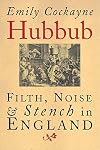
If you've ever been listed seventeenth-century England as a place you'd most like to time-travel to, I suggest reading this book first. Emily Cockayne's Hubbub: Noise, Filth and Stench in England, 1600-1770 (Yale University Press, 2007) is an absolutely disgusting journey through the streets, homes, markets, beds and privies (or "houses of office," as they were known) of early modern England. And it's utterly fascinating. You may want to shower between chapters, but it's worth it.
Using a show more wide variety of archival sources, from diaries and letters to fictional narratives to court records, Cockayne has created a compendium of annoyances surely unmatched in historical literature. She recognizes the limitations and inherent biases of her sources (most tend to be male, wealthy, and particularly whiny, or as she puts it in the case of Robert Hooke, a "creepy hypochondrical nerd"), and notes that while some exaggerations of grievances is to be expected, even if that's taken into account, life even for the richest of England's people was no picnic in the park.
In aptly-named chapters which, when recited, sound like a bad parody of Snow White's famous companions (Ugly, Itchy, Mouldy, Noisy, Grotty, Busy, Dirty, Gloomy) Cockayne catalogs the daily nuisances faced by every man, woman and child (these would of couse have been all the worse the further down the social ladder one found oneself). From what we would consider ghastly standards of personal hygiene (the noted diarist John Evelyn resolved on a "Course of yearly washing my head," when he was 33, p. 60) to the common ravages of intestinal parasites, fleas and other pests, to rarely (if ever) washed clothes, bedding and wigs, keeping clean and healthy was well nigh impossible.
Hubbub really does touch on just about every imaginable nuisance: pigs in the street, noisy neighbors, bad lighting, rough or nonexistent paving (in some cities well into the eighteenth century, she notes, each property-owner was responsible for paving the road in front of their building - needless to say, that didn't work out all that well), smoke, piles of rotten detritus everywhere ... I could go on. It gets almost comical (if uncomfortably and skin-crawingly so) at times: I have to admit I laughed out loud at this sentence about Samuel Pepys: "On the morning of 20 October 1660 he stepped into a 'great heap of turds' that had escaped from his neighbour's house of office and found themselves in Pepys's cellar" (pg. 144). Doesn't get much more filthy than that.
The move toward solutions to these various dilemmas forms just a small part of Cockayne's treatment, but she does discuss how cities and towns slowly began enacting paving regulations, zoning rules, rudimentary food inspections and other such salutary measures. What surprised me was how long those things took given the long-standing gripes that were clearly being bandied about.
Cockayne's also done an excellent job of finding images to complement her chapters, although Hogarth admittedly did much of that work for her. The only minor flaw is in the reproduction quality of the artwork; the images are printed quite dark, which makes some of the fine background details she discusses almost impossible to see. Aside from some minor repetitions within the text and a touch too little analysis of her discoveries, Cockayne's Hubbub is really a masterful book. The extensive footnotes and bibliography add much, and once again I've found a few interesting sources I'll want to examine further.
Highly recommended for the non-squeamish.
http://philobiblos.blogspot.com/2007/08/book-review-hubbub.html show less
Using a show more wide variety of archival sources, from diaries and letters to fictional narratives to court records, Cockayne has created a compendium of annoyances surely unmatched in historical literature. She recognizes the limitations and inherent biases of her sources (most tend to be male, wealthy, and particularly whiny, or as she puts it in the case of Robert Hooke, a "creepy hypochondrical nerd"), and notes that while some exaggerations of grievances is to be expected, even if that's taken into account, life even for the richest of England's people was no picnic in the park.
In aptly-named chapters which, when recited, sound like a bad parody of Snow White's famous companions (Ugly, Itchy, Mouldy, Noisy, Grotty, Busy, Dirty, Gloomy) Cockayne catalogs the daily nuisances faced by every man, woman and child (these would of couse have been all the worse the further down the social ladder one found oneself). From what we would consider ghastly standards of personal hygiene (the noted diarist John Evelyn resolved on a "Course of yearly washing my head," when he was 33, p. 60) to the common ravages of intestinal parasites, fleas and other pests, to rarely (if ever) washed clothes, bedding and wigs, keeping clean and healthy was well nigh impossible.
Hubbub really does touch on just about every imaginable nuisance: pigs in the street, noisy neighbors, bad lighting, rough or nonexistent paving (in some cities well into the eighteenth century, she notes, each property-owner was responsible for paving the road in front of their building - needless to say, that didn't work out all that well), smoke, piles of rotten detritus everywhere ... I could go on. It gets almost comical (if uncomfortably and skin-crawingly so) at times: I have to admit I laughed out loud at this sentence about Samuel Pepys: "On the morning of 20 October 1660 he stepped into a 'great heap of turds' that had escaped from his neighbour's house of office and found themselves in Pepys's cellar" (pg. 144). Doesn't get much more filthy than that.
The move toward solutions to these various dilemmas forms just a small part of Cockayne's treatment, but she does discuss how cities and towns slowly began enacting paving regulations, zoning rules, rudimentary food inspections and other such salutary measures. What surprised me was how long those things took given the long-standing gripes that were clearly being bandied about.
Cockayne's also done an excellent job of finding images to complement her chapters, although Hogarth admittedly did much of that work for her. The only minor flaw is in the reproduction quality of the artwork; the images are printed quite dark, which makes some of the fine background details she discusses almost impossible to see. Aside from some minor repetitions within the text and a touch too little analysis of her discoveries, Cockayne's Hubbub is really a masterful book. The extensive footnotes and bibliography add much, and once again I've found a few interesting sources I'll want to examine further.
Highly recommended for the non-squeamish.
http://philobiblos.blogspot.com/2007/08/book-review-hubbub.html show less
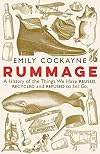
I was given this book for Christmas and immediately found the dust jacket appealing. Once I began reading, I found 'Rummage' an interesting combination of anecdotal and academic history. The author is a historian who writes in an entertaining yet rigorous style on a sprawling topic. Unusually, the book proceeds backwards in time from the 20th century to the 16th. Cockayne uses this structure well. I particularly liked the chapters on the mid-19th century, which focused on how many new show more inventions resulted from reuse of industrial effluents. The pleasant names of these novel products (e.g. bois durci) concealed their ingredients (blood and sawdust).
Cockayne writes with nuance and insight on how the reuse, remanufacture, and disposal of waste evolved in Britain over the centuries. She deliberately dismantles contemporary over-generalisations about the past, while also discussing assumptions and misconceptions of the time. Early chapters explain how drives for thrift and reuse during the first and second world wars had inconsistent results, both across the country and between types of materials. The rationales for reusing or recycling materials have varied considerably over time, as have the materials involved. I liked the discussion of how ornamentation from churches was repurposed after the Reformation. Another delightful detail was the demand for waste paper to wrap groceries, especially cheese, to the point that ledgers and other books were sometimes stolen for this purpose. As the industrial revolution proceeded, the range of (often noxious) wastes expanded and the ingenuity of their reuse did likewise.
I found the international dimension intriguing. Britain has exported and imported waste of various kinds for centuries, which surprised me. Germany apparently has a much more consistent history of material thrift and systematic reuse, profiting from Britain's ineffectual waste-handling at various points. Certainly, the 21st century pattern of Britain exporting waste to become someone else's problem is not new. The book has little to say about current challenges for waste reuse and recycling, but it doesn't need to comment as learning about the history of the subject inevitably sheds light on the present. It certainly seems ironic now that early plastics were made by recycling 'cotton wastes or paper fibres dissolved in acids and solvents'. Also notable is that combining artificial and natural fibres proved disastrous for rag recycling.
'Rummage' is a material history first and a cultural history second. The combination proves engaging, idiosyncratic, and ultimately fascinating. It would read well with [b:Empire of Things: How We Became a World of Consumers, from the Fifteenth Century to the Twenty-First|25242168|Empire of Things How We Became a World of Consumers, from the Fifteenth Century to the Twenty-First|Frank Trentmann|https://i.gr-assets.com/images/S/compressed.photo.goodreads.com/books/1442609156l/25242168._SY75_.jpg|46113293]. Finally, I found the section headings pretty hilarious. My favourite has to be 'Stinkle stinkle little tar'. show less
Cockayne writes with nuance and insight on how the reuse, remanufacture, and disposal of waste evolved in Britain over the centuries. She deliberately dismantles contemporary over-generalisations about the past, while also discussing assumptions and misconceptions of the time. Early chapters explain how drives for thrift and reuse during the first and second world wars had inconsistent results, both across the country and between types of materials. The rationales for reusing or recycling materials have varied considerably over time, as have the materials involved. I liked the discussion of how ornamentation from churches was repurposed after the Reformation. Another delightful detail was the demand for waste paper to wrap groceries, especially cheese, to the point that ledgers and other books were sometimes stolen for this purpose. As the industrial revolution proceeded, the range of (often noxious) wastes expanded and the ingenuity of their reuse did likewise.
I found the international dimension intriguing. Britain has exported and imported waste of various kinds for centuries, which surprised me. Germany apparently has a much more consistent history of material thrift and systematic reuse, profiting from Britain's ineffectual waste-handling at various points. Certainly, the 21st century pattern of Britain exporting waste to become someone else's problem is not new. The book has little to say about current challenges for waste reuse and recycling, but it doesn't need to comment as learning about the history of the subject inevitably sheds light on the present. It certainly seems ironic now that early plastics were made by recycling 'cotton wastes or paper fibres dissolved in acids and solvents'. Also notable is that combining artificial and natural fibres proved disastrous for rag recycling.
'Rummage' is a material history first and a cultural history second. The combination proves engaging, idiosyncratic, and ultimately fascinating. It would read well with [b:Empire of Things: How We Became a World of Consumers, from the Fifteenth Century to the Twenty-First|25242168|Empire of Things How We Became a World of Consumers, from the Fifteenth Century to the Twenty-First|Frank Trentmann|https://i.gr-assets.com/images/S/compressed.photo.goodreads.com/books/1442609156l/25242168._SY75_.jpg|46113293]. Finally, I found the section headings pretty hilarious. My favourite has to be 'Stinkle stinkle little tar'. show less
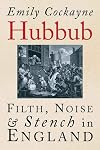
I felt greasy and grimy (like gopher guts?) after reading this but it's good grime.
Chapter titles like these:
Ugly
Itchy
Mouldy
Noisy
Grotty
Dirty
Gloomy....
Give an idea of the visceral "pleasures" within.
Fascinating and painstakingly researched, this is a must for those wondering what life was really like in the 1600s.
Jaw-dropping plates by William Hogarth abound.
"This book inhabits a grubby and squalid world, truffling out details that are vivid, colourful and sometimes downright show more nauseous. It's a veritage feast of filth and foulness, and I loved every minute of it,' - Christopher Hart, Literary Review
BUY, BORROW, OR BURN?
BUY. show less
Chapter titles like these:
Ugly
Itchy
Mouldy
Noisy
Grotty
Dirty
Gloomy....
Give an idea of the visceral "pleasures" within.
Fascinating and painstakingly researched, this is a must for those wondering what life was really like in the 1600s.
Jaw-dropping plates by William Hogarth abound.
"This book inhabits a grubby and squalid world, truffling out details that are vivid, colourful and sometimes downright show more nauseous. It's a veritage feast of filth and foulness, and I loved every minute of it,' - Christopher Hart, Literary Review
BUY, BORROW, OR BURN?
BUY. show less
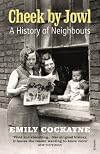
Although subtitled 'A History of Neighbours', Cheek by Jowl is more a social history of housing, town planning, public health and the effects these have had on community relations over time. A lot of the book is gossipy, snatches of tittle tattle about neighbours falling out. Some of it is funny. Most of all the book acts as a digest of other people's research, where neighbourly relations might have been mentioned in a wider historical context. Cockayne has seemingly used her literature show more review to populate the narrative she wanted to employ. Why not? This is popular history, not a rigorous academic text. Anyone wanting more depth can read the many books and published reports Cockayne references. Anyone who merely wants a peep at what neighbourly life has been like over a 600 year stretch of British history will be satisfied by this chatty book. Occasionally there are non-sequeteurs, where an anecdote is shoe horned into the narrative without any consideration of its relevance to what has gone before. Sometimes these jar, but by and large it's an enjoyable book. show less
Lists
Awards

You May Also Like


Statistics
- Works
- 4
- Members
- 337
- Popularity
- #70,619
- Rating
- 4.2
- Reviews
- 6
- ISBNs
- 11