
Christopher Kremmer
Author of The Carpet Wars: From Kabul to Baghdad: A Ten-Year Journey Along Ancient Trade Routes
About the Author
Image credit: Courtesy of Allen and Unwin
Works by Christopher Kremmer
The Carpet Wars: From Kabul to Baghdad: A Ten-Year Journey Along Ancient Trade Routes (2002) 342 copies, 5 reviews
Associated Works
Tagged
Common Knowledge
- Canonical name
- Kremmer, Christopher
- Birthdate
- 1958
- Gender
- male
- Nationality
- Australia
- Associated Place (for map)
- Australia
Members
Reviews
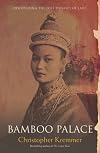
From a hostel in El Chalten, Argentina. I picked this up as it is not often you see books on Laos. Much more is known of its neighbours, Vietnam and Cambodia, which were also part of French Indochina.
An Australian journalist goes to Laos to find out the fate of the royal family, the book is an updated version of Stalking the Elephant Kings. As he travels through the country, he visits historical sites, meeting people - surviving members of the royal family, of the communist party, former show more political prisoners - , and asks searching questions.
The fate of the royal family is linked with the story of its people. The royal family had a chance to escape, but didn't, or at least the King and Queen did not, and the party have still not definitively explained what happened. They were not the only ones who faced difficult decisions in the wake of the civil war and also the purges in the ruling party, many Laotians left for neighbouring countries, or even overseas. He meets with a man held for many years in camps in the country, a party member, without ever being able to notify his family. The conditions of the camps were horrendous, indeed it appeared that those in charge were trying to kill them off, not quickly, but by starving them and breaking their morale.
Also mentioned are the American military personnel still unaccounted for, Kremmer hears stories of them being held in caves. They are a reminder that the Vietnam war did not confine itself to that country's borders, but fighting and bombs spilled over the border, bombs which are still causing damage even now.
Well researched, an insight into a relatively isolated country, which is surprising considering the amount of foreign interference in its history. show less
An Australian journalist goes to Laos to find out the fate of the royal family, the book is an updated version of Stalking the Elephant Kings. As he travels through the country, he visits historical sites, meeting people - surviving members of the royal family, of the communist party, former show more political prisoners - , and asks searching questions.
The fate of the royal family is linked with the story of its people. The royal family had a chance to escape, but didn't, or at least the King and Queen did not, and the party have still not definitively explained what happened. They were not the only ones who faced difficult decisions in the wake of the civil war and also the purges in the ruling party, many Laotians left for neighbouring countries, or even overseas. He meets with a man held for many years in camps in the country, a party member, without ever being able to notify his family. The conditions of the camps were horrendous, indeed it appeared that those in charge were trying to kill them off, not quickly, but by starving them and breaking their morale.
Also mentioned are the American military personnel still unaccounted for, Kremmer hears stories of them being held in caves. They are a reminder that the Vietnam war did not confine itself to that country's borders, but fighting and bombs spilled over the border, bombs which are still causing damage even now.
Well researched, an insight into a relatively isolated country, which is surprising considering the amount of foreign interference in its history. show less
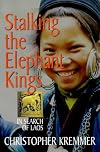
This non fiction account of Kremmer's extraordinary quest to establish the fate of the Laos Royal Family is gripping in its own right, but even more astonishing when read alongside the fictionalised account of the same events by Colin Cotterill, in his 'Disco for the Departed'. Kremmer is a fine journalist, but here he seems to channel LeCarre's 'Honorable Schoolboy' at his most reckless. How he survived without being shot or imprisoned - or at least deported - is a mystery. As both show more Cotterill and Kremmer make clear, this is not a subject that the Laotian authorities care to discuss much. The author's website confirms that this story was subsequently updated by Kremmer and re-issued under the title 'The Bamboo Palace'. show less
The carpet wars : from Kabul to Baghdad : a ten year journey along ancient trade routes by Christopher Kremmer
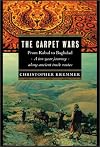
A slightly disjointed amble through central Asia, taking in Afghanistan, Iran, Iraq and Pakistan. A bunch of not overly connected travel pieces makes "The Carpet Wars" sometimes confuses the reader as to when events happened and the sometimes oblique connections to carpets can make digesting the book hard work. Kremmer makes up for this though with some evocative writing of the areas of central Asia that rarely appears in travel articles.

I could be mistaken, but it seems the liberalism of information on the Internet has penetrated the world of traditional publishing. While in the past most books were written by the more serious type of scholarly or semi-scholarly author, there now seems to be a new large group of journalists or former journalists who have turned to producing books. These books have a different flavour. A fairly large number of these books are written by relatively young, adventurous authors. Perhaps the show more availability of so much background information through the Internet enables these writers to combine journalistic skills of collecting first-hand information with the otherwise time-consuming task of writing up background to a story.
Their style of writing is somewhat different from earlier authors. Less knowledgeable, less snobbery; more personal, interweaving the object of research, with personal anecdotes, so to speak the process of collecting facts, in an easy-going, free, personal style. In some cases, the writing has a distinctly journalistic flavour of exaggeration and typifying descriptions. On the whole, the reporting also seems less neutral.
One such a new type of author is Christopher Kremmer, who has written books about Central and Southeast Asian countries, such as Afghanistan, Pakistan, Iran, India, and Laos. Bamboo Palace. Discovering the lost dynasty of Laos is his second book about Laos.
Rather than a thorough description and analysis of recent Lao history, the book is a racy detective story, trying to uncover the fate of the late royal family of Laos. Photos of and visits to derelict buildings, sites in the jungle, chasing witnesses, seeking out survivors, adventure and a pinch of danger are typical. The author is prominently present in the text, and in photos as the agent uncovering the facts.
The book is very readable, giving us a glimpse of contemporary life in Laos, and lifting a tip of the veil on Laotian history. The author is indeed able to lay bare quite a considerable part of the mosaic of that part of history concerning the last months of the royal family, and how they perished in concentration camps.
However, the style of the book is very confusing, especially in the beginning. It is a mish-mash of journalism, travelogue and personal reflections. The description of the author's dream, and the peculiar cycling accident, which the author claims was caused by a "cursed" stolen buddha sculpture are peculiar and undermine the sanity of the author and credulity of the book.
Laos is a country not much spoken of, and little known. This book is an interesting contribution to our knowledge of that country. It has whetted my appetite to know more about this country. show less
Their style of writing is somewhat different from earlier authors. Less knowledgeable, less snobbery; more personal, interweaving the object of research, with personal anecdotes, so to speak the process of collecting facts, in an easy-going, free, personal style. In some cases, the writing has a distinctly journalistic flavour of exaggeration and typifying descriptions. On the whole, the reporting also seems less neutral.
One such a new type of author is Christopher Kremmer, who has written books about Central and Southeast Asian countries, such as Afghanistan, Pakistan, Iran, India, and Laos. Bamboo Palace. Discovering the lost dynasty of Laos is his second book about Laos.
Rather than a thorough description and analysis of recent Lao history, the book is a racy detective story, trying to uncover the fate of the late royal family of Laos. Photos of and visits to derelict buildings, sites in the jungle, chasing witnesses, seeking out survivors, adventure and a pinch of danger are typical. The author is prominently present in the text, and in photos as the agent uncovering the facts.
The book is very readable, giving us a glimpse of contemporary life in Laos, and lifting a tip of the veil on Laotian history. The author is indeed able to lay bare quite a considerable part of the mosaic of that part of history concerning the last months of the royal family, and how they perished in concentration camps.
However, the style of the book is very confusing, especially in the beginning. It is a mish-mash of journalism, travelogue and personal reflections. The description of the author's dream, and the peculiar cycling accident, which the author claims was caused by a "cursed" stolen buddha sculpture are peculiar and undermine the sanity of the author and credulity of the book.
Laos is a country not much spoken of, and little known. This book is an interesting contribution to our knowledge of that country. It has whetted my appetite to know more about this country. show less
Awards

You May Also Like


Associated Authors
Statistics
- Works
- 6
- Also by
- 1
- Members
- 551
- Popularity
- #45,289
- Rating
- 3.7
- Reviews
- 12
- ISBNs
- 33
- Languages
- 1
- Favorited
- 1