
Samrat Upadhyay
Author of Arresting God in Kathmandu
About the Author
Samrat Upadhyay was born and raised in Kathmandu and came to the United States at age twenty-one. His work has appeared in The Best American Short Stories and The Best of the Fiction Workshops. He lives with his wife and daughter near Cleveland, where he teaches at Baldwin-Wallace College
Image credit: Courtesy of Indiana University
Works by Samrat Upadhyay
The Royal Ghosts 1 copy
Associated Works
Tagged
Common Knowledge
- Birthdate
- 1963-02-18
- Gender
- male
- Education
- College of Wooster (B.A.)
Ohio University (M.A.)
University of Hawaii (Ph.D.) - Occupations
- Professor of Creative Writing
- Organizations
- Indiana University
Baldwin Wallace College - Awards and honors
- Whiting Writers' Award (2001)
- Nationality
- Nepal
- Birthplace
- Kathmandu, Nepal
- Places of residence
- Kathmandu, Nepal
Bloomington, Indiana, USA - Map Location
- Nepal
Members
Reviews
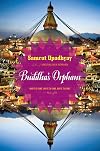
I enjoyed this book quite a bit. I am, however, surprised by some of the blurbs found on the cover:
I didn't have any sense whatsoever of Checkhov's modernist style in this nor would the word grandeur have come to mind. I'm not sure why there is this urge to make this into a Russian novel when it works perfectly well as a Nepalese one.
At its heart this is a love show more story between Nilu and Raja — a life-long but perfectly ordinary one insofar as such can occur across class/economic boundaries (I would disregard the "epic love" hyperbole on the cover as well) — but it also reaches both backwards a generation and forwards a generation to show strong parallels in the lives of their parents and children. However, the love story is just the vehicle for several ideas that seemed woven through the story.
I know very little about Buddhist philosophy but the consciously cyclical nature of this story seems very apropos for a tale that never steps very far from the culture of the Indian subcontinent. I took away the message that, however much the specifics of misfortune or adversity may seem unique to those encountering them, the fundamental experience has been repeated many times and how you meet the trial is part of what shapes the ultimate outcome. Further, those actions we take cause ripples out through the lives of others across time and geography in a general connectedness that we may not always perceive.
I found the women, by far, the most interesting characters. The arc from Mohini to Nilu to Ranjana to Kali, although not told chronologically, was the most powerful, both in terms of characterization and the underlying ideas. The men in the story, while as colorful and alive, are weaker people and their presence doesn't loom as large. Part of this is that cultural misogyny plays such an important role and the women's reactions — be it acceptance or struggle — form so much of the fabric of the story that it's hard not to see their roles as the backbone.
For me, Upadhyay is a quiet writer. By that I mean that I wasn't conscious of his presence all the time. His characters were living and breathing and, generally, all I could hear was their story. They are, by turns, humorous, sad, encouraging and heartbreaking but they are always engaging. Where this fell short occasionally was in the backdrop. It takes place from the 1960s to the present, a very tumultuous time politically in Nepal, and Upadhyay seems determined to insert a note of each political shift...even when it didn't seem to have that much relevance to his foreground story and felt somewhat bolted on.
I really enjoyed this book, especially the second half, becoming more engrossed as it went along. I can see why Upadhyay's other works have won awards and look forward to trying them someday.
Recommended. show less
...deserving of his acclaim as a Buddhist Chekhov...
...the sweep and romantic grandeur of a great old-fashioned Russian novel...
I didn't have any sense whatsoever of Checkhov's modernist style in this nor would the word grandeur have come to mind. I'm not sure why there is this urge to make this into a Russian novel when it works perfectly well as a Nepalese one.
At its heart this is a love show more story between Nilu and Raja — a life-long but perfectly ordinary one insofar as such can occur across class/economic boundaries (I would disregard the "epic love" hyperbole on the cover as well) — but it also reaches both backwards a generation and forwards a generation to show strong parallels in the lives of their parents and children. However, the love story is just the vehicle for several ideas that seemed woven through the story.
I know very little about Buddhist philosophy but the consciously cyclical nature of this story seems very apropos for a tale that never steps very far from the culture of the Indian subcontinent. I took away the message that, however much the specifics of misfortune or adversity may seem unique to those encountering them, the fundamental experience has been repeated many times and how you meet the trial is part of what shapes the ultimate outcome. Further, those actions we take cause ripples out through the lives of others across time and geography in a general connectedness that we may not always perceive.
I found the women, by far, the most interesting characters. The arc from Mohini to Nilu to Ranjana to Kali, although not told chronologically, was the most powerful, both in terms of characterization and the underlying ideas. The men in the story, while as colorful and alive, are weaker people and their presence doesn't loom as large. Part of this is that cultural misogyny plays such an important role and the women's reactions — be it acceptance or struggle — form so much of the fabric of the story that it's hard not to see their roles as the backbone.
For me, Upadhyay is a quiet writer. By that I mean that I wasn't conscious of his presence all the time. His characters were living and breathing and, generally, all I could hear was their story. They are, by turns, humorous, sad, encouraging and heartbreaking but they are always engaging. Where this fell short occasionally was in the backdrop. It takes place from the 1960s to the present, a very tumultuous time politically in Nepal, and Upadhyay seems determined to insert a note of each political shift...even when it didn't seem to have that much relevance to his foreground story and felt somewhat bolted on.
I really enjoyed this book, especially the second half, becoming more engrossed as it went along. I can see why Upadhyay's other works have won awards and look forward to trying them someday.
Recommended. show less
Real Rating: 3.75* of five
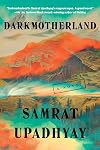
The Publisher Says: An epic tale of love and political violence set in earthquake-ravaged Darkmotherland, a dystopian reimagining of Nepal, from the Whiting Award–winning author of Arresting God in Kathmandu
In Darkmotherland, Nepali writer Samrat Upadhyay has created a novel of infinite embrace—filled with lovers and widows, dictators and dissidents, paupers, fundamentalists, and a genderqueer power player with her eyes on the throne.
At its heart are two show more intertwining narratives: one of Kranti, a revolutionary’s daughter, who marries into a plutocratic dynasty and becomes ensnared in the family’s politics. And then there is the tale of Darkmotherland’s new dictator and his mistress, Rozy, who undergoes radical body changes and grows into a figure of immense power.
Darkmotherland is a romp through the vast space of a globalized universe where personal ambitions are inextricably tied to political fortunes, where individual identities are shaped by family pressures and social reins, and where the East connects to and collides with the West in brilliant and unsettling ways.
I RECEIVED A DRC FROM THE PUBLISHER VIA NETGALLEY. THANK YOU.
My Review: There is a lot to be said for ambition in storytelling. This book, for the first third, was destined for enshrinement in my hall of fame; the second third for my favorites list; and by the end for my "you should read it if you love, or need, a full-immersion wide-angle view of what chaos really does." You should know going in that women have significant challenges regarding consensual sex here. The centering of a transfem character's experiences made for sharp commentary on gender roles in a repressive, fascistic regime, yet also made my hackles rise. I have trans folk in my life whose potential feelings about this book's explicitness I constantly found obtruding in my reading.
It's not to say this is a pure negative. I'm all for people writing uncomfortable takes on the world as we find it today. The fact that Rozy is a person with agency, albeit in a very twisted system, felt both natural and unhappy. Her choices were severely limited, and yet also used to prove the point that pressure can cause a person to become more powerful the same way water under pressure can become a weapon.
The fictionalized country in the story was a background for me, a setting; the events played out on its stage. I was unable to get deeper than that, despite the story's evident desire for me to do so, by the sheer size of the cast we're following. It is always a risk to expand a cast beyond a handful of people. The great trick of numbing people to the reality of suffering is to follow Stalin's epigrammatic maxim: "The death of one man is a tragedy. The death of millions is a statistic." Like teaching history, telling a story in novel form only becomes less involving when you dilute your message (especially when it's essentially the same message repeated) beyond a certain point. I'm not clear if that was an intentional choice of metacommentary on the author's and publisher's part.
This story of the chaos and upheaval that attend a violent ending suffers from this dilution. It also tries its best to invest you in its very deeply felt observations on how cruelty ultimately undermines itself as it metastasizes. As ever, the issue of what is celebration and/or normalization arises as repetition of violent language and behaviors continues to assault one's readerly experience. This fine balance between intention and reception is always deeply personal. It crossed my internal line shortly after midpoint; I was too deeply interested in the results the author intended to bring to quit, as I ordinarily would have done. That's why I got as close as I did to a full four stars.
I'm not doing a good job, I fear, of expressing how deeply enfolding a tale is told here. I'm very much a fan of stories that require me to think and deeply consider the places and times and inhabitants of the storyscape before me. I think a read that makes demands on my deeper cognitive resources is a fun read. This story does that. I'm very interested in tales of messy endings that are inevitable and inherent in the setup of the world being built. This story could be the poster child for that. I was, then, very much on the side of the author and his project of elucidation.
But because of certain choices he made, it began to feel like it was just that: a project.
I wanted to end the read as much, or more in love with it as I started out being. I'm bummed that I couldn't. show less
The Publisher Says: An epic tale of love and political violence set in earthquake-ravaged Darkmotherland, a dystopian reimagining of Nepal, from the Whiting Award–winning author of Arresting God in Kathmandu
In Darkmotherland, Nepali writer Samrat Upadhyay has created a novel of infinite embrace—filled with lovers and widows, dictators and dissidents, paupers, fundamentalists, and a genderqueer power player with her eyes on the throne.
At its heart are two show more intertwining narratives: one of Kranti, a revolutionary’s daughter, who marries into a plutocratic dynasty and becomes ensnared in the family’s politics. And then there is the tale of Darkmotherland’s new dictator and his mistress, Rozy, who undergoes radical body changes and grows into a figure of immense power.
Darkmotherland is a romp through the vast space of a globalized universe where personal ambitions are inextricably tied to political fortunes, where individual identities are shaped by family pressures and social reins, and where the East connects to and collides with the West in brilliant and unsettling ways.
I RECEIVED A DRC FROM THE PUBLISHER VIA NETGALLEY. THANK YOU.
My Review: There is a lot to be said for ambition in storytelling. This book, for the first third, was destined for enshrinement in my hall of fame; the second third for my favorites list; and by the end for my "you should read it if you love, or need, a full-immersion wide-angle view of what chaos really does." You should know going in that women have significant challenges regarding consensual sex here. The centering of a transfem character's experiences made for sharp commentary on gender roles in a repressive, fascistic regime, yet also made my hackles rise. I have trans folk in my life whose potential feelings about this book's explicitness I constantly found obtruding in my reading.
It's not to say this is a pure negative. I'm all for people writing uncomfortable takes on the world as we find it today. The fact that Rozy is a person with agency, albeit in a very twisted system, felt both natural and unhappy. Her choices were severely limited, and yet also used to prove the point that pressure can cause a person to become more powerful the same way water under pressure can become a weapon.
The fictionalized country in the story was a background for me, a setting; the events played out on its stage. I was unable to get deeper than that, despite the story's evident desire for me to do so, by the sheer size of the cast we're following. It is always a risk to expand a cast beyond a handful of people. The great trick of numbing people to the reality of suffering is to follow Stalin's epigrammatic maxim: "The death of one man is a tragedy. The death of millions is a statistic." Like teaching history, telling a story in novel form only becomes less involving when you dilute your message (especially when it's essentially the same message repeated) beyond a certain point. I'm not clear if that was an intentional choice of metacommentary on the author's and publisher's part.
This story of the chaos and upheaval that attend a violent ending suffers from this dilution. It also tries its best to invest you in its very deeply felt observations on how cruelty ultimately undermines itself as it metastasizes. As ever, the issue of what is celebration and/or normalization arises as repetition of violent language and behaviors continues to assault one's readerly experience. This fine balance between intention and reception is always deeply personal. It crossed my internal line shortly after midpoint; I was too deeply interested in the results the author intended to bring to quit, as I ordinarily would have done. That's why I got as close as I did to a full four stars.
I'm not doing a good job, I fear, of expressing how deeply enfolding a tale is told here. I'm very much a fan of stories that require me to think and deeply consider the places and times and inhabitants of the storyscape before me. I think a read that makes demands on my deeper cognitive resources is a fun read. This story does that. I'm very interested in tales of messy endings that are inevitable and inherent in the setup of the world being built. This story could be the poster child for that. I was, then, very much on the side of the author and his project of elucidation.
But because of certain choices he made, it began to feel like it was just that: a project.
I wanted to end the read as much, or more in love with it as I started out being. I'm bummed that I couldn't. show less
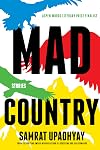
I wasn't entirely sure what I thought about the stories in this book as I worked my way through it. So many of them seemed to be about people who are, for want of a better way to describe them, lost souls; people who lack something in their lives. On the surface they seem to be reasonably well adjusted, or at least to know what it is they want from their lives. But as each story progresses, they all have strange, often disturbing transformations, slipping easily into different show more realities.
These stories are about metamorphoses, the most jarring of which are people of privilege who slip into lives of less privilege and (seemingly) greater simplicity. Sofi, an American girl, loses herself in the Nepali culture, insisting on becoming Nepali, and forgetting about her old life in Ohio. But underneath the new surface and new name is the old Sofi, who is betrayed by her own needs. Anamika, is a successful business woman with a truant son and disabled husband. Her adept manipulation of others fails her, and she is arrested and held in prison where she undergoes a profound change, a rejection of all she'd held dear, and we see her essential character as being quite different from what we had first thought.
These are stories which require a good deal of thought. They don't easily give up their meaning, and even seem to lead nowhere in some cases. But when taken as a whole, as pieces of a larger narrative, they describe our desire to escape life's difficulties, and the way in which our own personalities will always color those escapes.
Well worth your time. show less
These stories are about metamorphoses, the most jarring of which are people of privilege who slip into lives of less privilege and (seemingly) greater simplicity. Sofi, an American girl, loses herself in the Nepali culture, insisting on becoming Nepali, and forgetting about her old life in Ohio. But underneath the new surface and new name is the old Sofi, who is betrayed by her own needs. Anamika, is a successful business woman with a truant son and disabled husband. Her adept manipulation of others fails her, and she is arrested and held in prison where she undergoes a profound change, a rejection of all she'd held dear, and we see her essential character as being quite different from what we had first thought.
These are stories which require a good deal of thought. They don't easily give up their meaning, and even seem to lead nowhere in some cases. But when taken as a whole, as pieces of a larger narrative, they describe our desire to escape life's difficulties, and the way in which our own personalities will always color those escapes.
Well worth your time. show less
Darkmotherland by Samrat Upadhyay is a dystopian imagining of present-day Nepal following an enormous earthquake. This dense and complex novel follows the rise of the country’s nationalist leader, the daughter of his biggest detractor, his lover, and the wealthy industrialist family who supports him.
We see how a worn-out populace, concerned with trying to survive- either at a subsistence level or maintaining their previous wealth- will support lies, corruption, and disregard of human show more rights. These pressures exacerbate classism, racism, misogyny, sexual abuse, religious divides, and lack of empathy; this plays out over and over again in the text.
At almost 800 pages, there are only two characters that are fully realized: PM Papa, Darkmotherland’s leader, and his lover Rozy. The writing is rambling and packed full of random scenes, many of which do not seem to advance plot, world building or characters There is a lot of repetition, as well. A character’s clothing will be described and then half a page later will meet new people and their exact same clothing will be described again. Subplots are forgotten for hundreds of pages. Despite that, there is some very sharp political satire and social commentary. Certain scenes and people made me laugh out loud, and surprised me with their insight. A more concise and focused novel would have made that standout more.
While there are parts of this novel that I would give 5 stars, there are also parts that were just wordy and unnecessarily dense. I’ve not yet been able to decide if the payoff was worth it.
Thank you to NetGalley and SoHo Press for the advanced digital copy. show less
We see how a worn-out populace, concerned with trying to survive- either at a subsistence level or maintaining their previous wealth- will support lies, corruption, and disregard of human show more rights. These pressures exacerbate classism, racism, misogyny, sexual abuse, religious divides, and lack of empathy; this plays out over and over again in the text.
At almost 800 pages, there are only two characters that are fully realized: PM Papa, Darkmotherland’s leader, and his lover Rozy. The writing is rambling and packed full of random scenes, many of which do not seem to advance plot, world building or characters There is a lot of repetition, as well. A character’s clothing will be described and then half a page later will meet new people and their exact same clothing will be described again. Subplots are forgotten for hundreds of pages. Despite that, there is some very sharp political satire and social commentary. Certain scenes and people made me laugh out loud, and surprised me with their insight. A more concise and focused novel would have made that standout more.
While there are parts of this novel that I would give 5 stars, there are also parts that were just wordy and unnecessarily dense. I’ve not yet been able to decide if the payoff was worth it.
Thank you to NetGalley and SoHo Press for the advanced digital copy. show less
Lists
Awards


You May Also Like


Associated Authors
Statistics
- Works
- 8
- Also by
- 1
- Members
- 613
- Popularity
- #41,001
- Rating
- 3.5
- Reviews
- 34
- ISBNs
- 31
- Languages
- 2