
About the Author
Richard Wolin is Distinguished Professor of History, Political Science, and Comparative Literature at the Graduate Center of the City University of New York. His books include Heidegger's Children and The Seduction of Unreason (both Princeton).
Image credit: CUNY
Works by Richard Wolin
The Seduction of Unreason: The Intellectual Romance with Fascism from Nietzsche to Postmodernism (2004) 148 copies, 1 review
Heidegger's Children: Hannah Arendt, Karl Lowith, Hans Jonas, and Herbert Marcuse. (2001) 137 copies, 1 review
The Wind from the East: French Intellectuals, the Cultural Revolution, and the Legacy of the 1960s (2010) 84 copies
The Terms of Cultural Criticism: The Frankfurt School, Existentialism, Poststructuralism (1983) 23 copies, 1 review
'Juergen Habermas & post-secular societies' in The Chronicle of Higher Education 52/5, 23 Sept 2005 1 copy
Associated Works
Confronting Mass Democracy and Industrial Technology: Political and Social Theory from Nietzsche to Habermas (2002) — Contributor — 21 copies
Tagged
Common Knowledge
- Canonical name
- Wolin, Richard
- Birthdate
- 1952-09-02
- Gender
- male
- Education
- York University (MA|Ph.D|1980)
Reed College (BA|1974) - Occupations
- intellectual historian
professor - Organizations
- City University of New York Graduate Center
Rice University
Reed College - Nationality
- USA
- Birthplace
- Chicago, Illinois, USA
- Places of residence
- New York, New York, USA
- Associated Place (for map)
- USA
Members
Reviews
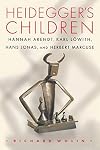
Richard Wolin's "Heidegger's Children" is an overview of Heidegger's pupils, Heidegger's effect on them philosophically and the position of Heidegger's political choices in this relation. Judging by the tone and a general lack of depth, the book is mostly intended for people of intellectual caliber but not very well-versed in the subject, which makes it excellent for academics who know nothing about Heidegger, for example. Of course this will not satisfy any real Heidegger scholar, but show more contrary to other reviewers, I don't think that's necessarily a problem.
Wolin's rapid overview of the philosophies of Hannah Arendt, Karl Löwith, Hans Jonas and Herbert Marcuse is generally good, and critical where deserved. He never really goes into the issues with their works themselves, but stays on the subject of the connection between their thought and Heidegger, often mainly relying on biographical analysis. Wolin's overall tone in reflecting on Heidegger and his pupils is that of the 'left-liberal' (continentally speaking) wondering what could have gone wrong, which is a bit annoying at times, but should not bother the reader too much.
On the whole, the book succeeds well for its purpose, but is a little superficial. One also would have wished that the two chapters on Heidegger himself had been in the front of the book instead of the back, since now one is basically 'reading backwards' into what Heidegger thought, so to speak. The conclusion is also rather stronger in criticism than the book itself allows. Therefore, I would recommend it mostly for intellectuals who want a basic overview of four of Heidegger's main pupils, but not for those knowledgeable about Heidegger or interested in an in-depth analysis of his work. show less
Wolin's rapid overview of the philosophies of Hannah Arendt, Karl Löwith, Hans Jonas and Herbert Marcuse is generally good, and critical where deserved. He never really goes into the issues with their works themselves, but stays on the subject of the connection between their thought and Heidegger, often mainly relying on biographical analysis. Wolin's overall tone in reflecting on Heidegger and his pupils is that of the 'left-liberal' (continentally speaking) wondering what could have gone wrong, which is a bit annoying at times, but should not bother the reader too much.
On the whole, the book succeeds well for its purpose, but is a little superficial. One also would have wished that the two chapters on Heidegger himself had been in the front of the book instead of the back, since now one is basically 'reading backwards' into what Heidegger thought, so to speak. The conclusion is also rather stronger in criticism than the book itself allows. Therefore, I would recommend it mostly for intellectuals who want a basic overview of four of Heidegger's main pupils, but not for those knowledgeable about Heidegger or interested in an in-depth analysis of his work. show less

Book is linked to the wrong covers and isbn. The isbn belongs to this book and this is the correct cover. The other covers are incorrect and the author is NOT Julian Barnes. Someone needs to correct the link. The author of this book is Richard Wolin. All the reviews are for a different book.
The Seduction of Unreason: The Intellectual Romance with Fascism from Nietzsche to Postmodernism, Second Edition by Richard Wolin
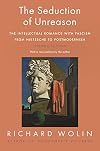
Muy buen libro sobre los enemigos de la ilustración y como terminan todos cerca del fascismo ya de derecha ya de izquierda. inclusive los estructuralistas y post estructuralists. Como el odio de los conservadores hacia el liberalismo termina en desastre. Y el post estructuralismo francés reciclado en eeuu termina en una tilingería delirante
Feb 29, 2024Spanish
Lists
Art of Reading (1)
You May Also Like


Associated Authors
Statistics
- Works
- 19
- Also by
- 1
- Members
- 744
- Popularity
- #34,143
- Rating
- 3.7
- Reviews
- 3
- ISBNs
- 49
- Languages
- 4
- Favorited
- 1