
Eric Schmidt
Author of How Google Works
Works by Eric Schmidt
The New Digital Age: Reshaping the Future of People, Nations and Business (2013) — Author — 434 copies, 10 reviews
Így vezetünk mi 1 copy
Associated Works
Artful Making: What Managers Need to Know About How Artists Work (2003) — Foreword — 82 copies, 2 reviews
The Startup Game: Inside the Partnership between Venture Capitalists and Entrepreneurs (2011) — Foreword — 80 copies
Tagged
Common Knowledge
Members
Reviews
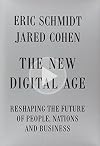
This book ought to be a terrifying picture of what happens when two supposedly very bright and unquestionably very successful young people present a paean to a technological future as they see it and, apparently, would have it.
But I do not believe that most readers of the book shall find it terrifying. Instead, like the book's authors, these readers, too morally blind, stupid and ignorant, will not grasp how and why the pictured future should be seen as an entirely predictable and show more horrifying step in the processes which are so far advanced already.
It isn't simply that former ideas--and ideals--and what was once conveyed by terms such as intellectual freedom, dignity, democratic speech, will be challenged, it's that these terms will have their former meanings forgotten, trivialized or reduced to nonsense in a new, changed arrangement of human values which leaves freedom and dignity further defined as something to do with consumer convenience--a conception whose character as insipid and banal will consistently surpass anyone's imagination for some limit to its capacity for a fathomless descent from present or former levels of depravity.
The future pictured in the book under consideration may very well come to pass not because it is or because it ought to be desirable but because, as whole societies, all over the world, people have neither the tools nor the intelligence to prevent this future from eventually coming about even if they could recognize that it is a nightmare vision, not the sparkling technological wonderland its authors argue it shall be.
Recommended readings, in the meantime:
Prophesies of Fascism, (The Tribune, 12 July 1940) by George Orwell : http://georgeorwellnovels.com/reviews/prophecies-of-fascism/
"London Letter" (The Partisan Review, New York, July-August, 1941) by George Orwell : http://georgeorwellnovels.com/journalism/london-letter-to-partisan-review-july-a...
James Burnham and the Managerial Revolution, originally published as Second Thoughts on James Burnham (a review of James Burnham's book, The Managerial Revolution in Polemic, May, 1946, by George Orwell : http://georgeorwellnovels.com/essays/james-burnham-and-the-managerial-revolution...
H.H. Gerth, together with C. Wright Mills, author of The Power Elite, also refer to and comment on Burnham's book in an essay "A Marx for the Managers" reprinted in the collected essays, Power, Politics and People and first published in the journal "Ethics", Vol. 52, No. 2, Jan., 1942 : http://www.jstor.org/stable/2989150 show less
But I do not believe that most readers of the book shall find it terrifying. Instead, like the book's authors, these readers, too morally blind, stupid and ignorant, will not grasp how and why the pictured future should be seen as an entirely predictable and show more horrifying step in the processes which are so far advanced already.
It isn't simply that former ideas--and ideals--and what was once conveyed by terms such as intellectual freedom, dignity, democratic speech, will be challenged, it's that these terms will have their former meanings forgotten, trivialized or reduced to nonsense in a new, changed arrangement of human values which leaves freedom and dignity further defined as something to do with consumer convenience--a conception whose character as insipid and banal will consistently surpass anyone's imagination for some limit to its capacity for a fathomless descent from present or former levels of depravity.
The future pictured in the book under consideration may very well come to pass not because it is or because it ought to be desirable but because, as whole societies, all over the world, people have neither the tools nor the intelligence to prevent this future from eventually coming about even if they could recognize that it is a nightmare vision, not the sparkling technological wonderland its authors argue it shall be.
Recommended readings, in the meantime:
Prophesies of Fascism, (The Tribune, 12 July 1940) by George Orwell : http://georgeorwellnovels.com/reviews/prophecies-of-fascism/
"London Letter" (The Partisan Review, New York, July-August, 1941) by George Orwell : http://georgeorwellnovels.com/journalism/london-letter-to-partisan-review-july-a...
James Burnham and the Managerial Revolution, originally published as Second Thoughts on James Burnham (a review of James Burnham's book, The Managerial Revolution in Polemic, May, 1946, by George Orwell : http://georgeorwellnovels.com/essays/james-burnham-and-the-managerial-revolution...
H.H. Gerth, together with C. Wright Mills, author of The Power Elite, also refer to and comment on Burnham's book in an essay "A Marx for the Managers" reprinted in the collected essays, Power, Politics and People and first published in the journal "Ethics", Vol. 52, No. 2, Jan., 1942 : http://www.jstor.org/stable/2989150 show less
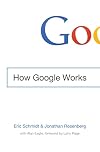
This is a really interesting book. But, boy, there must not be any introverts at Google. I'm not sure I agree with all of their thinking as far as it always being better for the company to have an employee who does their best thinking in the company of others, and also hangs out with others mostly in their spare time. There have been so many creative high achievers over the years who work best alone. If you are trying to build a culture that incorporates the best people, surely that would show more include some of those more self-contained individuals also. I'm not sure that I necessarily buy it that a person who likes quiet to work, or who tends to get tasks done himself rather than reaching out to others, is necessarily an un-innovative control freak. It's still a fascinating look into their culture, though. show less
Better than a book written by corporate committee should be. A lot of LinkedIn-style business bollocks, obviously, but also some interesting insights into Google's culture and ways of working. Easy to read.
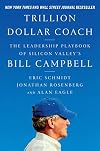
“The Trillion Dollar Coach” is a strangely wonderful book.
At one level the authors wrote the eulogy of a man—Bill Campbell- whom they evidently respected very much.
At another level, it is a manual for managers and leaders.
The book contains many lessons on how to manage people.
The book has been laid out well. What I like about the book is that each section ends with the lesson/message summarized in a block.
The lessons may seem to be just common sense. Most people will read the book show more and say, “But, of course! This is obvious”.
Most of these people will not live the principles laid out in the book.
This is the difference between managers and leaders, as Bill Campbell seems to have said frequently.
I like the book. show less
At one level the authors wrote the eulogy of a man—Bill Campbell- whom they evidently respected very much.
At another level, it is a manual for managers and leaders.
The book contains many lessons on how to manage people.
The book has been laid out well. What I like about the book is that each section ends with the lesson/message summarized in a block.
The lessons may seem to be just common sense. Most people will read the book show more and say, “But, of course! This is obvious”.
Most of these people will not live the principles laid out in the book.
This is the difference between managers and leaders, as Bill Campbell seems to have said frequently.
I like the book. show less
Lists
Awards


You May Also Like


Associated Authors
Statistics
- Works
- 15
- Also by
- 2
- Members
- 1,745
- Popularity
- #14,740
- Rating
- 3.6
- Reviews
- 31
- ISBNs
- 88
- Languages
- 15

