
Jennifer Burns
Author of Goddess of the Market: Ayn Rand and the American Right
About the Author
Jennifer Burns is Assistant Professor of History at the University of Virginia.
Works by Jennifer Burns
Romance: RIPPED 1 copy
Associated Works
American Capitalism: Social Thought and Political Economy in the Twentieth Century (2006) — Contributor — 20 copies
Tagged
Common Knowledge
- Birthdate
- 1975-12-31
- Gender
- female
- Education
- Harvard College (History)
University of California, Berkeley (PhD|History) - Occupations
- Assistant Professor of History (University of Virginia.)
- Nationality
- USA
- Places of residence
- Charlottesville, Virginia, USA
Menlo Park, California, USA - Associated Place (for map)
- USA
Members
Discussions
Two New Bios of Ayn Rand in Pro and Con (November 2009)
Reviews
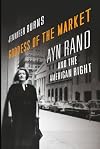
It can't be easy trying to write an objective biography of the 'founder' of objectivism, in part because it's like writing an objective biography of Marx: no matter how good it is, not matter how objective, at least half of its readers will hate it, because they take 'objective' to mean 'with no independent judgement, in either direction.' Damned if you damn, damned if you don't damn, damned if you deify.
But Burns does a great job. The early chapters are a bit dull, but then I find the show more opening chapters of every biography dull: they inevitably go into too much detail (because the author spent a lot of time researching these microfacts that nobody cares about, and reasonably enough wants to put them to *some* use), but once Rand gets to Hollywood things really pick up. Burns shows how Rand's ideas developed, debunks some of the myths, does a fantastic job showing how she was mixed up in the resurgence of 'American' conservatism in the post-war U.S., and deals sensitively with the idiocies of Rand's later, messianic phase.
As a special pleasure, she regularly pulls out gems like this: an editor "advised Rand to prune all unnecessary adjectives, a change that would have gutted the novel. Rand did, however, find some of her suggestions useful." This is simple, objective reporting--the editor suggested the superfluous adjectives be removed, Rand thought that would gut the novel. But the irony is delicious. These moments are rare, and Burns mostly keeps a straight face, but she picks her spots well. show less
But Burns does a great job. The early chapters are a bit dull, but then I find the show more opening chapters of every biography dull: they inevitably go into too much detail (because the author spent a lot of time researching these microfacts that nobody cares about, and reasonably enough wants to put them to *some* use), but once Rand gets to Hollywood things really pick up. Burns shows how Rand's ideas developed, debunks some of the myths, does a fantastic job showing how she was mixed up in the resurgence of 'American' conservatism in the post-war U.S., and deals sensitively with the idiocies of Rand's later, messianic phase.
As a special pleasure, she regularly pulls out gems like this: an editor "advised Rand to prune all unnecessary adjectives, a change that would have gutted the novel. Rand did, however, find some of her suggestions useful." This is simple, objective reporting--the editor suggested the superfluous adjectives be removed, Rand thought that would gut the novel. But the irony is delicious. These moments are rare, and Burns mostly keeps a straight face, but she picks her spots well. show less
It's a unique experience to read a biography about a person whom one knows of only distantly, and for whom one has little sympathy. Reading Goddess of the Market didn't change my thinking or feeling about Ayn Rand, but it did make me more acutely aware what those thoughts and feelings are.
I read both [The Fountainhead] and [Atlas Shrugged] in my early 20s. I remember them mostly for the mechanical click of the prose and for thinking, at the end of Atlas Shrugged that whatever premise Rand show more had been pursuing, she counteracted it with her choice of ending. I think I was reacting to the hate and anger that underpin the novel, themes I didn't consciously recall but which, in Burns's analysis of the book, I now see quite clearly. I'm planning on rereading them both.
As far as Rand's philosophical and political ideas, yeah, a lot of people really feel strongly about them one way or another. I don't agree with a lot of them because I don't agree with the basic assumptions upon which they are based, and I think they skip over or simply deny a good many other ideas that have more traction and durability, and can be better demonstrated through rational, scientific means. But that's neither here nor there, as I was never one of the converts. I read those two books and moved on. They didn't rock my world. Rand died while I was still in high school (within a month of my own mother's death, now that I think back on it) and she wasn't even a topic of conversation among my peers.
But there's no arguing that she has influences that affected my life. Learning about her as a person, as Burns is careful to do in this book, gives me a little more sympathy for her but also reduces any chances I had to really respect her. The weaknesses and flaws she had are particular ones I find most distasteful and work hardest to eradicate in myself -- a lack of self-awareness, a reluctance or inability to connect her thoughts, beliefs, and reactions to the particularity of her origins, and most especially her arrogance in insisting her ideas had sprung up, new and whole, independent of any influence. That she was also scarred, insecure, and seeking love, support, and acceptance, that she was amazingly strong and intelligent, that she was human -- those made it possible to read this book about her life without rejecting it from the first.
As a book, Jennifer Burns has written a very engaging, interesting, and intriguing recount and analysis. I admit, I had to hit the dictionary a few times (I love adding new words to my vocabulary) and yet she didn't talk down to her reader. It felt even handed and even mostly neutral, although I may have just not heard any note of bias in either direction because of my own stance.
In general, I enjoyed it and it has given me some new fodder for thought. show less
I read both [The Fountainhead] and [Atlas Shrugged] in my early 20s. I remember them mostly for the mechanical click of the prose and for thinking, at the end of Atlas Shrugged that whatever premise Rand show more had been pursuing, she counteracted it with her choice of ending. I think I was reacting to the hate and anger that underpin the novel, themes I didn't consciously recall but which, in Burns's analysis of the book, I now see quite clearly. I'm planning on rereading them both.
As far as Rand's philosophical and political ideas, yeah, a lot of people really feel strongly about them one way or another. I don't agree with a lot of them because I don't agree with the basic assumptions upon which they are based, and I think they skip over or simply deny a good many other ideas that have more traction and durability, and can be better demonstrated through rational, scientific means. But that's neither here nor there, as I was never one of the converts. I read those two books and moved on. They didn't rock my world. Rand died while I was still in high school (within a month of my own mother's death, now that I think back on it) and she wasn't even a topic of conversation among my peers.
But there's no arguing that she has influences that affected my life. Learning about her as a person, as Burns is careful to do in this book, gives me a little more sympathy for her but also reduces any chances I had to really respect her. The weaknesses and flaws she had are particular ones I find most distasteful and work hardest to eradicate in myself -- a lack of self-awareness, a reluctance or inability to connect her thoughts, beliefs, and reactions to the particularity of her origins, and most especially her arrogance in insisting her ideas had sprung up, new and whole, independent of any influence. That she was also scarred, insecure, and seeking love, support, and acceptance, that she was amazingly strong and intelligent, that she was human -- those made it possible to read this book about her life without rejecting it from the first.
As a book, Jennifer Burns has written a very engaging, interesting, and intriguing recount and analysis. I admit, I had to hit the dictionary a few times (I love adding new words to my vocabulary) and yet she didn't talk down to her reader. It felt even handed and even mostly neutral, although I may have just not heard any note of bias in either direction because of my own stance.
In general, I enjoyed it and it has given me some new fodder for thought. show less
Ayn Rand continues to sell hundreds of thousands of books each year many years after her death. One reason is the deeply personal reactions many people have to the ideas in her novels. Her ideas have influenced generations of conservatives, libertarians, and even liberals.
Jennifer Burns has written an absorbing and wonderfully readable biography of Ayn Rand. It is a biography and not an explanation of her ideas. Although sympathetic to Ayn Rand it provides the voices of her many critics. It show more is very much worth reading for the background it provides on the development of America's right-wing movements. In particular, I was fascinated by the stories about the anti-FDR factions who opposed the New Deal. Also interesting was how her ideas spread and were modified after the schism in the Objectivist movement.
My personal favorite quote about Ayn Rand unfortunately does not appear in the book: “Two novels can change a bookish fourteen-year old’s life: The Lord of the Rings and Atlas Shrugged. One is a childish fantasy that often engenders a lifelong obsession with its unbelievable heroes, leading to an emotionally stunted, socially crippled adulthood, unable to deal with the real world. The other involves orcs.” [Kung Fu Monkey -- Ephemera, blog post, March 19, 2009]” show less
Jennifer Burns has written an absorbing and wonderfully readable biography of Ayn Rand. It is a biography and not an explanation of her ideas. Although sympathetic to Ayn Rand it provides the voices of her many critics. It show more is very much worth reading for the background it provides on the development of America's right-wing movements. In particular, I was fascinated by the stories about the anti-FDR factions who opposed the New Deal. Also interesting was how her ideas spread and were modified after the schism in the Objectivist movement.
My personal favorite quote about Ayn Rand unfortunately does not appear in the book: “Two novels can change a bookish fourteen-year old’s life: The Lord of the Rings and Atlas Shrugged. One is a childish fantasy that often engenders a lifelong obsession with its unbelievable heroes, leading to an emotionally stunted, socially crippled adulthood, unable to deal with the real world. The other involves orcs.” [Kung Fu Monkey -- Ephemera, blog post, March 19, 2009]” show less
The Wonky Biography of a Wonk Written for Wonks
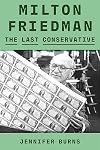
A biography of the Nobelist economist Milton Friedman (1912-2006), widely regarded as one of the most well-known and influential economists of the last 100 years. Those seeking a compelling portrait of the man behind the theory will likely be disappointed. He was an economist who mainly lived the sort of life one would expect an economist to live, which is to say frankly somewhat boring. Unlike his fellow subject of a biography by author show more target="_top">Jennifer Burns, novelist and philosopher Ayn Rand, his story contains no salacious details of drug use and libertine sexuality, no lurid bestselling fiction. Unlike his fellow Nobelist and contemporary Washington insider Henry Kissinger, he made no grand appearances at glamorous galas in Washington, New York and Hollywood. Unlike his fellow Economics Nobelist John Nash, he never struggled with mental illness.
Instead, his personal story almost seems like a template for a Wikipedia article. Like so many of the other towering figures of 20th-century America, his immigrant parents built their own business in a major urban center and through hard work and unwavering faith in the American Dream were able to make enough money to move to the suburbs, where their son became the first in his family to attend college. He was a standout student, and he went on to be a professor and adviser in Washington. He married his university classmate Rose Director, by whom he fathered two surviving children and to whom he remained married for the last 70 years of his life, and his close circle of friends was primarily comprised of his extended family and university colleagues. Where Rand appeared on The Tonight Show Starring Johnny Carson (1962-1992), Friedman's most notable TV appearance was on his and Rose's stodgier PBS documentary series Free to Choose (1980). Friedman avoided rubbing elbows with celebrities and socialites as Kissinger did, instead preferring round table debates and international policy conferences. Burns tries to inject some color into the story by focusing on the importance of the women in his life, but even their most personal traumas receive little more than a couple of paragraphs, as much a backdrop to his story as they were background noise to him, with his nose buried in academic papers and his mind laser-focused on his work.
The book succeeds less as the history of a man, then, and more as a history of Depression-to-Cold War-era economics. Here, however, the readership is limited. Although the economy is the issue of public policy which most affects the day-to-day lives of the most Americans, and both polls and election results repeatedly find the economy is the number-one issue on which they vote, those same election results also reveal the overwhelming majority of Americans have an understanding of economics that wouldn't receive a passing grade in a high-school-level course. Burns does her best to simplify the Chicago school philosophy of new classical macroeconomics, or Friedman's ideas on stabilization policy, but these are ultimately higher-level concepts which few would encounter until at least their second semester at a community college.
Friedman's life work therefore requires a degree of interest and pre-existing grasp of the material which even most readers of popular biographies simply don't possess. As a result, while it is well-written for the minority of people who would bother to attempt to read it, there is little to hold the attention of those readers who arguably most ought to read it. show less
A biography of the Nobelist economist Milton Friedman (1912-2006), widely regarded as one of the most well-known and influential economists of the last 100 years. Those seeking a compelling portrait of the man behind the theory will likely be disappointed. He was an economist who mainly lived the sort of life one would expect an economist to live, which is to say frankly somewhat boring. Unlike his fellow subject of a biography by author show more target="_top">Jennifer Burns, novelist and philosopher Ayn Rand, his story contains no salacious details of drug use and libertine sexuality, no lurid bestselling fiction. Unlike his fellow Nobelist and contemporary Washington insider Henry Kissinger, he made no grand appearances at glamorous galas in Washington, New York and Hollywood. Unlike his fellow Economics Nobelist John Nash, he never struggled with mental illness.
Instead, his personal story almost seems like a template for a Wikipedia article. Like so many of the other towering figures of 20th-century America, his immigrant parents built their own business in a major urban center and through hard work and unwavering faith in the American Dream were able to make enough money to move to the suburbs, where their son became the first in his family to attend college. He was a standout student, and he went on to be a professor and adviser in Washington. He married his university classmate Rose Director, by whom he fathered two surviving children and to whom he remained married for the last 70 years of his life, and his close circle of friends was primarily comprised of his extended family and university colleagues. Where Rand appeared on The Tonight Show Starring Johnny Carson (1962-1992), Friedman's most notable TV appearance was on his and Rose's stodgier PBS documentary series Free to Choose (1980). Friedman avoided rubbing elbows with celebrities and socialites as Kissinger did, instead preferring round table debates and international policy conferences. Burns tries to inject some color into the story by focusing on the importance of the women in his life, but even their most personal traumas receive little more than a couple of paragraphs, as much a backdrop to his story as they were background noise to him, with his nose buried in academic papers and his mind laser-focused on his work.
The book succeeds less as the history of a man, then, and more as a history of Depression-to-Cold War-era economics. Here, however, the readership is limited. Although the economy is the issue of public policy which most affects the day-to-day lives of the most Americans, and both polls and election results repeatedly find the economy is the number-one issue on which they vote, those same election results also reveal the overwhelming majority of Americans have an understanding of economics that wouldn't receive a passing grade in a high-school-level course. Burns does her best to simplify the Chicago school philosophy of new classical macroeconomics, or Friedman's ideas on stabilization policy, but these are ultimately higher-level concepts which few would encounter until at least their second semester at a community college.
Friedman's life work therefore requires a degree of interest and pre-existing grasp of the material which even most readers of popular biographies simply don't possess. As a result, while it is well-written for the minority of people who would bother to attempt to read it, there is little to hold the attention of those readers who arguably most ought to read it. show less
Lists
Awards


You May Also Like


Associated Authors
Statistics
- Works
- 7
- Also by
- 2
- Members
- 457
- Popularity
- #53,729
- Rating
- 3.7
- Reviews
- 9
- ISBNs
- 18