
Anne Conover Heller (1950–2022)
Author of Ayn Rand and the World She Made
About the Author
Works by Anne Conover Heller
Tagged
Common Knowledge
- Birthdate
- 1950
- Date of death
- 2022-10-10
- Gender
- female
- Occupations
- editor
journalist
author - Cause of death
- cancer
- Nationality
- USA
- Associated Place (for map)
- USA
Members
Discussions
Two New Bios of Ayn Rand in Pro and Con (November 2009)
Reviews
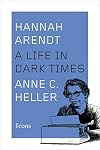
This biography of Hannah Arendt is a compact pleasure. At about 140 pages, it hits all the high notes without getting bogged down in the tangents and minutiae of life. It is part of a series I have been reading, and so far I have found much to praise in every one.
Hannah Arendt was an intellectual giant. Much of that had to do with her exceptional communications talents and charisma. She could hold an audience. Her classes in the US overflowed with freeloaders. She was a magnet for show more intellectual men at school in prewar Germany. The philosophy professor and eventual rector, one Martin Heidegger, held on to an illicit relationship with her for decades (even though he was a committed Nazi). He had the same communications powers, and wittingly or not, she followed in his masterful command of audiences. They said of both of them you could actually see them thinking. Words like intensity and flair were how others described their presentations.
Arendt grew up in a brief bubble, where Jews and women could assimilate and be woven into society. Her intellectual pursuits were encouraged; her mother was the same way. Her Judaic ancestry never interfered. Her beauty plus brains helped her glide through doors she apparently assumed would naturally be open to her, such was her upbringing. She was also lucky. She escaped Germany just before the door slammed shut. Then she escaped France just before the Nazis started shipping her kind to concentration camps. Life in New York was difficult for many years, but her constant publishing eventually led to books, speaking tours, and teaching positions. She was always controversial and thought-provoking, particularly among Jews who either abhorred her or adored her. Personally she thought her faith a minor detail in her being, of no weight or import. She was enormously critical of European Jewish leaders, which of course angered many. She was internally and eternally conflicted by Israel, helping get it going, despising its treatment of natives, and its politics. In New York City, this gained her no points.
The final straw was her book on Adolf Eichmann, who she dismissed as not having the intellect to be worth probing. This really caused the seas to part, and Arendt found herself constantly vilified, even by friends. On the other hand, it made her a worldwide attraction.
She thought of herself as employing common sense in her observations. She saw through to the truth at the bottom of the muck: “Mass unanimity is not the expression of agreement, but an expression of fanaticism and hysteria.”
If she were around today, she’d be a superstar, called a real piece of work by both fans and detractors. A life worth knowing about.
David Wineberg show less
Hannah Arendt was an intellectual giant. Much of that had to do with her exceptional communications talents and charisma. She could hold an audience. Her classes in the US overflowed with freeloaders. She was a magnet for show more intellectual men at school in prewar Germany. The philosophy professor and eventual rector, one Martin Heidegger, held on to an illicit relationship with her for decades (even though he was a committed Nazi). He had the same communications powers, and wittingly or not, she followed in his masterful command of audiences. They said of both of them you could actually see them thinking. Words like intensity and flair were how others described their presentations.
Arendt grew up in a brief bubble, where Jews and women could assimilate and be woven into society. Her intellectual pursuits were encouraged; her mother was the same way. Her Judaic ancestry never interfered. Her beauty plus brains helped her glide through doors she apparently assumed would naturally be open to her, such was her upbringing. She was also lucky. She escaped Germany just before the door slammed shut. Then she escaped France just before the Nazis started shipping her kind to concentration camps. Life in New York was difficult for many years, but her constant publishing eventually led to books, speaking tours, and teaching positions. She was always controversial and thought-provoking, particularly among Jews who either abhorred her or adored her. Personally she thought her faith a minor detail in her being, of no weight or import. She was enormously critical of European Jewish leaders, which of course angered many. She was internally and eternally conflicted by Israel, helping get it going, despising its treatment of natives, and its politics. In New York City, this gained her no points.
The final straw was her book on Adolf Eichmann, who she dismissed as not having the intellect to be worth probing. This really caused the seas to part, and Arendt found herself constantly vilified, even by friends. On the other hand, it made her a worldwide attraction.
She thought of herself as employing common sense in her observations. She saw through to the truth at the bottom of the muck: “Mass unanimity is not the expression of agreement, but an expression of fanaticism and hysteria.”
If she were around today, she’d be a superstar, called a real piece of work by both fans and detractors. A life worth knowing about.
David Wineberg show less

Life is complicated, and so is evil
Hannah Arendt: A Life in Dark Times by Anne C. Heller (New Harvest, $20).
The most recent in New Harvest Publishing’s Icons series of short biographies of giants in philosophy, science and the arts is Hannah Arendt: A Life in Dark Times by Anne C. Heller.
While it’s not comprehensive—impossible, in a mere 150 pages—it does provide a very good overview of Arendt’s remarkable and controversial life. Heller does an excellent job of covering the show more outrage that surrounded Arendt’s reporting on the trial of Nazi war criminal Adolf Eichmann for the New Yorker (later expanded and published as Eichmann in Jerusalem: The Banality of Evil), as well as illuminating the posthumous discovery of her affair with Nazi philosopher Martin Heidegger, situating both in Arendt’s life experience.
This is a well-written and concise introduction to a fascinating life.
(Reviewed on Lit/Rant: www.litrant.tumblr.com) show less
Hannah Arendt: A Life in Dark Times by Anne C. Heller (New Harvest, $20).
The most recent in New Harvest Publishing’s Icons series of short biographies of giants in philosophy, science and the arts is Hannah Arendt: A Life in Dark Times by Anne C. Heller.
While it’s not comprehensive—impossible, in a mere 150 pages—it does provide a very good overview of Arendt’s remarkable and controversial life. Heller does an excellent job of covering the show more outrage that surrounded Arendt’s reporting on the trial of Nazi war criminal Adolf Eichmann for the New Yorker (later expanded and published as Eichmann in Jerusalem: The Banality of Evil), as well as illuminating the posthumous discovery of her affair with Nazi philosopher Martin Heidegger, situating both in Arendt’s life experience.
This is a well-written and concise introduction to a fascinating life.
(Reviewed on Lit/Rant: www.litrant.tumblr.com) show less
“Things looked different after she had looked at them”
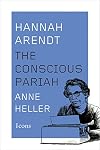
Short but deeply fascinating, this book about Hannah Arendt covers both her life and the evolution of her thinking in less than 140 pages. It opens with the controversy surrounding her coverage of the 1961 trial of Nazi officer Adolf Eichmann in Israel, and her pithy but divisive “banality of evil” observation, then cycles back to her turn of the century childhood in Prussia, where her highly educated, politically liberal, show more religiously agnostic family had established itself several generations previously after leaving czarist Russia.
Even as a child it was obvious Arendt possessed a prodigious intellect, but unsurprisingly that did not make her life easy. Her father died when she was seven and she had to flee Nazi Germany as a young woman, resettling first in Paris and later in the United States. Before leaving Germany she studied and had an affair with the Nazi involved philosopher Martin Heidegger, a relationship she had trouble renouncing even as she embraced her Jewish roots more and more avidly.
I was drawn right into this book. It was refreshing to read about someone devoted to the life of the mind rather than the pursuit of fame, political power, or wealth. Even though the book is not long it doesn’t feel slight because it plunges right into the heart of Arendt’s life and intellectual development. I have never read a book so copiously footnoted, all the author’s sources are cited right there in the text, which I appreciate but it did take some initial effort to not be distracted by them.
“Things looked different after she had looked at them . . . Thinking was her passion, and thinking for her was a moral activity.” Philosopher Hans Jonas on Hannah Arendt show less
Short but deeply fascinating, this book about Hannah Arendt covers both her life and the evolution of her thinking in less than 140 pages. It opens with the controversy surrounding her coverage of the 1961 trial of Nazi officer Adolf Eichmann in Israel, and her pithy but divisive “banality of evil” observation, then cycles back to her turn of the century childhood in Prussia, where her highly educated, politically liberal, show more religiously agnostic family had established itself several generations previously after leaving czarist Russia.
Even as a child it was obvious Arendt possessed a prodigious intellect, but unsurprisingly that did not make her life easy. Her father died when she was seven and she had to flee Nazi Germany as a young woman, resettling first in Paris and later in the United States. Before leaving Germany she studied and had an affair with the Nazi involved philosopher Martin Heidegger, a relationship she had trouble renouncing even as she embraced her Jewish roots more and more avidly.
I was drawn right into this book. It was refreshing to read about someone devoted to the life of the mind rather than the pursuit of fame, political power, or wealth. Even though the book is not long it doesn’t feel slight because it plunges right into the heart of Arendt’s life and intellectual development. I have never read a book so copiously footnoted, all the author’s sources are cited right there in the text, which I appreciate but it did take some initial effort to not be distracted by them.
“Things looked different after she had looked at them . . . Thinking was her passion, and thinking for her was a moral activity.” Philosopher Hans Jonas on Hannah Arendt show less
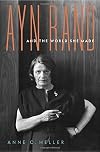
A very well-researched biography of this writer and philosopher. I listened to it as an audiobook (did not see the listing here on LT at this time), and discovered an author willing to tackle the myth of Ayn Rand. Heller digs right in with Rand's growing up as a Jewish merchant-class girl, different from her sisters right from the start, in Russia before the Revolution. Details about her family's life under Soviet occupation are documented, as are the difficulties faced by many of their show more class during this time. Her ability to immigrate to family in the US is fortunate for her; she lives with cousins in NY and Chicago, and it is in NY that she becomes infatuated with skyscrapers. Unfortunately for her family in the US and still in the Soviet Union, she neither pays her debts that she accumulated in the US, nor does she seek to get her family out of their own hell. Heller is quite comfortable calling Rand out on her narcissism and on her re-writing of her own history; Rand wrote that it is every man for himself and no one should help another while living quite a different reality. She also manages to outstay her visa, causing her to be an illegal immigrant until she marries an American and is able to live in the US as a legal citizen.
I read The Fountainhead a number of years back, and liked the idea of sticking to one's dreams and visions even if it makes you an outsider. The rape scene was horrible to read, and Heller does articulate the passage as an example of Rand's infatuation with her strong male characters, and I was also struck in Fountainhead with the radio host who does not believe his own schtick of ugliness countered by the "everyman" architect who thinks that the host's word is gospel. Quite a precursor to modern alt-right radio.
Good, well-researched biography, lots of good information, and worth borrowing a copy. show less
I read The Fountainhead a number of years back, and liked the idea of sticking to one's dreams and visions even if it makes you an outsider. The rape scene was horrible to read, and Heller does articulate the passage as an example of Rand's infatuation with her strong male characters, and I was also struck in Fountainhead with the radio host who does not believe his own schtick of ugliness countered by the "everyman" architect who thinks that the host's word is gospel. Quite a precursor to modern alt-right radio.
Good, well-researched biography, lots of good information, and worth borrowing a copy. show less
Awards


You May Also Like


Statistics
- Works
- 2
- Members
- 593
- Popularity
- #42,348
- Rating
- 4.0
- Reviews
- 14
- ISBNs
- 20
- Languages
- 1