
Kim Phillips-Fein
Author of Invisible Hands: The Making of the Conservative Movement from the New Deal to Reagan
About the Author
Works by Kim Phillips-Fein
Invisible Hands: The Making of the Conservative Movement from the New Deal to Reagan (2009) 238 copies, 4 reviews
Fear City: New York's Fiscal Crisis and the Rise of Austerity Politics (2017) 183 copies, 16 reviews
What's Good for Business: Business and American Politics since World War II (2012) 15 copies, 1 review
Associated Works
Boob Jubilee: The Mad Cultural Politics of the New Economy: Salvos from the Baffler (2003) — Contributor — 86 copies
American Capitalism: Social Thought and Political Economy in the Twentieth Century (2006) — Contributor — 20 copies
Tagged
Common Knowledge
Members
Reviews
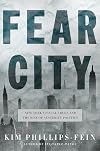
Growing up in the NYC area, I have long been aware of the fiscal crisis of the 1970s, but never knew many details about it. Fear City gives a good education on the topic. It is well written, readable, and much less dry than you would expect of a 400-page book about fiscal policy. Phillips-Fein packs in a lot of information while making the story interesting and at times even suspenseful. She goes into great detail on both the political machinations at the city, state, and federal levels, as show more various factions tried to keep the city afloat and debated how it should solve its problems; and also covers how the austerity measures affected the city's people and communities and how some of them tried to fight back.
My main criticism relates to the author's biases. She pretty clearly is critical of the bankers and conservatives who insisted that the city cut back on services in order to be able to pay its debts, and it's not that I disagree with that opinion per se, but she sometimes indulged in sarcastic/snarky criticisms of conservative opinions, which I found tiresome. And there were times when I wished she would present her ideas of what other path the city could have possibly taken through the crisis, rather than just criticizing the decisions that beleaguered public servants made in an extremely difficult and unprecedented situation.
That said, Fear City is definitely a worthwhile read for anyone interested in New York history and urban fiscal policy. show less
My main criticism relates to the author's biases. She pretty clearly is critical of the bankers and conservatives who insisted that the city cut back on services in order to be able to pay its debts, and it's not that I disagree with that opinion per se, but she sometimes indulged in sarcastic/snarky criticisms of conservative opinions, which I found tiresome. And there were times when I wished she would present her ideas of what other path the city could have possibly taken through the crisis, rather than just criticizing the decisions that beleaguered public servants made in an extremely difficult and unprecedented situation.
That said, Fear City is definitely a worthwhile read for anyone interested in New York history and urban fiscal policy. show less
 This review was written for LibraryThing Early Reviewers.
The book's first sentence: "On October 30,1975, the New York Daily News printed the most famous headline in its history: FORD TO CITY: DROP DEAD."
Indeed, one of the themes of the book is the interplay of the Federal government and the city/state governments in the management of New York City's debt crisis in the 1970s. That crisis came about, the book lucidly demonstrates, by generous city spending on social services and city workers at a time when the city's revenue base was shrinking. show more Politicians and city employee unions agreed on only one solution to the gap between revenue and spending - borrow. The bills finally came due in 1975. The market stopped buying New York City bonds.
The author, a history professor living in New York City, writes extremely well, and what could have been a dry, number crunching story is, instead, a great human drama. For the most part she sets out the well-sourced facts chronologically and without bias. She does, however, at the end of the narrative, offer her views about the price that was paid for the debt 'fix'.
"[New York City's debt crisis] . . . marked the beginning of a new age. A corporate and financial elite, along with technocratic politicians responsive to that group, gained control over New York. They could be counted on to prioritize the interests of business and the wealthy; indeed, they often regarded that as the only way to help the city. This new perspective closed off an older vision of New York, shutting down debate over whether city government should seek to guarantee a set of social rights for all. New York City still has not transcended this constriction of its politics. Neither has the nation as a whole."
The fix was the creation, in 1976, of the Municipal Assistance Corporation (MAC). That was a state agency that sold bonds and used the proceeds to pay the city's debts and at the same time to force the city drastically to reduce spending on, for example, subsidized subway fares, multiple fire houses and companies, free tuition at City College, a massive police force, health clinics and outdated city hospitals, and excessive numbers of city employees (in 1970 eleven out of every 100 people employed in New York City worked for the municipal government).
The changes forced by MAC took decision making out of the hands of old-time ward healing pols, and from well intentioned, but free spending, liberal politicians like John Lindsay and Abe Beame, and gave it to businessmen and technocrats. Mayors Giuliani and Bloomberg reflected the new ethos.
The book makes city governance as interesting and page turning as Robert Caro did in THE POWER BROKER (1975). show less
Indeed, one of the themes of the book is the interplay of the Federal government and the city/state governments in the management of New York City's debt crisis in the 1970s. That crisis came about, the book lucidly demonstrates, by generous city spending on social services and city workers at a time when the city's revenue base was shrinking. show more Politicians and city employee unions agreed on only one solution to the gap between revenue and spending - borrow. The bills finally came due in 1975. The market stopped buying New York City bonds.
The author, a history professor living in New York City, writes extremely well, and what could have been a dry, number crunching story is, instead, a great human drama. For the most part she sets out the well-sourced facts chronologically and without bias. She does, however, at the end of the narrative, offer her views about the price that was paid for the debt 'fix'.
"[New York City's debt crisis] . . . marked the beginning of a new age. A corporate and financial elite, along with technocratic politicians responsive to that group, gained control over New York. They could be counted on to prioritize the interests of business and the wealthy; indeed, they often regarded that as the only way to help the city. This new perspective closed off an older vision of New York, shutting down debate over whether city government should seek to guarantee a set of social rights for all. New York City still has not transcended this constriction of its politics. Neither has the nation as a whole."
The fix was the creation, in 1976, of the Municipal Assistance Corporation (MAC). That was a state agency that sold bonds and used the proceeds to pay the city's debts and at the same time to force the city drastically to reduce spending on, for example, subsidized subway fares, multiple fire houses and companies, free tuition at City College, a massive police force, health clinics and outdated city hospitals, and excessive numbers of city employees (in 1970 eleven out of every 100 people employed in New York City worked for the municipal government).
The changes forced by MAC took decision making out of the hands of old-time ward healing pols, and from well intentioned, but free spending, liberal politicians like John Lindsay and Abe Beame, and gave it to businessmen and technocrats. Mayors Giuliani and Bloomberg reflected the new ethos.
The book makes city governance as interesting and page turning as Robert Caro did in THE POWER BROKER (1975). show less
This review was written for LibraryThing Early Reviewers.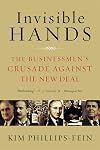
“The invisible hand of the market”, from Adam Smith’s “An inquiry into the nature and causes of the wealth of nations” is a beloved sound bite used whenever a politician wants to block or eliminate a law they see as detrimental “to business”. Like most of the beloved snippets from Smith’s most famous book it is taken out of context and misused. Kim Phillips-Fein’s book “Invisible hands : the businessmen's crusade against the New Deal” published in 2009 uses the phrase show more in the title of her book both ironically, she shows us just how little trust business men have in the market and literally, for the organized forces working to influence government policies to favor the wealthy and to stay hidden in the background.
Phillips-Fein’s subtitle seems to imply that businessmen only became active politically after after Franklin Delano Roosevelt managed to get his “New Deal” passed into law. In fact she reveals that organized political lobby groups, although they were not called that at the time, existed as far back as the late 19th century and the “National Manufacturers Association”, an anti-labor union group. Conservatism in the first decades of the 20th century did little to hide that it favored only the wealthy, a tiny part of the voting population.
Sinclair Lewis is often, incorrectly, attributed as the source for “When fascism comes to America it will be carrying a Bible and wrapped in the flag”. Whether you accept the connection between fascism and corporate political power the pro-wealth conservatives realized that religion and patriotism were good cover for policies that only served the rich. The DuPonts’ “American Liberty League” was one of the first attempts to cloak their movement in the tapestry of patriotism. Conservative activists formed “religious organizations” to push the idea that Jesus was a capitalist. The founder of these organizations confessed after retiring that he could have cared less about religion, he just wanted to save the wealthy. The group's true purposes were not that well disguised. One legislator referred to the Dupont organization as the “American Cellophane League” because, he said, it was made by the DuPonts and you could see right through it.
Then came Barry Goldwater. His campaign preyed on working class discomfort with post World War Two social changes and professed that conservatives were “protecting traditional values”. What Goldwater was protecting is best expressed in something he wrote, “I was born with a silver spoon in my mouth and I will do whatever it takes to keep it there.” The social turmoil of the 1960’s and 70s, Civil Rights, Feminism, anti-war protests, political scandals, the oil embargo, all set the stage for Ronald Reagan and Lee Atwater’s Southern Strategy and the divisive politics of today.
Phillips-Fein’s book was an eye opener for me, I thought the politics of wealth was a modern problem. I can’t recommend the book enough. It exposes the “Invisible Hands” that work to hold down the majority and make the wealthy even richer. show less
Phillips-Fein’s subtitle seems to imply that businessmen only became active politically after after Franklin Delano Roosevelt managed to get his “New Deal” passed into law. In fact she reveals that organized political lobby groups, although they were not called that at the time, existed as far back as the late 19th century and the “National Manufacturers Association”, an anti-labor union group. Conservatism in the first decades of the 20th century did little to hide that it favored only the wealthy, a tiny part of the voting population.
Sinclair Lewis is often, incorrectly, attributed as the source for “When fascism comes to America it will be carrying a Bible and wrapped in the flag”. Whether you accept the connection between fascism and corporate political power the pro-wealth conservatives realized that religion and patriotism were good cover for policies that only served the rich. The DuPonts’ “American Liberty League” was one of the first attempts to cloak their movement in the tapestry of patriotism. Conservative activists formed “religious organizations” to push the idea that Jesus was a capitalist. The founder of these organizations confessed after retiring that he could have cared less about religion, he just wanted to save the wealthy. The group's true purposes were not that well disguised. One legislator referred to the Dupont organization as the “American Cellophane League” because, he said, it was made by the DuPonts and you could see right through it.
Then came Barry Goldwater. His campaign preyed on working class discomfort with post World War Two social changes and professed that conservatives were “protecting traditional values”. What Goldwater was protecting is best expressed in something he wrote, “I was born with a silver spoon in my mouth and I will do whatever it takes to keep it there.” The social turmoil of the 1960’s and 70s, Civil Rights, Feminism, anti-war protests, political scandals, the oil embargo, all set the stage for Ronald Reagan and Lee Atwater’s Southern Strategy and the divisive politics of today.
Phillips-Fein’s book was an eye opener for me, I thought the politics of wealth was a modern problem. I can’t recommend the book enough. It exposes the “Invisible Hands” that work to hold down the majority and make the wealthy even richer. show less
Not long before seeing “Fear City” on LT’s Early Reviewers list, I had watched Adam Curtis’s 2016 film “Hypernormalisation,” which starts with two local but globally significant moments in 1975, one in Damascus and one in New York City. The latter was in deep debt and on the brink of collapse, and the film presents footage of the city issuing bonds in return for loans – a meeting where no banks showed up. Curtis saw this as the moment when financial institutions took power away show more from politicians and started to run society themselves. The film veers from there to analyze the effects of this “experiment” in the ensuing decades, but it had me wondering about the details of NYC’s fiscal crisis.
Kim Phillips-Fein’s “Fear City” details “New York’s fiscal crisis and the rise of austerity politics” (the book’s subtitle) so thoroughly that often I found my eyes glazing over, lost in the economic and political minutia. Even though the material throughout was not ideally suited to this reader, I applaud Phillips-Fein for dismantling some myths (in regards to the causes of the crisis as well as how the city navigated it and rose out of it) and painting as thorough and clear a picture as is possible all these decades later. It is an important history at an appropriate time, as conservative politicians and the corporations they appear to represent more than the public push toward even greater austerity in the wider American government.
Both Curtis and Phillips-Fein correctly assert that we – in NYC and elsewhere – are dealing with the effects of the mid-1970s crisis: income inequality and reduced government spending in social services, to name but two areas. Yet New York remains an island of sorts in the United States, with its relatively strong public sector and social welfare. Paradoxically, the city is home to some of the richest people in the world and is a place for billionaires from around the world to park their money via real estate. As such, the city is a living, breathing symbol of the struggles that started, in part, 42 years ago. show less
Kim Phillips-Fein’s “Fear City” details “New York’s fiscal crisis and the rise of austerity politics” (the book’s subtitle) so thoroughly that often I found my eyes glazing over, lost in the economic and political minutia. Even though the material throughout was not ideally suited to this reader, I applaud Phillips-Fein for dismantling some myths (in regards to the causes of the crisis as well as how the city navigated it and rose out of it) and painting as thorough and clear a picture as is possible all these decades later. It is an important history at an appropriate time, as conservative politicians and the corporations they appear to represent more than the public push toward even greater austerity in the wider American government.
Both Curtis and Phillips-Fein correctly assert that we – in NYC and elsewhere – are dealing with the effects of the mid-1970s crisis: income inequality and reduced government spending in social services, to name but two areas. Yet New York remains an island of sorts in the United States, with its relatively strong public sector and social welfare. Paradoxically, the city is home to some of the richest people in the world and is a place for billionaires from around the world to park their money via real estate. As such, the city is a living, breathing symbol of the struggles that started, in part, 42 years ago. show less
This review was written for LibraryThing Early Reviewers.Lists
Awards


You May Also Like


Associated Authors
Statistics
- Works
- 5
- Also by
- 3
- Members
- 446
- Popularity
- #54,978
- Rating
- 4.0
- Reviews
- 21
- ISBNs
- 19
