
Kevin M. Kruse
Author of One Nation Under God: How Corporate America Invented Christian America
About the Author
Kevin M. Kruse is Assistant Professor of History at Princeton University
Image credit: Kevin Kruse in 2015 [credit: Miller Center]
Works by Kevin M. Kruse
One Nation Under God: How Corporate America Invented Christian America (2015) 573 copies, 10 reviews
Myth America: Historians Take On the Biggest Legends and Lies About Our Past (2022) — Editor; Contributor — 281 copies, 5 reviews
Associated Works
The 1619 Project {The New York Times Magazine, August 18, 2019} (2019) — Contributor — 137 copies, 5 reviews
Tagged
Common Knowledge
- Birthdate
- 1972
- Gender
- male
- Occupations
- historian
professor - Organizations
- Princeton University (assistant professor of history)
Members
Reviews
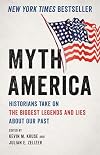
Amateur history written by non-historians with obvious and blatant political bias might just be the most socially harmful genre of writing in existence. This is history at its worst; oversimplified accounts with conclusions established ahead of time and facts either ignored or invented to support the desired interpretation.
Although it is true that historical facts and events often lend themselves to varying interpretations, it is also true that there exists a rich literature of research from show more credible professionals that limit the scope of reasonable interpretations in history.
It is only when non-specialists deviate from this consensus—often for what are clearly political motivations—that serious problems arise, and, unfortunately, we see this most often and most egregiously from the political right. Many conservatives have become so disconnected from reality that the only possible way to compete in the marketplace of ideas more broadly—and historical writing more specifically—is to cast doubt on legitimate institutions of learning, research, and communication. It’s no surprise, then, that universities, the media, and the institutions of science itself have all come under attack. For those on the right, conservatives aren’t crazy; EVERYONE ELSE is part of some vast global conspiracy.
A good example of blatant conservative political bias was President Trump’s 1776 Commission, which promised a version of history that would enable “patriotic education.” The only problem: the authors of the final “1776 report” included NO American historians. This is like creating a task force to study a particular disease or disorder and recruiting a team that lacks a single medical doctor—opting instead for non-licensed homeopathic healers.
That’s why Myth America is so critical for people to read; it’s a collection of essays from actual historians—i.e., people who know what they’re talking about because they’ve spent their entire lives studying historical sources, not having propaganda pieces ghost-written for them—debunking common myths spread largely by non-historians. It’s an opportunity to actually learn about the complexities of history that may or may not align with your preconceived beliefs.
What is so striking about the essays might be the fact that modern conservative arguments—consisting largely of conspiracy- and fear-mongering and blatant xenophobia and racism—are nothing new. The names and targets have changed, but the plot is the same.
In the 19th century, for example, it was Irish Catholics that triggered conservative fear and resentment; in the 20th century, it was Asians and Eastern Europeans; and in the 21st century, Muslims and Mexicans. So while many people celebrate the US as a “country of immigrants” and welcome the benefits of a diverse population, there has always been an undercurrent of racism and xenophobia that has largely defined American conservatism. These essays make this inescapable fact abundantly clear.
Several other conservative myths circulate among the less-informed or hyper-partisan. Myths such as: the US is not a democracy; the New Deal and Great Society were failures; the Civil War was not primarily fought over slavery; Confederate monuments are not primarily about the celebration of white supremacy; socialism is un-American; free enterprise is part of the Constitution; free markets can solve all problems; and voter fraud is not imaginary.
Instead, you’ll learn things like:
- The history of socialism in the US, and the socialists that campaigned strongly for changes, are largely responsible for progressive policies such as women’s suffrage, the minimum wage, workplace safety and overtime laws, expanded health insurance, and civil rights. Once considered radical ideas, who would dare call for these policies to be reversed now?
- Policies like Social Security and Medicare, while initially labeled as “socialist” and “un-American” by conservatives, turned out to be among the nation’s most popular policies no politician would now dare touch.
- There are countless historical sources showing that Confederate monuments were erected specifically to promote the continuation of white supremecist ideology.
- In surveys, two-thirds of borderland residents (along the US/Mexico border) reported that they “absolutely” did not want Trump’s wall to get built, while another 10 percent thought that it “probably” should not get built.
- The argument that World War II ended the Depression is an argument that the New Deal should have been BIGGER. It was federal spending during the war that stimulated the economy, so as the author wrote, “If federally created jobs building tanks and airplanes could wipe out the Depression, so could federally created jobs building schools and roads.”
- Ronald Reagan famously said, “Lyndon Johnson declared war on poverty, and poverty won,” in reference to LBJ’s Great Society program. But here’s the thing: as the author states, “Even without accounting for near-cash assistance, the national poverty rate declined from 20 percent to 12 percent under LBJ’s watch.” The number never moved under Reagan. This shows how easy it is to spread myths through soundbites that have nothing to do with reality.
- Claims of voter fraud are not only unfounded, but thinly-veiled guises to institute voter suppression laws, of which there is a rich history in the US. True to form, conservatives cast blame on others for what they themselves are doing; voter fraud is an issue only insofar as Republicans try to decrease voter turnout. Voter fraud in the form claimed by conservatives is imaginary; as GOP attorney Benjamin Ginsberg, who had spent four decades litigating election cases for the Republicans, admitted, “proof of systematic fraud has become the Loch Ness Monster of the Republican Party. People have spent a lot of time looking for it, but it doesn’t exist.” A federal judge also called Trump’s claims of rampant voter fraud to be based on “levels of hearsay” so “speculative” as to be “fantastical.”
You will learn all of this and much more across 20 deeply researched essays from specialists in each area.
This is not to say that the book is without problems, however. It would have been nice, for instance, to have a short bio of each author and their specializations as an intro to each essay. The quality of the essays also vary, with some more persuasive, well-researched, or balanced than others. There’s also the possibility that those more versed in history will view some of these myths as so idiotic as to not be worth refuting. But, unfortunately, these are not straw man arguments; these are things conservatives actually believe.
Overall, while the execution might not be perfect, this is just the book we need to start fighting back against dangerous far-right conservative mythology, which has been and always will be nothing more than a clever guise for racism, xenophobia, and the preservation of income inequality under the name of “election integrity,” “America first,” or “state rights.” show less
Although it is true that historical facts and events often lend themselves to varying interpretations, it is also true that there exists a rich literature of research from show more credible professionals that limit the scope of reasonable interpretations in history.
It is only when non-specialists deviate from this consensus—often for what are clearly political motivations—that serious problems arise, and, unfortunately, we see this most often and most egregiously from the political right. Many conservatives have become so disconnected from reality that the only possible way to compete in the marketplace of ideas more broadly—and historical writing more specifically—is to cast doubt on legitimate institutions of learning, research, and communication. It’s no surprise, then, that universities, the media, and the institutions of science itself have all come under attack. For those on the right, conservatives aren’t crazy; EVERYONE ELSE is part of some vast global conspiracy.
A good example of blatant conservative political bias was President Trump’s 1776 Commission, which promised a version of history that would enable “patriotic education.” The only problem: the authors of the final “1776 report” included NO American historians. This is like creating a task force to study a particular disease or disorder and recruiting a team that lacks a single medical doctor—opting instead for non-licensed homeopathic healers.
That’s why Myth America is so critical for people to read; it’s a collection of essays from actual historians—i.e., people who know what they’re talking about because they’ve spent their entire lives studying historical sources, not having propaganda pieces ghost-written for them—debunking common myths spread largely by non-historians. It’s an opportunity to actually learn about the complexities of history that may or may not align with your preconceived beliefs.
What is so striking about the essays might be the fact that modern conservative arguments—consisting largely of conspiracy- and fear-mongering and blatant xenophobia and racism—are nothing new. The names and targets have changed, but the plot is the same.
In the 19th century, for example, it was Irish Catholics that triggered conservative fear and resentment; in the 20th century, it was Asians and Eastern Europeans; and in the 21st century, Muslims and Mexicans. So while many people celebrate the US as a “country of immigrants” and welcome the benefits of a diverse population, there has always been an undercurrent of racism and xenophobia that has largely defined American conservatism. These essays make this inescapable fact abundantly clear.
Several other conservative myths circulate among the less-informed or hyper-partisan. Myths such as: the US is not a democracy; the New Deal and Great Society were failures; the Civil War was not primarily fought over slavery; Confederate monuments are not primarily about the celebration of white supremacy; socialism is un-American; free enterprise is part of the Constitution; free markets can solve all problems; and voter fraud is not imaginary.
Instead, you’ll learn things like:
- The history of socialism in the US, and the socialists that campaigned strongly for changes, are largely responsible for progressive policies such as women’s suffrage, the minimum wage, workplace safety and overtime laws, expanded health insurance, and civil rights. Once considered radical ideas, who would dare call for these policies to be reversed now?
- Policies like Social Security and Medicare, while initially labeled as “socialist” and “un-American” by conservatives, turned out to be among the nation’s most popular policies no politician would now dare touch.
- There are countless historical sources showing that Confederate monuments were erected specifically to promote the continuation of white supremecist ideology.
- In surveys, two-thirds of borderland residents (along the US/Mexico border) reported that they “absolutely” did not want Trump’s wall to get built, while another 10 percent thought that it “probably” should not get built.
- The argument that World War II ended the Depression is an argument that the New Deal should have been BIGGER. It was federal spending during the war that stimulated the economy, so as the author wrote, “If federally created jobs building tanks and airplanes could wipe out the Depression, so could federally created jobs building schools and roads.”
- Ronald Reagan famously said, “Lyndon Johnson declared war on poverty, and poverty won,” in reference to LBJ’s Great Society program. But here’s the thing: as the author states, “Even without accounting for near-cash assistance, the national poverty rate declined from 20 percent to 12 percent under LBJ’s watch.” The number never moved under Reagan. This shows how easy it is to spread myths through soundbites that have nothing to do with reality.
- Claims of voter fraud are not only unfounded, but thinly-veiled guises to institute voter suppression laws, of which there is a rich history in the US. True to form, conservatives cast blame on others for what they themselves are doing; voter fraud is an issue only insofar as Republicans try to decrease voter turnout. Voter fraud in the form claimed by conservatives is imaginary; as GOP attorney Benjamin Ginsberg, who had spent four decades litigating election cases for the Republicans, admitted, “proof of systematic fraud has become the Loch Ness Monster of the Republican Party. People have spent a lot of time looking for it, but it doesn’t exist.” A federal judge also called Trump’s claims of rampant voter fraud to be based on “levels of hearsay” so “speculative” as to be “fantastical.”
You will learn all of this and much more across 20 deeply researched essays from specialists in each area.
This is not to say that the book is without problems, however. It would have been nice, for instance, to have a short bio of each author and their specializations as an intro to each essay. The quality of the essays also vary, with some more persuasive, well-researched, or balanced than others. There’s also the possibility that those more versed in history will view some of these myths as so idiotic as to not be worth refuting. But, unfortunately, these are not straw man arguments; these are things conservatives actually believe.
Overall, while the execution might not be perfect, this is just the book we need to start fighting back against dangerous far-right conservative mythology, which has been and always will be nothing more than a clever guise for racism, xenophobia, and the preservation of income inequality under the name of “election integrity,” “America first,” or “state rights.” show less
June 17, 1972.
It was the day of my marriage. By our first anniversary, the date had another meaning: the date of the Watergate break-in.
As a girl, I had seen America come together with the assassination of President Kennedy and divide over the war in Viet Nam. The sounds of my teenage years were the chants of "Hey, hey, LBJ, how many kids did you kill today," and the music of Woodstock.
I finished my education, worked, had a child, sent him to college, saw him settle in work and a house, and show more retired against the backdrop of a further dividing America.
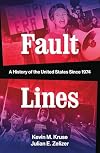
Fault Lines condenses history into paragraphs, each event eliciting a memory. I remembered it all. And the more I read the angrier I became.
In under 400 pages, Kevin M. Kruse and Justin E. Zelizer have compacted American political, social, and media history into a readable narrative.
Movements arose demanding equal rights while counter-movements strove to maintain the status quo--the authority of white males. The conflict has not resolved to a Hegelian shift to the center though, just a rising antagonism and deepening divide.
They describe how cultural shifts and disturbances impacted film and television and how the rise of the Internet and cable news shattered the common ground of national news.
For me, it was a condensation of memories. I had to wonder how a younger reader would respond. The authors are historians and Princeton University professors. They have taught this history to students.
This is a history book and not an offering of solutions; there are plenty of current books that address where to go from here. The authors state that the challenge is to "harness the intense energy that now drives us apart and channel it once again toward creating new and stronger bridges that can bring us together."
But so far, those leaders who endeavored to bridge the gap and pledge bipartisanship failed. There is no indication that the old fashioned values cherished in the past--working together for the common good, obeying the rule of law and custom, communicating, finding common ground--are reemerging. Instead, political leaders are ignoring the will of the majority, engineering ways to disenfranchise groups, with special interest group money buying political clout.
We are told that by knowing the past we can plan for the future, understanding our errors we can proactively prevent the repetition of those errors. I know that America has gone astray many times in our brief history, and the countering movements arighted our ship of state. It is my 'glass half full' hope.
I received an ARC from the publisher. My review is fair and unbiased. show less
It was the day of my marriage. By our first anniversary, the date had another meaning: the date of the Watergate break-in.
As a girl, I had seen America come together with the assassination of President Kennedy and divide over the war in Viet Nam. The sounds of my teenage years were the chants of "Hey, hey, LBJ, how many kids did you kill today," and the music of Woodstock.
I finished my education, worked, had a child, sent him to college, saw him settle in work and a house, and show more retired against the backdrop of a further dividing America.
Fault Lines condenses history into paragraphs, each event eliciting a memory. I remembered it all. And the more I read the angrier I became.
In under 400 pages, Kevin M. Kruse and Justin E. Zelizer have compacted American political, social, and media history into a readable narrative.
Movements arose demanding equal rights while counter-movements strove to maintain the status quo--the authority of white males. The conflict has not resolved to a Hegelian shift to the center though, just a rising antagonism and deepening divide.
They describe how cultural shifts and disturbances impacted film and television and how the rise of the Internet and cable news shattered the common ground of national news.
For me, it was a condensation of memories. I had to wonder how a younger reader would respond. The authors are historians and Princeton University professors. They have taught this history to students.
This is a history book and not an offering of solutions; there are plenty of current books that address where to go from here. The authors state that the challenge is to "harness the intense energy that now drives us apart and channel it once again toward creating new and stronger bridges that can bring us together."
But so far, those leaders who endeavored to bridge the gap and pledge bipartisanship failed. There is no indication that the old fashioned values cherished in the past--working together for the common good, obeying the rule of law and custom, communicating, finding common ground--are reemerging. Instead, political leaders are ignoring the will of the majority, engineering ways to disenfranchise groups, with special interest group money buying political clout.
We are told that by knowing the past we can plan for the future, understanding our errors we can proactively prevent the repetition of those errors. I know that America has gone astray many times in our brief history, and the countering movements arighted our ship of state. It is my 'glass half full' hope.
I received an ARC from the publisher. My review is fair and unbiased. show less

Princeton University professor Kevin Kruse is one of my favorite Twitter follows. He regularly posts threads that bring the historical receipts to refute whatever the misinformation talking points of the day are on that woebegone social-media quagmire. And he does it with an engaging narrative style that even non-historians can follow, and a mocking wit that feels deeply satisfying even when you know it's likely having no effect on the grifters he's targeting.
With Myth America, Kruse and his show more fellow editor Julian Zelizer (also a Princeton professor) have gathered essays from noted scholars across the spectrum of American history to refute some of the pernicious myths (some might call them lies) that are repeated ad nauseam these days. The hot-button topics include myths about "American Exceptionalism," immigration in general and the American-Mexican border in particular, the success of the Depression-era New Deal social welfare programs, the claims of voter fraud that underlie ongoing efforts to curtail voting rights, the increasing violence of police interactions with communities of color, and more.
Zelizer's essay deconstructs the myth of the Reagan Revolution, while Kruse expands a topic on which he has expended many tweets: the so-called Southern Strategy that Republicans employed to attract racist white voters in the American South that over decades resulted in the complete flip of the party from the "party of Lincoln" freeing the slaves to the "party of Trump" courting white Christian nationalists.
I got my bachelor's degree in history so I found I had at least a superficial knowledge of most of the topics covered in Myth America. For me, the value was in the details, having the bare facts put into context and buttressed by plenty of hard historical evidence. Some of the topics, such as the one on "The Magic of the Marketplace," which delves into economic theory vs economic reality, were things I had heard without understanding for years, and I felt smarter for finally getting encough context to be able to understand the topic the next time it comes up in the news. But I think the authors provide enough context to allow even readers completely unfamiliar with a topic to gain an useful understanding of it.
I'm sure there will be people who dismiss this book as partisan, a piece of liberal propaganda. I found the individual arguments to be dispassionate and matter-of-fact, a welcome breath of fresh air these days. The citations of historical evidence from primary and other trusted sources provide a foundation of facts from which fair-minded individuals can start a discussion about interpretation.
I was fortunate enough to have both the ebook and the audiobook editions, and found it most effective to listen to the essays, with a break between each to process the information I learned. During that time, I would often consult the ebook to look up the footnotes and in some cases the charts and graphs referenced in the text in order to more fully understand the topic. The audiobook used several narrators who were generally fine if uninspired choices, although I was disappointed they didn't choose male narrators for the essays written by men and female narrators for the essays written by women. Instead both the male and female narrators seemed to be assigned more or less randomly. show less
With Myth America, Kruse and his show more fellow editor Julian Zelizer (also a Princeton professor) have gathered essays from noted scholars across the spectrum of American history to refute some of the pernicious myths (some might call them lies) that are repeated ad nauseam these days. The hot-button topics include myths about "American Exceptionalism," immigration in general and the American-Mexican border in particular, the success of the Depression-era New Deal social welfare programs, the claims of voter fraud that underlie ongoing efforts to curtail voting rights, the increasing violence of police interactions with communities of color, and more.
Zelizer's essay deconstructs the myth of the Reagan Revolution, while Kruse expands a topic on which he has expended many tweets: the so-called Southern Strategy that Republicans employed to attract racist white voters in the American South that over decades resulted in the complete flip of the party from the "party of Lincoln" freeing the slaves to the "party of Trump" courting white Christian nationalists.
I got my bachelor's degree in history so I found I had at least a superficial knowledge of most of the topics covered in Myth America. For me, the value was in the details, having the bare facts put into context and buttressed by plenty of hard historical evidence. Some of the topics, such as the one on "The Magic of the Marketplace," which delves into economic theory vs economic reality, were things I had heard without understanding for years, and I felt smarter for finally getting encough context to be able to understand the topic the next time it comes up in the news. But I think the authors provide enough context to allow even readers completely unfamiliar with a topic to gain an useful understanding of it.
I'm sure there will be people who dismiss this book as partisan, a piece of liberal propaganda. I found the individual arguments to be dispassionate and matter-of-fact, a welcome breath of fresh air these days. The citations of historical evidence from primary and other trusted sources provide a foundation of facts from which fair-minded individuals can start a discussion about interpretation.
I was fortunate enough to have both the ebook and the audiobook editions, and found it most effective to listen to the essays, with a break between each to process the information I learned. During that time, I would often consult the ebook to look up the footnotes and in some cases the charts and graphs referenced in the text in order to more fully understand the topic. The audiobook used several narrators who were generally fine if uninspired choices, although I was disappointed they didn't choose male narrators for the essays written by men and female narrators for the essays written by women. Instead both the male and female narrators seemed to be assigned more or less randomly. show less
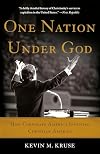
A highly researched investigation into the origins of American civic religion as currently manifest in its emphasis on the "Judeo-Christian" tradition and particularly the theme of "One Nation Under God."
Kruse writes books with explosive subtitles with provocative theses that are laid out with impressive detail and saturated with primary source quotations. While most attempt to make sense of America's "civic deism" beginning in the 1950s, Kruse goes back to the 1930s with the coordination show more between certain religious leaders who espoused a "Christian libertarianism" and who found the New Deal to be pagan socialism and the corporate titans of the day who were looking for some good PR and image rehabilitation. The story centered on Fifield and Vereide and their promotions interweaving "Judeo-Christianity," "freedom of association," "free markets," and the like, and all in contrast to the current government which to them was socialist, pagan, and threatening these values.
By the 1950s they found their man in Eisenhower, who very much was about developing a more religious character to the nation. Kruse lays out exactly how Eisenhower promoted a "civic deism," encouraging religious belief and participation, "whatever it was." Yes, it was critiqued for its hollowness and vacuousness, but the appeal worked. All the forces behind the "Christian libertarianism" of the 30s and 40s supported Eisenhower, and Eisenhower responded with all kinds of appeals for civic religion: America became "one nation under God," in contrast to the godless Communists; Eisenhower promoted the National Prayer Breakfast; all kinds of pageantry was on display, often funded by corporate titans behind the scenes, espousing the strength of America as its faith, with few being confused about the nature of that faith: somewhat Jewish, but very much Christian. The message was sent, and heard loud and clear: to be a good American meant to have a faith in God, particularly in Christianity. Religious participation increased to a heretofore unseen level in America, and one which would never be eclipsed.
And yet Eisenhower was a bit of a "poison pill" for the "Christian libertarians," because he had no interest in dismantling the New Deal state. Instead, the very things the "Christian libertarians" were trying to paint as pagan and socialist, and their skepticism of the government, was instead "baptized" and made part of this "Christian nation" and its ideology. Whereas promoting this civic deistic religion was a "right wing" thing to do in the 30s and 40s, it lost its partisan association in the 50s and became a bipartisan project. Kruse details how "under God" was added to the pledge at this time and the establishment of "In God We Trust" as the national motto.
Kruse then describes the limits of this civic religion as it would become manifest in the 50s and 60s. Generic appeals to being under God were one thing. Gideons pushing the KJV on schoolchildren was perfectly fine to many, but deeply offensive to Jewish people, Catholics, and a few other groups. The imposition of a particular prayer in the state of New York led to the beginning of questioning about prayer and devotional time in schools; it would soon be entirely dismantled. Kruse does well at documenting, in detail, the response to these actions, especially the advancement of a school prayer amendment to the Constitution, and how the fault line developed between the institutional heads who generally spoke for Christian denominations and the "common man" and the "common preacher" who did not maintain the same fears or concerns.
Kruse then compares and contrasts the Eisenhower and Nixon administrations, demonstrating how the latter consciously attempted to turn back the clock, as if 1960-1968 did not exist, with Billy Graham prominent in his activities, a religious service in the East Wing of the White House, and a very deliberate appeal to the conservative religious voter. But Kruse demonstrates well that it was no longer unifying the nation, but a source of division. Kruse ends his main thesis in this period before 1972, but in an epilogue brings the story to the Obama years: the rise of Reagan, the faith talk of Bush I, Clinton, Bush II, and Obama, and all of it coming back to the development and advancement of the civil deistic religion over this period from 1935 to 1955.
There is a lot here worthy of consideration. Kruse does well at showing that while "Christian libertarianism" was one way of looking at Jesus, it was by no means the only one; FDR had a Christian faith, and associated his New Deal work with that faith. One could imagine an America in which the social safety net was understood in Christian terms and lauded and valued as such. It is worth noting that Fifield may have been politically right-wing but theologically was liberal. He rejected those aspects of the Gospel story that did not fit his libertarian and free market conceptions. While today those who are religiously liberal tend to do the opposite, and emphasize Jesus' concern for the oppressed, it's a good reminder that once one is untethered from the text one can go in a host of directions and in the end distort what God has made known in Jesus.
Kruse provides great benefit in providing an often unacknowledged dimension in the explosion of religiosity in the postwar period. No doubt there would have still been a resurgence in faith even if there were not this sustained "marketing" of civic deism by the Eisenhower administration; nevertheless, what Eisenhower wrought has implications which last until today. The message, again, was that a good American goes to church. The driver was not faith but patriotism and citizenship. Throughout faith was secondary to the American project, and it has ever been thus since. To this day America has broad majorities who have faith in God; and yet, when probed, it is evident that faith is not deeply in what God has done in Jesus. It barely knows the substance of what the Bible teaches, but is very strong on the USA. It has advanced the agenda of the USA in whatever the USA has done, especially the agenda favored by conservatives. It does not handle critique of American policy or agendas well. And it certainly has not weathered the demographic battles of recent days well: American Evangelicalism today is not known as much for embodying Jesus as it is the GOP agenda, and has reached its apotheosis with the current executive, who in his life embodies almost everything which Jesus would be against. Such is almost the inevitable conclusion when conservative ideological nationalism is the driver, and faith is in the backseat.
No argument: some who came to the pews because they wanted to be good Americans learned of the Christ, repented, and followed Him faithfully. Many of their children would become immersed in Christianity and would practice it. It wasn't a terrible move. But it benefited the state, and a particular political ideology, more than it benefited the Kingdom of God in Christ, and the latter has suffered because of it.
Highly recommended for consideration. show less
Kruse writes books with explosive subtitles with provocative theses that are laid out with impressive detail and saturated with primary source quotations. While most attempt to make sense of America's "civic deism" beginning in the 1950s, Kruse goes back to the 1930s with the coordination show more between certain religious leaders who espoused a "Christian libertarianism" and who found the New Deal to be pagan socialism and the corporate titans of the day who were looking for some good PR and image rehabilitation. The story centered on Fifield and Vereide and their promotions interweaving "Judeo-Christianity," "freedom of association," "free markets," and the like, and all in contrast to the current government which to them was socialist, pagan, and threatening these values.
By the 1950s they found their man in Eisenhower, who very much was about developing a more religious character to the nation. Kruse lays out exactly how Eisenhower promoted a "civic deism," encouraging religious belief and participation, "whatever it was." Yes, it was critiqued for its hollowness and vacuousness, but the appeal worked. All the forces behind the "Christian libertarianism" of the 30s and 40s supported Eisenhower, and Eisenhower responded with all kinds of appeals for civic religion: America became "one nation under God," in contrast to the godless Communists; Eisenhower promoted the National Prayer Breakfast; all kinds of pageantry was on display, often funded by corporate titans behind the scenes, espousing the strength of America as its faith, with few being confused about the nature of that faith: somewhat Jewish, but very much Christian. The message was sent, and heard loud and clear: to be a good American meant to have a faith in God, particularly in Christianity. Religious participation increased to a heretofore unseen level in America, and one which would never be eclipsed.
And yet Eisenhower was a bit of a "poison pill" for the "Christian libertarians," because he had no interest in dismantling the New Deal state. Instead, the very things the "Christian libertarians" were trying to paint as pagan and socialist, and their skepticism of the government, was instead "baptized" and made part of this "Christian nation" and its ideology. Whereas promoting this civic deistic religion was a "right wing" thing to do in the 30s and 40s, it lost its partisan association in the 50s and became a bipartisan project. Kruse details how "under God" was added to the pledge at this time and the establishment of "In God We Trust" as the national motto.
Kruse then describes the limits of this civic religion as it would become manifest in the 50s and 60s. Generic appeals to being under God were one thing. Gideons pushing the KJV on schoolchildren was perfectly fine to many, but deeply offensive to Jewish people, Catholics, and a few other groups. The imposition of a particular prayer in the state of New York led to the beginning of questioning about prayer and devotional time in schools; it would soon be entirely dismantled. Kruse does well at documenting, in detail, the response to these actions, especially the advancement of a school prayer amendment to the Constitution, and how the fault line developed between the institutional heads who generally spoke for Christian denominations and the "common man" and the "common preacher" who did not maintain the same fears or concerns.
Kruse then compares and contrasts the Eisenhower and Nixon administrations, demonstrating how the latter consciously attempted to turn back the clock, as if 1960-1968 did not exist, with Billy Graham prominent in his activities, a religious service in the East Wing of the White House, and a very deliberate appeal to the conservative religious voter. But Kruse demonstrates well that it was no longer unifying the nation, but a source of division. Kruse ends his main thesis in this period before 1972, but in an epilogue brings the story to the Obama years: the rise of Reagan, the faith talk of Bush I, Clinton, Bush II, and Obama, and all of it coming back to the development and advancement of the civil deistic religion over this period from 1935 to 1955.
There is a lot here worthy of consideration. Kruse does well at showing that while "Christian libertarianism" was one way of looking at Jesus, it was by no means the only one; FDR had a Christian faith, and associated his New Deal work with that faith. One could imagine an America in which the social safety net was understood in Christian terms and lauded and valued as such. It is worth noting that Fifield may have been politically right-wing but theologically was liberal. He rejected those aspects of the Gospel story that did not fit his libertarian and free market conceptions. While today those who are religiously liberal tend to do the opposite, and emphasize Jesus' concern for the oppressed, it's a good reminder that once one is untethered from the text one can go in a host of directions and in the end distort what God has made known in Jesus.
Kruse provides great benefit in providing an often unacknowledged dimension in the explosion of religiosity in the postwar period. No doubt there would have still been a resurgence in faith even if there were not this sustained "marketing" of civic deism by the Eisenhower administration; nevertheless, what Eisenhower wrought has implications which last until today. The message, again, was that a good American goes to church. The driver was not faith but patriotism and citizenship. Throughout faith was secondary to the American project, and it has ever been thus since. To this day America has broad majorities who have faith in God; and yet, when probed, it is evident that faith is not deeply in what God has done in Jesus. It barely knows the substance of what the Bible teaches, but is very strong on the USA. It has advanced the agenda of the USA in whatever the USA has done, especially the agenda favored by conservatives. It does not handle critique of American policy or agendas well. And it certainly has not weathered the demographic battles of recent days well: American Evangelicalism today is not known as much for embodying Jesus as it is the GOP agenda, and has reached its apotheosis with the current executive, who in his life embodies almost everything which Jesus would be against. Such is almost the inevitable conclusion when conservative ideological nationalism is the driver, and faith is in the backseat.
No argument: some who came to the pews because they wanted to be good Americans learned of the Christ, repented, and followed Him faithfully. Many of their children would become immersed in Christianity and would practice it. It wasn't a terrible move. But it benefited the state, and a particular political ideology, more than it benefited the Kingdom of God in Christ, and the latter has suffered because of it.
Highly recommended for consideration. show less
Lists
Awards

You May Also Like


Associated Authors
Statistics
- Works
- 6
- Also by
- 3
- Members
- 1,406
- Popularity
- #18,271
- Rating
- 4.3
- Reviews
- 25
- ISBNs
- 31