
Joan Mellen (1941–2025)
Author of A Farewell to Justice: Jim Garrison, JFK's Assassination, and the Case That Should Have Changed History
About the Author
Joan Mellen is the bestselling author of twenty books, including The Great Game in Cuba, published by Skyhorse in 2013. She has written for a variety of publications, including the New York Times, Los Angeles Times, Philadelphia Inquirer, and Baltimore Sun. Mellen is a professor of English and show more creative writing at Temple University in Philadelphia. show less
Image credit: www.joanmellen.com/
Works by Joan Mellen
A Farewell to Justice: Jim Garrison, JFK's Assassination, and the Case That Should Have Changed History (2005) 82 copies, 1 review
Faustian Bargains: Lyndon Johnson and Mac Wallace in the Robber Baron Culture of Texas (2016) 19 copies
Kenji Mizoguchi 1 copy
Associated Works
Tagged
Common Knowledge
- Birthdate
- 1941-09-07
- Date of death
- 2025-06-30
- Gender
- female
- Education
- Hunter College (BA|1962)
City University of New York (MA|1964; PhD|1968) - Occupations
- professor
- Organizations
- Temple University
- Nationality
- USA
- Birthplace
- New York, New York, USA
- Places of residence
- Pennington, New Jersey, USA
- Associated Place (for map)
- USA
Members
Reviews

Although I firmly believe that unpleasant people can create great art and that we should try to judge art for itself and not for the artist's personal life, I admit to being disappointed by the huge gap between Kay Boyle as a person (especially as a mother) and as the writer who created some of my favorite work of the 1930s. In this exhaustive and exhausting biography, Joan Mellen portrays a woman who is haughty, manipulative, judgmental, didactic, and anti-intellectual, from her early years show more right up until her death at the age of 90. Simultaneously believing that a woman's role is to bear children and that she should follow her own desires regardless of those children's best interests, Boyle had five daughters and one son whose lives she proceeded to ruin at the altar of her own self-regard. Her daughter Faith, from whom Boyle had been estranged for 20 years, describes their eventual reconciliation as an uneasy one, referring to an evil quality that Boyle possessed even in old age. Ironically, Faith was the daughter who Boyle felt closest to, and whose involvement in Mel Lyman's dogmatic commune/cult devastated Boyle. As an autocrat herself, she perhaps resented the autocratic hold that Lyman had over Faith, a hold that she wielded over her other children. To make matters worse, Boyle's writing deteriorated in the 1940s and onward, as wartime privations forced her to churn out potboilers for the mass media to make ends meet. By the time she had been investigated for McCarthyism in the 1950s, her talent seemed to have utterly left her, and she spent the '60s and '70s writing leftist political screeds and mawkish homages to those of her students who lived up to her radical ideology. The last 200 or so pages of the book become a mire of repetitive snippets (Boyle protests social injustice; Boyle suffers some physical ailment that she gamely pulls through, swearing that age won't get the best of her; Boyle rewrites her diaries to self-mythologize; Boyle threatens to sue anyone who dares to question her version of history; Boyle plays her children against each other and behaves nastily to her grandchildren, etc.). By the time she dies, it comes as a relief to the reader, although the ensuing description of the revisionary eulogies read at her funeral ends the book on a discomfiting note. To her credit, Boyle does come across as a survivor, and she certainly did act on her political convictions, misguided though some of them may have been. Still, the reader is left with the image of a bullying woman who never hesitated to push her views on others, even harassing the residents in her retirement facility to join Amnesty International. Boyle's literary legacy is similarly besmirched by the decades of prodigious yet slack writing that threaten to undermine the truly innovative work that she did in the 1930s. show less

Not that I would think that being born into the "privilege"mentioned in the title imparts acumen, but surely this unfortunate ambassador's daughter could have had the situational awareness not to be taken in by --two-- criminal swindlers into long, protracted love and finance dealings. Still, it is well researched and reads very well and briskly.
A long, detailed biography revealing Boyle's extreme arrogance, unending work (8 hours a day writing for 80 years), excessive procreation, man-chasing passion, late-blooming political awareness spawned by a '50s witch-hunt, and, most importantly/tragically for her children, celebration of the unexamined inner life, all coupled with massive areas of political and economic ignorance. This mix lead to wild success, failure, and finally semi-critical rediscovery, all told in this personal show more history of the 20th Century starting with expat modernism, and then skipping thru Harold Ross NewYorkerism, fascism, McCarthyism, hippie communalism, black power, feminism (the ony one she spurned), and finally peace activism.
Note: Mellon writes with god-like authority on all matters moral and literary. Beware if you have other ideas about Boyle. show less
Note: Mellon writes with god-like authority on all matters moral and literary. Beware if you have other ideas about Boyle. show less
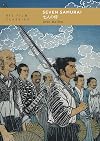
"Seven Samurai" by Joan Mellen first published in 2002 by the British Film Institute with this edition first published in 2022 by Bloomsbury for the British Film Institute with new cover artwork by Yuko Shimizu and a new Afterword to the 2022 edition by the author. Professor Joan Mellen is a trailblazing, award winning educator and author with over 50 years teaching at Temple University in Philadelphia. In 1972, she won a prize by the Mainichi Shimbun newspaper organization for her writing show more which enabled her to travel to Japan where she would personally both interview Akira Kurosawa and defend him and his film Seven Samurai against attacks from Japanese film critics and Japanese new wave directors.
The slim volume at 110 pages matches the pocket size of other volumes in the long running BFI Film Classics series and officially lists the following sections and their page numbers under Contents: Seven Samurai 7, Afterword to the 2022 edition 95, Credits 109, Bibliography 110. Additionally, there are some bolded subsections within the text as follows: Seven Samurai and Japanese History: The Individual and The Group 17, Kurosawa's Themes 24, Kurosawa Master Craftsman 37, Kurosawa and Japanese Film; Kurosawa and his Critics 71, The epic moment: Kurosawa's controversial ending 89, The images of women in the films of Akira Kurosawa 100.
Professor Mellen provides excellent analysis on Kurosawa's composition of characters illustrated with images from the film examining class, interpersonal relationships, group dynamics, and even foreshadowing the fate of characters and the samurai as a class. Professor Mellen examines the influence of Sergei Eisenstein and his montage editing style on Kurosawa with illustrative examples from the film. Unfortunately, as much as I enjoyed the majority of the text I found the book disappointing in its digressions in revisiting the feuds and attacks from the 70s at the height of film culture as well as Kurosawa's treatment of women in his films; subjects which are certainly deserving of their own essays or BFI editions, just not tacked on here. I can most assuredly agree with Professor Mellen's words on Seven Samurai that the greatness of this film is 'sublime'.
Next year in 2024 Toho Studios will mark the 70th anniversary of two its landmark and defining films "Seven Samurai" and "Gojira" known globally today as "Godzilla" and studio gates have massive murals of each film guarding the entry like the statues of deities at the gates of temples. show less
The slim volume at 110 pages matches the pocket size of other volumes in the long running BFI Film Classics series and officially lists the following sections and their page numbers under Contents: Seven Samurai 7, Afterword to the 2022 edition 95, Credits 109, Bibliography 110. Additionally, there are some bolded subsections within the text as follows: Seven Samurai and Japanese History: The Individual and The Group 17, Kurosawa's Themes 24, Kurosawa Master Craftsman 37, Kurosawa and Japanese Film; Kurosawa and his Critics 71, The epic moment: Kurosawa's controversial ending 89, The images of women in the films of Akira Kurosawa 100.
Professor Mellen provides excellent analysis on Kurosawa's composition of characters illustrated with images from the film examining class, interpersonal relationships, group dynamics, and even foreshadowing the fate of characters and the samurai as a class. Professor Mellen examines the influence of Sergei Eisenstein and his montage editing style on Kurosawa with illustrative examples from the film. Unfortunately, as much as I enjoyed the majority of the text I found the book disappointing in its digressions in revisiting the feuds and attacks from the 70s at the height of film culture as well as Kurosawa's treatment of women in his films; subjects which are certainly deserving of their own essays or BFI editions, just not tacked on here. I can most assuredly agree with Professor Mellen's words on Seven Samurai that the greatness of this film is 'sublime'.
Next year in 2024 Toho Studios will mark the 70th anniversary of two its landmark and defining films "Seven Samurai" and "Gojira" known globally today as "Godzilla" and studio gates have massive murals of each film guarding the entry like the statues of deities at the gates of temples. show less
Awards


You May Also Like


Associated Authors
Statistics
- Works
- 25
- Also by
- 2
- Members
- 612
- Popularity
- #41,085
- Rating
- 4.0
- Reviews
- 8
- ISBNs
- 60
- Languages
- 3