
Confucius
Author of The Analects
About the Author
Image credit: Traditional Potrait
Works by Confucius
The four books: The great learning; The doctrine of the mea[n]; Confucian Analects; The works of Mencius (1901) 99 copies, 5 reviews
The Complete Confucius: The Analects, The Doctrine Of The Mean, and The Great Learning with an Introduction by Nicholas Tamblyn (2016) 34 copies
Wisdom of China, The: The Sayings of Confucius, Mencius, LaoTzu, Chuang Tzu, and Lieh Tzu (1965) 33 copies
Delphi Collected Works of Confucius - Four Books and Five Classics of Confucianism (Illustrated) (Delphi Series Seven Book 13) (2016) 21 copies
Understanding the Analects of Confucius: A New Translation of Lunyu with Annotations (SUNY series in Chinese Philosophy and Culture) (2017) — Author — 17 copies, 1 review
Book of Songs (Shi-Jing): A New Translation of Selected Poems from the Ancient Chinese Anthology (Chinese Bound Classics) (2021) 16 copies
Shijing, Book of Odes: Bilingual Edition, English and Chinese 詩經: Classic of Poetry, Book of Songs (2014) — Author — 3 copies
Great Learning: Bilingual Edition, English and Chinese: A Confucian Classic of Ancient Chinese Literature (2016) 3 copies
Los libros canónicos chinos 3 copies
Doctrine of the Mean: Bilingual Edition, English and Chinese: A Confucian Classic of Ancient Chinese Literature (2016) 2 copies
Tratados morales y políticos 2 copies
Os Analectos 2 copies
The Great Books Fourth Year Volume One Confucius : the Analect Selections; Plato : the Republic Books VI-VII (1956) 2 copies
The Unwobbling Pivot and the Great Digest. Translated with notes and commentary by Ezra Pound. (1949) 2 copies
Digest of the Analects 2 copies
Chinese Philosophy: Sayings of Confucius, Sayings of Mencius, Sayings of Lao Tzu, Sayings of Chuang Tzu and Lieh Tzu (2011) 2 copies
Keskustelut = [Luen-y] 2 copies
The Chinese classics 2 copies
Kungfutses udødelige tanker 1 copy
PS431 - Aprendendo a viver 1 copy
Quadrivolume de Confúcio 1 copy
Konfutse 1 copy
La Via dell’uomo 1 copy
Konfucius 1 copy
Filosofía oriental 1 copy
Massime dai 'Dialoghi' 1 copy
Weisheiten des Konfuzius: Gespräche und Lebensphilosophie - Vollständige deutsche Ausgabe (German Edition) (2014) 1 copy
Opere (1-2-1) 1 copy
The wisdom of Confucius 1 copy
Lunyu 1 copy
Confucio: Dialoghi 1 copy
Obras 1 copy
Testi Confuciani 1 copy
Pensieri morali 1 copy
Gespräche. Illustriert 1 copy
Confucius' lære 1 copy
Sources de sagesse chinoise 1 copy
Entretiens du Maître avec ses disciples : Nouvelle Edition (La Petite Collection t. 156) (2002) 1 copy, 1 review
Confucius et Mencius : Les Quatre Livres de philosophie morale et politique de la Chine (2015) 1 copy
论语今译 (汉英对照) 1 copy
Os Analectos 1 copy
Choix de pensées 1 copy
The ethics of Confucius : the sayings of the master and his disciples upon the conduct of "The Superior man" (2013) 1 copy
Testamento di Confucio 1 copy
Basic Teachings of Confucius 1 copy
La via dell'uomo 1 copy
Shih Ching, Confucian Odes 1 copy
Living Thoughts of Confucius 1 copy
Confucianism: The ULTIMATE Collected Works of 18 Books (With Active Table of Contents) (2011) 1 copy
The Analects of Confucius (with CD) Chinese children's classic Random House(Chinese Edition) (2000) 1 copy
Confucius et Mencius. Les Quatre Livres de philosophie morale et politique de la Chine (Éd.1852) (2012) 1 copy
Cartea cântecelor 1 copy
Analects by Confucius: Timeless Wisdom on Ethics, Family, and Harmony with Traditional Commentaries (Grapevine Edition) (2022) 1 copy
Confucius Say 1 copy
TheAnalects 1 copy
The Chinese Classics, Vol. I: Confucian Analects, The Great Learning and the Doctrine of the Mean 1 copy
Un bon exemple D'HONNÊTETÉ 1 copy
The Complete Works of Confucius: The Analects, Doctrine of the Mean, The Great Learning, and More 1 copy
Veliko učenje 1 copy
論語(絲綢書收藏) 1 copy
The Proverbial Philosophy Of Confucius: Quotations From The Chinese Classics For Each Day In The Year (1895) (2009) 1 copy
The Proverbial Philosophy Of Confucius: Quotations From The Chinese Classics For Each Day In The Year (1895) (2010) 1 copy
Confucius--The Analeacts 1 copy
Associated Works
The Graphic Canon, Vol. 1: From the Epic of Gilgamesh to Shakespeare to Dangerous Liaisons (2012) — Contributor — 302 copies, 7 reviews
Oogst Der Tijden. keur uit de werken van schrijvers en dichters aller volken en eeuwen (1940) — Contributor — 12 copies
Tagged
Common Knowledge
- Canonical name
- Confucius
- Legal name
- 孔子
- Other names
- 孔夫子
- Birthdate
- 551 BCE
- Date of death
- 479 BCE
- Gender
- male
- Occupations
- teacher
philosopher
politician - Nationality
- State of Lu (Zhou Dynasty)
- Birthplace
- Nanxinzhen, Qufu, Shandong, China
- Map Location
- China
Members
Discussions
Three Chinese classics in Philosophy and Theory (January 18)
Analects of Confucius - LIMITED EDITIONS CLUB 1933 in George Macy devotees (February 2024)
Reviews
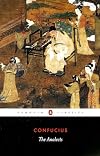
This is not a cohesive set of philosophical arguments or principles. Rather, it is a collection of philosophical fragments, across which it is possible to knit together some key ideas and to see how they are elaborated and developed. There are also some fragments that make little sense, probably because they are either taken out of context or are corrupted from the source material.
There are plenty of reviews that attempt to piece together the teachings in this collection into a more-or-less show more complete and coherent set of ideas. I’ll direct readers to those excellent reviews if that is what you want to read. Here, I want to reflect on some things that stood out for me, personally.
First, a passage that I think encapsulates what seem to be the main ideas and their interconnections:
“The Master said, ‘What is within the reach of a man’s understanding but beyond the power of his benevolence to keep is something he will lose even if he acquires it. A man may be wise enough to attain it and benevolent enough to keep it, but if he does not rule over them with dignity, then the common people will not be reverent. A man may be wise enough to attain it, benevolent enough to keep it and may govern the people with dignity, but if he does not set them to work in accordance with the rites, he is still short of perfection’” (XV.33).
I think there are a couple of points worth highlighting here. One is the importance of understanding as an outgrowth of learning. Understanding is a path to wisdom and wisdom is a path to benevolence, a personal quality encompassing a variety of related virtues, including filial piety (IV.1), tolerance, trustworthiness, quickness, generosity (XVII.6) and courage (XIV.4). In short, benevolence entails good will to others and when we either acquire the wisdom to cultivate and exercise benevolence or our actions are corrected toward benevolence via wise rulers, the result is moral, ethical, and social harmony. Acting benevolently bestows dignity upon a person that others will respect and revere and allow the benevolent “gentleman” to lead others to harmony by example, persuasion, or correction, if needed. Harmony results in the cultivation of peace and music and the arts and in the establishment of rites and rituals that people learn and that may, through adherence to and reverence, ensure the continuation of right thought and action that is preserving of harmony.
A core is benevolence or a good will to others and there are numerous passages in the analects developing this virtue. For example, “[d]o not impose on others what you yourself do not desire” (XII.2) and “The Master said, ‘Make it your guiding principle to do your best for others and to be trustworthy in what you say, and move yourself to where rightness is, then you will be exalting virtue” (XII.10). Developing and practicing benevolence is clearly a virtue that sets one on the Way. Interestingly, though, it is also noted that “’[t]he wise man is attracted to benevolence because he finds it to his advantage’” (IV.2). More on this in a moment.
Cultivating wisdom appears to be the path to benevolence that sets one on the Way as a path of moral rectitude. “The Master said, ‘Use your ears widely but leave out what is doubtful; repeat the rest with caution and you will make few mistakes. Use your eyes widely and leave out what is hazardous; put the rest into practice with caution and you will have few regrets. When in your speech your make few mistakes and in your action you have few regrets, an official career will follow as a matter of course’” (II.18). In other words, learn broadly but don’t accept everything at face value. And in applying that knowledge, exercise caution. A wise person is one who learns not just what is taught but who turns one lesson into two.
So if we take the point that cultivating benevolence is to a person’s “advantage” and that wisdom in thought and action leads to “an official career […] as a matter of course” I am led to think of the guidance here as advice for rulers and governors. And the advice doesn’t seem wholly beneficent. “To work for the things the common people have a right to and to keep one’s distance from the gods and spirits while showing them reverence can be called wisdom” (VI.22). A passage like this reads like sound advice to officials: don’t regard yourself as equivalent to or near the gods because you are not at their level. And pay attention to what common people think of as their rights, whether that is a correct perception or not, because in working toward those rights it is easier to create harmony, which protects one’s base of power. Interesting parallels here with both The Republic and The Prince.
Another stand out point for me is about the importance of rites and rituals and recitation of The Odes a collection of poetry. “The Master said, ‘The gentleman widely versed in culture but brought back to essentials by the rites can, I suppose, be relied upon not to turn against what he stood for’” (VI.27). The rites appear to have some kind of leveling effect. They are the things that all are responsible to know and to practice and in adherence to the rites is what creates a kind of equality. Practicing the rites brings us back to what is “essential,” which is seemingly another gesture to a commonality among all who practice them. So what are the rites? Rites seem to stand in for habitual practices, distillations of the Way that we practice automatically and by rote so as to make them automatic, perhaps part of a pathway to virtue that does not require conscious intervention (not unlike the perfection of Aristotelian virtue). The rites become the embodiment of what is right and good which doesn’t place such virtue in a person or in an office but makes them available to all who devote themselves to the practice. Rites are, perhaps, meditative and focal practices.
An interesting read overall. Not always enjoyable and frequently confusing, but I think I got something from it. show less
There are plenty of reviews that attempt to piece together the teachings in this collection into a more-or-less show more complete and coherent set of ideas. I’ll direct readers to those excellent reviews if that is what you want to read. Here, I want to reflect on some things that stood out for me, personally.
First, a passage that I think encapsulates what seem to be the main ideas and their interconnections:
“The Master said, ‘What is within the reach of a man’s understanding but beyond the power of his benevolence to keep is something he will lose even if he acquires it. A man may be wise enough to attain it and benevolent enough to keep it, but if he does not rule over them with dignity, then the common people will not be reverent. A man may be wise enough to attain it, benevolent enough to keep it and may govern the people with dignity, but if he does not set them to work in accordance with the rites, he is still short of perfection’” (XV.33).
I think there are a couple of points worth highlighting here. One is the importance of understanding as an outgrowth of learning. Understanding is a path to wisdom and wisdom is a path to benevolence, a personal quality encompassing a variety of related virtues, including filial piety (IV.1), tolerance, trustworthiness, quickness, generosity (XVII.6) and courage (XIV.4). In short, benevolence entails good will to others and when we either acquire the wisdom to cultivate and exercise benevolence or our actions are corrected toward benevolence via wise rulers, the result is moral, ethical, and social harmony. Acting benevolently bestows dignity upon a person that others will respect and revere and allow the benevolent “gentleman” to lead others to harmony by example, persuasion, or correction, if needed. Harmony results in the cultivation of peace and music and the arts and in the establishment of rites and rituals that people learn and that may, through adherence to and reverence, ensure the continuation of right thought and action that is preserving of harmony.
A core is benevolence or a good will to others and there are numerous passages in the analects developing this virtue. For example, “[d]o not impose on others what you yourself do not desire” (XII.2) and “The Master said, ‘Make it your guiding principle to do your best for others and to be trustworthy in what you say, and move yourself to where rightness is, then you will be exalting virtue” (XII.10). Developing and practicing benevolence is clearly a virtue that sets one on the Way. Interestingly, though, it is also noted that “’[t]he wise man is attracted to benevolence because he finds it to his advantage’” (IV.2). More on this in a moment.
Cultivating wisdom appears to be the path to benevolence that sets one on the Way as a path of moral rectitude. “The Master said, ‘Use your ears widely but leave out what is doubtful; repeat the rest with caution and you will make few mistakes. Use your eyes widely and leave out what is hazardous; put the rest into practice with caution and you will have few regrets. When in your speech your make few mistakes and in your action you have few regrets, an official career will follow as a matter of course’” (II.18). In other words, learn broadly but don’t accept everything at face value. And in applying that knowledge, exercise caution. A wise person is one who learns not just what is taught but who turns one lesson into two.
So if we take the point that cultivating benevolence is to a person’s “advantage” and that wisdom in thought and action leads to “an official career […] as a matter of course” I am led to think of the guidance here as advice for rulers and governors. And the advice doesn’t seem wholly beneficent. “To work for the things the common people have a right to and to keep one’s distance from the gods and spirits while showing them reverence can be called wisdom” (VI.22). A passage like this reads like sound advice to officials: don’t regard yourself as equivalent to or near the gods because you are not at their level. And pay attention to what common people think of as their rights, whether that is a correct perception or not, because in working toward those rights it is easier to create harmony, which protects one’s base of power. Interesting parallels here with both The Republic and The Prince.
Another stand out point for me is about the importance of rites and rituals and recitation of The Odes a collection of poetry. “The Master said, ‘The gentleman widely versed in culture but brought back to essentials by the rites can, I suppose, be relied upon not to turn against what he stood for’” (VI.27). The rites appear to have some kind of leveling effect. They are the things that all are responsible to know and to practice and in adherence to the rites is what creates a kind of equality. Practicing the rites brings us back to what is “essential,” which is seemingly another gesture to a commonality among all who practice them. So what are the rites? Rites seem to stand in for habitual practices, distillations of the Way that we practice automatically and by rote so as to make them automatic, perhaps part of a pathway to virtue that does not require conscious intervention (not unlike the perfection of Aristotelian virtue). The rites become the embodiment of what is right and good which doesn’t place such virtue in a person or in an office but makes them available to all who devote themselves to the practice. Rites are, perhaps, meditative and focal practices.
An interesting read overall. Not always enjoyable and frequently confusing, but I think I got something from it. show less
NB: This review is not for The Analects (which one couldn't review, any more than one could review the Bible). This review is for the DC Lau translation/Penguin Classics edition.
The introduction to this edition is atrocious. Fussy, stilted, and thoroughly uninspiring. Half the introduction is spent pouring over specific etymologies, which should have been saved for a "Translator's Note" aimed at scholars or for those that have an ambition to read classical Chinese. The rest is a "anorak's show more guide" to Confucius, which only hints at more interesting, human or historical interpretations.
He dismisses the notion that Confucius's worldview could be seen as authoritarian - without ever explaining who thought that or why it might be. No reference is made to the use of Confucianism as a tool by past Chinese governments, or any prior Western readings. He's like a trainspotter who's forgotten what trains are for.
The worst part is his total credulity of Confucius' saintliness, forgetting he was first-and-foremost a man. He cites Confucius dismissing contemporary Chinese music as an example of his commitment to things that are morally pure. It doesn't seem to occur to Lau that contemporary Chinese music has an "impure" reputation *because* of Confucius, or indeed - much more likely - that Confucius simply had an old-fashioned taste in music and made it a moral issue, as those in the 1950s did with Rock n Roll.
As far as the accuracy of the translation goes, I'll have to take DC Lau's account. It's perfectly readable, although the typeface is dense. The Analects themselves are of course timeless. show less
The introduction to this edition is atrocious. Fussy, stilted, and thoroughly uninspiring. Half the introduction is spent pouring over specific etymologies, which should have been saved for a "Translator's Note" aimed at scholars or for those that have an ambition to read classical Chinese. The rest is a "anorak's show more guide" to Confucius, which only hints at more interesting, human or historical interpretations.
He dismisses the notion that Confucius's worldview could be seen as authoritarian - without ever explaining who thought that or why it might be. No reference is made to the use of Confucianism as a tool by past Chinese governments, or any prior Western readings. He's like a trainspotter who's forgotten what trains are for.
The worst part is his total credulity of Confucius' saintliness, forgetting he was first-and-foremost a man. He cites Confucius dismissing contemporary Chinese music as an example of his commitment to things that are morally pure. It doesn't seem to occur to Lau that contemporary Chinese music has an "impure" reputation *because* of Confucius, or indeed - much more likely - that Confucius simply had an old-fashioned taste in music and made it a moral issue, as those in the 1950s did with Rock n Roll.
As far as the accuracy of the translation goes, I'll have to take DC Lau's account. It's perfectly readable, although the typeface is dense. The Analects themselves are of course timeless. show less
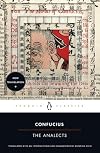
You can't review the Analects. But you can review editions of the Analects, and this one, translated and commented upon by Annping Chin, is one of the great editions of any philosophy book I've ever come across. The translation clear without being condescending, and Chin includes the Chinese text at the back of the book. Her comments are fascinating; best of all, she includes references to and quotes from the many traditional commentaries on the book, so you know not only what e.g. one show more random American translator thinks about a given passage, but what one random American professor thinks about it... and one to four of the best known Confucians and scholars of Confucius' thought. It's almost a history of Confucian thought and scholarship in itself:
E.g., in 6.22 Fan Chi asks about wisdom and humaneness. We get information about who Fan Chi was, and learn that "the Song statesman and general Fan Zhongyan, many centuries later, rephrased what Confucius says... 'To be first in worrying about the world's worries and last to enjoy its pleasures'" is to be truly committed to public service.
It's hard to express my enthusiasm for this edition, really.
One small thought about the Analects themselves: Chin's translation, more than others I've read, helped me understand the importance Confucius places on education and tradition: tradition (i.e., the rites) holds us back, while education (i.e., literature) lets us broaden ourselves. To have either without the other produces a vicious person; to have them both in perfect balance produces the best person. Were I still a scholar, I'd love to write a paper about Confucius as negative dialectician. Thankfully, I'm not. show less
E.g., in 6.22 Fan Chi asks about wisdom and humaneness. We get information about who Fan Chi was, and learn that "the Song statesman and general Fan Zhongyan, many centuries later, rephrased what Confucius says... 'To be first in worrying about the world's worries and last to enjoy its pleasures'" is to be truly committed to public service.
It's hard to express my enthusiasm for this edition, really.
One small thought about the Analects themselves: Chin's translation, more than others I've read, helped me understand the importance Confucius places on education and tradition: tradition (i.e., the rites) holds us back, while education (i.e., literature) lets us broaden ourselves. To have either without the other produces a vicious person; to have them both in perfect balance produces the best person. Were I still a scholar, I'd love to write a paper about Confucius as negative dialectician. Thankfully, I'm not. show less
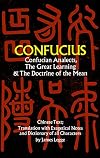
Over the past few weeks I have been reading, considering and meditating upon the classic translation of Confucius by James Legge entitled, Confucian Analects, The Great Learning and The Doctrine of the Mean. All works distilled over centuries from the teachings of Confucius who lived from 551 to 479 B.C.
Elias Canetti summed it up neatly: "The Analects of Confucius are the oldest complete intellectual and spiritual portrait of a man. It strikes one as a modern book." It also strikes this show more reader as a very un-western book and difficult to decipher. In spite of that there is a lot that Confucius' thought has in common with the wisdom of the west. One of the most famous doctrines is that of "reciprocity".
15.24 Zigong asked: "Is there any single word that could guide one's entire life?" The Master said: "Should it not be reciprocity? What you do not wish for yourself, do not do to others." (Simon Leys trans., p 77)
That is complementary to the more familiar "Golden Rule" that says one should "do unto others as one would have them do unto you." From reading the aphorisms one comes away with an appreciation for culture, family and what seems to be a conservative view of man. It also is a very humane, even humanistic, view of society.
Apparently this was just what was needed during the lifetime of Confucius as there was great change in his society. He lived during a period of acute cultural crisis. Confucius, like thinkers in the West from Socrates to Gandhi, demonstrated a confidence that in turn drew followers to him and his thought. We can thank them for what little of Confucius' thought that we have. In these books and fragments we have the distillation of his thought and it impresses me as worth meditating on. It is a treasure of humanity. show less
Elias Canetti summed it up neatly: "The Analects of Confucius are the oldest complete intellectual and spiritual portrait of a man. It strikes one as a modern book." It also strikes this show more reader as a very un-western book and difficult to decipher. In spite of that there is a lot that Confucius' thought has in common with the wisdom of the west. One of the most famous doctrines is that of "reciprocity".
15.24 Zigong asked: "Is there any single word that could guide one's entire life?" The Master said: "Should it not be reciprocity? What you do not wish for yourself, do not do to others." (Simon Leys trans., p 77)
That is complementary to the more familiar "Golden Rule" that says one should "do unto others as one would have them do unto you." From reading the aphorisms one comes away with an appreciation for culture, family and what seems to be a conservative view of man. It also is a very humane, even humanistic, view of society.
Apparently this was just what was needed during the lifetime of Confucius as there was great change in his society. He lived during a period of acute cultural crisis. Confucius, like thinkers in the West from Socrates to Gandhi, demonstrated a confidence that in turn drew followers to him and his thought. We can thank them for what little of Confucius' thought that we have. In these books and fragments we have the distillation of his thought and it impresses me as worth meditating on. It is a treasure of humanity. show less
Lists
Awards


You May Also Like


Associated Authors
Statistics
- Works
- 287
- Also by
- 2
- Members
- 10,624
- Popularity
- #2,238
- Rating
- 3.7
- Reviews
- 116
- ISBNs
- 579
- Languages
- 28
- Favorited
- 13
