
Michael D. Coogan
Author of The New Oxford Annotated Bible, New Revised Standard Version with the Apocrypha
About the Author
Michael Coogan is director of publications for the Harvard Semitic Museum and professor emeritus of religious studies at Stonehill College. He has also taught at Harvard Divinity School, Wellesley College, and elsewhere. He is the author of The Old Testament: A Historical and Literary Introduction show more to the Hebrew Scriptures, The Old Testament: A Very Short Introduction, and A Reader of Ancient Near Eastern Texts: Sources for the Study of the Old Testament and the editor of The New Oxford Annotated Bible. His most recent book is The Ten Commandments: A Short History of an Ancient Text. show less
Works by Michael D. Coogan
The New Oxford Annotated Bible, New Revised Standard Version with the Apocrypha (1991) 4,656 copies, 12 reviews
The Old Testament: A Historical and Literary Introduction to the Hebrew Scriptures (2005) 357 copies, 1 review
Eastern Religions: Hinduism, Buddism, Taoism, Confucianism, Shinto (1997) — Editor — 122 copies, 2 reviews
Scripture and Other Artifacts: Essays on the Bible and Archaeology in Honor of Philip J. King (1994) — Editor — 49 copies
God's Favorites: Judaism, Christianity, and the Myth of Divine Chosenness (2019) 30 copies, 1 review
The New Oxford Annotated Bible NRSV 2 copies
The Old Testament 1 copy
Associated Works
Tagged
Common Knowledge
- Canonical name
- Coogan, Michael D.
- Legal name
- Coogan, Michael David
- Birthdate
- 1942-07-30
- Gender
- male
- Education
- Harvard University (PhD|1971)
- Occupations
- religious studies professor
biblical scholar - Organizations
- Harvard Divinity School
Harvard Semitic Museum
Fordham University
Boston College
Wellesley College
University of Waterloo (show all 7)
Stonehill College - Awards and honors
- Stonehill's Distinguished Faculty Award (2000)
- Nationality
- UK
- Places of residence
- Concord, Massachusetts, USA
- Associated Place (for map)
- Concord, Massachusetts, USA
Members
Reviews
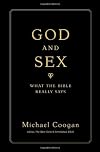
When a book is titled, or as in this case subtitled, what the bible really says that usually does not bode well. I say usually because Michael Coogan's book is a delightful exception to that rule. First off, he has chosen a fascinating topic. Second, Coogan is an excellent First Testament scholar. And thirdly, this is the perfect book to tie into my ongoing series on the theology of marriage.
Not only is sex a hot topic, it is the source of many a heated debate. Coogan does not skirt around show more any of this. His focus is clearly on what is in the text and he carefully steers us away from the culture wars so that we can give the texts a chance to speak. That is a good thing. But it is also a hard thing as the texts do not consistently present the values we cherish in our society. Over and over again Coogan points to the horrendous treatment of women in Scripture. This highlights his critique of the use of Scripture in the contemporary culture wars - that we all pick and choose what to highlight and what to ignore. If you are looking for a how to guide for Biblical sex, then you are probably not the kind of person who would be reading this book. But if you are looking for a careful study of what is actually in the texts themselves regarding human (and divine) sexuality, this is a great resource.
It is clear that Coogan's strengths are in First, sometimes called Old, Testament scholarship. (Funny note, at a few points I was reminded of the work of popular historian Thomas Cahill only to find Cahill mentioned in the Acknowledgments. It was a feeling I had based on Coogan's style. I found Coogan as easy to read as Cahill who is a very engaging writer.) He draws the reader into the scope of the text like an archeologist carefully unearths a site of antiquity. His forays into the New Testament are good, but somehow not nearly as engaging. Most of the chapters did leave me wanting more though, simply because everything is so interesting.
It is curious though that despite focusing heavily on the treatment of women, Coogan does not mention an important First Testament cultural challenge at the end of Job. In fact it is one of the few things that marks Job as being changed by his experience - the way he treats his new daughters. Here is where Coogan's insistance that we need to let the text speak as a whole becomes so important. But perhaps I find this important because it is foundational to my own strategy of working with Scriptural text. Coogan's proposed strategy is that the texts should be in dialogue with the people of faith and not simply taken as normative - otherwise we should treat women horribly and reinstate slavery. At least we should if we want to be faithful to all of Scripture.
In terms of my series Towards a Theology of Marriage. Coogan provides an excellent overview of Biblical views on marriage. And it is a mess. The following, according to the Bible, should be acceptable: women are merely property and are distributed in power broker type arrangements, a woman who is raped is not important it is an offense against her owner, married men as not prohibited from seeing prostitutes even though they may not let their daughters be prostitutes, polygamy is really the norm and if there were more women in the garden than Eve you can bet Adam would be depicted as procreating with them as well because as soon as this was an option (according to pre-historical texts) it was the norm. Of course none of this will support a high view of covenant such as I am proposing. But the good news is that we do not read Scripture this way. Even the hyper-literalists navigate their way through scripture using their preconceptions about what it 'should' say. This is why Coogan's proposal for Scripture in faith communities is so important.
If you are looking for an engaging read on a fascinating subject then look no further. If you want to read something that supports your already established notions of what the Bible says about sex - you might want to avoid this one. It will only make you mad. But for those of us who care about the text, this book is a great read. show less
Not only is sex a hot topic, it is the source of many a heated debate. Coogan does not skirt around show more any of this. His focus is clearly on what is in the text and he carefully steers us away from the culture wars so that we can give the texts a chance to speak. That is a good thing. But it is also a hard thing as the texts do not consistently present the values we cherish in our society. Over and over again Coogan points to the horrendous treatment of women in Scripture. This highlights his critique of the use of Scripture in the contemporary culture wars - that we all pick and choose what to highlight and what to ignore. If you are looking for a how to guide for Biblical sex, then you are probably not the kind of person who would be reading this book. But if you are looking for a careful study of what is actually in the texts themselves regarding human (and divine) sexuality, this is a great resource.
It is clear that Coogan's strengths are in First, sometimes called Old, Testament scholarship. (Funny note, at a few points I was reminded of the work of popular historian Thomas Cahill only to find Cahill mentioned in the Acknowledgments. It was a feeling I had based on Coogan's style. I found Coogan as easy to read as Cahill who is a very engaging writer.) He draws the reader into the scope of the text like an archeologist carefully unearths a site of antiquity. His forays into the New Testament are good, but somehow not nearly as engaging. Most of the chapters did leave me wanting more though, simply because everything is so interesting.
It is curious though that despite focusing heavily on the treatment of women, Coogan does not mention an important First Testament cultural challenge at the end of Job. In fact it is one of the few things that marks Job as being changed by his experience - the way he treats his new daughters. Here is where Coogan's insistance that we need to let the text speak as a whole becomes so important. But perhaps I find this important because it is foundational to my own strategy of working with Scriptural text. Coogan's proposed strategy is that the texts should be in dialogue with the people of faith and not simply taken as normative - otherwise we should treat women horribly and reinstate slavery. At least we should if we want to be faithful to all of Scripture.
In terms of my series Towards a Theology of Marriage. Coogan provides an excellent overview of Biblical views on marriage. And it is a mess. The following, according to the Bible, should be acceptable: women are merely property and are distributed in power broker type arrangements, a woman who is raped is not important it is an offense against her owner, married men as not prohibited from seeing prostitutes even though they may not let their daughters be prostitutes, polygamy is really the norm and if there were more women in the garden than Eve you can bet Adam would be depicted as procreating with them as well because as soon as this was an option (according to pre-historical texts) it was the norm. Of course none of this will support a high view of covenant such as I am proposing. But the good news is that we do not read Scripture this way. Even the hyper-literalists navigate their way through scripture using their preconceptions about what it 'should' say. This is why Coogan's proposal for Scripture in faith communities is so important.
If you are looking for an engaging read on a fascinating subject then look no further. If you want to read something that supports your already established notions of what the Bible says about sex - you might want to avoid this one. It will only make you mad. But for those of us who care about the text, this book is a great read. show less
 This review was written for LibraryThing Early Reviewers.
I have read a few perspectives on sexuality from a Christian point of view before, but had so far found them quite innocuous in that they did not actually make much in the way of claims (at least not well-founded claims) and in the fact that they did not challenge the Christian status quo. I was hoping that this book would be different, and it was. Unfortunately, it was different from the others on only one count.
The book is divided up by topic rather than historical time period or Bible show more order, which marks a departure from most Christian books I have read before. The author delves into the historical, cultural, religious, and linguistic ambiguities on Biblical topics related to sex, such as the status of women, marriage and divorce, forbidden sexual relations, rape and prostitution, and the idea of a wife for Yahweh. The topics seem quite well-covered and explored except for the last one. It was by far the most fascinating and radical issue in the book, but he starts discussing it not long before the book ends. Furthermore, the conclusion is non-conclusive; the author merely brings up issues but never takes an intellectual (not to mention moral) stance on them. This is most troubling on the topic of the women's issues highlighted in the first section as well as the section about rape and prostitution. The author brings up how reprehensible people would find traditional Biblical views on ideas such as consent, but does not provide a Biblical perspective on that warranted disgust nor does he state his own opinion. It made me feel as if he was subtly undermining the more humanistic views on women and women's rights that people espouse today.
Overall, I would say that the author does a fantastic job of deconstructing Christian views on sex based on the Bible, but he doesn't do much for reconstructing them afterwards. Maybe it's supposed to be the reader's job, but from a non-Christian point of view, I do wonder what the author, who is a Christian, actually thinks about some of the thornier issues he discusses. show less
The book is divided up by topic rather than historical time period or Bible show more order, which marks a departure from most Christian books I have read before. The author delves into the historical, cultural, religious, and linguistic ambiguities on Biblical topics related to sex, such as the status of women, marriage and divorce, forbidden sexual relations, rape and prostitution, and the idea of a wife for Yahweh. The topics seem quite well-covered and explored except for the last one. It was by far the most fascinating and radical issue in the book, but he starts discussing it not long before the book ends. Furthermore, the conclusion is non-conclusive; the author merely brings up issues but never takes an intellectual (not to mention moral) stance on them. This is most troubling on the topic of the women's issues highlighted in the first section as well as the section about rape and prostitution. The author brings up how reprehensible people would find traditional Biblical views on ideas such as consent, but does not provide a Biblical perspective on that warranted disgust nor does he state his own opinion. It made me feel as if he was subtly undermining the more humanistic views on women and women's rights that people espouse today.
Overall, I would say that the author does a fantastic job of deconstructing Christian views on sex based on the Bible, but he doesn't do much for reconstructing them afterwards. Maybe it's supposed to be the reader's job, but from a non-Christian point of view, I do wonder what the author, who is a Christian, actually thinks about some of the thornier issues he discusses. show less
This review was written for LibraryThing Early Reviewers.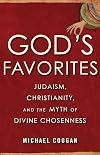
Michael Coogan takes a scholarly perspective to the Biblical claims of divine chosenness. He explains how Biblical writers were writing for their times and were influenced by place, politics, and tribalism. That God has chosen any peoples over another, according to Coogan, is a myth. It is a myth that has been used by Jews, Christians, Americans, Israelis, and others throughout history. It is a claim that has been used to justify persecution, slavery, exclusion, and war. Coogan calls for show more abandoning the myth of divine chosenness and, instead, embracing the Biblical call to care for the vulnerable and needy. Adherents of Biblical literalism will not appreciate Coogan’s reading of the Bible. Readers with an open mind, however, will find this an informative and thought-provoking book. show less
Michael Coogan's "God and Sex: What the Bible Really Says" accomplishes what few book on the Bible even attempt: It is at once a well-researched, well-conceived historical-critical examination of the biblical text while also being completely accessible to modern readers not particularly well-versed in biblical scholarship. As other reviews have suggested, this book will not be well-received by those who already "know" what the Bible says concerning sex (yep, that's me being cute using one of show more the authors textual highlights). However, as a minister I can think of many congregants to whom I would recommend this work.
On several occasions, Coogan takes to task those translators who have "prudishly" toned down the sexual overtones in the text. Conversely, on a few occasions the author seems to overstate (play up?) the sexual nature of a passage, probably to elicit a bit of a shock for the novice student of the Bible. However, this is rare and not pervasive.
For those less inclined to finish the book due to its very explicit sections, I would say, "please reconsider your decision." The conclusion of the book is perhaps its strongest section and sets forth why books such as these are important in a culture where the Bible has great influence and a myriad of interpretations. show less
On several occasions, Coogan takes to task those translators who have "prudishly" toned down the sexual overtones in the text. Conversely, on a few occasions the author seems to overstate (play up?) the sexual nature of a passage, probably to elicit a bit of a shock for the novice student of the Bible. However, this is rare and not pervasive.
For those less inclined to finish the book due to its very explicit sections, I would say, "please reconsider your decision." The conclusion of the book is perhaps its strongest section and sets forth why books such as these are important in a culture where the Bible has great influence and a myriad of interpretations. show less
This review was written for LibraryThing Early Reviewers.Lists
Awards

You May Also Like


Associated Authors
Statistics
- Works
- 37
- Also by
- 2
- Members
- 8,037
- Popularity
- #3,014
- Rating
- 4.2
- Reviews
- 48
- ISBNs
- 123
- Languages
- 6
