
Adrian Levy
Author of The Amber Room: The Fate of the World's Greatest Lost Treasure
About the Author
Adrian Levy is a British investigative journalists specializing in foreign subjects. He lives in London.
Image credit: Adrian Levy, distinguished British journalist and author. (Photograph by Sheela Bhatt found here)
Works by Adrian Levy
Deception: Pakistan, the United States, and the Secret Trade in Nuclear Weapons (2007) 94 copies, 1 review
Associated Works
The Folio Book of Historical Mysteries (2008) — Co-Author: Where is the Amber Room?, some editions — 112 copies
Tagged
Common Knowledge
- Birthdate
- 1965
- Gender
- male
- Occupations
- journalist
- Organizations
- The Guardian
- Awards and honors
- British Foreign Journalist of the Year (2004)
British Journalist of the Year (jointly with Cathy Scott-Clark) 2009 - Relationships
- Scott-Clark, Cathy (collaborator)
- Nationality
- UK
- Associated Place (for map)
- UK
Members
Reviews
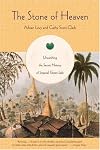
One of the disadvantages of buying most of your books from Amazon is that you’re never quite sure what you will get - especially since reviews at Amazon are suspect. The complementary advantage is sometimes you get books that are still interesting despite not being what you expected. So it is with The Stone of Heaven. I was expecting, I think, James Michener meets high pressure metamorphic mineralogy, with lots of juicy little tidbits about hydrothermal alteration interspersed with show more anecdotes about famous jade lumps painstakingly carved by Chinese artisans into stunningly accurate representations of green peppers, green apples, green crickets, and The Incredible Hulk.
Instead, the authors, a pair of British journalists, have written a political, sociological and psychological history of jade. It’s not clear if they even know the difference between jadeite and nephrite or the petrology and geological provenance of jadeite deposits; but they do know and transmit quite a bit of knowledge about East Asia in the last two centuries. It was refreshing to find that journalists in the UK, unlike their American counterparts, understand that research is more than just interviewing.
Chinese emperors wanted jade. Unfortunately the only place they knew where they could get it was a part of Burma where “godforsaken hell hole” is a serious understatement. (Aside to alternate history buffs - how would history be different if the botroidal jade deposits of Wyoming were known to Emperor Qianlong?). At any rate, Chinese efforts to conquer the Karen and Shan tribes of Burma came to nothing as armies disappeared into the jungle and never came back.
Eventually the Western powers got into the act. Flimsy excuses were found to conquer Burma, and although China wasn’t conquered (probably because nobody could agree on how to divide it up) a joint French/English expeditionary force, justifiable incensed over Chinese refusal to cooperate in addicting their entire population to opium, marched on and sacked the Summer Palace. (I’ve always been proud of my country because we were not involved in the sordid Opium Wars, since we were too busy exploiting our slave population at the time).
The orgiastic looting of the Summer Palace, where shiploads of artifacts were sent back to London and Paris, only acted to develop an appetite for jade in the West as well as the East. At this point the tone of the book changes, and the authors begin chronicling various figures from both China and the West who conspicuously consumed jade jewelry. This include Chiang Kai-shek, who demolished and looted the Imperial tombs to finance various warlord enterprises; his third wife, who was not at all adverse to the odd jade bangle; the last emperor, Pu-Yi, who at least had the excuse of needing to flee Peking in a hurry for selling off the last Imperial pieces; Madame Wellington Koo, heiress and wife to a Chinese diplomat, who eventually died in poverty in New York, and Barbara Hutton, who went through a series of husbands and jewels before dying addicted to Coke (that’s right, the carbonated kind). This part of the book reads a lot like tabloid journalism - unpleasant but titillating little details abound. No one comes off well at all.
Finally, the last part describes, in a way that could be a little more self-effacing, the authors describe their own adventures in trying to gain access to the jadeite mines in Myanmar, not one of the world’s most accommodating tourist destinations. In a laudable display of political neutrality they come down just as hard on the nominally socialist government of Myanmar and the actually communist government of China as they previously did on various imperialist Europeans. Apparently communist dogma about national liberation movements and downtrodden workers and peasants get swept right into the dustbin of history when there’s money involved, since the PRC cheerfully supplied military assistance to the government of Myanmar so they could crush various ethnic groups in the northern part of the country and take over the jadeite mines - in which the PRC now has a major interest. In the last chapter, the authors somehow manage to get into the mines of Hpakant - maybe because they could pronounce it - and document AIDS-stricken workers staggering around with baskets of overburden and spending their pittance wages on drugs and brothels.
There’s a lot of stuff here that’s just a little dubious; the authors are telling a story about sleazy history and they’re not at all averse to throwing in sleaze of their own just to make sure reader interest doesn’t fall off. I really want to get the same history from other sources before I’m convinced. Which means, of course, that I have to read some more books. Darn. show less
Instead, the authors, a pair of British journalists, have written a political, sociological and psychological history of jade. It’s not clear if they even know the difference between jadeite and nephrite or the petrology and geological provenance of jadeite deposits; but they do know and transmit quite a bit of knowledge about East Asia in the last two centuries. It was refreshing to find that journalists in the UK, unlike their American counterparts, understand that research is more than just interviewing.
Chinese emperors wanted jade. Unfortunately the only place they knew where they could get it was a part of Burma where “godforsaken hell hole” is a serious understatement. (Aside to alternate history buffs - how would history be different if the botroidal jade deposits of Wyoming were known to Emperor Qianlong?). At any rate, Chinese efforts to conquer the Karen and Shan tribes of Burma came to nothing as armies disappeared into the jungle and never came back.
Eventually the Western powers got into the act. Flimsy excuses were found to conquer Burma, and although China wasn’t conquered (probably because nobody could agree on how to divide it up) a joint French/English expeditionary force, justifiable incensed over Chinese refusal to cooperate in addicting their entire population to opium, marched on and sacked the Summer Palace. (I’ve always been proud of my country because we were not involved in the sordid Opium Wars, since we were too busy exploiting our slave population at the time).
The orgiastic looting of the Summer Palace, where shiploads of artifacts were sent back to London and Paris, only acted to develop an appetite for jade in the West as well as the East. At this point the tone of the book changes, and the authors begin chronicling various figures from both China and the West who conspicuously consumed jade jewelry. This include Chiang Kai-shek, who demolished and looted the Imperial tombs to finance various warlord enterprises; his third wife, who was not at all adverse to the odd jade bangle; the last emperor, Pu-Yi, who at least had the excuse of needing to flee Peking in a hurry for selling off the last Imperial pieces; Madame Wellington Koo, heiress and wife to a Chinese diplomat, who eventually died in poverty in New York, and Barbara Hutton, who went through a series of husbands and jewels before dying addicted to Coke (that’s right, the carbonated kind). This part of the book reads a lot like tabloid journalism - unpleasant but titillating little details abound. No one comes off well at all.
Finally, the last part describes, in a way that could be a little more self-effacing, the authors describe their own adventures in trying to gain access to the jadeite mines in Myanmar, not one of the world’s most accommodating tourist destinations. In a laudable display of political neutrality they come down just as hard on the nominally socialist government of Myanmar and the actually communist government of China as they previously did on various imperialist Europeans. Apparently communist dogma about national liberation movements and downtrodden workers and peasants get swept right into the dustbin of history when there’s money involved, since the PRC cheerfully supplied military assistance to the government of Myanmar so they could crush various ethnic groups in the northern part of the country and take over the jadeite mines - in which the PRC now has a major interest. In the last chapter, the authors somehow manage to get into the mines of Hpakant - maybe because they could pronounce it - and document AIDS-stricken workers staggering around with baskets of overburden and spending their pittance wages on drugs and brothels.
There’s a lot of stuff here that’s just a little dubious; the authors are telling a story about sleazy history and they’re not at all averse to throwing in sleaze of their own just to make sure reader interest doesn’t fall off. I really want to get the same history from other sources before I’m convinced. Which means, of course, that I have to read some more books. Darn. show less
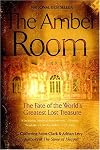
In 1701, Frederick I, King in Prussia, commissions the building of the Amber Room but he dies before it is completed. His son, Frederick William I, decides that rather than complete it himself (a drain on the royal treasury) he will give it as a gift to Peter the Great, Tsar of Russia. Peter gets the Room back to Russia but he too dies before it can be completed and installed. It is his daughter, the Tsarina Elizabeth, who completes the project. The room is moved several times but eventually show more it is installed in the Catherine Palace and there it remains until the Nazis invade in 1941. They dismantle the Room and move it back to Konigsberg in crates and that is the last time it is seen. In 2001, two investigative journalists start tracking down what happened to the Amber Room. The story crosses three "worlds" of Eastern Europe: Imperial Russia of the Tsars, the Soviet Union and her allies, and modern day Russia.
I love history and this book is about history. It is amazing to see the similarities and differences between these three periods of Russia. It is also amazing to see what lengths people will go to when driven by fear. They write with a clean voice that grabs your attention and keeps you interested in the story. The story is laid out as it unfolded for the them; you follow all the same rabbit trails they did. In the process, you get a glimpse into the world of the post-WWII Soviet Union and her ally, the German Democratic Republic. You also get a glimpse of the workings of modern-day Russia where "everything is forbidden but all things are possible." Money greases everything in the new Russia - a lot like the US in that sense.
The one gripe I had with this this book is the first chapter or so comes across as whining, a kind of "it's so hard to get any information, life is so difficult" thing. I think the bulk of the book conveys the difficulty of trying to get information from the Soviet Union, the GDR, and the new Russia and post-reconstruction Germany without the whining. show less
I love history and this book is about history. It is amazing to see the similarities and differences between these three periods of Russia. It is also amazing to see what lengths people will go to when driven by fear. They write with a clean voice that grabs your attention and keeps you interested in the story. The story is laid out as it unfolded for the them; you follow all the same rabbit trails they did. In the process, you get a glimpse into the world of the post-WWII Soviet Union and her ally, the German Democratic Republic. You also get a glimpse of the workings of modern-day Russia where "everything is forbidden but all things are possible." Money greases everything in the new Russia - a lot like the US in that sense.
The one gripe I had with this this book is the first chapter or so comes across as whining, a kind of "it's so hard to get any information, life is so difficult" thing. I think the bulk of the book conveys the difficulty of trying to get information from the Soviet Union, the GDR, and the new Russia and post-reconstruction Germany without the whining. show less
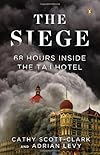
Topic itself is interesting but the way it is presented is confusing and botched. The authors attempt to do too much in the space they have, they flit from character to character with little in the way of reminding the reader of who they are/what they do. This takes the reader out of the story, having to go back to the front and remind yourself who that person is. It makes for a jarring and disjointed reading experience. Personally to compare this to Black Hawk Down is erroneous and show more misguided, BHD is written far better than this. show less
From its cover, this book sounds like a history of jade. But it's actually a history of jadeite, not jade. But even that's not accurate as while jadeite runs through this book, it's actually a history of China and surrounding areas, mostly from the 1700s to the present. It's a unique angle on a fascinating history and I'd highly recommend it. Just don't assume it's a book that will only be of interest to gemologists!
Lists
Awards


You May Also Like


Associated Authors
Statistics
- Works
- 8
- Also by
- 1
- Members
- 972
- Popularity
- #26,497
- Rating
- 3.6
- Reviews
- 13
- ISBNs
- 61
- Languages
- 6