
Amy Sackville
Author of The Still Point
About the Author
Image credit: www.amysackville.co.uk/
Works by Amy Sackville
Associated Works
FISH Anthology 2006: Grandmother Boy Wolf — Contributor — 1 copy
Tagged
Common Knowledge
- Canonical name
- Sackville, Amy
- Birthdate
- 1981
- Gender
- female
- Education
- University of Leeds (BA - English and Theatre Studies)
University of Oxford (Exeter College)
Goldsmiths College, University of London - Occupations
- Associate Lecturer, Open University
short story writer
reviewer - Agent
- Jenny Hewson (Rogers Coleridge and White)
- Short biography
- Amy Sackville studied English and Theatre Studies at Leeds, went on to an MPhil at Oxford (specialising in Modernism), and worked in publishing before attending the MA in Creative and Life Writing at Goldsmiths in 2007-2008. She is an Associate Lecturer of the Open University and lives in West London. She has had short stories and reviews published in various anthologies and journals; The Still Point is her first novel.
- Nationality
- UK
- Places of residence
- London, England, UK
- Associated Place (for map)
- England, UK
Members
Reviews
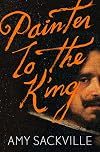
Every so often, a novel comes along that challenges one’s expectations of the genre. Amy Sackville’s Painter to the King is one such work. It is, ostensibly, a fictional biography of Diego Velázquez, covering in particular the decades he spent in the service of King Philip IV of Spain and the relationship which developed between the artist and the monarch who was his royal/loyal patron. Sackville is surprisingly faithful to the ‘facts’, even down to what may seem trivial historical show more details. Yet, her novel is by no means a straightforward retelling of the life of Velázquez. For a start, she adopts a sort of stream of consciousness narration – which is often breathless and febrile, on occasion seemingly tentative or improvisatory. It feels as if we have stepped into a painting which is taking shape or as if we’re standing behind the painter, watching as he sketches at his easel. This impression is strengthened by the very ‘visual’ descriptions, full of colour and movement and the play of light and dark. Indeed, the chapters often have the atmosphere of a tableau, a scene ready to be set down for posterity.
At intervals, the third person approach is interrupted by the narrator intruding with her own ruminations. One should always be wary of identifying the author with the novel’s subject, but it is difficult not to see Sackville herself in the thirty-something narrator embarking on a literary pilgrimage on the steps of Velázquez. It is an inspired touch gives the novel a personal meaning and reveals it as a labour of love. At the same time, however, it can be taken as a warning that, despite all endeavours at authenticity, it is difficult, if not impossible, to recreate the past and particularly the thoughts and feelings of historical figures. This novel is, indeed, biographical and historical but is equally a very contemporary ‘imagining’ of the past.
And this brings us to the heart of what is, ultimately, a highly philosophical novel. I felt Painter to the King to be an exploration of the correlation between art and artifice, truth and reality, public personas and private feelings. The characters the novel are constantly preoccupied as to what will survive after their death – the King’s obsession with having his portraits painting is a way of ensuring his memory remains. But even though Diego is notorious for his devastating honesty and his inability to “lie” in his portraits, can we be sure that the King we know is not shaped by the painter’s imagination, just as Diego and his monarch speak to us through Sackville’s prose?
I found this to be a challenging novel, one which I read over a number of weeks alongside less demanding fare. But it is an impressive achievement and I would be surprised and disappointed if this is not – deservedly – recognised when the time for literary awards arrives.
Read more at https://endsoftheword.blogspot.com/2018/08/portrait-of-artist-painter-to-king-by... show less
At intervals, the third person approach is interrupted by the narrator intruding with her own ruminations. One should always be wary of identifying the author with the novel’s subject, but it is difficult not to see Sackville herself in the thirty-something narrator embarking on a literary pilgrimage on the steps of Velázquez. It is an inspired touch gives the novel a personal meaning and reveals it as a labour of love. At the same time, however, it can be taken as a warning that, despite all endeavours at authenticity, it is difficult, if not impossible, to recreate the past and particularly the thoughts and feelings of historical figures. This novel is, indeed, biographical and historical but is equally a very contemporary ‘imagining’ of the past.
And this brings us to the heart of what is, ultimately, a highly philosophical novel. I felt Painter to the King to be an exploration of the correlation between art and artifice, truth and reality, public personas and private feelings. The characters the novel are constantly preoccupied as to what will survive after their death – the King’s obsession with having his portraits painting is a way of ensuring his memory remains. But even though Diego is notorious for his devastating honesty and his inability to “lie” in his portraits, can we be sure that the King we know is not shaped by the painter’s imagination, just as Diego and his monarch speak to us through Sackville’s prose?
I found this to be a challenging novel, one which I read over a number of weeks alongside less demanding fare. But it is an impressive achievement and I would be surprised and disappointed if this is not – deservedly – recognised when the time for literary awards arrives.
Read more at https://endsoftheword.blogspot.com/2018/08/portrait-of-artist-painter-to-king-by... show less
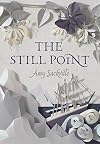
This was a perfectly charming little word-painting, a meditative non-act of wordplay that plays out in the silence between reader and page.
The author uses words precisely, shaping each deliberately with expert care in relation to the page and its fellows. Rolling her short, suspended sentences about the tongue, one senses even the mouth-feel of words has been considered in their artful selection and placement. Like a prose poem, this is a text meant to be read aloud, even if only in the show more echoes of your mind.
Her enjoyment with words is infectious: coruscating to "core us skating"; bare bear skin, padding on pads. Even punctuation plays a part, softly concluding each note so that its heft might weightlessly linger a moment in your mind. Whitespace is evident throughout, from the frozen simplicity of the binding to the ladderly gaps betwixt lines, bleak moats which must be crossed to reach the next flotilla of fine black text.
Not one to leave her reader stranded at the gates of meaning, the author comes with us on this quest, peeling back each page in an unusually present first-person plural point of view; and if omniscient, the narrative accompaniment reflects a mischievous and occasionally absent-minded aspect, easily distracted by will-o-wisp glints of memory.
I'm unsure whether I'm willing to term this delightful text a "novel", which is almost overly replete with cheesy connotations of dimestore pulp; this is more of an interactive still life, rolled out in slo-mo so the reader can savor each succulently crystalline freeze-frame.
I regret that I haven't had a chance to finish it, in part because the gently swaying lap and lull of the languid descriptions evoke such a dreamy state that it becomes an effort to pull ones eyes forward in time. I do want to spend more time with this experiential tour-de-placid, but I suppose I shall have to relinquish my copy and give some other explorer their chance to brave the candent ice :-/ show less
The author uses words precisely, shaping each deliberately with expert care in relation to the page and its fellows. Rolling her short, suspended sentences about the tongue, one senses even the mouth-feel of words has been considered in their artful selection and placement. Like a prose poem, this is a text meant to be read aloud, even if only in the show more echoes of your mind.
Her enjoyment with words is infectious: coruscating to "core us skating"; bare bear skin, padding on pads. Even punctuation plays a part, softly concluding each note so that its heft might weightlessly linger a moment in your mind. Whitespace is evident throughout, from the frozen simplicity of the binding to the ladderly gaps betwixt lines, bleak moats which must be crossed to reach the next flotilla of fine black text.
Not one to leave her reader stranded at the gates of meaning, the author comes with us on this quest, peeling back each page in an unusually present first-person plural point of view; and if omniscient, the narrative accompaniment reflects a mischievous and occasionally absent-minded aspect, easily distracted by will-o-wisp glints of memory.
I'm unsure whether I'm willing to term this delightful text a "novel", which is almost overly replete with cheesy connotations of dimestore pulp; this is more of an interactive still life, rolled out in slo-mo so the reader can savor each succulently crystalline freeze-frame.
I regret that I haven't had a chance to finish it, in part because the gently swaying lap and lull of the languid descriptions evoke such a dreamy state that it becomes an effort to pull ones eyes forward in time. I do want to spend more time with this experiential tour-de-placid, but I suppose I shall have to relinquish my copy and give some other explorer their chance to brave the candent ice :-/ show less
Every so often, a novel comes along that challenges one’s expectations of the genre. Amy Sackville’s Painter to the King is one such work. It is, ostensibly, a fictional biography of Diego Velázquez, covering in particular the decades he spent in the service of King Philip IV of Spain and the relationship which developed between the artist and the monarch who was his royal/loyal patron. Sackville is surprisingly faithful to the ‘facts’, even down to what may seem trivial historical show more details. Yet, her novel is by no means a straightforward retelling of the life of Velázquez. For a start, she adopts a sort of stream of consciousness narration – which is often breathless and febrile, on occasion seemingly tentative or improvisatory. It feels as if we have stepped into a painting which is taking shape or as if we’re standing behind the painter, watching as he sketches at his easel. This impression is strengthened by the very ‘visual’ descriptions, full of colour and movement and the play of light and dark. Indeed, the chapters often have the atmosphere of a tableau, a scene ready to be set down for posterity.
At intervals, the third person approach is interrupted by the narrator intruding with her own ruminations. One should always be wary of identifying the author with the novel’s subject, but it is difficult not to see Sackville herself in the thirty-something narrator embarking on a literary pilgrimage on the steps of Velázquez. It is an inspired touch gives the novel a personal meaning and reveals it as a labour of love. At the same time, however, it can be taken as a warning that, despite all endeavours at authenticity, it is difficult, if not impossible, to recreate the past and particularly the thoughts and feelings of historical figures. This novel is, indeed, biographical and historical but is equally a very contemporary ‘imagining’ of the past.
And this brings us to the heart of what is, ultimately, a highly philosophical novel. I felt Painter to the King to be an exploration of the correlation between art and artifice, truth and reality, public personas and private feelings. The characters the novel are constantly preoccupied as to what will survive after their death – the King’s obsession with having his portraits painting is a way of ensuring his memory remains. But even though Diego is notorious for his devastating honesty and his inability to “lie” in his portraits, can we be sure that the King we know is not shaped by the painter’s imagination, just as Diego and his monarch speak to us through Sackville’s prose?
I found this to be a challenging novel, one which I read over a number of weeks alongside less demanding fare. But it is an impressive achievement and I would be surprised and disappointed if this is not – deservedly – recognised when the time for literary awards arrives.
Read more at https://endsoftheword.blogspot.com/2018/08/portrait-of-artist-painter-to-king-by... show less
At intervals, the third person approach is interrupted by the narrator intruding with her own ruminations. One should always be wary of identifying the author with the novel’s subject, but it is difficult not to see Sackville herself in the thirty-something narrator embarking on a literary pilgrimage on the steps of Velázquez. It is an inspired touch gives the novel a personal meaning and reveals it as a labour of love. At the same time, however, it can be taken as a warning that, despite all endeavours at authenticity, it is difficult, if not impossible, to recreate the past and particularly the thoughts and feelings of historical figures. This novel is, indeed, biographical and historical but is equally a very contemporary ‘imagining’ of the past.
And this brings us to the heart of what is, ultimately, a highly philosophical novel. I felt Painter to the King to be an exploration of the correlation between art and artifice, truth and reality, public personas and private feelings. The characters the novel are constantly preoccupied as to what will survive after their death – the King’s obsession with having his portraits painting is a way of ensuring his memory remains. But even though Diego is notorious for his devastating honesty and his inability to “lie” in his portraits, can we be sure that the King we know is not shaped by the painter’s imagination, just as Diego and his monarch speak to us through Sackville’s prose?
I found this to be a challenging novel, one which I read over a number of weeks alongside less demanding fare. But it is an impressive achievement and I would be surprised and disappointed if this is not – deservedly – recognised when the time for literary awards arrives.
Read more at https://endsoftheword.blogspot.com/2018/08/portrait-of-artist-painter-to-king-by... show less
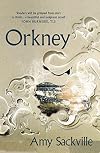
The lady in the bookshop said she had read this - she had to, it was featured at a literary festival she was organising - and described the author's voice as new. I thought that at the beginning but then became frustrated by the sea, the spray and the Orkney wind. It is the story of an ageing professor who has become obsessed with a young student. This isn't the first time a novel has been created around this theme. They marry and spend a 'honeymoon' on a remote Orkney island. Nightmares show more about the sea wake her up every night, she spends most of the day on the sea edge, blown about by the wind; he spends his days looking through a window at her out by the sea, blown about the wind. He starts to get jealous and at nudge, nudge comments of people they meet, silly old feel/young girl. Sea tales and legends arise, they get salt in their mouth from sea and sex - and in the end I wasn't too unhappy when she disappeared. The best part was the mental turmoil, bordering on despair, of a man aware of impending retirement, loneliness and loss of youth and credibility. show less
Lists
Awards


You May Also Like


Associated Authors
Statistics
- Works
- 3
- Also by
- 1
- Members
- 469
- Popularity
- #52,470
- Rating
- 3.6
- Reviews
- 15
- ISBNs
- 22
- Languages
- 2
- Favorited
- 1