
Carl Raschke
Author of The Next Reformation: Why Evangelicals Must Embrace Postmodernity
About the Author
Carl A. Raschke is professor of religious studies at the University of Denver, specializing in continental philosophy, the philosophy of religion and the theory of religion. He is an internationally known writer and academic who has authored numerous books, including The Revolution in Religious show more Theory, GloboChrist, The Next Reformation and The Engendering God. show less
Works by Carl Raschke
Painted Black: From Drug Killings to Heavy Metal : The Alarming True Story of How Satanism Is Terrorizing Our Communities (1990) 48 copies, 1 review
Postmodernism and the Revolution in Religious Theory: Toward a Semiotics of the Event (2012) 14 copies
The Interruption of Eternity: Modern Gnosticism and the Origins of the New Religious Consciousness (1980) 4 copies
The bursting of new wineskins : reflections on religion and culture at the end of affluence (1978) 2 copies
The Republic of Faith: The Search for Agreement Amid Diversity in American Religion (Religion in American Culture) (2002) 2 copies
Associated Works
Tagged
Common Knowledge
- Gender
- male
- Education
- Harvard University (Ph.D, Philosophy)
- Occupations
- professor
- Organizations
- American Academy of Religion
- Places of residence
- Oklahoma, USA
- Associated Place (for map)
- Oklahoma, USA
Members
Reviews

Author Raschke abuses his academic credentials in this sensationalistic and dishonest presentation about contemporary Satanism, which uses a scholarly format to offer garden-variety paranoia, tying together such disparate phenomena as the Matamoros drug murders, Antonin Artaud's Theatre of Cruelty, and the aesthetics of heavy metal music. Painted Black provided a great assist to rumor panics in the early 1990s, and to professional scaremongers and scapegoaters then and since. The book is show more full of false details and baseless claims. In the final section on popular culture, Raschke laughably demonizes innocuous fantasy role-playing gamers.
The photographic plates are the main reason I keep this book around. Several of them (obtained by the photographer under false pretenses) depict the old Aleister Crowley Oasis temple, where I received my first Thelemic initiations. show less
The photographic plates are the main reason I keep this book around. Several of them (obtained by the photographer under false pretenses) depict the old Aleister Crowley Oasis temple, where I received my first Thelemic initiations. show less
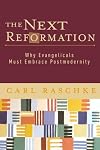
It is important to know that this author's defining religious experience was in a charismatic context. His primary thesis is that the "foundationalism" of the Enlightenment and modernism has been embedded in evangelicalism (although they are antagonists) and that the epistemology, philosophy of language and metaphysics of modernism has been rejected and superseded by postmodernism. Of course, trying to define postmodernism is like trying to nail jello to the wall. For Raschke, postmodernism show more is bound up with Heiddiger, Derrida and others of that -- especially French -- ilk. His primary complaint against modernistic Christianity is against the "hellenistic" systematic theology. He also doesn't like the doctrine of inerrancy. He promotes "faith" which is "postpropositional."
It would take a major essay to critique this book adequately. Good things: the survey of Western intellectual history; the summary and discussion of major intellectual figures: Luther, Calvin, Kant, Kierkegaard, Heidigger and others; the emphasis that systematic theology is not the essence of Christian faith. Bad things: the elevation of Derrida's views of language (he was a snake-oil salesman, in my view); he demonizes what his disagrees with; he uses rhetoric to inform the reader what conclusions to have without a rationale for those conclusions; he elevates the neo-charismatic religious experience and spontaneity as normative for Christian experience without providing reasons for the "modernist, foundationalist" evangelical to change his views.
After reading this book, I have a much more articulate understanding of why I reject so much of postmodernist polemic. show less
It would take a major essay to critique this book adequately. Good things: the survey of Western intellectual history; the summary and discussion of major intellectual figures: Luther, Calvin, Kant, Kierkegaard, Heidigger and others; the emphasis that systematic theology is not the essence of Christian faith. Bad things: the elevation of Derrida's views of language (he was a snake-oil salesman, in my view); he demonizes what his disagrees with; he uses rhetoric to inform the reader what conclusions to have without a rationale for those conclusions; he elevates the neo-charismatic religious experience and spontaneity as normative for Christian experience without providing reasons for the "modernist, foundationalist" evangelical to change his views.
After reading this book, I have a much more articulate understanding of why I reject so much of postmodernist polemic. show less
GloboChrist: The Great Commission Takes a Postmodern Turn (The Church and Postmodern Culture) by Carl A. Raschke
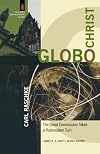
NCLA Review - This is a very challenging book replete with philosophical and theological terms and concepts, written for laymen who wonder what shapes the emerging postmodern church will take. Rashke writes of missional activities in Europe and elsewhere, and of changes in strategy that must occur if Christians are to be listened to in the future. From his impressive familiarity with religious history, he outlines the deep challenge Islam poses for Christianity. Laying waste both evangelical show more and mainstream suppositions, he tackles head-on the troubling subject of eschatology (end times) from both Christian and Islamic perspectives. Despite the verbal thickets, I was powerfully drawn through the pages, eager to learn what conclusions the author would draw, and what action he would advocate. Rating: 3 —DKW . 175p, paper, Baker 2008, $14.99 [261] show less
You May Also Like


Associated Authors
Statistics
- Works
- 25
- Also by
- 3
- Members
- 546
- Popularity
- #45,668
- Rating
- 3.3
- Reviews
- 3
- ISBNs
- 50