
Sherill Tippins
Author of February House
About the Author
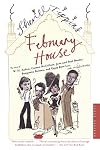
Sherill Tippins is the author of February House: The Story of W. H. Auden, Carson McCullers, Jane and Paul Bowles, Benjamin Britten, and Gypsy Rose Lee Under One Roof in Wartime America. She lives in New York City.
Image credit: Facebook
Works by Sherill Tippins
Inside the Dream Palace: The Life and Times of New York's Legendary Chelsea Hotel (2013) 242 copies, 6 reviews
Associated Works
ADHD: A Complete and Authoritative Guide (American Academy of Pediatrics) (2004) — Contributor — 61 copies
Tagged
Common Knowledge
Members
Reviews
February House: The Story of W. H. Auden, Carson McCullers, Jane and Paul Bowles, Benjamin Britten, and Gypsy Rose Lee, Under One Roof in Brooklyn by Sherill Tippins
For most of my life, my favorite period of history has been the 35 or 40 years just prior to my own arrival. Whether tales of the Algonquin Round Table, [a:Barbara Tuchman|137261|Barbara W. Tuchman|http://photo.goodreads.com/authors/1229046503p2/137261.jpg]'s [b:The Proud Tower|192955|The Proud Tower A Portrait of the World Before the War, 1890-1914|Barbara W. Tuchman|http://ecx.images-amazon.com/images/I/71Q7X2SVJ1L._SL75_.gif|1649174] and [b:The Guns of August|11366|The Guns of show more August|Barbara W. Tuchman|http://photo.goodreads.com/books/1166469894s/11366.jpg|1884932], Schlesinger's history of FDR's presidency, or fiction set in the period, I'm always drawn to it. So when http://www.todayinliterature.com recently mentioned [b:February House|59659|Imperium|Ryszard Kapuściński|http://photo.goodreads.com/books/1170533405s/59659.jpg|2358709], I was pleased to find it at my local library. I had a hard time putting it down.
The book is the true story of one year in the lives of a group of writers, musicians, and artists who either lived at, or visited frequently, a house in Brooklyn Heights. The year is 1940-1941. The residents and their friends include such well-known names as [a:Carson McCullers|3506|Carson McCullers|http://photo.goodreads.com/authors/1188820982p2/3506.jpg], [a:W. H. Auden|285217|Johann Wolfgang von Goethe|http://photo.goodreads.com/authors/1190290128p2/285217.jpg], Benjamin Britten, Peter Pears, [a:Gypsy Rose Lee|76947|Sherill Tippins|http://www.goodreads.com/images/nophoto/nophoto-U-50x66.jpg], Klaus and Erika Mann (son and daughter of [a:Thomas Mann|5223|Franz Kafka|http://photo.goodreads.com/authors/1185826841p2/5223.jpg]), [a:Paul Bowles and his wife Jane Salvador Dali author: Christopher Isherwood].... George Davis, whose idea it was to rent the house and make it a sort of artistic commune, is less well known now, but was fiction editor at Harper's Bazaar when that meant publishing serious and even avant-garde fiction, and later married Lotte Lenya, the widow of Kurt Weill, and was instrumental in keeping Weill's music before the public.
[b:February House|59659|Imperium|Ryszard Kapuściński|http://photo.goodreads.com/books/1170533405s/59659.jpg|2358709] is much more than a book full of famous names and entertaining stories. It examines the tensions of the period, when America was not yet in the war; when the American artistic and intellectual community was welcoming and assisting European colleagues to safety in the U.S., while simultaneously feeling competitive with them. Auden, Britten, Pears and Isherwood, as Britons who had come to the U.S. before the war, suffered both inner conflict and outward criticism for being away from their native land in its time of crisis. Many of the group were homosexual or bisexual, with all the problems that entailed at a time when one could be arrested for acting on that orientation. But most importantly, there was the creative impulse that unified them and sometimes divided them. How does an artist of any kind find or create the optimum conditions for doing his work? What should that work be, in a time of international crisis? And, as one might expect in a group of twenty- and thirty-somethings, where and how does one find love? A great deal of energy was expended on love -- requited or unrequited, romantic, Platonic, or triangulated.
[b:February House|59659|Imperium|Ryszard Kapuściński|http://photo.goodreads.com/books/1170533405s/59659.jpg|2358709] is a fascinating book, almost guaranteed to make the reader want to dig deeper into the works of the writers, musicians and artists it describes, and also evoking an exciting and terrifying time in our history as well as a vanished (literally -- the house was torn down in 1945 for an expressway) part of New York. Highly recommended. show less
The book is the true story of one year in the lives of a group of writers, musicians, and artists who either lived at, or visited frequently, a house in Brooklyn Heights. The year is 1940-1941. The residents and their friends include such well-known names as [a:Carson McCullers|3506|Carson McCullers|http://photo.goodreads.com/authors/1188820982p2/3506.jpg], [a:W. H. Auden|285217|Johann Wolfgang von Goethe|http://photo.goodreads.com/authors/1190290128p2/285217.jpg], Benjamin Britten, Peter Pears, [a:Gypsy Rose Lee|76947|Sherill Tippins|http://www.goodreads.com/images/nophoto/nophoto-U-50x66.jpg], Klaus and Erika Mann (son and daughter of [a:Thomas Mann|5223|Franz Kafka|http://photo.goodreads.com/authors/1185826841p2/5223.jpg]), [a:Paul Bowles and his wife Jane Salvador Dali author: Christopher Isherwood].... George Davis, whose idea it was to rent the house and make it a sort of artistic commune, is less well known now, but was fiction editor at Harper's Bazaar when that meant publishing serious and even avant-garde fiction, and later married Lotte Lenya, the widow of Kurt Weill, and was instrumental in keeping Weill's music before the public.
[b:February House|59659|Imperium|Ryszard Kapuściński|http://photo.goodreads.com/books/1170533405s/59659.jpg|2358709] is much more than a book full of famous names and entertaining stories. It examines the tensions of the period, when America was not yet in the war; when the American artistic and intellectual community was welcoming and assisting European colleagues to safety in the U.S., while simultaneously feeling competitive with them. Auden, Britten, Pears and Isherwood, as Britons who had come to the U.S. before the war, suffered both inner conflict and outward criticism for being away from their native land in its time of crisis. Many of the group were homosexual or bisexual, with all the problems that entailed at a time when one could be arrested for acting on that orientation. But most importantly, there was the creative impulse that unified them and sometimes divided them. How does an artist of any kind find or create the optimum conditions for doing his work? What should that work be, in a time of international crisis? And, as one might expect in a group of twenty- and thirty-somethings, where and how does one find love? A great deal of energy was expended on love -- requited or unrequited, romantic, Platonic, or triangulated.
[b:February House|59659|Imperium|Ryszard Kapuściński|http://photo.goodreads.com/books/1170533405s/59659.jpg|2358709] is a fascinating book, almost guaranteed to make the reader want to dig deeper into the works of the writers, musicians and artists it describes, and also evoking an exciting and terrifying time in our history as well as a vanished (literally -- the house was torn down in 1945 for an expressway) part of New York. Highly recommended. show less
Inside the Dream Palace: The Life and Times of New York's Legendary Chelsea Hotel by Sherill Tippins
The Chelsea Hotel is a fascinating microcosm of New York City cultural history. This book does a fascinating story justice. It’s especially timely with the latest attempts to redevelop the now vacant Chelsea. I just wish that it came with a soundtrack CD.
Entertaining, if uneven. The letters and diaries of Auden and Britten give the author a window into their significant personal and artistic development over the period covered in the book. Other residents are treated in more superficial, anecdotal, and often repetitious fashion. Carson McCullers’ daily sherry ration began to wear on me. But even as a collection of names the book would be quite worth looking at, and there is a reference list of sources that provides many avenues for more show more detailed follow-up. show less
February House: The Story of W. H. Auden, Carson McCullers, Jane and Paul Bowles, Benjamin Britten, and Gypsy Rose Lee, Under One Roof in Brooklyn by Sherill Tippins
Really interesting, with little mini bios of all the people, and great images like Carson and Gypsy running through the streets of Brooklyn chasing a fire engine in the middle of the night, holding hands. As they're running, Carson gets the image that helps her pull The Member of the Wedding together.
Also a lot of stuff about expat Brits trying to figure out what, as artists, they should do about the war, and attitudes about them in the UK.
I've read a biography of McCullers, and Gypsy's show more memoir, but know almost nothing about Auden except that he was a gay poet, and there's a lot about his philosophical brooding about war, his romance with Chester Kallman, and other fascinating stuff. Ditto Paul and Jane Bowles, and now I'd like to find out more about them and read Two Serious Ladies. show less
Also a lot of stuff about expat Brits trying to figure out what, as artists, they should do about the war, and attitudes about them in the UK.
I've read a biography of McCullers, and Gypsy's show more memoir, but know almost nothing about Auden except that he was a gay poet, and there's a lot about his philosophical brooding about war, his romance with Chester Kallman, and other fascinating stuff. Ditto Paul and Jane Bowles, and now I'd like to find out more about them and read Two Serious Ladies. show less
Lists
Which house? (1)
Awards


You May Also Like


Associated Authors
Statistics
- Works
- 6
- Also by
- 1
- Members
- 623
- Popularity
- #40,414
- Rating
- 3.9
- Reviews
- 13
- ISBNs
- 18
- Languages
- 2