
William Montgomery Watt (1909–2006)
Author of Muhammad: Prophet and Statesman
About the Author
Works by William Montgomery Watt
The History of al-Tabari Vol. 7. The Foundation of the Community: Muhammad At Al-Madina A.D. 622-626/Hijrah-4 A.H. (1987) — Annotator — 26 copies
HAZRET-İ MUHAMMED 1 copy
Kur'an'a Giriş 1 copy
Associated Works
Tagged
Common Knowledge
- Canonical name
- Watt, William Montgomery
- Legal name
- Watt, William Montgomery
- Other names
- Watt, W. Montgomery
- Birthdate
- 1909-03-14
- Date of death
- 2006-10-24
- Gender
- male
Members
Reviews
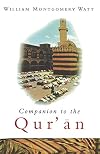
It's interesting to become a voyeur into other religions. I see how much of Islam is quite similar to Christian fundamentalism - subjugation to a text, promises or threats of an afterlife, and a general lack of humanism. Perhaps this belies my Christian theological orientation more. I don't really like Christian fundamentalism, nor do I like the Koran much.
I respect Muslims, and I mean them no harm. I just disagree with them that this is the meaning of life. I prefer the Christian story of show more grace and redemption. I wish to understand Muslims as they are my neighbor, whom I am commanded to love. That is why I read this Companion to the Koran. The scientist in me wants to understand the world around me; the religious side of me wants to learn how to love and respect Muslims more; the seeker in me wishes to understand what this book, so revered, has to contribute to a common human instinct to seek after God.
I leave my reading of this guide grateful that Islam has been in geographic retreat since 1666. Perhaps I should feel the same way about Christianity if I only read one commentary on the Bible instead of hundreds of books of theology. The Bible must come alive to be understood. That's why I like reading the history of religious activities alongside my Bible. The Koran must be the same way. One must first be oriented to learn deeply about the religion. I lack that deep learning - that life habituation - to understand this great book. In my ignorance, I find little compelling here, but I am open to learning more. show less
I respect Muslims, and I mean them no harm. I just disagree with them that this is the meaning of life. I prefer the Christian story of show more grace and redemption. I wish to understand Muslims as they are my neighbor, whom I am commanded to love. That is why I read this Companion to the Koran. The scientist in me wants to understand the world around me; the religious side of me wants to learn how to love and respect Muslims more; the seeker in me wishes to understand what this book, so revered, has to contribute to a common human instinct to seek after God.
I leave my reading of this guide grateful that Islam has been in geographic retreat since 1666. Perhaps I should feel the same way about Christianity if I only read one commentary on the Bible instead of hundreds of books of theology. The Bible must come alive to be understood. That's why I like reading the history of religious activities alongside my Bible. The Koran must be the same way. One must first be oriented to learn deeply about the religion. I lack that deep learning - that life habituation - to understand this great book. In my ignorance, I find little compelling here, but I am open to learning more. show less
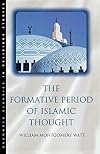
This is an excellent overview of early Islamic theology (which is really all that it covers, despite the more inclusive "thought" of the title). The publishers play up the value of this book as an introductory text, and I agree that it wouldn't be baffling to someone new to the topic; however, I don't feel that the information would really sink in unless you had some prior knowledge. Despite the textbook format, this is also an important piece of scholarship, as Watt definitely advances his show more own theories rather than simply reporting different views on each topic. He is sensitive to traditional Islamic historiography while falling squarely into the Goldziher/Schacht camp. Occasionally his analysis goes off course into some "Maybe they think this way because they're Arabs and they live in the desert" nonsense, but for the most part Watt has a balanced and transparent historical method. The book is getting a bit old; for either an undergraduate class or one's personal reading, I'd supplement this with the textbooks by Marshall Hodgson (also old), Patricia Crone, and Jonathan Berkey on classical Islamicate history and thought. The Flowering of Muslim Theology by Josef van Ess is a solid, quick read before tackling Watt. show less
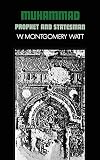
This is a somewhat brief overview of the Prophet - his childhood and development and call to proclaim the message of Allah.
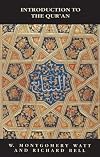
The best English statement of the issues and problems of Qur-anic study.
Lists
You May Also Like


Associated Authors
Statistics
- Works
- 43
- Also by
- 4
- Members
- 1,228
- Popularity
- #20,901
- Rating
- 3.7
- Reviews
- 8
- ISBNs
- 141
- Languages
- 9
- Favorited
- 1
