
Charlotte Delbo (1913–1985)
Author of Auschwitz and After
About the Author
Series
Works by Charlotte Delbo
Convoy To Auschwitz: Women of the French Resistance (Women's Life Writings from Around the World) (1963) 25 copies
Auschwitz e depois 13 copies
La memoire et les jours; [suivi de] Tombeau du dictateur, Varsovie, Les folles de mai, Kalavrita des mille Antigone et autres textes (2013) 2 copies
Tagged
Common Knowledge
- Birthdate
- 1913-08-10
- Date of death
- 1985-03-01
- Gender
- female
- Education
- Sorbonne
- Occupations
- memoirist
resistance fighter
historian
biographer
writer
secretary - Organizations
- Union des Jeunes Filles de France (JFdeF)
- Short biography
- Charlotte Delbo, the daughter of a metalworker who rose to run his own shipyard and an Italian immigrant mother, gravitated toward the theater and politics as a teenager. In 1932, she joined the youth wing of the French Communist Party and quickly became a prominent organizer. A couple of years later, she met and married Georges Dudach, a Communist and law student. Charlotte attended courses in philosophy at the Sorbonne in Paris and trained as a secretary. She got a job as an assistant to Louis Jouvet, a well-known actor and theater impresario, and went on tour with him and his company throughout South America. She was in Buenos Aires when the Germans invaded and occupied France in 1940. She decided to return to Paris in November 1941 and worked with her husband and the communist young women's group Union des Jeunes Filles de France (JFdeF) to print and distribute anti-Nazi materials and the underground newspaper Lettres Françaises. In March 1942, French police arrested her and Dudach, who was executed by the Gestapo in May. Charlotte Delbo was detained in transit camps near Paris for the rest of the year; then on January 24, 1943, she and 229 other Frenchwomen imprisoned for their resistance activities were put on a train for Auschwitz concentration camp. Only 49 of the women returned. They were held in Auschwitz, first at Birkenau and later the Raisko satellite camp, for about a year before being sent to Ravensbrück. Those who survived were released to the custody of the Swedish chapter of the International Red Cross in 1945. After recovering, Delbo returned to France and was faced with the daunting task of re-integrating herself into a world that could did not understand her wartime experiences. She wrote several books, including a trilogy of memoirs published as "Auschwitz and After" ("None of Us Will Return," "Useless Knowledge," and "The Measure of Our Days"). The play "Qui Rapportera Ces Paroles?" (Who Will Carry the Word?) is about Delbo's time at Birkenau. In later years, she abandoned Communism but her political views remained strongly left-wing. During France's war with Algeria she published "Les belles lettres," a collection of petitions protesting colonial French policy. She never remarried. During the 1960s, she worked for the United Nations and philosopher Henri Lefebvre.
- Nationality
- France
- Birthplace
- Vigneux-sur-Seine, Essone, France
- Places of residence
- Paris, France
Auschwitz, Poland
Buenos Aires, Argentina - Associated Place (for map)
- France
Members
Reviews
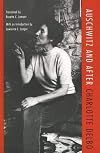
4.5 / 5. Maybe higher. This needs to become standard holocaust reading. Up there with Levi, Frank, Frankl, and Wiesel. Maybe more of a stepping stone after those authors though, as the structure and experimental nature of the writing makes it harder to read. Plus one requires a good grasp of the history and situation, as Delbo doesn't really give you much of that.
I found so many things to like about this sad, sad, sad book. Her attempts at communicating the horror, her struggle with memory, show more and her struggle along with her comrades of reintegrating with society.
How funny, so few talk about the reintegration part. You would think, once you're out, life would be great again. I remember reading Hiroshima and Nagasaki survivor accounts and how later in life society would ostracize them because of the victims' scars and the desire for society to forget the whole thing... How strange. And how terrible.
That theme, the idea that society just wants to forget, and how that whole idea of forgetting is so horrendous to anyone who experienced it... is so intense.
In the end, I absolutely loved this book, even if it left me terribly sad most days I read it. But, you know, how could it not? And for those who wish not to read it, because they don't want to be saddened... well, that's sad too: you're denying the victims their need to bear witness to these events, and hopefully keep us all in mind of a) how good we have it; and b) never let these things happen again... show less
I found so many things to like about this sad, sad, sad book. Her attempts at communicating the horror, her struggle with memory, show more and her struggle along with her comrades of reintegrating with society.
How funny, so few talk about the reintegration part. You would think, once you're out, life would be great again. I remember reading Hiroshima and Nagasaki survivor accounts and how later in life society would ostracize them because of the victims' scars and the desire for society to forget the whole thing... How strange. And how terrible.
That theme, the idea that society just wants to forget, and how that whole idea of forgetting is so horrendous to anyone who experienced it... is so intense.
In the end, I absolutely loved this book, even if it left me terribly sad most days I read it. But, you know, how could it not? And for those who wish not to read it, because they don't want to be saddened... well, that's sad too: you're denying the victims their need to bear witness to these events, and hopefully keep us all in mind of a) how good we have it; and b) never let these things happen again... show less
Incredibly powerful writing from a French political prisoner, interned in Auschwitz. It is refreshing to read an account of the female experience of the camps, especially in such a beautiful combination of poetry and prose. The attention devoted to life after liberation and Delbo's return to France makes this something of a landmark; this work should be hailed alongside that of Wiesel and Levi as the epitome of Holocaust testimony.
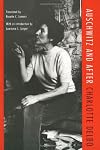
Working for the French Resistance, Delbo was arrested by the Nazis in 1942, imprisoned, and later sent to Auschwitz and Ravensbruck. A talented writer, she sought to preserve a record of the atrocities perpetrated by the Nazis. This volume contains a trilogy: "None of Us Will Return" (written in 1946 but not published until 1965), "Useless Knowledge," and "The Measure of Our Days," originally published in 1970. Her writing is haunting, gracefully combining vignettes of poetry and poetic show more prose and enveloping the reader in an emotional whirlwind. There is a deceptive simplicity inherent in her understated but exceedingly powerful imagery. Lamont's translation is sensitive and fluid, while Lawrence Langer's introductory essay provides both background material and a deserved tribute to the author. show less

A series of sketches of life as a woman prisoner in Auschwitz. I had assumed Charlotte Delbo was Jewish, but it turns out she was a gentile member of the French resistance. This book reminds me of Sara Nomberg-Pryzytyk's Auschwitz: True Tales From a Grotesque Land, except more loosely structured. Some of the scenes are in verse form; some are less than half a page long. It's a very short book -- I finished in under an hour -- and worth looking at as a curiosity, if nothing else.
For a much show more more in-depth, nonfiction account of the experiences of Charlotte Delbo and her fellow sufferers, try the best-selling A Train in Winter: An Extraordinary Story of Women, Friendship, and Resistance in Occupied France. show less
For a much show more more in-depth, nonfiction account of the experiences of Charlotte Delbo and her fellow sufferers, try the best-selling A Train in Winter: An Extraordinary Story of Women, Friendship, and Resistance in Occupied France. show less
Lists
Awards

You May Also Like


Associated Authors
Statistics
- Works
- 19
- Members
- 559
- Popularity
- #44,692
- Rating
- 4.5
- Reviews
- 9
- ISBNs
- 47
- Languages
- 9
- Favorited
- 1