

Dorothy Macardle (1889–1958)
Author of The Uninvited
About the Author
Disambiguation Notice:
As a playwright, used the name Margaret Callan.
Works by Dorothy Macardle
Shakespeare, Man & Boy 5 copies
The Uninvited (abridged) 1 copy
Associated Works
Irish Ghost Stories (Tales of Mystery & The Supernatural) (2011) — Contributor — 42 copies, 1 review
A Brilliant Void: A Selection of Classic Irish Science Fiction (2018) — Contributor — 33 copies, 1 review
Tagged
Common Knowledge
- Canonical name
- Macardle, Dorothy
- Legal name
- Macardle, Dorothea Marguerita Callan
- Other names
- Callan, Margaret
- Birthdate
- 1889-02-02
- Date of death
- 1958-12-23
- Gender
- female
- Education
- Alexandra College, Dublin, Ireland
University College Dublin - Occupations
- writer
historian
playwright
journalist
teacher
political activist - Organizations
- The Gaelic League
Sinn Féin
Fianna Fáil
The Irish Press
Irish National Council for Women
Irish Association of Civil Liberties - Short biography
- Dorothy Macardle was born in Dundalk, Ireland, to a wealthy brewing family famous for their Macardle's Ale. They moved to Dublin when she was in her teens, and she was educated at Alexandra College and University College Dublin. After graduating, she returned to Alexandra College to teach English. She was active in republican and feminist politics, and was writing plays. The first professional production of one of her plays took place in the 1910s with the Little Theatre in Dublin, founded by Daisy Bannard Cogley, who directed a production of Macardle's play Asthara in 1918. Mcardle worked as a journalist and publicist during the War of Independence and the Civil War.
When the republican movement split in 1921–1922 over the Anglo-Irish Treaty to create the Irish Free State, Macardle sided with the anti-Treaty faction and accused the new Irish government of betraying its ideals. She was arrested in 1922, and served time in both Mountjoy and Kilmainham Gaols.
McCardle deplored what she saw as the reduced status of women in the 1937 Constitution of Ireland. Noting that the mew Constitution had dropped the commitment to guarantee equal rights and opportunities "without distinction of sex," she demanded of Eamon de Valera how anyone "with advanced views on the rights of women" could support it. She also criticized compulsory Irish language teaching in schools.
While working as a journalist with the League of Nations in the 1930s, Macardle came to feel an affinity with the plight of Czechoslovakia as it was being pressed to make territorial concessions to Nazi Germany. Believing that "Hitler's war should be everybody's war," she disagreed with de Valera's policy of Irish neutrality. She went to work for the BBC in London, worked on her fiction writing, and, at the end of World War II, campaigned for refugee children, a crisis described in her book Children of Europe (1949). In 1951 she became the first president of the Irish Society of Civil Liberties.
Macardle recounted her Civil Car experiences in Earthbound: Nine Stories of Ireland (1924). She continued as a playwright for the next two decades. In her dramatic writing she used the pseudonym Margaret Callan.
Her book The Irish Republic was first published in 1937 and was well-received by criticsl Macardle was widely praised for her research, thorough documentation, range of sources, and narration of dramatic events, The book was reprinted several times, most recently in 2005. The Irish Republic was the only authoritative account of the period 1916-1926 that was widely used by de Valera and Fianna Fáil over the years. - Nationality
- Ireland
- Birthplace
- Dundalk, County Louth, Ireland
- Places of residence
- Dundalk, Ireland (birth)
Dublin, Ireland
Drogheda, Ireland (death) - Place of death
- Drogheda, County Louth, Ireland
- Burial location
- St. Fintan's Cemetery, Sutton, Dublin, Ireland
- Disambiguation notice
- As a playwright, used the name Margaret Callan.
- Associated Place (for map)
- Ireland
Members
Reviews

An old-fashioned ghost story originally published in 1942, The Uninvited for me was not particularly scary, but rather strangely charming. It was quite talky--no surprise that the narrator is a playwright--and I could easily imagine the spirited, oh-so-British young people at the center of the story. The setting of an abandoned house on a cliff overlooking the sea with its maze of rooms and windswept garden comes alive wonderfully through Macardle's prose. I have not seen the movie, but it's show more obvious how well this book would translate to film. show less
https://nwhyte.livejournal.com/2973364.html
The narrator is a young but upper-class Irishman living in London, who decides to move to Cornwall with his sister after a relationship break-up; they buy an empty house from the nearby retired military chap and his cute if troubled grand-daughter. The house turns out not to be quite as empty as they had been led to believe...
It's a ghost story, but a ghost story with a couple of interesting wrinkles. The book casually treats ghosts as a show more scientifically proven phenomenon operating according to implicitly well-understood laws, with the Irish protagonists (and a Dublin lawyer who is dragged in to help near the end) naturally better equipped to deal with the problem of the haunted house than their English neighbours on the coast of Cornwall. This makes it all a bit less scary - though the moments of terror are still well conveyed - but also more comprehensible. There is a jolly good twist at the end, which I should have seen coming but didn't, linking to interesting issues of sex and gender. I'm not surprised that it made a decent film, and am a bit surprised that I hadn't heard of it before. show less
The narrator is a young but upper-class Irishman living in London, who decides to move to Cornwall with his sister after a relationship break-up; they buy an empty house from the nearby retired military chap and his cute if troubled grand-daughter. The house turns out not to be quite as empty as they had been led to believe...
It's a ghost story, but a ghost story with a couple of interesting wrinkles. The book casually treats ghosts as a show more scientifically proven phenomenon operating according to implicitly well-understood laws, with the Irish protagonists (and a Dublin lawyer who is dragged in to help near the end) naturally better equipped to deal with the problem of the haunted house than their English neighbours on the coast of Cornwall. This makes it all a bit less scary - though the moments of terror are still well conveyed - but also more comprehensible. There is a jolly good twist at the end, which I should have seen coming but didn't, linking to interesting issues of sex and gender. I'm not surprised that it made a decent film, and am a bit surprised that I hadn't heard of it before. show less
The Uninvited by Dorothy Macardle is a classic haunted house story that was originally published in 1942 and was adapted to film in 1944. Looking to escape the stress and demands of life in London, brother and sister, Roderick and Pamela Fitzgerald, find the perfect house on the Devon coast. The house had been empty for some time and the price was right so they snapped it up not knowing that they were soon to be plagued by paranormal events.
The house was the site of the deaths of two women show more fifteen years ago. A young wife and mother, Mary, and her artist husband’s model and mistress, Carmel. Events surrounding the deaths of these women are murky but it appears that neither one actually died a natural death. Mary’s young daughter, Stella, still lives nearby and is happy and excited to be able to visit the house she was born in. Unfortunately, Stella seems to be the trigger for the apparitions, with one wanting to guard her while the other seems intent on driving Stella to her death.
The Uninvited is one of my favourite ghostly movies and I wasn’t disappointed with the book either. All the classic events of a haunting, from extreme coldness, sounds of sobbing in the night, particular rooms where no one dares to spend much time, and visual sightings that root one to the spot are all scattered throughout the book. The story has a timeless quality and, at first, the disturbances are subtle and easy to dismiss, but as the book goes on, the atmosphere gets darker and darker and extreme danger comes to the forefront. If you enjoy a good but not over-done ghost story that is well written and solidly plotted, I recommend giving The Uninvited a try. show less
The house was the site of the deaths of two women show more fifteen years ago. A young wife and mother, Mary, and her artist husband’s model and mistress, Carmel. Events surrounding the deaths of these women are murky but it appears that neither one actually died a natural death. Mary’s young daughter, Stella, still lives nearby and is happy and excited to be able to visit the house she was born in. Unfortunately, Stella seems to be the trigger for the apparitions, with one wanting to guard her while the other seems intent on driving Stella to her death.
The Uninvited is one of my favourite ghostly movies and I wasn’t disappointed with the book either. All the classic events of a haunting, from extreme coldness, sounds of sobbing in the night, particular rooms where no one dares to spend much time, and visual sightings that root one to the spot are all scattered throughout the book. The story has a timeless quality and, at first, the disturbances are subtle and easy to dismiss, but as the book goes on, the atmosphere gets darker and darker and extreme danger comes to the forefront. If you enjoy a good but not over-done ghost story that is well written and solidly plotted, I recommend giving The Uninvited a try. show less
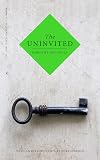
This is a wonderful timeless story by Dorothy Macardle. Published as "Uneasy Freehold" in the early 1940's, it was renamed for the classic film it spawned in 1943 starring Ray Milland and the ethereal Gail Russell. I've owned a hardback copy of this fabulous book for decades and try to read it at least once every couple of years. There is a light and breezy feel to this narrative which makes it the perfect summer read if you are tired of the run-of-the-mill.
Roderick and his sister Pamela show more leave the hustle and bustle of modern London looking for that perfect house on the English coast. What they find is the beautiful Cliff End overlooking the sea. From their first meeting with the sweet and lovely young Stella Meredith, whose grandfather owns the house, we know there is a larger mystery here. This is a good novel that slowly unfolds as we learn of Stella's mother Mary, and the beautiful Spanish girl, Carmel, who was seduced by Stella's father.
There are more questions than answers for the brother and sister the longer they remain at Cliff End. Who is the apparition at the top of the stairway and why does a sickening cold always precede its appearance? Why are there moans of anguish coming from the room that used to be the nursery? What is the real mystery surrounding Mary's death? What about that Mimosa scent that coincides with the moaning? And why do things get more stirred up every time young Stella is there? Roderick has fallen for the sweet Stella just as the reader has and both must discover the answers.
What makes this such an excellent read is that it treats this as a straightforward story of ordinary people thrown into extraordinary circumstances. It unfolds slowly as Roderick and Pamela attempt to solve this maddening riddle to an otherwise wonderful house they don't want to leave. Both the mystery and ghost story are presented in an entertaining day-to-day chronicle of life in the English countryside. Ever so gradually, the growing romance between Roderick and Stella inches its way to the center at the same time the danger to young Stella heightens.
It's fantastic that this long-out-of-print classic is now available on Kindle. The forward in the Kindle version contains a wealth of information about Macardle, her work and life. It's several pages in the Kindle and is well worth reading. The Uninvited inspired the finest film of its kind ever made, starring Ray Milland and the lovely Gail Russell. You don't want to miss either the book or the film, and now that Macardle's fine novel is back in print, you don't have to. show less
Roderick and his sister Pamela show more leave the hustle and bustle of modern London looking for that perfect house on the English coast. What they find is the beautiful Cliff End overlooking the sea. From their first meeting with the sweet and lovely young Stella Meredith, whose grandfather owns the house, we know there is a larger mystery here. This is a good novel that slowly unfolds as we learn of Stella's mother Mary, and the beautiful Spanish girl, Carmel, who was seduced by Stella's father.
There are more questions than answers for the brother and sister the longer they remain at Cliff End. Who is the apparition at the top of the stairway and why does a sickening cold always precede its appearance? Why are there moans of anguish coming from the room that used to be the nursery? What is the real mystery surrounding Mary's death? What about that Mimosa scent that coincides with the moaning? And why do things get more stirred up every time young Stella is there? Roderick has fallen for the sweet Stella just as the reader has and both must discover the answers.
What makes this such an excellent read is that it treats this as a straightforward story of ordinary people thrown into extraordinary circumstances. It unfolds slowly as Roderick and Pamela attempt to solve this maddening riddle to an otherwise wonderful house they don't want to leave. Both the mystery and ghost story are presented in an entertaining day-to-day chronicle of life in the English countryside. Ever so gradually, the growing romance between Roderick and Stella inches its way to the center at the same time the danger to young Stella heightens.
It's fantastic that this long-out-of-print classic is now available on Kindle. The forward in the Kindle version contains a wealth of information about Macardle, her work and life. It's several pages in the Kindle and is well worth reading. The Uninvited inspired the finest film of its kind ever made, starring Ray Milland and the lovely Gail Russell. You don't want to miss either the book or the film, and now that Macardle's fine novel is back in print, you don't have to. show less
Lists
1940s (1)
ScaredyKIT 2020 (1)
Awards


You May Also Like


Associated Authors
Statistics
- Works
- 12
- Also by
- 8
- Members
- 502
- Popularity
- #49,319
- Rating
- 3.8
- Reviews
- 24
- ISBNs
- 23
- Languages
- 1
- Favorited
- 1