
Joseph Horowitz
Author of Classical Music in America: A History of Its Rise and Fall
About the Author
Joseph Horowitz is an artistic consultant to major symphony orchestras and one of the foremost writers on American music. Director of a three-year NEH-supported National Education Project on "Dvorak in America," he contributes to the New York Times Arts & Leisure section and to the Times Literary show more Supplement (UK) show less
Image credit: Brooklyn Academy of Music
Works by Joseph Horowitz
Artists in Exile: How Refugees from Twentieth-Century War and Revolution Transformed the American Performing Arts (2008) 100 copies, 1 review
Wagner Nights: An American History (California Studies in 19th Century Music) (1994) 30 copies, 1 review
"On My Way": The Untold Story of Rouben Mamoulian, George Gershwin, and Porgy and Bess (2013) 17 copies
The Ivory Trade: Music and the Business of Music at the Van Cliburn International Piano Competition (1990) 13 copies
The Propaganda of Freedom: JFK, Shostakovich, Stravinsky, and the Cultural Cold War (Music in American Life) (2023) 4 copies, 1 review
Conversazione con Arrau 2 copies
Classical Music in America 1 copy
New World Prophecy 1 copy
Tagged
Common Knowledge
- Gender
- male
Members
Reviews
The Propaganda of Freedom: JFK, Shostakovich, Stravinsky, and the Cultural Cold War (Music in American Life) by Joseph Horowitz

The Propaganda of Freedom by Joseph Horowitz presents a perspective on freedom and its relationship to creativity that questions the idea that freedom is the ONLY environment within which great art can be created.
The history coupled with the analysis makes this an eye-opening read, and I highly recommend it as such, especially for those interested in the Cold War Era. Highlighting the hyperbole as well as the just plain wrong, Horowitz shows that freedom can have different results for show more different people.
What I think was the biggest takeaway for me went beyond just the cultural Cold War. So many broad, loosely defined concepts, of which freedom is just one, are rarely the single or even major factor in the success or failure of an area of human endeavor. Nuance can make what one group sees as an essential positive be nothing more than a neutral factor for another group. What might be a positive idea may not always be what sparks the greatest creativity, whether in the arts or in science and engineering. When such sweeping generalities are made about such concepts, even if you might tend to agree with the idea, you should probably question just how valid the claim is.
Okay, back to the book. I would recommend this to anyone with an interest in the arts and where they intersect with governmental policy. This will also highlight the way government can use the arts for their purposes then turn around and defund and try to eliminate them from education once they have served their governmental purpose.
Reviewed from a copy made available by the publisher via NetGalley. show less
The history coupled with the analysis makes this an eye-opening read, and I highly recommend it as such, especially for those interested in the Cold War Era. Highlighting the hyperbole as well as the just plain wrong, Horowitz shows that freedom can have different results for show more different people.
What I think was the biggest takeaway for me went beyond just the cultural Cold War. So many broad, loosely defined concepts, of which freedom is just one, are rarely the single or even major factor in the success or failure of an area of human endeavor. Nuance can make what one group sees as an essential positive be nothing more than a neutral factor for another group. What might be a positive idea may not always be what sparks the greatest creativity, whether in the arts or in science and engineering. When such sweeping generalities are made about such concepts, even if you might tend to agree with the idea, you should probably question just how valid the claim is.
Okay, back to the book. I would recommend this to anyone with an interest in the arts and where they intersect with governmental policy. This will also highlight the way government can use the arts for their purposes then turn around and defund and try to eliminate them from education once they have served their governmental purpose.
Reviewed from a copy made available by the publisher via NetGalley. show less
Artists in Exile: How Refugees from Twentieth-Century War and Revolution Transformed the American Performing Arts by Joseph Horowitz
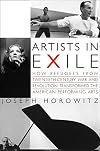
An examination and account of twentieth-century European artists' emigration to America. A tapestry of epic proportions is woven from dozens of extraordinary artistic lives. This is a delightful and energizing read.
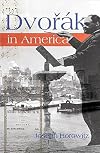
An interesting story about the inspiration for Dvorak's American music- the New World Symphony and the American Quintet. The author traces the details of music in America vis-a-vis the "standard" music of the age- Germanic Neo-Classical centered in staid Vienna. The author limits his discussion to evidence relevant to his point, which is well-focused and effectively argued, but he misses the opportunity for adding more depth by neglecting any source information or bibliography. Within the show more text, he indicates source material directly quoted differently from his own opinion, but he offers no citations, documentary information, or ideas for further reading, all of which is too bad, because the book itself is otherwise well-written and enjoyable to peruse. The source material offers a lesson in late 19th century American language that suggests conversations on racial terminology and the recognition of the value of ethnic diversity. A focus on Dr. Dvorak's assistant, an African-American singer whose traditional songs inspired many parts of the symphony, bookends the narrative, grounding it in an inspiring American story. Between the story of Harry Burleigh is the chronological journey of the Dvorak family in America in 1893, colored by chapters on American musical and popular culture to set the scene. While the book includes an index in the back, as well as stories of the author's inspiration and journey writing the text, the lack of a bibliography proves lamentable. show less
A book written for younger readers, focusing on Czech composer Antonin Dvorak's three-year (1892-1895) sojourn in America as director of the National Conservatory in New York City. The author does an excellent job at capturing the feel of the period -- and how the country-boy-at-heart Dvorak reacted to the noises and bustle of the Big Apple. Central to the story is Dvorak's contention that an American symphonic music had to grow out of Negro spirituals and native American music, a point show more contended by the German-trained composers in the New England School centered in effete Boston. -- An enjoyable enough book, but, since I am not in the intended demographic (and already know something of Dvorak's life and work), difficult to fully appreciate and evaluate. show less
Awards


You May Also Like


Statistics
- Works
- 27
- Members
- 493
- Popularity
- #50,126
- Rating
- 3.9
- Reviews
- 6
- ISBNs
- 35
- Languages
- 2