
Sandy Tolan
Author of The Lemon Tree: An Arab, a Jew, and the Heart of the Middle East
About the Author
Sandy Tolan is the cofounder of Homelands Productions. He has won more than twenty national and international journalism awards, was a Nieman Fellow at Harvard University, and has taught journalism at the University of California, Berkeley
Works by Sandy Tolan
The Lemon Tree (Young Readers' Edition): An Arab, A Jew, and the Heart of the Middle East (2020) 51 copies, 2 reviews
Tagged
Common Knowledge
- Birthdate
- 1956
- Gender
- male
- Occupations
- professor, University of Southern California (USC)’s Annenberg School for Communication and Journalism
journalist - Nationality
- USA
- Birthplace
- Milwaukee, Wisconsin, USA
- Associated Place (for map)
- Wisconsin, USA
Members
Reviews
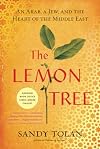
I feel embarrassed writing this, but I don't know a whole lot about the conflict between Palestinians and Israelis in the Middle East. I mean, I've heard of the major milestones that have shaped it during my own lifetime, but the background, I don't know a lot about it. And before reading "The Lemon Tree", I knew even less.
Which is why I think this is a fairly good introduction to the conflict's major dilemmas. Yes, it forgoes some of the historical sweep of the events that it describes to show more focus on the lives of two people, Dalia and Bashir, who have a house and a lemon tree in common. But their relationship also serves as a potent allegory for some of the conflict's most complex and intractable questions. They are, after all, two individuals who have an interest in a very specific peace of land, and, to varying extents, their lives were shaped by the conflict about who really owns it. In the book's introduction, Tolan relates how his book was, astonishingly enough, received warmly by people on both sides of the Israeli/Palestinian conflict, but this was clearly his intention. Whether he's describing what local politics was like in Ramla before the British left or talking about how Dalia's parents' memories of Bulgaria influenced her, the past weighs heavily on everyone here. Unfortunately, one of the other things they seem to have in common is a conviction that they belong in Palestine. Tolan should be credited for explaining how individuals from two communities might have reason to believe this, but it's a a mutual assertion that seemed to be running out of common ground for potential negotiation even when the book was published. The potential for deal-making has not, to say the least, has not improved since.
There are a couple of other interesting themes running through "The Lemon Tree." Tolan writes well about the Bulgarian experience in World War II and how a nominal fascist ally was able to save -- if sometimes at a terrible price -- a very significant percentage of its Jewish community from the Nazis. He also writes well about how the region's politics have become less flexible on both sides as time has gone by. A growing feeling on the Palestinian side that return was not inevitable has made violence insurrection seem more appealing, while Israel's politics have, in some ways, grown less democratic and amenable to any sort of compromise. In this context, it's heartbreaking to read about the slow decline of the Oslo Accords and how much attitudes and facts on the ground have shifted since various two-state solutions were proposed. While Bashir and Dalia's connection still seems like a courageous and valuable thing, "The Lemon Tree" is not necessarily an optimistic book, as both communities' claims are still deeply felt and victory by one side might require the obliteration of the others' entire self-concept. The house describes in this book still stands, and is being used both as a school for local Arab children and as a point of encounter for both communities. It's a small enough hope in a confoundingly difficult situation. show less
Which is why I think this is a fairly good introduction to the conflict's major dilemmas. Yes, it forgoes some of the historical sweep of the events that it describes to show more focus on the lives of two people, Dalia and Bashir, who have a house and a lemon tree in common. But their relationship also serves as a potent allegory for some of the conflict's most complex and intractable questions. They are, after all, two individuals who have an interest in a very specific peace of land, and, to varying extents, their lives were shaped by the conflict about who really owns it. In the book's introduction, Tolan relates how his book was, astonishingly enough, received warmly by people on both sides of the Israeli/Palestinian conflict, but this was clearly his intention. Whether he's describing what local politics was like in Ramla before the British left or talking about how Dalia's parents' memories of Bulgaria influenced her, the past weighs heavily on everyone here. Unfortunately, one of the other things they seem to have in common is a conviction that they belong in Palestine. Tolan should be credited for explaining how individuals from two communities might have reason to believe this, but it's a a mutual assertion that seemed to be running out of common ground for potential negotiation even when the book was published. The potential for deal-making has not, to say the least, has not improved since.
There are a couple of other interesting themes running through "The Lemon Tree." Tolan writes well about the Bulgarian experience in World War II and how a nominal fascist ally was able to save -- if sometimes at a terrible price -- a very significant percentage of its Jewish community from the Nazis. He also writes well about how the region's politics have become less flexible on both sides as time has gone by. A growing feeling on the Palestinian side that return was not inevitable has made violence insurrection seem more appealing, while Israel's politics have, in some ways, grown less democratic and amenable to any sort of compromise. In this context, it's heartbreaking to read about the slow decline of the Oslo Accords and how much attitudes and facts on the ground have shifted since various two-state solutions were proposed. While Bashir and Dalia's connection still seems like a courageous and valuable thing, "The Lemon Tree" is not necessarily an optimistic book, as both communities' claims are still deeply felt and victory by one side might require the obliteration of the others' entire self-concept. The house describes in this book still stands, and is being used both as a school for local Arab children and as a point of encounter for both communities. It's a small enough hope in a confoundingly difficult situation. show less
As much a biography of nations as two families, while still as focused on character and individuals as on history, this is a careful and fascinating work. Built from massive amounts of research and interviews, the work still manages to read like a story and quickly becomes impossible to put down even as it progresses with ever more nuance.
I'm glad to have finally gotten around to reading it, and feel like I've got a far better handle on the intricacies surrounding this part of the Middle show more East.
Recommended. show less
I'm glad to have finally gotten around to reading it, and feel like I've got a far better handle on the intricacies surrounding this part of the Middle show more East.
Recommended. show less
The Lemon Tree (Young Readers' Edition): An Arab, A Jew, and the Heart of the Middle East by Sandy Tolan
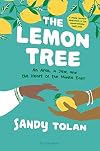
This was published in 2020; the adult original was published in 2006 (next on my list). I can only think about the need to update for the current crisis and to wonder how it would be perceived by the 2 principle players: Bashir Kairi and Dalia Eshkenazi Landau. They have put a very human face on a generations-old conflict that has even deeper roots in ancient religious beliefs. It definitely helped my understand the very complex Palestine-Israel situation a little better - just from a show more factual, time-line perspective - YR editions are good for that! Bashir's family lived in Ramla, in what was British-occupied Palestine until 1948. His father Amhad built their house with his own hands with Jerusalem stone, and Bashir was born there, but was only 3 when his family was chased out of their homes and Ramla became part of the new state of Israel. Dalia was an infant when her parents left Bulgaria after WWII, having escaped Nazi deportation, but having survived Nazi occupation. Bulgaria's move toward Communism made staying untenable, so they took advantage of the Zionist movement of re-location to settle in Israel in 1948, eventually moving into the Kairi family home, which they believed had been abandoned. Bashir and Dalia met in 1967 when Bashir visited Ramla and knocked on the door, explaining his heritage and requesting to see the house. Dalia let him in, and a small boundary was broken down and the two were able to talk, listen and empathize. This became the beginning of a decades-long friendship and appreciation and understanding, though not agreement. Bashir strongly believed in the right of return and the need for Palestine to be restored to its former independent democratic state. Dalia believed removing all the Jews was not a feasible solution; sacrifices from both sides would need to be made. "At the core of Dalia's faith was the conviction that personal dialogue was the key to transformation....If national interest comes before our common humanity," Dalia said, "then there is no hope for transformation, there is no hope for anything!" 114 Bashir was accused of terrorist association with the PFLP and its activism against Israel. He was imprisoned for 15 years, and despite torture was never proven to be involved with any of the attacks. Nor did he confess. His standard reply was: "I believe in one thing: Palestine. And I hate one thing: occupation." (96) In 1985, Dalia inherited her parents' house, but was already living elsewhere. She reached out to Bashir to see what could be done with it (returning it to his family was not possible because they were prohibited by law to own property in Israel.) They agreed to make it a school for Arab Israeli children and it also promoted Jewish-Arab interaction opportunities for kids and she called it Open House. in 1988 Bashir was deported because he was perpetually on a watch-list for terrorism. This was decried by the UN and at the time Dalia wrote an open letter to Bashir in a Jerusalem newspaper that he answered in due time with more detailed info about his family's experience at the hands of the Israelis. Understanding continued to grow. They last saw each other in 2005, but politics had so deteriorated it put their relationship on hold. Still the story is a testimony to the ability to overcome differences and see humanity in the 'other,' even when ideologies don't chance. Thoughtful, hopeful, insightful, and needed. show less
Throughout the book much is made of the "dialog" and "friendship" of the protagonists, Dalia and Bashir. This was completely lost on me. It is Dalia who consistently opens her heart and actively seeks an understanding. She looks beyond herself to the situation of the Arabs that once inhabited the land. She tries to envision a solution. Bashir does none of these things. He does not once open his heart nor seek understanding, he simply goes through the motions of basic Arab hospitality. He show more does not look beyond himself, not once, to see the plight of the Jewish people. He never tries to envision a solution, instead fixating on one single scenario and blinding himself to anything beyond.
The author tried really hard to be fair, and in that I think he does a good job. show less
The author tried really hard to be fair, and in that I think he does a good job. show less
Lists
Awards


You May Also Like


Statistics
- Works
- 5
- Members
- 1,561
- Popularity
- #16,516
- Rating
- 4.0
- Reviews
- 49
- ISBNs
- 32
- Languages
- 3
- Favorited
- 2