
Izzeldin Abuelaish
Author of I Shall Not Hate: A Gaza Doctor's Journey on the Road to Peace and Human Dignity
About the Author
Image credit: Jacob Stevens
Works by Izzeldin Abuelaish
I Shall Not Hate: A Gaza Doctor's Journey on the Road to Peace and Human Dignity (2010) 629 copies, 61 reviews
Tagged
Common Knowledge
- Canonical name
- Abuelaish, Izzeldin
- Legal name
- Abuelaish, Izzeldin
- Birthdate
- 1955-02-03
- Gender
- male
- Education
- University of London (diploma in Obstetrics and Gynecology)
Harvard University (M.A.) - Occupations
- Medical Doctor
professor - Organizations
- University of Toronto
- Awards and honors
- Calgary Peace Prize (2012)
Lombardy Region Peace Prize (2011)
Mahatma Gandhi Peace Award of Canada (2010)
Order of Ontario - Short biography
- Izzeldin Abuelaish, MD, MPH, is a Palestinian medical doctor who was born and raised in the Jabalia refugee camp. He is a proponent of peace between Palestinians and Israelis.
- Nationality
- Palestine (birth)
- Birthplace
- Jabalia Camp, Gaza Strip, Palestine
- Places of residence
- Gaza
Toronto, Ontario, Canada
Members
Reviews
I Shall Not Hate: A Gaza Doctor's Journey on the Road to Peace and Human Dignity by Izzeldin Abuelaish
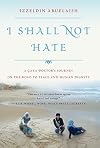
By turns inspiring and heart-breaking, hopeful and horrifying, I Shall Not Hate is Izzeldin Abuelaish's account of an extraordinary life. A Harvard-trained Palestinian doctor who was born and raised in the Jabalia refugee camp in the Gaza Strip and "who has devoted his life to medicine and reconciliation between Israelis and Palestinians" (New York Times), Abuelaish has been crossing the lines in the sand that divide Israelis and Palestinians for most of his life - as a physician who treats show more patients on both sides of the line, as a humanitarian who sees the need for improved health and education for women as the way forward in the Middle East. And, most recently, as the father whose daughters were killed by Israeli soldiers on January 16, 2009, during Israel's incursion into the Gaza Strip. His response to this tragedy made news and won him humanitarian awards around the world. Instead of seeking revenge or sinking into hatred, Abuelaish called for the people in the region to start talking to each other. His deepest hope is that his daughters will be "the last sacrifice on the road to peace between Palestinians and Israelis." show less
(I Shall Not Hate: A Gaza Doctor's Journey on the Road to Peace and Human Dignity) [By: Abuelaish, Izzeldin] [Feb, 2012] by Izzeldin Abuelaish
Given the extreme horrors that are going on in Gaza at the moment, it felt only right to read something this year relating to Gaza, and I appreciate the couple of CRers who recommended this to be through their fine reviews. It's a difficult book to both read and to review, especially given that the horrors which the doctor who wrote this book describes back in 2009 were but the tip of the iceberg of what was to come in Gaza.
Izzeldin Abuelaish, who would go on to be nominated for the Nobel show more Peace Prize, writes with eloquence about the modern day hell that is life in Gaza. Whatever your politics, it's hard to think of many other places in the world where such a large body people are hemmed into such a relatively small space with so little freedom of movement, their land borders, sea and airspace blockaded by Israel with the Palestinians having next to no control over the transportation of basic necessities such as food and medicine into their land. Complex geopolitical wrangling has existed for a very long time in this part of the world and there is fault on both sides, but Abuelaish tries to put his own politics aside and to instead put a human face to the real victims of this ongoing struggle.
The futility of guns and rockets in achieving any type of peaceful resolution to the conflict is core to Abuelaish's message in this book. As an eminent fertility specialist, he spent a considerable amount of his career working in a hospital in Israel, endeavouring to help couples regardless of their faith or nationality and building firm friendships with many Israelis. This, he believes, is a rare privilege in this part of the world, where Palestinians and Israelis have little opportunity to engage with each other, where they only know the 'other side' as faceless enemies, which makes peace all the more difficult. As such, he endeavoured to ensure his own children made the most of opportunities to attend peace camps with Israeli young people, and instilled a strong sense of love and humanity in his children's upbringing. Incredibly sadly, three of his daughters and a niece were killed when an Israeli tank opened fire from the street on the bedroom they were in, and Abuelaish works hard, not just in this novel but in the numerous talks he has given over the years, to prevent them from being faceless statistics - he wants us to see their faces, to know something of their individual personalities, the career dreams they had. He also wants us to know, however hard it is to read, the reality of this type of warfare, his daughters limbs scattered around the wreckage of their bedroom, one daughter decapitated. It's utterly harrowing, but I think it's important not to look the other way to the reality of other people's sufferings.
Coming as I do from Northern Ireland, I appreciate how what Abuelaish says about dialogue being the only route to peace is so true, and also how peace will never be established whilst two peoples are kept largely separated from each other. Peace requires getting to know each other, to stop demonising the other side as something less than human, to look for what we have in common rather than what divides us.
Peace seems further away than ever for Palestinians and Israelis at this point, but we must live in hope. At one point in his career, Abuelaish works with some Israeli doctors on the impact of conflict trauma on Palestinian children living in Gaza and Israeli children living near the border with Gaza. Fifteen years ago PTSD was already becoming endemic amongst these children - it's so difficult to think about what the future holds for the children of today in these areas.
4 stars - a true lesson in compassion but so very hard to read given current events. show less
Izzeldin Abuelaish, who would go on to be nominated for the Nobel show more Peace Prize, writes with eloquence about the modern day hell that is life in Gaza. Whatever your politics, it's hard to think of many other places in the world where such a large body people are hemmed into such a relatively small space with so little freedom of movement, their land borders, sea and airspace blockaded by Israel with the Palestinians having next to no control over the transportation of basic necessities such as food and medicine into their land. Complex geopolitical wrangling has existed for a very long time in this part of the world and there is fault on both sides, but Abuelaish tries to put his own politics aside and to instead put a human face to the real victims of this ongoing struggle.
The futility of guns and rockets in achieving any type of peaceful resolution to the conflict is core to Abuelaish's message in this book. As an eminent fertility specialist, he spent a considerable amount of his career working in a hospital in Israel, endeavouring to help couples regardless of their faith or nationality and building firm friendships with many Israelis. This, he believes, is a rare privilege in this part of the world, where Palestinians and Israelis have little opportunity to engage with each other, where they only know the 'other side' as faceless enemies, which makes peace all the more difficult. As such, he endeavoured to ensure his own children made the most of opportunities to attend peace camps with Israeli young people, and instilled a strong sense of love and humanity in his children's upbringing. Incredibly sadly, three of his daughters and a niece were killed when an Israeli tank opened fire from the street on the bedroom they were in, and Abuelaish works hard, not just in this novel but in the numerous talks he has given over the years, to prevent them from being faceless statistics - he wants us to see their faces, to know something of their individual personalities, the career dreams they had. He also wants us to know, however hard it is to read, the reality of this type of warfare, his daughters limbs scattered around the wreckage of their bedroom, one daughter decapitated. It's utterly harrowing, but I think it's important not to look the other way to the reality of other people's sufferings.
Coming as I do from Northern Ireland, I appreciate how what Abuelaish says about dialogue being the only route to peace is so true, and also how peace will never be established whilst two peoples are kept largely separated from each other. Peace requires getting to know each other, to stop demonising the other side as something less than human, to look for what we have in common rather than what divides us.
Peace seems further away than ever for Palestinians and Israelis at this point, but we must live in hope. At one point in his career, Abuelaish works with some Israeli doctors on the impact of conflict trauma on Palestinian children living in Gaza and Israeli children living near the border with Gaza. Fifteen years ago PTSD was already becoming endemic amongst these children - it's so difficult to think about what the future holds for the children of today in these areas.
4 stars - a true lesson in compassion but so very hard to read given current events. show less
The sheer amount of adversity Abuelaish has had to overcome is astounding, only surpassed by the incredible amount of humanity he somehow still possesses.
Abuelaish takes the time to humanise the ongoing Israeli-Palestinian conflict in terms of the effect it has had on people on both sides - in particular in giving firsthand accounts of what daily life in Gaza entails, to grow up in poverty and insecurity, to be constantly denied basic rights, and to be treated as subhuman -, making it a show more fairly accessible introduction into this ongoing complicated quagmire.
Seeing as his main message is for peaceful coexistence, for both sides to come together through their shared humanity, he is extremely careful to attribute blame to both. As a result, the tone is almost too measured, perhaps intentionally (so as to avoid criticisms of politicising agendas via emotional manipulation) depriving what would have otherwise been intensely devastating scenes of their potency.
Thankfully, the inclusions of third person accounts of Abuelaish painted a more human portrait of him: someone who has had to hide every bit of dissatisfaction and frustration at the unfairness and inequality he is subjected to daily in order to go about his professional and personal life, to be beyond reproach by the Israelis so as to be in a position of power to effect change for Palestinians, but then perhaps then setting an impossible standard for future Palestinians?
I would love an update from Abuelaish (the book included one from 2011) about his thoughts on the current situation and his life since the book was published.
Extra: The Guardian's review is also well worth a read. show less
Abuelaish takes the time to humanise the ongoing Israeli-Palestinian conflict in terms of the effect it has had on people on both sides - in particular in giving firsthand accounts of what daily life in Gaza entails, to grow up in poverty and insecurity, to be constantly denied basic rights, and to be treated as subhuman -, making it a show more fairly accessible introduction into this ongoing complicated quagmire.
Seeing as his main message is for peaceful coexistence, for both sides to come together through their shared humanity, he is extremely careful to attribute blame to both. As a result, the tone is almost too measured, perhaps intentionally (so as to avoid criticisms of politicising agendas via emotional manipulation) depriving what would have otherwise been intensely devastating scenes of their potency.
Thankfully, the inclusions of third person accounts of Abuelaish painted a more human portrait of him: someone who has had to hide every bit of dissatisfaction and frustration at the unfairness and inequality he is subjected to daily in order to go about his professional and personal life, to be beyond reproach by the Israelis so as to be in a position of power to effect change for Palestinians, but then perhaps then setting an impossible standard for future Palestinians?
I would love an update from Abuelaish (the book included one from 2011) about his thoughts on the current situation and his life since the book was published.
Extra: The Guardian's review is also well worth a read. show less
I Shall Not Hate: A Gaza Doctor's Journey on the Road to Peace and Human Dignity by Izzeldin Abuelaish
What an inspiring and emotional story of this man who lost his 3 daughters in a Gaza attack on his Palestinian home! I have started reading this book not knowing much about the long term conflict in the Gaza strip, and I am glad I did so with a beginner's mind; Dr. Abuelaish' recount and amazingly neutral position in this history of conflict only helped me look at this sad and long overdue political argument through his eyes, free of preconceived ideas, stereotyping and generalizations. As a show more health care professional, I agree with his view on seeing medicine as a link between people, a bridge that can unite us all. Although his loss is inconceivably sad and unnecessary, it brought to life a book that should be read by anyone. This book reminds us all that truth is always in the middle, and that humanity is about what we all have in common, and not what sets us apart. A brilliant lesson in how to live and love despite all challenges. show less
 This review was written for LibraryThing Early Reviewers.
Lists
Awards


You May Also Like


Associated Authors
Statistics
- Works
- 1
- Members
- 629
- Popularity
- #40,057
- Rating
- 4.1
- Reviews
- 61
- ISBNs
- 24
- Languages
- 6
