
Charlotte Gill
Author of Eating Dirt: Deep Forests, Big Timber, and Life with the Tree-Planting Tribe
About the Author
Image credit: charlottegill.com
Works by Charlotte Gill
Eating Dirt: Deep Forests, Big Timber, and Life with the Tree-Planting Tribe (2011) 183 copies, 12 reviews
Tagged
Common Knowledge
- Birthdate
- 1972
- Gender
- female
- Occupations
- tree planter
Writing teacher - Organizations
- University of British Columbia
- Awards and honors
- British Columbia Book Award for Non fiction
- Nationality
- Canada
- Birthplace
- London, Ontario, Canada
- Places of residence
- Vancouver, British Columbia, Canada
Powell River, British Columbia, Canada - Associated Place (for map)
- British Columbia, Canada
Members
Reviews

An excellent book about the intrepid tree-planters of British Columbia who spend most of the year in the clear-cut forests. My image of a clear-cut was of a grim area bereft of beauty, yet Gill saw beauty everywhere despite the "permadirt" ingrained in a tree-planter's skin. In addition to describing the people who take on this relentlessly back-breaking work, she talks about forests and forestry with expertise. Her writing is beautifully poetic in places and deserving of all the accolades show more received. show less
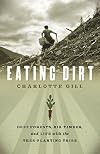
Eating Dirt: Deep Forests, Big Timber, and Life with the Tree-Planting Tribe by Charlotte Gill is a fascinating look at both her 20 year career as a tree planter in the clear cut forests of B.C. and an overall look at trees, forestry and the land and people that sustain this industry.
I expected someone who had spent twenty years of “bending, planting, standing up and moving on” over some of the roughest terrain on the earth to be a woman who is strong, independent and tenacious. What I show more wasn’t expecting was that this woman would write in such a gentle, poetic, literary style. This book strikes the perfect balance between well researched facts and an unflinching, at times humoress description of life as a migrant worker doing a hard and dirty job. As a native of Vancouver Island I particularly loved her wonderful descriptions of the flora and fauna of this unique place, as the following excerpt illustrates:
“We skim along as if on the surface of a plasmatic skin. Flocks of cormorants putter across the surface and dive under the prow of our boat. Islets dot the water. Trees crowd their shores. On lucky days we’ll see orcas and minke whales or whiskered sea lions lazing on knobs of rock, warming their brown blubber in the hazy sun.“
Eating Dirt sheds light on a corner of the logging industry that isn’t well known and manages to do this while walking a fine line between denouncing or glorifying the business. Entertaining and informative, this is a book I relished. show less
I expected someone who had spent twenty years of “bending, planting, standing up and moving on” over some of the roughest terrain on the earth to be a woman who is strong, independent and tenacious. What I show more wasn’t expecting was that this woman would write in such a gentle, poetic, literary style. This book strikes the perfect balance between well researched facts and an unflinching, at times humoress description of life as a migrant worker doing a hard and dirty job. As a native of Vancouver Island I particularly loved her wonderful descriptions of the flora and fauna of this unique place, as the following excerpt illustrates:
“We skim along as if on the surface of a plasmatic skin. Flocks of cormorants putter across the surface and dive under the prow of our boat. Islets dot the water. Trees crowd their shores. On lucky days we’ll see orcas and minke whales or whiskered sea lions lazing on knobs of rock, warming their brown blubber in the hazy sun.“
Eating Dirt sheds light on a corner of the logging industry that isn’t well known and manages to do this while walking a fine line between denouncing or glorifying the business. Entertaining and informative, this is a book I relished. show less
This is Charlotte Gill's memoir of her twenty-year career as a tree planter. Beginning each February, she replanted forests, following the spring weather as it moved thousands of miles through British Columbia, and ending her work year in October. This is an insider's view of the life of one of the most physically grueling and dirtiest jobs around--so dirty, that she refers to being "earth-stained" with "permadirt," and wears disposable clothes. This is also a job that required her to eat show more 4,000 calories a day just so she could get up and do it again the next day. I found this look at her life absolutely fascinating. In between her stories of bears, solitude, blistering heat, camaraderie, bruises, bugs, rain, helicopters, lousy motels, and bending over thousands of times a day, she talks about the history of humans and forests, and the importance of forests to our planet. She weaves these pieces together with some beautiful, poetic writing, lush with similes and metaphors that she creates through keen observation.
This will definitely go on the list of my top books of the year. I'm not the only one who enjoyed it--lots of rave reviews around the internet, nominations for literary non-fiction prizes, and it won the British Columbia National Award for Canadian Non-fiction, which awarded the author with $40,000. I think she well-earned it. show less
This will definitely go on the list of my top books of the year. I'm not the only one who enjoyed it--lots of rave reviews around the internet, nominations for literary non-fiction prizes, and it won the British Columbia National Award for Canadian Non-fiction, which awarded the author with $40,000. I think she well-earned it. show less
Gill describes, in vivid and poetic detail, the life of a tree planter. It's grueling, punishing work, but she revels in the hardships. Her writing is wonderful: lyrical and vivid, and really not the kind of writing you would expect to come from this kind of work.
Gill also details the history of logging, from ancient Mesopotamia to the present day. She talks about the ecology of forests, and how little we understand even today about all of the creatures that make up the forest ecosystem.
I show more enjoyed the book thoroughly, but I did have a few complaints. When she is talking about her work as a tree planter, she skips around in time a lot, from her first summer of tree planting to more recent ones, in no particular order and often without much context. Her writing in these sections was so gorgeous that I enjoyed reading it just for the sheer pleasure of language, but there wasn't much by way of story, and I often wasn't sure why she was talking about certain episodes, other than the joy of describing them. As much as I enjoyed the writing, the purposelessness of it got a little frustrating.
I also wished she had devoted more time to history and ecology. I was particularly interested in these parts of the book, and she throws out some really fascinating information, but doesn't delve into it very deeply.
I live in the Pacific Northwest, so I often drive past newly-logged forests and trucks loaded with newly-cut trees, and I am never quite sure how to feel about it... Humans need wood, but the devastation caused by logging is heartbreaking. I was hoping that this book would give me a little more clarity about this issue, but instead it just muddled it more and made me even more uncertain and ambivalent. That's more a criticism of me than of her: I can't blame Gill for not writing the book I hoped I was about to read.
Overall, though, this was a fascinating book, and worth reading for the writing alone. show less
Gill also details the history of logging, from ancient Mesopotamia to the present day. She talks about the ecology of forests, and how little we understand even today about all of the creatures that make up the forest ecosystem.
I show more enjoyed the book thoroughly, but I did have a few complaints. When she is talking about her work as a tree planter, she skips around in time a lot, from her first summer of tree planting to more recent ones, in no particular order and often without much context. Her writing in these sections was so gorgeous that I enjoyed reading it just for the sheer pleasure of language, but there wasn't much by way of story, and I often wasn't sure why she was talking about certain episodes, other than the joy of describing them. As much as I enjoyed the writing, the purposelessness of it got a little frustrating.
I also wished she had devoted more time to history and ecology. I was particularly interested in these parts of the book, and she throws out some really fascinating information, but doesn't delve into it very deeply.
I live in the Pacific Northwest, so I often drive past newly-logged forests and trucks loaded with newly-cut trees, and I am never quite sure how to feel about it... Humans need wood, but the devastation caused by logging is heartbreaking. I was hoping that this book would give me a little more clarity about this issue, but instead it just muddled it more and made me even more uncertain and ambivalent. That's more a criticism of me than of her: I can't blame Gill for not writing the book I hoped I was about to read.
Overall, though, this was a fascinating book, and worth reading for the writing alone. show less
Lists
Awards


You May Also Like


Associated Authors
Statistics
- Works
- 3
- Members
- 247
- Popularity
- #92,309
- Rating
- 3.9
- Reviews
- 12
- ISBNs
- 16
