
John Vaillant
Author of The Tiger: A True Story of Vengeance and Survival
About the Author
Image credit: Journalist John Vaillant at the 2015 Texas Book Festival. By Larry D. Moore, CC BY-SA 4.0, https://commons.wikimedia.org/w/index.php?curid=44599458
Works by John Vaillant
Associated Works
Tagged
Common Knowledge
- Canonical name
- Vaillant, John
- Birthdate
- 1962-06-04
- Gender
- male
- Education
- Oberlin College (BA|1984)
- Occupations
- journalist
- Awards and honors
- Governor General's Award (2005)
Writers' Trust Prize for Non-Fiction (2005)
British Columbia's National Award for Canadian Non-Fiction
The Globe and Mail Best Book for Science (2010)
Nicolas Bouvier Prize (2012)
Windham–Campbell Literature Prize (2014) (show all 7)
Baillie Gifford Prize for Non-Fiction (2023) - Relationships
- Vaillant, George C. (grandfather)
Vaillant, George E. (father) - Short biography
- John Vaillant has written for The New Yorker, The Atlantic, National Geographic–Adventure, Outside and Men’s Journal. He lives in Vancouver with his wife (an anthropologist and a potter) and their two children. (from www.randomhouse.ca)
- Nationality
- Canada
USA - Birthplace
- Cambridge, Massachusetts, USA
- Places of residence
- Vancouver, British Columbia, Canada
- Associated Place (for map)
- Cambridge, Massachusetts, USA
Members
Reviews

I loved this book so much that I bought my own paper copy after listening to it and starting reading again immediately.
The main layer of the book is, of course, about an Amur Tiger who kills people in the Russian Far East and a group of tiger hunters who set out to put him down because he killed another hunter. However, this book is about so much more and that really made it into the great book it is for me.
Many times I thought about the immense amount of research that must have gone into show more this book because it talks about the vegetation in that part of the Taiga; the native people and their history, culture, and traditions; Russian and Soviet history and conflicts with Asian neighbors; the impact of the dying and now dead Soviet empire on the livelihood of people in the Far East.
It is also very much a book about how we as selfish humans leave no room for other living creatures and then are surprised that these creatures lash out in desperate acts of self-defense. I will give this book to many people and recommend it to everybody I know. Very informative and entertaining. show less
The main layer of the book is, of course, about an Amur Tiger who kills people in the Russian Far East and a group of tiger hunters who set out to put him down because he killed another hunter. However, this book is about so much more and that really made it into the great book it is for me.
Many times I thought about the immense amount of research that must have gone into show more this book because it talks about the vegetation in that part of the Taiga; the native people and their history, culture, and traditions; Russian and Soviet history and conflicts with Asian neighbors; the impact of the dying and now dead Soviet empire on the livelihood of people in the Far East.
It is also very much a book about how we as selfish humans leave no room for other living creatures and then are surprised that these creatures lash out in desperate acts of self-defense. I will give this book to many people and recommend it to everybody I know. Very informative and entertaining. show less
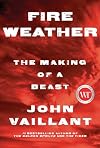
A number of years ago CBC published a list of 100 True Stories that Make You Proud to be Canadian. I think CBC needs to update the list and include this book on it. (Vaillant did have a book on that list--The Tiger -- which was a great book but it took place mostly in Siberia, whereas this is a story set right here.) Even if you followed every minute of coverage of the Fort MacMurray fire, I guarantee you will learn something new.
The book starts off with Origin Stories. Vaillant goes into show more how the oil industry started and grew into a mammoth business. The tar sands in northern Alberta were far from ideal in terms of accessibility or product but the oil companies and the Alberta government knew they could exploit this resource if they threw enough money and people at it. Years passed before the tar sands started showing a profit. And, like all resource industries, they are subject to the vicissitudes of the market place. Nevertheless, by May of 2016, over 100,000 people lived in Fort MacMurray and they earned incredible money. They had all the trappings of people with big money, big houses, big vehicles, lots of toys and lifestyle to equal the rich and famous.
In the second part of the book Vaillant describes the fire that overtook Fort Mac. On May 3, a wildfire started in the boreal forest close to the city. Within hours, everyone except first responders were evacuated as the city burned around them. Incredibly, no one died in the fire and only one person was killed as all these people evacuated. Vaillant goes into detail about why the fire was so bad but I won't repeat that. Just know that it was a fire like no-one there had ever experienced before. Actually, that's not quite true. A few years earlier, another Alberta community called Slave Lake experienced a similar conflagration and their fire chief and his son drove to Fort MacMurray to give the fire fighters there the benefit of their advice. However, by the time they got there any hope of turning the fire back was gone. Two story houses disappeared in five minutes after the fire struck them. Entire neighbourhoods were lost in the matter of minutes. The local fire fighters were aided by the provincial fire officials and heavy equipment from the mines were brought in. In some areas, this heavy equipment tore down new houses and pushed them into their basements to provide a fire break. It took several weeks before people could come back into the city and the fire was not put out completely until the next year.
The third part of the book, Reckonings, develops the connection between climate change and massive fires. One bombshell I learned from the book was that the oil companies had themselves done research on the increase of CO2 in the atmosphere and how that would impact Earth's climate but they disbanded the research in 1984. It is similar to the tobacco industry denying the health effects of their product for years after they knew from their own findings what was happening. And this may be the way, Vaillant speculates, to finally get to grips with climate change. Already there have been court challenges, some of which have been successful. If it is prohibitively expensive to carry on business as usual, then the oil industry will be forced to change.
One of the concepts this book introduced me to is the Lucretius Problem. Put simply, it is that a person will have difficulty imagining and assimilating things outside of their own personal experience. In the epic poem De Rarum Natura, Titus Lucretius Carus says
"Yes, and so any river is huge if it be the greatest man has seen
who has seen no greater before..
and each imagines as huge all things of every kind
which are greatest of those he has seen..."
Since reading about the Lucretius Problem I have postulated how it applies in any number of situations from people not shoveling the city sidewalk in front of their house because they don't personally walk the neighbourhood to children not learning to read cursive because they are not exposed to it. It's a game changer I think. show less
The book starts off with Origin Stories. Vaillant goes into show more how the oil industry started and grew into a mammoth business. The tar sands in northern Alberta were far from ideal in terms of accessibility or product but the oil companies and the Alberta government knew they could exploit this resource if they threw enough money and people at it. Years passed before the tar sands started showing a profit. And, like all resource industries, they are subject to the vicissitudes of the market place. Nevertheless, by May of 2016, over 100,000 people lived in Fort MacMurray and they earned incredible money. They had all the trappings of people with big money, big houses, big vehicles, lots of toys and lifestyle to equal the rich and famous.
In the second part of the book Vaillant describes the fire that overtook Fort Mac. On May 3, a wildfire started in the boreal forest close to the city. Within hours, everyone except first responders were evacuated as the city burned around them. Incredibly, no one died in the fire and only one person was killed as all these people evacuated. Vaillant goes into detail about why the fire was so bad but I won't repeat that. Just know that it was a fire like no-one there had ever experienced before. Actually, that's not quite true. A few years earlier, another Alberta community called Slave Lake experienced a similar conflagration and their fire chief and his son drove to Fort MacMurray to give the fire fighters there the benefit of their advice. However, by the time they got there any hope of turning the fire back was gone. Two story houses disappeared in five minutes after the fire struck them. Entire neighbourhoods were lost in the matter of minutes. The local fire fighters were aided by the provincial fire officials and heavy equipment from the mines were brought in. In some areas, this heavy equipment tore down new houses and pushed them into their basements to provide a fire break. It took several weeks before people could come back into the city and the fire was not put out completely until the next year.
The third part of the book, Reckonings, develops the connection between climate change and massive fires. One bombshell I learned from the book was that the oil companies had themselves done research on the increase of CO2 in the atmosphere and how that would impact Earth's climate but they disbanded the research in 1984. It is similar to the tobacco industry denying the health effects of their product for years after they knew from their own findings what was happening. And this may be the way, Vaillant speculates, to finally get to grips with climate change. Already there have been court challenges, some of which have been successful. If it is prohibitively expensive to carry on business as usual, then the oil industry will be forced to change.
One of the concepts this book introduced me to is the Lucretius Problem. Put simply, it is that a person will have difficulty imagining and assimilating things outside of their own personal experience. In the epic poem De Rarum Natura, Titus Lucretius Carus says
"Yes, and so any river is huge if it be the greatest man has seen
who has seen no greater before..
and each imagines as huge all things of every kind
which are greatest of those he has seen..."
Since reading about the Lucretius Problem I have postulated how it applies in any number of situations from people not shoveling the city sidewalk in front of their house because they don't personally walk the neighbourhood to children not learning to read cursive because they are not exposed to it. It's a game changer I think. show less
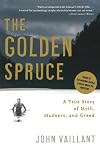
Valliant has quickly become one of my favorite narrative nonfiction writers and this book shows his early chops. It starts with a mystery disappearance of a Native activist, named Grant Hadwin, in British Columbia's Queen Charlotte Islands. He had been charged with setting a unique Sitka golden spruce on fire, in protest of the massive logging industry. Vaillant perfectly lays out such intricate details, dealing with logging, conservation and the environment. He is a master at this approach. show more Highly recommended. show less
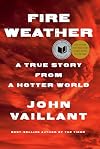
Summary: An account of the Fort McMurray fire of 2016, when a forest fire consumed a town and became a harbinger of things to come in a hotter, drier world.
I never wore face masks outdoors during all of the COVID epidemic. I did several days last summer when a smoky haze that had traveled a thousand miles settled over the Midwest and other parts of the eastern United States. For much of the summer, vast tracts of forest were on fire in Canada. News just today indicates there are zombie fires show more burning underground and dry conditions in western Canada portend another fire summer.
John Vaillant tells the story of what happened when a raging wilderness fire intersected with an oil industry town, Fort McMurray in Alberta. Fort McMurray grew to a city of 90,000 people because of our insatiable thirst for oil. The tar sands nearby are rich in bitumen, which can be converted through energy intensive processes to the petroleum products helping to warm our atmosphere. Fort McMurray also exists in the heart of the boreal forests that stretch across the north of Canada.
Conditions in the spring of 2016 were exceptionally warm and dry. A high pressure system yielded blue skies unseasonably high temperatures and low humidity, further drying out the forest around the town. On May 1, a small fire known as Fire 009, the ninth fire around Fort McMurray, was sited southwest of the town, on the other side of the river. By May 2, officials began to worry, even as they projected calm. But those in the know knew May 3 would be hard. No one knew how hard. Another hot, dry day, with winds coming around to blow out of the southwest and freshening. All the ingredients were present for the fire to explode…and it did. The morning began with brilliant blue skies. Suddenly, at 12:15, everyone discovered that a monster was among them. In rapid order, neighborhoods were consumed. While people got up expecting a normal day, suddenly they needed to evacuate–immediately–90,000 of them.
The amazing story is that none of them died. But much of the town did. Firefighters tore down rows of houses and were able to save others. What they discovered however was that when a fire became this intense, rivers were not a barrier, that fire tornados and other freak meteorological occurrences could cast the fire over firebreaks and natural obstacles. The fire would seek fuel.
That’s one of the interesting things the emerges from Vaillant’s rendering of the many eyewitness accounts–that the fire was a kind of living thing–akin to the Balrog in The Lord of the Rings. He describes the flammability of the boreal forest, particularly the black spruces, dripping with sap, exploding into flame as the wall of heat of the fire approaches. They are like bombs, containing all this stored energy. Vaillant describes another kind of bomb–the residential houses in the fire’s path. Made of vinyl siding, kiln dried wood framing, shingled roofs, polyurethane, polyester in furniture curtains and clothes, and all sorts of other petroleum based plastics throughout as well as gas cans, propane tanks, and other flammables. Houses went from livable structures to holes in the ground in less than five minutes.
Vaillant describes the stunning awakening from “this is no big deal” to “the apocalypse has come” of the residents. He goes on to describe the slower, more insidious burn as our atmosphere warms. He retells the story of what we know and when we knew it about greenhouse gasses and anthropogenic global warming. The basic physics was demonstrated in 1856. By 1956, scientists were testifying before Congress. Their predictions, even back then are startlingly accurate. There was no partisan debate. But nothing was done. As early as the 1970’s, the oil companies own scientists knew. And there was a window of time when something could be done to avert the dramatic climate changes we are seeing. Now we may be facing a rapidly closing window to avert changes on such a scale that they result in a mass extinction of much of life.
Vaillant is one of many voices describing the future on our doorstep. Year round fire seasons in many parts of the world is the impact on which he focuses. Fuel, dry conditions, wind, and a spark are all that’s needed for another Fort McMurray at the wilderness urban interfaces where many of us live. The irony is that we keep lighting the fire that fuels the fire everyday. Fort McMurray with its petrochemical industry, is in microcosm the story in which we all are implicated. Vaillant not only tells a riveting story about a monster fire. He tells a sobering story that demands we face the reality of the world we are leaving our children and grandchildren. It could very well be one where they are fighting, and maybe running, for their lives. But to where will they run? show less
I never wore face masks outdoors during all of the COVID epidemic. I did several days last summer when a smoky haze that had traveled a thousand miles settled over the Midwest and other parts of the eastern United States. For much of the summer, vast tracts of forest were on fire in Canada. News just today indicates there are zombie fires show more burning underground and dry conditions in western Canada portend another fire summer.
John Vaillant tells the story of what happened when a raging wilderness fire intersected with an oil industry town, Fort McMurray in Alberta. Fort McMurray grew to a city of 90,000 people because of our insatiable thirst for oil. The tar sands nearby are rich in bitumen, which can be converted through energy intensive processes to the petroleum products helping to warm our atmosphere. Fort McMurray also exists in the heart of the boreal forests that stretch across the north of Canada.
Conditions in the spring of 2016 were exceptionally warm and dry. A high pressure system yielded blue skies unseasonably high temperatures and low humidity, further drying out the forest around the town. On May 1, a small fire known as Fire 009, the ninth fire around Fort McMurray, was sited southwest of the town, on the other side of the river. By May 2, officials began to worry, even as they projected calm. But those in the know knew May 3 would be hard. No one knew how hard. Another hot, dry day, with winds coming around to blow out of the southwest and freshening. All the ingredients were present for the fire to explode…and it did. The morning began with brilliant blue skies. Suddenly, at 12:15, everyone discovered that a monster was among them. In rapid order, neighborhoods were consumed. While people got up expecting a normal day, suddenly they needed to evacuate–immediately–90,000 of them.
The amazing story is that none of them died. But much of the town did. Firefighters tore down rows of houses and were able to save others. What they discovered however was that when a fire became this intense, rivers were not a barrier, that fire tornados and other freak meteorological occurrences could cast the fire over firebreaks and natural obstacles. The fire would seek fuel.
That’s one of the interesting things the emerges from Vaillant’s rendering of the many eyewitness accounts–that the fire was a kind of living thing–akin to the Balrog in The Lord of the Rings. He describes the flammability of the boreal forest, particularly the black spruces, dripping with sap, exploding into flame as the wall of heat of the fire approaches. They are like bombs, containing all this stored energy. Vaillant describes another kind of bomb–the residential houses in the fire’s path. Made of vinyl siding, kiln dried wood framing, shingled roofs, polyurethane, polyester in furniture curtains and clothes, and all sorts of other petroleum based plastics throughout as well as gas cans, propane tanks, and other flammables. Houses went from livable structures to holes in the ground in less than five minutes.
Vaillant describes the stunning awakening from “this is no big deal” to “the apocalypse has come” of the residents. He goes on to describe the slower, more insidious burn as our atmosphere warms. He retells the story of what we know and when we knew it about greenhouse gasses and anthropogenic global warming. The basic physics was demonstrated in 1856. By 1956, scientists were testifying before Congress. Their predictions, even back then are startlingly accurate. There was no partisan debate. But nothing was done. As early as the 1970’s, the oil companies own scientists knew. And there was a window of time when something could be done to avert the dramatic climate changes we are seeing. Now we may be facing a rapidly closing window to avert changes on such a scale that they result in a mass extinction of much of life.
Vaillant is one of many voices describing the future on our doorstep. Year round fire seasons in many parts of the world is the impact on which he focuses. Fuel, dry conditions, wind, and a spark are all that’s needed for another Fort McMurray at the wilderness urban interfaces where many of us live. The irony is that we keep lighting the fire that fuels the fire everyday. Fort McMurray with its petrochemical industry, is in microcosm the story in which we all are implicated. Vaillant not only tells a riveting story about a monster fire. He tells a sobering story that demands we face the reality of the world we are leaving our children and grandchildren. It could very well be one where they are fighting, and maybe running, for their lives. But to where will they run? show less
Lists
Trees (1)
read in 2024 (1)
Awards


You May Also Like


Associated Authors
Statistics
- Works
- 4
- Also by
- 1
- Members
- 3,531
- Popularity
- #7,193
- Rating
- 4.1
- Reviews
- 168
- ISBNs
- 68
- Languages
- 10
- Favorited
- 5
