
Catherine Bush (1) (1961–)
Author of The Rules of Engagement
For other authors named Catherine Bush, see the disambiguation page.
About the Author
Image credit: Courtesy of Serpent's Tail Press
Works by Catherine Bush
The Journey Prize anthology : short fiction from the best of Canada's new writers (2000) — Editor — 2 copies
Tagged
Common Knowledge
- Birthdate
- 1961
- Gender
- female
- Education
- Yale University (AB - Comparative Literature)
- Occupations
- novelist
associate professor (Creative Writing) - Organizations
- University of Guelph
- Nationality
- Canada (birth)
- Birthplace
- Toronto, Ontario, Canada
- Places of residence
- New York, New York, USA
- Associated Place (for map)
- Canada
Members
Reviews
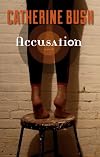
From the back of the book:
"While in Copenhagen, Sara Wheeler, a Toronto journalist, happens upon Cirkus Mirak, a touring Ethiopian children's circus. She later meets and is convinced to drive the circus founder, Raymond Renaud, through the night from Toronto to Montreal. Such chance beginnings lead to later fateful encounters, as renowned novelist Catherine Bush artfully confronts the destructive power of allegations.
With Accusation, Bush again proves herself one of Canada's finest authors show more as she examines the impossibility inherent in attempting to uncover "the truth." After a friend of Sara's begins work on a documentary about the circus, unsettling charges begin to float to the surface, disturbing tales of sexual and physical abuse at the hands of Raymond. Accounts and anecdotes mount, denunciations fly, and while Sara tries to untangle the narrative knots and determine what to believe, the concept of a singular (truth) becomes slippery. Her present search is simultaneously haunted by her past."
Moving between Canada, Ethiopia, and Australia, Accusation follows a network of lives that intersect with life-altering consequence, painfully revealing that the best of intentions can still lead to disaster, yet from disaster spring seeds of renewal and hope.
Catherine Bush is a beautiful, intellectual writer whose attention to craft just shines off every page. Consider this character description: There was a touch of self-consciousness in the way he used his voice, as if he were playing an instrument, yet his warmth and combination of fervour and charm overtook whatever was manipulative. He breathed out a generosity that made him the kind of man you felt compelled to watch." After reading hundreds of books with throw-away descriptions about how tall someone is, or what color their hair is, what a relief it is to find myself in the hands of a masterful prose-smith.
Beyond the wonderful technical aspects of the book, Bush tackles the big moral, ethical questions. A man is accused of a reprehensible crime. How does one defend oneself against accusation? She says, "What did true denial sound like? If accused, you were speaking always, into the wind of the possiblity of not being believed, you had to try to convince your listener, and anything might sound defensive or overcompensatory or strident, you battered yourself against the wall of what you had not done but others claimed you had, and somehow you had to dissolve the wall or leap over it.. . . What was it that Raymond Renaud had said in teh car that July night, something about how when people believe a thing to be true it is very hard to convince them it isn't. It is very difficult to prove something in the negative: I did not do it. Had he spoken with the vehemence of someone who'd already had an experience of trying to counter another's claim, of not being believed.?"
At first I wasn't convinced she'd chosen the right narrator. Sara is a peripheral narrator, although her job as a journalist gives her more opportunity both to ferret out the truth and to (inadvertently) possibly become part of the story. However, I was soon won over. By having the reader experience the story through Sara, we are allowed to doubt as she doubts, to cry out for justice as she does, to feel her ambivalence and to question our own ability to find the truth. It's a risky choice, but one that works, and I tip my hat to her.
It's a book that makes you think, and keeps you turning pages. Recommended. show less
"While in Copenhagen, Sara Wheeler, a Toronto journalist, happens upon Cirkus Mirak, a touring Ethiopian children's circus. She later meets and is convinced to drive the circus founder, Raymond Renaud, through the night from Toronto to Montreal. Such chance beginnings lead to later fateful encounters, as renowned novelist Catherine Bush artfully confronts the destructive power of allegations.
With Accusation, Bush again proves herself one of Canada's finest authors show more as she examines the impossibility inherent in attempting to uncover "the truth." After a friend of Sara's begins work on a documentary about the circus, unsettling charges begin to float to the surface, disturbing tales of sexual and physical abuse at the hands of Raymond. Accounts and anecdotes mount, denunciations fly, and while Sara tries to untangle the narrative knots and determine what to believe, the concept of a singular (truth) becomes slippery. Her present search is simultaneously haunted by her past."
Moving between Canada, Ethiopia, and Australia, Accusation follows a network of lives that intersect with life-altering consequence, painfully revealing that the best of intentions can still lead to disaster, yet from disaster spring seeds of renewal and hope.
Catherine Bush is a beautiful, intellectual writer whose attention to craft just shines off every page. Consider this character description: There was a touch of self-consciousness in the way he used his voice, as if he were playing an instrument, yet his warmth and combination of fervour and charm overtook whatever was manipulative. He breathed out a generosity that made him the kind of man you felt compelled to watch." After reading hundreds of books with throw-away descriptions about how tall someone is, or what color their hair is, what a relief it is to find myself in the hands of a masterful prose-smith.
Beyond the wonderful technical aspects of the book, Bush tackles the big moral, ethical questions. A man is accused of a reprehensible crime. How does one defend oneself against accusation? She says, "What did true denial sound like? If accused, you were speaking always, into the wind of the possiblity of not being believed, you had to try to convince your listener, and anything might sound defensive or overcompensatory or strident, you battered yourself against the wall of what you had not done but others claimed you had, and somehow you had to dissolve the wall or leap over it.. . . What was it that Raymond Renaud had said in teh car that July night, something about how when people believe a thing to be true it is very hard to convince them it isn't. It is very difficult to prove something in the negative: I did not do it. Had he spoken with the vehemence of someone who'd already had an experience of trying to counter another's claim, of not being believed.?"
At first I wasn't convinced she'd chosen the right narrator. Sara is a peripheral narrator, although her job as a journalist gives her more opportunity both to ferret out the truth and to (inadvertently) possibly become part of the story. However, I was soon won over. By having the reader experience the story through Sara, we are allowed to doubt as she doubts, to cry out for justice as she does, to feel her ambivalence and to question our own ability to find the truth. It's a risky choice, but one that works, and I tip my hat to her.
It's a book that makes you think, and keeps you turning pages. Recommended. show less
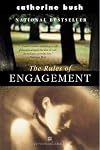
From the book back cover:
Arcadia Hearne is a researcher who studies contemporary war and specializes in issues of military intervention. Far from her hometown of Toronto, she has created a new life for herself in London. While she pursues the study of violence, surveying the rich arsenal of current global conflicts, she refuses to put herself either physically or emotionally at risk. Thrust into a world full of people who, like her, hide secrets and are in flight from difficult pasts, show more Arcadia is compelled both to contemplate new possibilities for intervention and to confront her own painful history.
This one took some time for me to immerse myself in. The prose is intelligent and elegant, interspersed with a philosophical examination of love and conflict. We learn slowly through a series of memory flashbacks why Arcadia fled Toronto and watch as the compulsion within her to face this past grows. It is the exploration of what one is willing to risk and how that made this story a compelling read for me. "It isn't just a matter of risk. Given that you can't act everywhere, do everything, just as you can't intervene in all conflicts, you have to determine your zones of responsibility. That's what we grapple with in intervention studies. You have to choose where you're going to take your risks, set limits. As you travel from zones of safety into zones of danger. That's what makes risk meaningful." Arcadia's shift from safety into zones of danger is triggered when her sister Lux asks her to deliver a package to a refugee from Somalia. Arcadia's personal examination of risks and her boundaries is central to the story.
Arcadia was not an easy character for me to connect with. The daughter of a nuclear engineer, she is an armchair war expert that has never visited the global conflict zones her work focuses on. Never witnessed first hand the brutalities of the civil war in the southern Sudan, the bodies pulled from the mass graves in Srebrenica, the Bosnian refugee camp rape victims. Instead, she deals in the methodical and moralistic examination of how warfare and conflict is personalized, an interesting profession for one whose coping mechanism when faced with an event during her university days is to flee to England and turn her back on the event. When she does decide to face her personal conflict, it is for a self-serving purpose that grated against my sensibilities.
That aside, Bush does an excellent job in taking the cold, impersonal, methodical examination of warfare and transposing this onto the emotional and personal examination of conflict in the arena of love, making what some will call a cliched approach to the topic refreshingly different to read. My favorite quote from the book: "I used to long for love as a clear and steady state, though perhaps there is no love that does not hold the seed of something else - just as there is no steady state of the body, and no state at all without some inconsistency, some internal contradiction, some trace of weather patterns, the possibility of migration or other turbulence. Perhaps the question is simply whether love enfolds an ambivalence you can live with, or one you can't."
Overall, not an easy story as it requires a commitment from the reader to delve into a philosophical discussion of warfare but worth the time and effort to read. show less
Arcadia Hearne is a researcher who studies contemporary war and specializes in issues of military intervention. Far from her hometown of Toronto, she has created a new life for herself in London. While she pursues the study of violence, surveying the rich arsenal of current global conflicts, she refuses to put herself either physically or emotionally at risk. Thrust into a world full of people who, like her, hide secrets and are in flight from difficult pasts, show more Arcadia is compelled both to contemplate new possibilities for intervention and to confront her own painful history.
This one took some time for me to immerse myself in. The prose is intelligent and elegant, interspersed with a philosophical examination of love and conflict. We learn slowly through a series of memory flashbacks why Arcadia fled Toronto and watch as the compulsion within her to face this past grows. It is the exploration of what one is willing to risk and how that made this story a compelling read for me. "It isn't just a matter of risk. Given that you can't act everywhere, do everything, just as you can't intervene in all conflicts, you have to determine your zones of responsibility. That's what we grapple with in intervention studies. You have to choose where you're going to take your risks, set limits. As you travel from zones of safety into zones of danger. That's what makes risk meaningful." Arcadia's shift from safety into zones of danger is triggered when her sister Lux asks her to deliver a package to a refugee from Somalia. Arcadia's personal examination of risks and her boundaries is central to the story.
Arcadia was not an easy character for me to connect with. The daughter of a nuclear engineer, she is an armchair war expert that has never visited the global conflict zones her work focuses on. Never witnessed first hand the brutalities of the civil war in the southern Sudan, the bodies pulled from the mass graves in Srebrenica, the Bosnian refugee camp rape victims. Instead, she deals in the methodical and moralistic examination of how warfare and conflict is personalized, an interesting profession for one whose coping mechanism when faced with an event during her university days is to flee to England and turn her back on the event. When she does decide to face her personal conflict, it is for a self-serving purpose that grated against my sensibilities.
That aside, Bush does an excellent job in taking the cold, impersonal, methodical examination of warfare and transposing this onto the emotional and personal examination of conflict in the arena of love, making what some will call a cliched approach to the topic refreshingly different to read. My favorite quote from the book: "I used to long for love as a clear and steady state, though perhaps there is no love that does not hold the seed of something else - just as there is no steady state of the body, and no state at all without some inconsistency, some internal contradiction, some trace of weather patterns, the possibility of migration or other turbulence. Perhaps the question is simply whether love enfolds an ambivalence you can live with, or one you can't."
Overall, not an easy story as it requires a commitment from the reader to delve into a philosophical discussion of warfare but worth the time and effort to read. show less
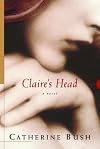
When Claire Barber learns that her older sister, Rachel, has vanished, she disrupts her life in Toronto to follow news of her sister to New York, Montreal, Amsterdam, Italy, Las Vegas and Mexico. Claire is worried that Rachel's severe and worsening migraines may have pushed her over the edge. Claire also suffers from migraines and her search for her sister becomes an emotional journey. This novel explores how we live with pain, how much we can bear and what we would be willing to give up to show more free ourselves from it. I really liked the character development and exploration of living with pain. show less
This is a very powerful novel about accusations; about how, once made, accusations linger in the public realm, and in the relationship between people who believe or reject the accusation.
Sara, a Canadian reporter, happens upon an Ethiopian circus and is immediately charmed and amazed by the child performers. She later meets the man (fellow Canadian Raymond Renaud) who runs the circus and trains the children, who would otherwise likely live in poverty.
Later, serious allegations of sexual show more abuse are made against Raymond, and Sara is unsure what to believe. Her feelings are complicated as she was once falsely accused of a more minor crime.
Sparsely written, leaving room for different interpretations...this is a very good book. show less
Sara, a Canadian reporter, happens upon an Ethiopian circus and is immediately charmed and amazed by the child performers. She later meets the man (fellow Canadian Raymond Renaud) who runs the circus and trains the children, who would otherwise likely live in poverty.
Later, serious allegations of sexual show more abuse are made against Raymond, and Sara is unsure what to believe. Her feelings are complicated as she was once falsely accused of a more minor crime.
Sparsely written, leaving room for different interpretations...this is a very good book. show less
Awards


You May Also Like


Statistics
- Works
- 6
- Members
- 287
- Popularity
- #81,378
- Rating
- 3.8
- Reviews
- 9
- ISBNs
- 36
- Languages
- 2