
Timothy Taylor (2)
Author of Stanley Park
For other authors named Timothy Taylor, see the disambiguation page.
Works by Timothy Taylor
Associated Works
Tagged
Common Knowledge
- Birthdate
- 1963
- Gender
- male
- Education
- Queen's University at Kingston
University of Alberta - Nationality
- Canada
- Birthplace
- Venezuela
- Places of residence
- Vancouver, British Columbia, Canada
Edmonton, Alberta, Canada
Toronto, Ontario, Canada - Associated Place (for map)
- Canada
Members
Reviews
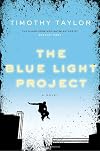
I am not sure if Timothy Taylor is prescient or just knows how to read the wind, but The Blue Light Project, published in April 2011 and undoubtedly in the works for some time before that, prequels perfectly the sensations, if not the motivations, of the Occupy Wall Street protests, down to the forming of factions within, the pre-emptive overreactions of the authorities, the implied presence of agents provocateur, and the unsettled remains of the aftermath.
Set amid a three-day hostage seige show more in an unamed city, the story unfolds around the intersection of three (plus a lesser fourth) lives and how the drama influences each's present and future while--in bits and pieces like the jigsaw puzzles that comprise their (and our) lives--revealing how each one's past brought them to where they are. Wryly skewering modern-day cultural mainstays such as American Idol, celebrity "journalism," conspiracy theory, and the current seige mentality pervading America (both north and south the US/Canada border), Taylor weaves an interesting, forward moving, and thoughtful tale aboout the two worlds we live in: fear and paranoia on one hand, hope and redemption on the other. show less
Set amid a three-day hostage seige show more in an unamed city, the story unfolds around the intersection of three (plus a lesser fourth) lives and how the drama influences each's present and future while--in bits and pieces like the jigsaw puzzles that comprise their (and our) lives--revealing how each one's past brought them to where they are. Wryly skewering modern-day cultural mainstays such as American Idol, celebrity "journalism," conspiracy theory, and the current seige mentality pervading America (both north and south the US/Canada border), Taylor weaves an interesting, forward moving, and thoughtful tale aboout the two worlds we live in: fear and paranoia on one hand, hope and redemption on the other. show less
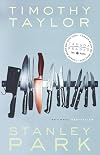
Through the parallel plotlines of a hip young locavore chef and his guerrilla-anthropologist father, this novel explores the theme of place, of rootedness, of identity derived from connection to the land or the wilful repudiation of such a connection.
Unfortunately, and I guess inevitably given its subject, it's hopelessly rooted in its own time and place, such that if you’re not au fait with Vancouver circa 1995 a hell of a lot of this story is going to be lost on you. The book is jammed show more with street names and other left-coast references that will do nothing for non-Vancouverites.
The other issue is the abundance of annoying characters. Our hero, Jeremy, is more or less agreeable, but his Stanley Park-dwelling dad is smug and self-mysterious, and pulling Jez in the other direction is coffee mogul wanker Dante Beale, who is of course supposed to be a PITA but jeez we spend a lot of time in his rancid company. There's also a precocious child, and I can’t stand precocious children.
Stanley Park isn't a bad novel though. It does have something to say and it's stuffed with filthy food porn, even (especially) when things get ultra-locavore in a wonderfully written climactic scene. show less
Unfortunately, and I guess inevitably given its subject, it's hopelessly rooted in its own time and place, such that if you’re not au fait with Vancouver circa 1995 a hell of a lot of this story is going to be lost on you. The book is jammed show more with street names and other left-coast references that will do nothing for non-Vancouverites.
The other issue is the abundance of annoying characters. Our hero, Jeremy, is more or less agreeable, but his Stanley Park-dwelling dad is smug and self-mysterious, and pulling Jez in the other direction is coffee mogul wanker Dante Beale, who is of course supposed to be a PITA but jeez we spend a lot of time in his rancid company. There's also a precocious child, and I can’t stand precocious children.
Stanley Park isn't a bad novel though. It does have something to say and it's stuffed with filthy food porn, even (especially) when things get ultra-locavore in a wonderfully written climactic scene. show less
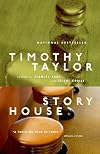
Two half-brothers, Graham and Elliot Gordon, meet in a boxing ring to spar out their problems, their father strangely filming the bout for posterity. Their combat is brief, unexpectedly violent, and poignantly rendered on the page, and up to this point, readers could be forgiven for believing Timothy Taylor’s latest novel is an ode to the sweet science.
As the account unfolds, however, it becomes apparent the Canadian author has a deeper focus to his story. Much as in the manner in which show more his Giller Award-nominated debut novel Stanley Park employed food as a narrative catalyst, Story House uses the art of architecture to examine the uncertainty of family, attempting, in the manner in which Graham looks at buildings, “to see through the structure to the rock beneath. The roll and shape of it."
As the boys mature, Taylor’s themes take root. Graham, like his father, seeks a career in architecture, trying to gain himself a reputation separate and distinct from his far more famous father. Elliot, “whose world view had evolved into a deadly, deliberate project of hating everything to do with the quest for accomplishment," makes a successful career as an importer of counterfeit products.
Estranged for years, the two are reunited at the site of their past battle, a decrepit edifice now believed to be one of their late father’s unsung masterworks. Teaming up a producer from the reality television show Unexpected Architecture, they decide to restore the building into something of its former self.
Taylor has a knack for imbuing his stories with lyric realism, unearthing beauty in the mundane and trivial. Where Stanley Park effortlessly captured the sweaty splendour of the restaurant kitchen, Story House finds brilliant majesty in the mould and mildew of buildings, explaining through vividly realized discussions of architectural concepts “the dreams that brought them into being."
Yet like the structures he espouses, Taylor has built Story House into a luminous hollow façade, a vacant shell awaiting tenants to breathe life into it. “How do we expose the thing, make it understood?" ponders one character as he examines the ongoing restoration. Taylor has the same dilemma.
There are no revelations in the characters; the brothers’ relationship is summed up in the opening chapter, and never alters further. While the unchanging personality of family is a major theme, it also hinders the author in keeping things interesting. Taylor’s exploration of the bonds of family through architectural structures is a laboured metaphor that rarely digs as deep as it seems.
It’s a shame, as Story House is never less than eminently readable. But Taylor’s tale peaks in its opening chapter as the boys bob and weave and throw clumsy punches that cause as much emotional damage as physical.
This image haunts Story House, two brothers brought to blows by a misguided sense of family honour. The real tragedy is that, for all of Taylor’s architectural skill and tremendous literary dexterity, Story House is ultimately as emotionally resonant as a blueprint. show less
As the account unfolds, however, it becomes apparent the Canadian author has a deeper focus to his story. Much as in the manner in which show more his Giller Award-nominated debut novel Stanley Park employed food as a narrative catalyst, Story House uses the art of architecture to examine the uncertainty of family, attempting, in the manner in which Graham looks at buildings, “to see through the structure to the rock beneath. The roll and shape of it."
As the boys mature, Taylor’s themes take root. Graham, like his father, seeks a career in architecture, trying to gain himself a reputation separate and distinct from his far more famous father. Elliot, “whose world view had evolved into a deadly, deliberate project of hating everything to do with the quest for accomplishment," makes a successful career as an importer of counterfeit products.
Estranged for years, the two are reunited at the site of their past battle, a decrepit edifice now believed to be one of their late father’s unsung masterworks. Teaming up a producer from the reality television show Unexpected Architecture, they decide to restore the building into something of its former self.
Taylor has a knack for imbuing his stories with lyric realism, unearthing beauty in the mundane and trivial. Where Stanley Park effortlessly captured the sweaty splendour of the restaurant kitchen, Story House finds brilliant majesty in the mould and mildew of buildings, explaining through vividly realized discussions of architectural concepts “the dreams that brought them into being."
Yet like the structures he espouses, Taylor has built Story House into a luminous hollow façade, a vacant shell awaiting tenants to breathe life into it. “How do we expose the thing, make it understood?" ponders one character as he examines the ongoing restoration. Taylor has the same dilemma.
There are no revelations in the characters; the brothers’ relationship is summed up in the opening chapter, and never alters further. While the unchanging personality of family is a major theme, it also hinders the author in keeping things interesting. Taylor’s exploration of the bonds of family through architectural structures is a laboured metaphor that rarely digs as deep as it seems.
It’s a shame, as Story House is never less than eminently readable. But Taylor’s tale peaks in its opening chapter as the boys bob and weave and throw clumsy punches that cause as much emotional damage as physical.
This image haunts Story House, two brothers brought to blows by a misguided sense of family honour. The real tragedy is that, for all of Taylor’s architectural skill and tremendous literary dexterity, Story House is ultimately as emotionally resonant as a blueprint. show less

This novel is strange. It is difficult to ascertain a specific time frame or a locality. The story moves back and forth from one location to another, from one character to another and also from one time frame to another. It does come together at some point, but not all of my questions were resolved.
It seems to be set in a time when the whole world is suffering from ADD, taking risks, almost just to attract attention and dazzle crowds that love meaningless soundbites to which they assign show more great meaning, street cultures are revered and have taken on the persona of the “gang” in a completely different, almost more acceptable way, it is as if the street sub-culture is all on drugs, spaced out, looking for trouble, yet they are perfectly accepted by the younger generation and media. They seem hyper, and several rival gangs vie for street space, turf, to voice ideas or plaster walls with them. The defiance is justified and applauded, authority is mocked and disrespected, greed and envy are thriving as is schadenfreude! Does this pattern sound familiar yet?
Rabbit, is a major character. After leaving a lucrative silicon valley type job because he begins to question the altruistic value vs the evil value, of the project he is working on, he moves away, drops out and begins to make his mark with artistic statements he paints in public spaces. He moves to NYC from Oregon, and he begins to descend into a state of near-vagrancy.
Another of the major characters, Eva Latour, a gold medal skier, is searching for her brother, a rebel. When she finds him and he is no longer the rebel, she is disappointed. She worshiped his free spirit. He is a respected member of society. She no longer fully appreciates him. She is part of the culture of discontented people, although she has achieved greatness. She worshiped his free spirit.
She has been offered a job in the entertainment world. Reality shows are the rage. There are no limits to what they present. Even little children are paraded across stages and humiliated. Voyeurism is the fashion. Everyone wants to know how someone else lives, especially those touched by fame and everyone loves to see someone fail at what they are doing, even if they are the best at what they are doing. Society is searching for something but, whatever it is, it seems to have no real value, other than "a nebulous feeling".
The most evil character is Mov, and yet, is he? He served his country. Is it his fault that he has pretty much driven himself mad with the tactics he was forced or trained to use, the results they inspired and the failures he experienced. This man, who prepped enemy spies for interrogation, has gone over the edge into madness.
An unexpected hero is a reporter who has fallen from grace. Thom Pegg, after winning the Pulitzer Prize, is discovered to have created his sources out of whole cloth. His purpose may have been commendable, but the method was not. His heroism goes largely unsung, in a world where reality shows thrive, while the “real” reality is controlled and contrived by the powers that be, so that only the information that is deemed necessary to know, is allowed to become public. Who would believe his story, anyway; it is the story of a liar. There is little transparency and it sounds awfully close to the way we live today; it makes the premise of the book even more frightening; it is almost too close for comfort.
The book comes together around a hostage crisis. Some of the children from KiddieFame, a children’s talent show, of sorts, have been taken captive during a “kill” episode, in which one of the contestants is removed from the competition, often the best one, as schadenfreude often does rule. It turns into a real rather than a pretend, game of violence. But, no one knows why, no one knows who is behind this heinous act. Who would capture children, and yet, it is vaguely familiar, isn’t it? It is reminiscent of the Russian hostage crisis, in Chechen, which took place on the same date, years before.
The populace seems to identify with issues far too deeply, to assume too much self importance and a pretense of having influence to change things dramatically in bizarre and unusual ways. Discontent and anger permeate the atmosphere and this novel surely illustrates what can happen when a “world goes mad”, when someone goes mad and tries to infect the world with that madness; in order to achieve redemption for his “crimes” he spreads the feeling of terror, like a disease which moves out into the ether.
We have only to think about the cult of people that arose to follow Casey Anthony, for and against. We have only to think of the bizarre ways in which the lawyers used facts to influence judgment, to know that our time is dangerously close to the time in the book. Society is failing. There is an equal feeling of vicarious pleasure and disappointment, shared by the mob. It comes in waves.
When the hostage taking begins, there are people making frantic predictions, having no idea whatsoever about what they are saying. They are assuming the hostage taker is a terrorist, they accuse a government they don’t trust of orchestrating the event, they think it will blow over, be nothing. They live in a fantasy. They actually seem to enjoy this crisis. They, the people, that is, seem to have been geared up for this. Maybe it is all the reality shows that have prepared them to feel this way. They like being voyeurs, feeling like authority, feeling like they are important. Their values are mixed up. They worship the wrong things, entertainment, video games, ridiculous meaningless art. There is a culture out there that doesn’t work, that simply creates issues, incites or ignites the community to action, even over ridiculously foolish things. There seems to be a lack of ambition, drive, responsibility. Their energies are directed toward pretty worthless pursuits. The street culture is prominent and street art is prevalent. Everywhere are protest signs of some kind. Universal terror appears to be the universal end product they are seeking.
One has to wonder why we are obsessed with the dysfunctional, especially after reading this novel. There are a lot of angry fringe groups and they always find a leader to glom around. There are so many characters who march to the beat of their own drummer, not mainstream, not active participants in improving anything but more in presenting their personal philosophies to the world. They are not producers of anything of value for physical survival but rather concentrate on emotions and feelings.
I think the real savior in the book is Rabbit, whose great achievement, his technological message, would seem to be "Let There Be Light!" Reminiscent of the creation, isn't it? Is that all that we need? Are we looking for a way back? Is hope the answer? I think it has proven to fall short of the goal. We can't survive on hope, alone. Humans need more, but they need it in the proper perspective! So, yes, let there be light, let there be understanding but also let there be responsibility for one's own behavior. We are all going to be held accountable, in some way, at some time. show less
It seems to be set in a time when the whole world is suffering from ADD, taking risks, almost just to attract attention and dazzle crowds that love meaningless soundbites to which they assign show more great meaning, street cultures are revered and have taken on the persona of the “gang” in a completely different, almost more acceptable way, it is as if the street sub-culture is all on drugs, spaced out, looking for trouble, yet they are perfectly accepted by the younger generation and media. They seem hyper, and several rival gangs vie for street space, turf, to voice ideas or plaster walls with them. The defiance is justified and applauded, authority is mocked and disrespected, greed and envy are thriving as is schadenfreude! Does this pattern sound familiar yet?
Rabbit, is a major character. After leaving a lucrative silicon valley type job because he begins to question the altruistic value vs the evil value, of the project he is working on, he moves away, drops out and begins to make his mark with artistic statements he paints in public spaces. He moves to NYC from Oregon, and he begins to descend into a state of near-vagrancy.
Another of the major characters, Eva Latour, a gold medal skier, is searching for her brother, a rebel. When she finds him and he is no longer the rebel, she is disappointed. She worshiped his free spirit. He is a respected member of society. She no longer fully appreciates him. She is part of the culture of discontented people, although she has achieved greatness. She worshiped his free spirit.
She has been offered a job in the entertainment world. Reality shows are the rage. There are no limits to what they present. Even little children are paraded across stages and humiliated. Voyeurism is the fashion. Everyone wants to know how someone else lives, especially those touched by fame and everyone loves to see someone fail at what they are doing, even if they are the best at what they are doing. Society is searching for something but, whatever it is, it seems to have no real value, other than "a nebulous feeling".
The most evil character is Mov, and yet, is he? He served his country. Is it his fault that he has pretty much driven himself mad with the tactics he was forced or trained to use, the results they inspired and the failures he experienced. This man, who prepped enemy spies for interrogation, has gone over the edge into madness.
An unexpected hero is a reporter who has fallen from grace. Thom Pegg, after winning the Pulitzer Prize, is discovered to have created his sources out of whole cloth. His purpose may have been commendable, but the method was not. His heroism goes largely unsung, in a world where reality shows thrive, while the “real” reality is controlled and contrived by the powers that be, so that only the information that is deemed necessary to know, is allowed to become public. Who would believe his story, anyway; it is the story of a liar. There is little transparency and it sounds awfully close to the way we live today; it makes the premise of the book even more frightening; it is almost too close for comfort.
The book comes together around a hostage crisis. Some of the children from KiddieFame, a children’s talent show, of sorts, have been taken captive during a “kill” episode, in which one of the contestants is removed from the competition, often the best one, as schadenfreude often does rule. It turns into a real rather than a pretend, game of violence. But, no one knows why, no one knows who is behind this heinous act. Who would capture children, and yet, it is vaguely familiar, isn’t it? It is reminiscent of the Russian hostage crisis, in Chechen, which took place on the same date, years before.
The populace seems to identify with issues far too deeply, to assume too much self importance and a pretense of having influence to change things dramatically in bizarre and unusual ways. Discontent and anger permeate the atmosphere and this novel surely illustrates what can happen when a “world goes mad”, when someone goes mad and tries to infect the world with that madness; in order to achieve redemption for his “crimes” he spreads the feeling of terror, like a disease which moves out into the ether.
We have only to think about the cult of people that arose to follow Casey Anthony, for and against. We have only to think of the bizarre ways in which the lawyers used facts to influence judgment, to know that our time is dangerously close to the time in the book. Society is failing. There is an equal feeling of vicarious pleasure and disappointment, shared by the mob. It comes in waves.
When the hostage taking begins, there are people making frantic predictions, having no idea whatsoever about what they are saying. They are assuming the hostage taker is a terrorist, they accuse a government they don’t trust of orchestrating the event, they think it will blow over, be nothing. They live in a fantasy. They actually seem to enjoy this crisis. They, the people, that is, seem to have been geared up for this. Maybe it is all the reality shows that have prepared them to feel this way. They like being voyeurs, feeling like authority, feeling like they are important. Their values are mixed up. They worship the wrong things, entertainment, video games, ridiculous meaningless art. There is a culture out there that doesn’t work, that simply creates issues, incites or ignites the community to action, even over ridiculously foolish things. There seems to be a lack of ambition, drive, responsibility. Their energies are directed toward pretty worthless pursuits. The street culture is prominent and street art is prevalent. Everywhere are protest signs of some kind. Universal terror appears to be the universal end product they are seeking.
One has to wonder why we are obsessed with the dysfunctional, especially after reading this novel. There are a lot of angry fringe groups and they always find a leader to glom around. There are so many characters who march to the beat of their own drummer, not mainstream, not active participants in improving anything but more in presenting their personal philosophies to the world. They are not producers of anything of value for physical survival but rather concentrate on emotions and feelings.
I think the real savior in the book is Rabbit, whose great achievement, his technological message, would seem to be "Let There Be Light!" Reminiscent of the creation, isn't it? Is that all that we need? Are we looking for a way back? Is hope the answer? I think it has proven to fall short of the goal. We can't survive on hope, alone. Humans need more, but they need it in the proper perspective! So, yes, let there be light, let there be understanding but also let there be responsibility for one's own behavior. We are all going to be held accountable, in some way, at some time. show less
Lists
Awards


You May Also Like


Associated Authors
Statistics
- Works
- 7
- Also by
- 3
- Members
- 602
- Popularity
- #41,740
- Rating
- 3.5
- Reviews
- 18
- ISBNs
- 109
- Languages
- 4
- Favorited
- 2