
R. D. Rosen
Author of Bad Cat: 244 Not-So-Pretty Kitties And Cats Gone Bad
About the Author
R. D. Rosen is the author of A Buffalo in the House: The True Story of a Man, an Animal, and the American West and Such Good Girls: The Journey of the Holocaust's Hidden Child Survivors, among many others. He grew up across the street from Sid Luckman in Highland Park, Illinois, and lives in New show more York, where he still roots for the Chicago Bears. show less
Series
Works by R. D. Rosen
Associated Works
Tagged
Common Knowledge
- Other names
- Rosen, Richard
- Birthdate
- 1949
- Gender
- male
- Relationships
- McWhorter, Diane (wife)
- Nationality
- USA
- Map Location
- USA
Members
Reviews
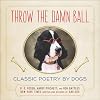
Have you ever wondered what goes on in a dog's brain? According to this short and completely entertaining book of "Classic Poetry by Dogs," quite a lot of erudite thoughts go through their heads. Of course, they do spend a lot of time rhapsodizing about stinky smells, flatulence, poo, and licking their hind ends, but then even the most poetic among them is still a dog. Many of the poems here are based on well known works and it was good fun to see if I could figure out which poems served as show more inspiration. Some of the poems are hilarious and others are sweet, some saucy and some poignant. All in all, a fun little book to dip into for dog lovers.
And for my own canine poetry inspired by the book, see: http://booknaround.blogspot.com/2013/10/review-throw-damn-ball-by-rd-rosen.html show less
And for my own canine poetry inspired by the book, see: http://booknaround.blogspot.com/2013/10/review-throw-damn-ball-by-rd-rosen.html show less

Richard Dean Rosen – like Jerome Doolittle (Body Scissors) and Charles Goodrum (Dewey Decimated) – is mystery fiction’s equivalent of a journeyman baseball player. He’s around the game for years, familiar to hardcore fans but virtually unknown to casual ones, and his career numbers are impressive without being good enough to put him in the running for the hall of fame. Dead Ball, the fifth in Rosen’s “Harvey Blissberg” series, is ample proof of that.
Dead Ball opens with show more Blissberg, an ex-ballplayer for 15 years and an ex-private investigator for 4, in the midst of a galloping midlife crisis. Dissatisfied with his new career as a motivational speaker and his longstanding relationship with ESPN reporter Mickey Slavin, he’s a sharply etched character, but not one you’d want to spend 20, much less 220, pages with. No matter: A call from the owner of the Providence Jewels shakes Blissberg out of his slump. The Jewels’ star player, Maurice “Moss” Cooley – on track to best Joe DiMaggio’s 56-game hitting streak – is receiving racist death threats, and Blissberg signs on to protect Cooley and find out who wants him dead.
The mystery in Dead Ball is competent without ever being thrilling or particularly innovative. Rosen provides a satisfying number of suspects, and plants the key clues competently enough, but in the end he works the “least likely suspect” principle so hard that the story creaks under the weight of the back story necessary to make the big reveal work. The climax has a similar feeling of too-elaborate contrivance, relying as it does on atypical behavior from several characters and the presence of at least one spectacularly implausible prop. Finally, there is a feeling of over-familiarity. Harvey, fresh in his debut appearance 30 years ago, now pales beside more recent, better-drawn characters: an amalgam of Greg Rucka’s bodyguard-for-hire Atticus Kodiak and Harlan Coben’s ex-jock detective Myron Bolitar, but without the intensity of the former or the goofy charm of the latter.
Rosen introduced Harvey – a Red Sox center fielder in the twilight of his career, traded to the Jewels for their first, and his last, major-league season – in Strike Three, You’re Dead (1984). Fifteen years separate Strike Three and Dead Ball, in real world and story world alike, and Dead Ball is at its best when Rosen explores that idea. Harvey’s encounters with characters from the older book, now grown old, are well-written and poignant, and his reactions to being back in a world he thought he had left behind (without being sure he wanted to) are satisfyingly complex. Providence, too, has changed in the intervening fifteen years, and Rosen makes good use of that, as well. The local color and the small details of life in a baseball team’s clubhouse are, as they were in Strike Three, the best parts of the book. The mystery works well enough as a mechanism to deliver them, and – like a looping infield single that advances the runners on base – that is ultimately enough. show less
Dead Ball opens with show more Blissberg, an ex-ballplayer for 15 years and an ex-private investigator for 4, in the midst of a galloping midlife crisis. Dissatisfied with his new career as a motivational speaker and his longstanding relationship with ESPN reporter Mickey Slavin, he’s a sharply etched character, but not one you’d want to spend 20, much less 220, pages with. No matter: A call from the owner of the Providence Jewels shakes Blissberg out of his slump. The Jewels’ star player, Maurice “Moss” Cooley – on track to best Joe DiMaggio’s 56-game hitting streak – is receiving racist death threats, and Blissberg signs on to protect Cooley and find out who wants him dead.
The mystery in Dead Ball is competent without ever being thrilling or particularly innovative. Rosen provides a satisfying number of suspects, and plants the key clues competently enough, but in the end he works the “least likely suspect” principle so hard that the story creaks under the weight of the back story necessary to make the big reveal work. The climax has a similar feeling of too-elaborate contrivance, relying as it does on atypical behavior from several characters and the presence of at least one spectacularly implausible prop. Finally, there is a feeling of over-familiarity. Harvey, fresh in his debut appearance 30 years ago, now pales beside more recent, better-drawn characters: an amalgam of Greg Rucka’s bodyguard-for-hire Atticus Kodiak and Harlan Coben’s ex-jock detective Myron Bolitar, but without the intensity of the former or the goofy charm of the latter.
Rosen introduced Harvey – a Red Sox center fielder in the twilight of his career, traded to the Jewels for their first, and his last, major-league season – in Strike Three, You’re Dead (1984). Fifteen years separate Strike Three and Dead Ball, in real world and story world alike, and Dead Ball is at its best when Rosen explores that idea. Harvey’s encounters with characters from the older book, now grown old, are well-written and poignant, and his reactions to being back in a world he thought he had left behind (without being sure he wanted to) are satisfyingly complex. Providence, too, has changed in the intervening fifteen years, and Rosen makes good use of that, as well. The local color and the small details of life in a baseball team’s clubhouse are, as they were in Strike Three, the best parts of the book. The mystery works well enough as a mechanism to deliver them, and – like a looping infield single that advances the runners on base – that is ultimately enough. show less
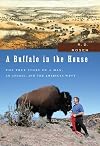
This book relates the true story of husband and wife, Roger Brooks and Veryl Goodnight, who adopt an orphaned one-week-old buffalo, which they name Charlie. Initially, Charlie was to be with them only a short time, while Veryl used him as a model for a sculpture she was creating. Charlie develops a deep relationship with his human "parents," especially Roger. When Charlie finally is moved to a nearby buffalo ranch, he injures himself the first night, and Roger and Veryl take him to a show more Colorado veterinary school for treatment and then bring him back "home" to recuperate. Charlie's life is eventually shortened by another later injury. The author mixes in quite a bit of history regarding the slaughter and near-extinction of buffalo in the 19th century West, and ongoing problems with the state of Montana freely slaughtering buffalo which wander out of their protected home in Yellowstone National Park. For my taste, some of the historical sections could have been somewhat condensed, but all in all, this is a very warm book about an almost unheard-of relationship between man and buffalo. show less
Cute photo collection with poetry written in the style of famous poets. Mostly funny, in parts surprisingly crude, but a neat idea. Here's my favorite couplet from a poem called "Ode to Odes":
Hey, it is supposed to be written by a dog.
Nothing compares to discovering a sonnet
That moves me so much that I want to pee on it
Hey, it is supposed to be written by a dog.
Lists
Edgar Award (1)
Unlikely Pets (1)
Awards


You May Also Like


Associated Authors
Statistics
- Works
- 19
- Also by
- 1
- Members
- 1,996
- Popularity
- #12,896
- Rating
- 3.8
- Reviews
- 39
- ISBNs
- 68
- Languages
- 7