
Gary Small
Author of The Memory Bible: An Innovative Strategy for Keeping Your Brain Young
About the Author
Gary Small, M.D., is the author of the New York Times bestseller The Memory Bible, and director of the UCLA Longevity Center and professor of psychiatry at UCLA's David Geffen School of Medicine. Gigi Morgan is the coauthor of five additional books on the brain and memory with her husband, Dr. Gary show more Small. show less
Image credit: Sterling Franken-Steffen
Works by Gary Small
The Naked Lady Who Stood on Her Head: A Psychiatrist's Stories of His Most Bizarre Cases (2011) 257 copies, 18 reviews
The Alzheimer's Prevention Program: Keep Your Brain Healthy for the Rest of Your Life (2011) 107 copies
The Memory Prescription: Dr. Gary Small's 14-Day Plan to Keep Your Brain and Body Young (2004) 56 copies
The Longevity Bible: 8 Essential Strategies for Keeping Your Mind Sharp and Your Body Young (2006) 39 copies, 1 review
Tagged
Common Knowledge
- Gender
- male
Members
Reviews
The Naked Lady Who Stood on Her Head: A Psychiatrist's Stories of His Most Bizarre Cases by Gary Small
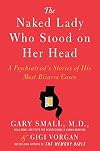
Psychiatrist Gary Small shares stories of some of the oddest and most memorable cases he has encountered in his career, including people suffering from such problems as false pregnancy, weird nightmares, complicated addictions, and mass hysteria.
It's interesting to get a look into the practice of psychiatry that goes beyond the cliches of "Tell me about your mother" or "Here, have some antidepressants" (although there are certainly enough examples of both of those things). And many of these show more cases are indeed interesting. As a human, myself, I'm always interested in what goes on in -- and what can go wrong with -- the human mind.
But, I don't know. There's just something about Small, or about his writing (or about the writing of his wife/co-author, perhaps) that rubs me the wrong way. I think it's partly that he can't seem to quite decide whether this is a collection of interesting cases or a personal memoir, and keeps including extraneous, uninteresting information about his personal life. Partly it's the way he includes lots of dialog that cannot possibly be verbatim, which often feels really stilted and simplified. (Admittedly, in a book like this, that sort of thing is probably inevitable, but it can certainly be done more smoothly. And the fact that he never explicitly discusses the fact that that's what he's doing doesn't thrill me, either.) He includes lots of conversations with his co-workers, too, which often have a hearty "ha-ha, look at us guys all having a laugh together!" tone, where the people and the jokes in question tend to come across as more obnoxious than anything. Also, while he's often self-deprecating and is willing to discuss his own uncertainties and false assumptions as he attempts to figure out his patients' problems, I can't help noticing the fact that all these cases ultimately make him look good, sometimes by showing up other doctors whom he portrays as hidebound idiots. Now, maybe it's a false impression, but all of this together combines to make the whole thing feel a little off to me. A little self-absorbed, maybe. A little artificial.
But that's not even what really bugs me the most. Because, all right, it comes as absolutely no surprise that therapists sometimes find their patients boring, or annoying, or unpleasant. And, in general, I am all for honesty and openness in this kind of account. But I cannot help feeling that it's deeply unprofessional for a therapist to talk publicly about finding his patients boring or annoying or unpleasant, no matter how many personal details he's changed. And Small does this kind of a lot. I think I reached the height of my discomfort with him when he quotes a patient as saying, "This is completely confidential, right?" and his reply of "Of course" left me exclaiming, "Except it's clearly not, because you put it in your book!" In other contexts, maybe that would have bothered me less, but with this book, I just can't quite get past it. show less
It's interesting to get a look into the practice of psychiatry that goes beyond the cliches of "Tell me about your mother" or "Here, have some antidepressants" (although there are certainly enough examples of both of those things). And many of these show more cases are indeed interesting. As a human, myself, I'm always interested in what goes on in -- and what can go wrong with -- the human mind.
But, I don't know. There's just something about Small, or about his writing (or about the writing of his wife/co-author, perhaps) that rubs me the wrong way. I think it's partly that he can't seem to quite decide whether this is a collection of interesting cases or a personal memoir, and keeps including extraneous, uninteresting information about his personal life. Partly it's the way he includes lots of dialog that cannot possibly be verbatim, which often feels really stilted and simplified. (Admittedly, in a book like this, that sort of thing is probably inevitable, but it can certainly be done more smoothly. And the fact that he never explicitly discusses the fact that that's what he's doing doesn't thrill me, either.) He includes lots of conversations with his co-workers, too, which often have a hearty "ha-ha, look at us guys all having a laugh together!" tone, where the people and the jokes in question tend to come across as more obnoxious than anything. Also, while he's often self-deprecating and is willing to discuss his own uncertainties and false assumptions as he attempts to figure out his patients' problems, I can't help noticing the fact that all these cases ultimately make him look good, sometimes by showing up other doctors whom he portrays as hidebound idiots. Now, maybe it's a false impression, but all of this together combines to make the whole thing feel a little off to me. A little self-absorbed, maybe. A little artificial.
But that's not even what really bugs me the most. Because, all right, it comes as absolutely no surprise that therapists sometimes find their patients boring, or annoying, or unpleasant. And, in general, I am all for honesty and openness in this kind of account. But I cannot help feeling that it's deeply unprofessional for a therapist to talk publicly about finding his patients boring or annoying or unpleasant, no matter how many personal details he's changed. And Small does this kind of a lot. I think I reached the height of my discomfort with him when he quotes a patient as saying, "This is completely confidential, right?" and his reply of "Of course" left me exclaiming, "Except it's clearly not, because you put it in your book!" In other contexts, maybe that would have bothered me less, but with this book, I just can't quite get past it. show less
The Naked Lady Who Stood on Her Head: A Psychiatrist's Stories of His Most Bizarre Cases by Gary Small
I'm a big fan of non-fiction books about things so crazy and unbelievable, they make you forget that they're non-fiction in the first place. Which is why when I first cracked open my copy of The Naked Lady Who Stood on Her Head: A Psychiatrist's Stories of His Most Bizarre Cases, co-written by Dr. Gary Small and wife Gigi Vorgan, it took so much willpower to put it down just so I could quickly finish my chores and run my errands fast enough to get back to reading. Both entertaining and show more informative, it even made me question my own sanity after reading.
Written in chronological order following Dr. Small's career from psychiatric trainee at Harvard Medical School to research head at UCLA, The Naked Lady details some of his most eclectic psychiatric cases. And by eclectic, I do mean crazy weird: from the guy who purposely injured his arm because he wants to get it amputated; the lawyer with a shrinking penis; the worried mother who's read every single medical textbook and has started diagnosing herself and everyone else around her; and yes, even the naked lady who stood on her head.
Full of humor at every turn of the page, The Naked Lady reads like a hilariously bizarre short story collection that I often tend to forget that these accounts actually happened to real people. And while extremely funny and often times thought-provoking, it also gives us an inside look at the world of psychotherapy and how crazy things can sometimes get, even for the most well-trained psychiatrist. The medical jargon, though only few, are so well-explained; I've actually learned a thing or two about psychology that might come in handy if I ever consider taking an Introduction to Psychology class myself. Dr. Small is not only a really good doctor, he's a gifted storyteller as well.
My favorite would be "Gaslight," where a middle-aged couple, whose kids have all left for college, goes into couple therapy with Dr. Small for what was initially diagnosed as an empty-nest syndrome. But then things take a twist, and the husband, who turns out to be a sociopath, not fools one, but two psychiatrists into thinking that he's perfectly sane.
Perfect for those who are curious as to how our minds work, or if you're into the bizarre or amusingly strange, The Naked Lady Who Stood on Her Head is a definite must-read for everyone, crazy or otherwise.
Originally posted here. show less
Written in chronological order following Dr. Small's career from psychiatric trainee at Harvard Medical School to research head at UCLA, The Naked Lady details some of his most eclectic psychiatric cases. And by eclectic, I do mean crazy weird: from the guy who purposely injured his arm because he wants to get it amputated; the lawyer with a shrinking penis; the worried mother who's read every single medical textbook and has started diagnosing herself and everyone else around her; and yes, even the naked lady who stood on her head.
Full of humor at every turn of the page, The Naked Lady reads like a hilariously bizarre short story collection that I often tend to forget that these accounts actually happened to real people. And while extremely funny and often times thought-provoking, it also gives us an inside look at the world of psychotherapy and how crazy things can sometimes get, even for the most well-trained psychiatrist. The medical jargon, though only few, are so well-explained; I've actually learned a thing or two about psychology that might come in handy if I ever consider taking an Introduction to Psychology class myself. Dr. Small is not only a really good doctor, he's a gifted storyteller as well.
My favorite would be "Gaslight," where a middle-aged couple, whose kids have all left for college, goes into couple therapy with Dr. Small for what was initially diagnosed as an empty-nest syndrome. But then things take a twist, and the husband, who turns out to be a sociopath, not fools one, but two psychiatrists into thinking that he's perfectly sane.
Perfect for those who are curious as to how our minds work, or if you're into the bizarre or amusingly strange, The Naked Lady Who Stood on Her Head is a definite must-read for everyone, crazy or otherwise.
Originally posted here. show less
The Naked Lady Who Stood on Her Head: A Psychiatrist’s Stories of His Most Bizarre Cases by Gary Small
The Naked Lady Who Stood on Her Head is a collection of short essays by psychiatrist Gary Small describing the "most bizarre cases" he dealt with over decades of practice. The first essays are from encounters at Massachusetts General during Small's days as a resident. From there, we follow Small back to his native California where he continues to treat patients, conducts research, and settles in as a geriatric specialist.
If judged by its subtitle alone ("a psychiatrist's stories of his most show more bizarre cases"), readers may be disappointed. Any casual student of psychology will not be impressed by stories about shopping addicts, psychopathic husbands with second families, and stress-induced sudden blindness. The subtitle draws in the reader by promising shock value (it happened to me!) and just doesn't deliver.
The value of his book is beyond Small's "craziest" patients. I think this book would have been better if it was framed as a personal memoir, or of a physician's reflections as he looks back on his career. The patient stories are framed by conversations with Small's colleagues, friends, and family, where he gives us context of where he was in his career at the time and how he has grown as a physician since then. He recognizes several times that his response as a young psychiatrist would be vastly different from his response today, as a professional with years of experience. It was fascinating to read about how how Small worked through challenging diagnoses, and how his professional interactions with his patients shaped his personal interactions with friends and family, and vice versa: how his personal life affected the way he treated his patients. Those passages were what I liked best about this book - self-reflection.
Dr. Small is a brilliant physician, and I would have liked to read more about his method as a psychiatrist and less about his house calls to wealthy patients. Hopefully in the future he will give us that book! show less
If judged by its subtitle alone ("a psychiatrist's stories of his most show more bizarre cases"), readers may be disappointed. Any casual student of psychology will not be impressed by stories about shopping addicts, psychopathic husbands with second families, and stress-induced sudden blindness. The subtitle draws in the reader by promising shock value (it happened to me!) and just doesn't deliver.
The value of his book is beyond Small's "craziest" patients. I think this book would have been better if it was framed as a personal memoir, or of a physician's reflections as he looks back on his career. The patient stories are framed by conversations with Small's colleagues, friends, and family, where he gives us context of where he was in his career at the time and how he has grown as a physician since then. He recognizes several times that his response as a young psychiatrist would be vastly different from his response today, as a professional with years of experience. It was fascinating to read about how how Small worked through challenging diagnoses, and how his professional interactions with his patients shaped his personal interactions with friends and family, and vice versa: how his personal life affected the way he treated his patients. Those passages were what I liked best about this book - self-reflection.
Dr. Small is a brilliant physician, and I would have liked to read more about his method as a psychiatrist and less about his house calls to wealthy patients. Hopefully in the future he will give us that book! show less

Gerçek hikâyeler kurgudan çok daha tuhaftır, Dr. Gary Small da bunu gayet iyi biliyor. Psikiyatriyle ve insan beyni üstüne çığır açıcı araştırmalarla geçen otuz yıl içinde Dr. Small pek çok şey görmüş. Şimdi ofisinin kapılarını açmaya ve kariyerinin en gizemli, ilginç ve tuhaf hastalarını anlatmaya hazır. Bu kitap bir psikiyatristin zihnine ve onun giderek gelişim gösteren mesleki yaşamına yapılan aydınlatıcı bir yolculuk. Aynı zamanda bu branşın ve show more daha önce görülmemiş, tanısı koyulmamış çeşitli akıl hastalıklarının perde arkasına da bir bakış… Kitabı okurken kendinizi, bizi insan yapan şaşırtıcı tuhaflıklar üstüne düşünürken bulacaksınız. Sıkça komik, kimi zaman trajik ve daima etkileyici Dr. Small, sizleri kariyeri içinde Boston’un kalabalık acil servis koridorlarından başlayıp ülke elitlerinin multimilyon dolarlık kayak localarına dek uzayan bir geziye çıkarıyor. Bu gezi sırasında birbirinden tuhaf gerçek karakterleri anlatırken, bir yandan da esrarengiz histerik körlükle, penisinin küçüldüğüne inanan bir adamla, gizli sürdürülen çifte hayatlarla ve ürkütücü derecede psikotik romantik arzularla baş ediyor. Akıl hocası kendi hastası olduğunda Dr. Small’un kariyeri ve kişisel hayatı tam bir döngüyü tamamlıyor ve Small’un kimsenin zihinsel araştırmanın ötesinde olmadığını anlamasını sağlıyor; kendisinin bile… show less
Lists
Awards

You May Also Like


Associated Authors
Statistics
- Works
- 21
- Members
- 981
- Popularity
- #26,256
- Rating
- 3.3
- Reviews
- 27
- ISBNs
- 67
- Languages
- 9