
Baroness Orczy (1865–1947)
Author of The Scarlet Pimpernel
About the Author
Image credit: Baroness Emma Orczy de Orczi (1865–1947) by Bassano Ltd.
Series
Works by Baroness Orczy
Delphi Collected Works of Baroness Emma Orczy US (Illustrated) (Delphi Series Six Book 24) (2016) 15 copies
Female Sleuths Megapack: Lady Molly of Scotland Yard, Loveday Brooke, and Amelia Butterworth (2014) — Contributor — 13 copies
The Scarlet Pimpernel Anthology Volume I: The Scarlet Pimpernel, I Will Repay and The Elusive Pimpernel (Volume 1) (2012) 8 copies
A gay adventurer: Being the biography of Sir Percy Blakeney, Bart., known as the Scarlet Pimpernel (1935) 6 copies, 1 review
Scarlet Pimpernel The League of the Scarlet Pimpernel The Elusive Pimpernel The Triumph of the Scarlet Pimpernel (4 Unabridged Classics) (2013) 6 copies
The Complete Escapades of The Scarlet Pimpernel-Volume 1: The Scarlet Pimpernel & I Will Repay (2018) 5 copies
Old Man in the Corner: The Old Man in the Corner / The Case of Miss Elliott / The Glasgow Mystery (2010) 4 copies
The Complete Escapades of The Scarlet Pimpernel: Volume 8-Pimpernel and Rosemary & Adventures of the Scarlet Pimpernel (2019) 3 copies
A Scarlet Pimpernel Collection: The Scarlet Pimpernel, I Will Repay, The Elusive Pimpernel, The League of the Scarlet Pimpernel (2021) 3 copies
The Scarlet Pimpernel Anthology: Eldorado, Lord Tony's Wife and The League of The Scarlet Pimpernel (2012) 3 copies
Sir Percy Explains [Short Story] 2 copies
The Scarlet Pimpernel - Unabridged 2 copies
The Glasgow Mystery 2 copies
The Chief's Way 2 copies
A question of temptation 2 copies
I Will Repay and Other Works by Baroness Emmuska Orczy (Unexpurgated Edition) (Halcyon Classics) (2009) 2 copies
Links in the Chain of Life 2 copies
The Complete Escapades of The Scarlet Pimpernel-Volume 2: The Elusive Pimpernel & Eldorado (2018) 2 copies
De Roode Pimpernel overwint 2 copies
Obras selectas. Pinpinela escarlata. Mia será la venganza. Eldorado. El desquite de sir Percy (1976) 2 copies
The Collected Adventures of the Scarlet Pimpernel: Omnibus Edition of Sir Percy's Adventures (Illustrated) (2021) 2 copies
De Roode Pimpernel faalt niet 2 copies
Červený bedrník. Díl 2, Odplata 2 copies
De svarta diamanterna m.fl. detektivhistorier : Bemynd. övers. från engelskan av Oscar Nachman 1 copy
The Principal Witness 1 copy
The Little Doctor 1 copy
The Traitor [Short Story] 1 copy
The Stranger From Paris 1 copy
In the Tiger's Den 1 copy
The Lure of the Chateau 1 copy
Fly-By-Night 1 copy
Kättemaks : romaan 1 copy
Yo castigaré 1 copy
Červený Bedrník. Díl l 1 copy
SIR PERCY BLAKENEY - FIC ORC 1 copy
The Ninescore Mystery 1 copy
Den røde pimpernel, Bind 2 1 copy
Den røde pimpernel, Bind 1 1 copy
Den røde Pimpernel I-II 1 copy
The Brighton Mystery 1 copy
Una alegre aventura 1 copy
The Red Carnation 1 copy
The Complete Escapades of The Scarlet Pimpernel: Volume 7-The Laughing Cavalier and The First Sir Percy (2019) 1 copy
Four Complete Novels 1 copy
The Complete Escapades of The Scarlet Pimpernel-Volume 3: Lord Tony's Wife & The Triumph of the Scarlet Pimpernel (2018) 1 copy
The Complete Escapades of The Scarlet Pimpernel-Volume 4: Sir Percy Hits Back & A Child of the Revolution (2018) 1 copy
The Complete Escapades of the Scarlet Pimpernel: Volume 6-Sir Percy Leads the Band & Mam'zelle Guillotine (2019) 1 copy
Detective Tales from the A.B.C Tea-Rooms-Two Detective Story Collections: The Old Man in the Corner and Unravelled Knots (2022) 1 copy
Detective Molly & the Old Man-Two Detective Story Collections: Lady Molly of Scotland Yard & The Case of Miss Elliott (2022) 1 copy
The Edinburgh Mystery 1 copy
The Man in Grey, etc 1 copy
Entrapping a Lady 1 copy
The Edinburg Mystery 1 copy
Scarlet Pimpernel Vol 5 1 copy
His Majesty's Well-Beloved: An Episode in the Life of Mr. Thomas Betteron as told by His Friend John Honeywood (2017) 1 copy
Diplomati og Kærlighed 1 copy
The Birmingham Mystery 1 copy
The Dublin Mystery 1 copy
The Liverpool Mystery 1 copy
The Scarlett Pimpernel 1 copy
Scarlet Pimpernel Vol 6 1 copy
The Fordwych Castle Mystery 1 copy
The Will-o’-the-wisp 1 copy
Nicolette 1 copy
Unravelled knots 1 copy
The Honourable Jim 1 copy
Associated Works
Detection by Gaslight: 14 Victorian Detective Stories (Dover Thrift Editions) (1997) — Contributor — 198 copies, 3 reviews
The Edinburgh Mystery: And Other Tales of Scottish Crime (2022) — Contributor — 128 copies, 7 reviews
101 Years' Entertainment: The Great Detective Stories 1841-1941 (1941) — Contributor — 111 copies, 1 review
In the Shadow of Agatha Christie: Classic Crime Fiction by Forgotten Female Writers, 1850-1917 (2018) — Contributor — 108 copies, 8 reviews
The Big Book of Swashbuckling Adventure: Classic Tales of Dashing Heroes, Dastardly Villains, and Daring Escapes (2014) — Contributor — 64 copies, 2 reviews
The Web She Weaves: An Anthology of Mystery and Suspense Stories by Women (1983) — Contributor — 60 copies, 2 reviews
The Rivals of Sherlock Holmes: The Greatest Detective Stories: 1837-1914 (2019) — Contributor — 39 copies
The Scarlet Pimpernel: The Complete Series 1 & 2 [1999 TV mini series] (1999) — Original story — 37 copies, 1 review
Grande Dames of Detection: Two Centuries of Sleuthing Stories by the Gentle Sex (1973) — Contributor — 35 copies
The World's Best One Hundred Detective Stories, Volume 10 (1929) — Contributor — 23 copies, 2 reviews
The Graphic Canon of Crime & Mystery, Vol. 2: From Salome to Edgar Allan Poe to The Silence of the Lambs (2021) — Contributor — 14 copies
British Mystery Megapack Volume 3: The Mysterious Affair At Styles, The Secret Agent, The Man Who Would Be King, A Christmas Tragedy and The Dead Secret (2014) 11 copies
Mitt skattkammer. b.9 Gjennom tidene — Contributor — 9 copies
Sleuths: Twenty-Three Great Detectives of Fiction and Their Best Stories (1931) — Contributor — 7 copies
Classic Crime Stories : 13 Tales from Edgar Allan Poe to Lawrence Block (2007) — Contributor — 5 copies
Scarlett Pimpernel / Der letzte Mohikaner / Knulp / Irgendwo in Tibet (1973) — Contributor — 3 copies
The detective in fiction: a posse of eight — Contributor — 2 copies
The Scarlet Pimpernel — Original text — 1 copy
Stories for girls — Contributor — 1 copy
Tagged
Common Knowledge
- Other names
- Orczy, Emma Magdalena Rosalia Maria Josephina Barbara
Orczy Barstow, Emma Magdolna Rozália Mária Jozefa Borbála, Baroness - Birthdate
- 1865-09-23
- Date of death
- 1947-11-12
- Gender
- female
- Education
- West London School of Art
Heatherley's School of Fine Art - Occupations
- artist
illustrator
novelist
translator
aristocrat - Organizations
- Detection Club
- Relationships
- Korda, Alexander (producer)
- Short biography
- Emma Magdalena Rosalia Maria Josephina Barbara, Baroness Orczy, known as Emmuska, was born in Hungary, the daughter of Baron Felix Orczy, a landed aristocrat and well-known composer and conductor, and his wife Countess Emma Wass. She was educated in Brussels, Paris, and London, and exhibited her art work in the Royal Academy. In 1894, she married Montagu Barstow, a British clergyman and artist, and they worked together as illustrators and jointly published an edition of Hungarian folk tales. Orczy became famous in 1905 with the publication of her novel The Scarlet Pimpernel (originally a play co-written with her husband). Its background of the French Revolution and swashbuckling hero, Sir Percy Blakeney, was to prove immensely popular. Sequel books followed and numerous film and TV versions have been made with the first in 1934, produced by Alexander Korda, another Hungarian. Baroness Orczy also wrote detective and adventure stories. She inherited her family’s estate of Tarna-Ors in Hungary but continued to live in England until the end of World War I, when she and her husband settled in Monte Carlo.
- Nationality
- Hungary (birth)
UK (naturalized, 1910) - Birthplace
- Tanaörs, Hungary
- Places of residence
- London, Middlesex, England, UK
Budapest, Hungary
Brussels, Belgium
Paris, Île-de-France, France
Monte Carlo, Monaco - Place of death
- Henley-on-Thames, Oxfordshire, England, UK
- Map Location
- England, UK
Members
Reviews

Marguerite St. Just was a beautiful, anti-Monarchist, French actress who fell in love with and married Sir Percy Blakeney, a handsome, rich, stupid, English aristocrat. Her brother, Armand, fell in love with a French Marquis’ daughter and was beaten almost to death for daring to love above his class. In revenge, Marguerite exposed the Marquis’ plot with Austria to overthrow the French government, resulting in the execution of the Marquis and his family. Now, Marguerite feels terrible show more guilt and is lightly resented by her husband and her wealthy peers over it. (But she mostly doesn't care because she's busy telling anyone who will listen how stupid her husband is, and also because no one actually shuns her because that would be common.)
Meanwhile, a League of wealthy English aristocrats are secretly working together to rescue wealthy French aristocrats from the common people of Paris, led by a mysterious man who signs his correspondence with a red flower (scarlet pimpernel). A French envoy to England, Chauvelin, discovers that Armand is helping the Scarlet Pimpernel (why would he do that? no reason given) and blackmails Marguerite into giving him information about the Pimpernel’s identity. Marguerite discovers that her husband is the Scarlet Pimpernel and is only pretending to be stupid and so now she loves him again, but it's almost too late. She races to France to warn Percy before Chauvelin captures him, but only finds an incredibly racist stereotype of a Jewish man. After hours of hiding in the back of an inn and then in the back of a wagon waiting for her husband, Marguerite is surprised to learn that the Jewish man was the Pimpernel all along! No one recognized him because Percy is super hot and the incredibly racist Jewish stereotype was so ugly. He has already tricked Chauvelin and rescued Armand, and Marguerite was so brave to hide in the back of that wagon so he forgives her for, uh, calling out a traitor.
It's really hard to put into words how much I hated this. The entire premise of the story relies on the “truth” that aristocrats are unquestionably superior to everyone else. The one non-aristocratic character whose thoughts we are privy to, an innkeeper, sincerely believes that he is privileged to be allowed to serve the members of the League who visit his business. The evidence that the commoners of France are bad people is that a similar French innkeeper only provides room and board in exchange for money without being deferential enough to the “well-born” customers. Quelle horreur! The only interesting dynamic here is that the English hate the French so much that it's almost subversive to care about even their most privileged elite. Nothing brings sworn enemies together like class war, I guess.
The age of the book is no excuse. 1905 is fifty years after Dickens was writing about social justice and over a century is plenty of hindsight to write about the French Revolution. Even Shakespeare managed to tell stories about aristocrats while writing their servants as fleshed-out human beings with their own thoughts and opinions. The book is only a “product of its time” in that the author was desperately clinging to the empire that gave her barony its power as it was about to decline and fall.
There is no doubt that the French Revolution and the Reign of Terror far overreached its original objective and executed many clergy and commoners accused of crimes without evidence or trial. However, the Scarlet Pimpernel does not care about them. There is no discussion among the members of the League about stopping the Reign of Terror, rescuing anyone else, or even destroying a guillotine or two. He only rescues wealthy and powerful aristocrats (whom the book repeatedly calls “innocents”).
The alleged cultural value of this story is as the prototype of a swashbuckling hero with a secret identity and a love triangle where two of the sides are the same person in disguise. However, I wouldn't consider rescuing aristocrats to be particularly heroic, and the only swashbuckling actions we see the Pimpernel take are disguising himself as an old woman and a gross stereotype. The doltish Percy is admittedly a great ruse, but Marguerite never has strong feelings about the Pimpernel one way or the other until after she discovers he's really her husband. I did enjoy that the book was so close on Marguerite's point of view throughout, so we always know her thoughts and the story is revealed to the audience at the same time as her, but that becomes a detriment in the second half of the book when she spends hours hiding in small spaces so she can watch the real action happen.
There could be some purpose in teaching this book in school literature class to show how the values and beliefs of an artist are reflected in their art, but there doesn't seem to be much critical analysis to that end around the internet. The story is culturally beloved but I didn't find anything to appreciate here aside from the audiobook narrator's hilarious foppish accent. show less
Meanwhile, a League of wealthy English aristocrats are secretly working together to rescue wealthy French aristocrats from the common people of Paris, led by a mysterious man who signs his correspondence with a red flower (scarlet pimpernel). A French envoy to England, Chauvelin, discovers that Armand is helping the Scarlet Pimpernel (why would he do that? no reason given) and blackmails Marguerite into giving him information about the Pimpernel’s identity. Marguerite discovers that her husband is the Scarlet Pimpernel and is only pretending to be stupid and so now she loves him again, but it's almost too late. She races to France to warn Percy before Chauvelin captures him, but only finds an incredibly racist stereotype of a Jewish man. After hours of hiding in the back of an inn and then in the back of a wagon waiting for her husband, Marguerite is surprised to learn that the Jewish man was the Pimpernel all along! No one recognized him because Percy is super hot and the incredibly racist Jewish stereotype was so ugly. He has already tricked Chauvelin and rescued Armand, and Marguerite was so brave to hide in the back of that wagon so he forgives her for, uh, calling out a traitor.
It's really hard to put into words how much I hated this. The entire premise of the story relies on the “truth” that aristocrats are unquestionably superior to everyone else. The one non-aristocratic character whose thoughts we are privy to, an innkeeper, sincerely believes that he is privileged to be allowed to serve the members of the League who visit his business. The evidence that the commoners of France are bad people is that a similar French innkeeper only provides room and board in exchange for money without being deferential enough to the “well-born” customers. Quelle horreur! The only interesting dynamic here is that the English hate the French so much that it's almost subversive to care about even their most privileged elite. Nothing brings sworn enemies together like class war, I guess.
The age of the book is no excuse. 1905 is fifty years after Dickens was writing about social justice and over a century is plenty of hindsight to write about the French Revolution. Even Shakespeare managed to tell stories about aristocrats while writing their servants as fleshed-out human beings with their own thoughts and opinions. The book is only a “product of its time” in that the author was desperately clinging to the empire that gave her barony its power as it was about to decline and fall.
There is no doubt that the French Revolution and the Reign of Terror far overreached its original objective and executed many clergy and commoners accused of crimes without evidence or trial. However, the Scarlet Pimpernel does not care about them. There is no discussion among the members of the League about stopping the Reign of Terror, rescuing anyone else, or even destroying a guillotine or two. He only rescues wealthy and powerful aristocrats (whom the book repeatedly calls “innocents”).
The alleged cultural value of this story is as the prototype of a swashbuckling hero with a secret identity and a love triangle where two of the sides are the same person in disguise. However, I wouldn't consider rescuing aristocrats to be particularly heroic, and the only swashbuckling actions we see the Pimpernel take are disguising himself as an old woman and a gross stereotype. The doltish Percy is admittedly a great ruse, but Marguerite never has strong feelings about the Pimpernel one way or the other until after she discovers he's really her husband. I did enjoy that the book was so close on Marguerite's point of view throughout, so we always know her thoughts and the story is revealed to the audience at the same time as her, but that becomes a detriment in the second half of the book when she spends hours hiding in small spaces so she can watch the real action happen.
There could be some purpose in teaching this book in school literature class to show how the values and beliefs of an artist are reflected in their art, but there doesn't seem to be much critical analysis to that end around the internet. The story is culturally beloved but I didn't find anything to appreciate here aside from the audiobook narrator's hilarious foppish accent. show less

Every now and again, I check for retellings of my favourite classic books, but instead of a fresh take on The Scarlet Pimpernel, I found this and my mind boggled. 'Translated in modern English'? The original novel (1905) is written in modern English! Orczy is hardly Shakespeare or Chaucer. Anyway, with the 'translation' was free on Kindle Unlimited, how could I resist the experiment?
As the old folks on Facebook say, LOL. Did somebody get paid for ruining a 120 year old classic story, or was show more AI involved? Random words are changed to either no purpose - 'Ugh!' for 'Bah!' - or with the effect of inadvertently changing the meaning ('the bays had transformed into the massive gates of her beautiful English home' - neat trick!) Some French terms are taken out, others left alone. Historical terms relative to the eighteenth century era of the story are hilariously modernised, so that 'Jellyband switched off the vintage lamp', Chauvelin's spies have 'radar', and Marguerite's 'car' is waiting outside.
But oy vey, the dialogue surely wins the 'WTF?' award here. I knew I was in trouble when Marguerite announced 'Leave the poor guy alone!' and asked 'What's got you riled up?' instead of her original cutting remark of, 'What fly stings you, pray?' Chauvelin gushes, 'Oh wow! Is it really that bad?' like a teenager, and apparently Lord Hastings visited Suzanne's 'Mom' with an update about her 'Dad'. The most heinous transgression, however, is this:
We search for him here, we search for him there,
Those French folks hunt for him everywhere.
Is he in heaven? Or is he in hell?
That damned, elusive Pimpernel!
COME ON! Even those who haven't read the novel, and can't read in general, know 'They seek him here ...' Mucking up the national anthem ("May he reign over us for a long time, God save the King!) was forgivable compared to that disaster.
If you're so ridiculously dense that a 'translation' of a twentieth century novel is required, please stay away from my favourite novels. I'm not even ranking this one in case one star drags down the original title.
A crime against fiction. show less
As the old folks on Facebook say, LOL. Did somebody get paid for ruining a 120 year old classic story, or was show more AI involved? Random words are changed to either no purpose - 'Ugh!' for 'Bah!' - or with the effect of inadvertently changing the meaning ('the bays had transformed into the massive gates of her beautiful English home' - neat trick!) Some French terms are taken out, others left alone. Historical terms relative to the eighteenth century era of the story are hilariously modernised, so that 'Jellyband switched off the vintage lamp', Chauvelin's spies have 'radar', and Marguerite's 'car' is waiting outside.
But oy vey, the dialogue surely wins the 'WTF?' award here. I knew I was in trouble when Marguerite announced 'Leave the poor guy alone!' and asked 'What's got you riled up?' instead of her original cutting remark of, 'What fly stings you, pray?' Chauvelin gushes, 'Oh wow! Is it really that bad?' like a teenager, and apparently Lord Hastings visited Suzanne's 'Mom' with an update about her 'Dad'. The most heinous transgression, however, is this:
We search for him here, we search for him there,
Those French folks hunt for him everywhere.
Is he in heaven? Or is he in hell?
That damned, elusive Pimpernel!
COME ON! Even those who haven't read the novel, and can't read in general, know 'They seek him here ...' Mucking up the national anthem ("May he reign over us for a long time, God save the King!) was forgivable compared to that disaster.
If you're so ridiculously dense that a 'translation' of a twentieth century novel is required, please stay away from my favourite novels. I'm not even ranking this one in case one star drags down the original title.
A crime against fiction. show less

They seek him here,
They seek him there,
Those Frenchies seek him everywhere.
What fun! An old-fashioned rollicking romance, with dashing young cavaliers and twisted misunderstandings between lovers, set against the horrors of the French Reign of Terror. The Scarlet Pimpernel himself is slightly more daring and strong than his followers and clever enough to be an Oscar Wilde character.
I admit to not being surprised by a single turn of the storyline. I suspect that I saw this in movie form back show more in my childhood. But that hardly mattered. I loved the horrible predicaments Marguerite found herself in, the dastardly nature of Chevelin, and the unassailable British character of Sir Percy. Truth is, when we are young girls we dream of a man who is strong, handsome, owns a yacht, and will have eyes for no one but ourselves. Reading this novel made me feel young again. show less
They seek him there,
Those Frenchies seek him everywhere.
What fun! An old-fashioned rollicking romance, with dashing young cavaliers and twisted misunderstandings between lovers, set against the horrors of the French Reign of Terror. The Scarlet Pimpernel himself is slightly more daring and strong than his followers and clever enough to be an Oscar Wilde character.
I admit to not being surprised by a single turn of the storyline. I suspect that I saw this in movie form back show more in my childhood. But that hardly mattered. I loved the horrible predicaments Marguerite found herself in, the dastardly nature of Chevelin, and the unassailable British character of Sir Percy. Truth is, when we are young girls we dream of a man who is strong, handsome, owns a yacht, and will have eyes for no one but ourselves. Reading this novel made me feel young again. show less
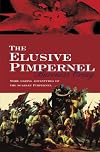
This should be titled 'an interlude', as the real story is the powerful romance between Sir Percy and the ever impulsive Marguerite. Chauvelin sets a trap for the Pimpernel, or so he thinks, to even the score for the humiliation he suffered in Calais in The Scarlet Pimpernel; Percy takes the initiative and calls his arch-enemy's bluff, although his escape is a little flimsy (but for the convention of The Hero Always Triumphs, this should have been a victory for the sable-clad underdog). In show more the chapters with Marguerite, a prisoner of Chauvelin in Boulogne, the reader shares her thoughts and fears, as in The Scarlet Pimpernel, and so her very human behaviour is understandable; barring I Will Repay and Sir Percy Leads the Band, where Marguerite doesn't appear at all, this is the first sequel to consider how the Blakeneys are adjusting to their lives together after the clifftop reunion, and it does so very well. She has to learn to trust him, just as he begins to realise how vitally he loves and treasures his wife. Beautiful sentiment and subtle character development. show less
Lists
Books I've read (1)
Overdue Podcast (1)
Favourite Books (1)
Ambleside Books (1)
Folio Society (1)
1920s (1)
Unread books (1)
Revolutions (1)
Swashbucklers (1)
Carole's List (1)
Best Spy Fiction (1)
Favourite Books (1)
Book wishlist (1)
Sonlight Books (1)
Awards


You May Also Like


Associated Authors
Statistics
- Works
- 214
- Also by
- 69
- Members
- 14,680
- Popularity
- #1,568
- Rating
- 3.8
- Reviews
- 342
- ISBNs
- 1,262
- Languages
- 17
- Favorited
- 35
