
Karl Kesel
Author of The Return of Superman
About the Author
Image credit: http://www.comicvine.com/karl-kesel/26-11380/
Series
Works by Karl Kesel
DC graphic novel collection: Harley Quinn Preludes And Knock Knock Jokes (2008) 237 copies, 6 reviews
Action Comics # 695 4 copies
Superboy [1994] #1 4 copies
Superboy [1994] #2 4 copies
Superboy [1994] #3 4 copies
Marvel Apes #2 Comic 3 copies
Secret Origins (1986-1990) #43 3 copies
Marvel Apes #3 (Of 4) 3 copies
Harley Quinn [2000] #18 3 copies
Superboy [1994] #4 3 copies
Superboy [1994] #5 3 copies
Superboy [1994] #7 3 copies
Fantastic Four [1998] #516 — Author — 3 copies
What If... Dr. Doom Had Become The Thing? (2005) Issue #1 What If...Dr. Doom Had Become The Thing? (2004) 2 copies
MARVEL APES #1 (OF 4) 2 copies
Marvel Apes Speedball Special 2 copies
Harley Quinn [2000] #21 2 copies
Harley Quinn [2000] #20 2 copies
Fantastic Four [1998] #526 — Author — 2 copies
Superboy [1994] #9 2 copies
Superboy [1994] #10 2 copies
Harley Quinn [2000] #23 2 copies
Superboy [1994] #6 2 copies
World's Finest #6 2 copies
The Adventures of Superman #517 2 copies
Fantastic Four [1998] #56 — Author — 2 copies
Superboy: One Million 2 copies
Action Comics # 694 2 copies
Fantastic Four [1998] #514 — Author — 2 copies
Fantastic Four [1998] #515 — Author — 2 copies
Sagas DC 8: La noche final 1 copy
Biblioteca superman 10 1 copy
World's Finest #2 1 copy
World's Finest #4 1 copy
Amazing Fantasy (2004) #13 1 copy
Fantastic Four [1998] #55 — Author — 1 copy
Biblioteca superman 11 1 copy
"DC Comics Graphic Novel Collection Ausgabe 9: Harley Quinn: Flachwitze und andere Katastrophen" 1 copy
Amazing Fantasy (2004) #14 1 copy
Superboy and the Ravers, #1 1 copy
Unlimited Access (1997) #4 1 copy
Daredevil, Vol. 1 #355 1 copy
Unlimited Access (1997) #3 1 copy
Unlimited Access (1997) #2 1 copy
Unlimited Access (1997) #1 1 copy
Final Night (1996) 1 copy
Superman 051 1 copy
Superman 045 1 copy
Superboy [1994] #14 1 copy
Superboy [1994] #15 1 copy
Superboy [1994] #16 1 copy
Superboy [1994] #17 1 copy
Superboy [1994] #18 1 copy
Superboy [1994] #19 1 copy
Superboy [1994] #21 1 copy
Superboy [1994] #22 1 copy
Superman 043/044 1 copy
Superboy [1994] #12 1 copy
Superman 041 1 copy
Superman 039 1 copy
Superboy And The Ravers 13 1 copy
Superman 037 1 copy
Superman 030 1 copy
Superboy [1994] #13 1 copy
Superman 047 1 copy
Superman 103 1 copy
Superman 056 1 copy
Superman 058 1 copy
Superman 074 1 copy
Superman 078 1 copy
Superman 087 1 copy
Superman 095 1 copy
Superman 099 1 copy
Superman 101 1 copy
Superman 108 1 copy
Superman 115 1 copy
Superman 049 1 copy
Superman 116 1 copy
Superman 119 1 copy
Superman Nuova Serie n. 01 1 copy
Superman Nuova Serie n. 02 1 copy
Superman Nuova Serie n. 03 1 copy
Superman Nuova Serie n. 04 1 copy
Superman Nuova Serie n. 05 1 copy
Superman Nuova Serie n. 06 1 copy
Superman 024 1 copy
Superman 054 1 copy
Human Torch (2003-2004) #1 1 copy
Harley Quinn: Quintessence 1 copy
Superman 022 1 copy
Superman 017 1 copy
Superman 014 1 copy
Superman 011 1 copy
Superman 007 1 copy
Superman # 18 1 copy
Fantastic Four 2099 #4 1 copy
The Final Night (Complete) 1 copy
Superboy [1994] #57 1 copy
Harley Quinn Solo tome 1 1 copy
Associated Works
Godzilla: The Original Marvel Years Omnibus (2024) — Introduction, some editions — 28 copies, 1 review
L.E.G.I.O.N. (1989) #34 — Inker, Cover, some editions — 1 copy
L.E.G.I.O.N. (1989) #38 — Inker, Cover, some editions — 1 copy
Tagged
Common Knowledge
- Birthdate
- 1959-01-07
- Gender
- male
- Organizations
- Periscope Studio
- Relationships
- Kesel, Barbara (ex-wife)
- Nationality
- USA
- Birthplace
- Victor, New York, USA
- Associated Place (for map)
- New York, USA
Members
Reviews

It turns out that Superman really isn't dead after all. Please, act surprised. This collection tells of his return to life in an absolutely huge book containing twenty-two individual issues. You can't get that for $19.99 anymore; these days DC would turn that into four (hardcover) trades at least. Of course, Superman doesn't do things by halves, he does them by quadruples-- if he comes back from the dead, he's going to do it four times.
The first half of the book or so focuses on each of the show more four Supermen in turn, trying to avoid a commitment to any one of them actually being the real Clark Kent. By far my favorite of these was John Henry Irons, who is the only one who doesn't try to pretend to be the "real" Superman. Irons is a man whose life was saved by Superman who build himself a suit of steel to fill the gap left when Superman died. Because, despite World Without a Superman going to great pains to show how Supergirl, Guardian, and Gangbuster were successfully filling that gap, no one at all is doing a thing about it here. Irons goes by the moniker "Man of Steel" and spends most of his time fighting some woman who I guess is supposed to be sexy but is in the issues penciled by Jon Bogdanove, so she just looks stupid. Like everyone he pencils. I say I like the Man of Steel the best, and of course I do-- he's being Superman for all the right reasons: it's the right thing to do. Except he's also trying to atone for his past as a weapons developer, now that his super-awesome weapons are being sold to Metropolis gangs. He feels a lot of guilt over this, because apparently street gangs just wouldn't commit crimes if they couldn't gain access to guns called "Toastmasters". He's pretty much an Iron Man rip-off now that I think about it, except that he's not rich, alcoholic, or Republican.
Of course, you pretty much have to like the Man of Steel the best, because the other Supermen aren't up to much. Next most sympathetic is Superboy, a clone of Superman created by Project Cadmus, despite the fact that in World Without a Superman they were stopped from creating a clone by Guardian and the Newsboy Legion. Really, just admit none of you read the stories each other write, guys. Anyway, Superboy is cloned with an earring, sunglasses, and a leather jacket, which tells you everything you need to know-- he's a self-centered 1990s teenager who is about as appealing as Superman as a dead rat. Fortunately, the book doesn't even try to convince you that he's the real deal; he just spends a lot of time flirting with a terminally stupid Asian reporter.
And then there's the other two: the Last Son of Krypton and the Man of Tomorrow (a.k.a. the Cyborg Superman). Perhaps the book's biggest failing is that it never really tries to convince the reader that these two might be the real deal. The Last Son has some good sleights-of-hand to show how he could be the real Superman in practical/plot terms, but there's not enough character work to support that. An attitude more like Superman's, or some moment of connections with his "old" life would go a long way. Guy Gardener likes him, which isn't exactly a vote of support either. And despite the excellent "Prove it" chapter where the Cyborg Superman saves Bill Clinton from an improbable assassination attempt, you never really believe in him either.
But perhaps that's the point. Three of these characters have the Superman powers and logo and modus operandi, but they don't have the Superman essence. And this book is about what makes Superman who he is. He doesn't believe in power above all, he doesn't believe in self-aggrandizement, he doesn't believe in unnecessary lethal force. He believes in doing the right thing. And that's why Steel is the closest any of the characters come to being the "real" Superman, even though he doesn't have the powers in any way, shape, or form. And as the story goes on, the Last Son of Krypton (revealed to be a guy named "the Eradicator" that you and I have never heard of in a humongous and clumsy backstory dump) learns this and begins changing his ways, ameliorating his actions so that he's more like the real Last Son.
(Oh, and Bibbo Bibbowski shows up again, goddamnit. He doesn't say "Sooperman" at least, but we're still treated to "you were my fav'rit!" I'd take even Superboy over this guy.)
Of course, the Cyborg Superman knocks himself out of the running by turning out to be Secretly Evil. He's another guy you and I have never heard of, an astronaut or something who hates Superman for reasons none of the main characters are ever told; there's just an entire issue given over to two comedy aliens telling each other convoluted backstory. Oh, awesome. And he's working with Mongul, an intergalactic criminal whose power is being a lame version of Darkseid. Despite this not-quite-winning villain combination, the second half of the book, where the Cyborg and Mongul unleash their plan and destroy Coast City (poor Green Lantern, his hometown wiped out in someone else's comic), is very good.
The real Superman makes his way back to Metropolis, low on power, but determined. He's Superman, you know? He's not going to stop, even if he doesn't have the powers all the other characters do. Of course, he's got long hair and wears black now, but I guess you can't have everything. His return leads to my three favorite moments of the book: the first is when Superboy, inspired by the real deal (I am getting tired of this phrase) diverts a missile headed for Metropolis, apparently at the cost of his own life. Even though he obviously lives through it, it's a powerful moment, as Superboy struggles and struggles to do what has to be done.
The other highlight is when Superman and Steel battle their ways through Engine City. I dig two-men-with-virtually-nothing-against-all-odds stories, and they're even better when the two men are as awesome as Clark Kent and John Henry Irons. (Supergirl's there too, slowly de-laming herself, but who really cares about her?) And then the Eradicator shows up again and--
I like the idea of the ending-- the Eradicator understanding the "true" meaning of Superman's legacy and gifting Superman with power once more-- but its execution is a little clumsy, I have to admit, as not even the characters have a good reason for why Superman's powers came back. And then the way Superman disposes of the Cyborg is kind of lame. But then, there's the third favorite moment: the double-page spread where Superman really, truly, actually is back. Oh yes!
The art is typical superhero comic fare, usually fine except when Bogdanove is drawing. I wish there was a consistent feature to Maggie Sawyer between artists aside from "lesbian haircut", though.
Like all the best Superman stories, this book is about what it is to be Superman. And with some well-crafted character moments (Lois especially shines in this book) and some strong heroic ones, this book stands as the crowning jewel of the death/rebirth trilogy. Not everything's perfect here, but the book works more often than it doesn't, the second half especially. show less
The first half of the book or so focuses on each of the show more four Supermen in turn, trying to avoid a commitment to any one of them actually being the real Clark Kent. By far my favorite of these was John Henry Irons, who is the only one who doesn't try to pretend to be the "real" Superman. Irons is a man whose life was saved by Superman who build himself a suit of steel to fill the gap left when Superman died. Because, despite World Without a Superman going to great pains to show how Supergirl, Guardian, and Gangbuster were successfully filling that gap, no one at all is doing a thing about it here. Irons goes by the moniker "Man of Steel" and spends most of his time fighting some woman who I guess is supposed to be sexy but is in the issues penciled by Jon Bogdanove, so she just looks stupid. Like everyone he pencils. I say I like the Man of Steel the best, and of course I do-- he's being Superman for all the right reasons: it's the right thing to do. Except he's also trying to atone for his past as a weapons developer, now that his super-awesome weapons are being sold to Metropolis gangs. He feels a lot of guilt over this, because apparently street gangs just wouldn't commit crimes if they couldn't gain access to guns called "Toastmasters". He's pretty much an Iron Man rip-off now that I think about it, except that he's not rich, alcoholic, or Republican.
Of course, you pretty much have to like the Man of Steel the best, because the other Supermen aren't up to much. Next most sympathetic is Superboy, a clone of Superman created by Project Cadmus, despite the fact that in World Without a Superman they were stopped from creating a clone by Guardian and the Newsboy Legion. Really, just admit none of you read the stories each other write, guys. Anyway, Superboy is cloned with an earring, sunglasses, and a leather jacket, which tells you everything you need to know-- he's a self-centered 1990s teenager who is about as appealing as Superman as a dead rat. Fortunately, the book doesn't even try to convince you that he's the real deal; he just spends a lot of time flirting with a terminally stupid Asian reporter.
And then there's the other two: the Last Son of Krypton and the Man of Tomorrow (a.k.a. the Cyborg Superman). Perhaps the book's biggest failing is that it never really tries to convince the reader that these two might be the real deal. The Last Son has some good sleights-of-hand to show how he could be the real Superman in practical/plot terms, but there's not enough character work to support that. An attitude more like Superman's, or some moment of connections with his "old" life would go a long way. Guy Gardener likes him, which isn't exactly a vote of support either. And despite the excellent "Prove it" chapter where the Cyborg Superman saves Bill Clinton from an improbable assassination attempt, you never really believe in him either.
But perhaps that's the point. Three of these characters have the Superman powers and logo and modus operandi, but they don't have the Superman essence. And this book is about what makes Superman who he is. He doesn't believe in power above all, he doesn't believe in self-aggrandizement, he doesn't believe in unnecessary lethal force. He believes in doing the right thing. And that's why Steel is the closest any of the characters come to being the "real" Superman, even though he doesn't have the powers in any way, shape, or form. And as the story goes on, the Last Son of Krypton (revealed to be a guy named "the Eradicator" that you and I have never heard of in a humongous and clumsy backstory dump) learns this and begins changing his ways, ameliorating his actions so that he's more like the real Last Son.
(Oh, and Bibbo Bibbowski shows up again, goddamnit. He doesn't say "Sooperman" at least, but we're still treated to "you were my fav'rit!" I'd take even Superboy over this guy.)
Of course, the Cyborg Superman knocks himself out of the running by turning out to be Secretly Evil. He's another guy you and I have never heard of, an astronaut or something who hates Superman for reasons none of the main characters are ever told; there's just an entire issue given over to two comedy aliens telling each other convoluted backstory. Oh, awesome. And he's working with Mongul, an intergalactic criminal whose power is being a lame version of Darkseid. Despite this not-quite-winning villain combination, the second half of the book, where the Cyborg and Mongul unleash their plan and destroy Coast City (poor Green Lantern, his hometown wiped out in someone else's comic), is very good.
The real Superman makes his way back to Metropolis, low on power, but determined. He's Superman, you know? He's not going to stop, even if he doesn't have the powers all the other characters do. Of course, he's got long hair and wears black now, but I guess you can't have everything. His return leads to my three favorite moments of the book: the first is when Superboy, inspired by the real deal (I am getting tired of this phrase) diverts a missile headed for Metropolis, apparently at the cost of his own life. Even though he obviously lives through it, it's a powerful moment, as Superboy struggles and struggles to do what has to be done.
The other highlight is when Superman and Steel battle their ways through Engine City. I dig two-men-with-virtually-nothing-against-all-odds stories, and they're even better when the two men are as awesome as Clark Kent and John Henry Irons. (Supergirl's there too, slowly de-laming herself, but who really cares about her?) And then the Eradicator shows up again and--
I like the idea of the ending-- the Eradicator understanding the "true" meaning of Superman's legacy and gifting Superman with power once more-- but its execution is a little clumsy, I have to admit, as not even the characters have a good reason for why Superman's powers came back. And then the way Superman disposes of the Cyborg is kind of lame. But then, there's the third favorite moment: the double-page spread where Superman really, truly, actually is back. Oh yes!
The art is typical superhero comic fare, usually fine except when Bogdanove is drawing. I wish there was a consistent feature to Maggie Sawyer between artists aside from "lesbian haircut", though.
Like all the best Superman stories, this book is about what it is to be Superman. And with some well-crafted character moments (Lois especially shines in this book) and some strong heroic ones, this book stands as the crowning jewel of the death/rebirth trilogy. Not everything's perfect here, but the book works more often than it doesn't, the second half especially. show less
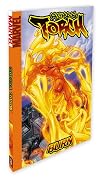
Love Skottie Young’s art and the story of a lone Johnny Storm in early days and “today” was solid and surprising

I will say that after the 8th issue -a disaster, really- this is brilliant. It has a very great start with all the puppets and then it goes on with the parallelism between Quinntets and Stooges. And finally, another well-known villain of Arkham appears.
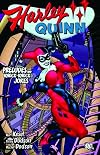
Harley Quinn springs the Joker from jail only to be double-crossed by him. Lovesick and out on her lonesome, she starts joining up with other supervillains and gathering henchmen of her own to create mayhem and mischief wherever she goes!
Generally speaking, I like the character of Harley Quinn, but I think there are subtleties that make or break how she is presented. The Harley here is a little too in love with the Joker, even after he repeatedly abuses that affection. Luckily that doesn't show more last for too, too long as she out on her own pretty soon after. Her various team-ups and other activities bring in some familiar faces from the Bat universe (Riddler, Two-Face, Oracle, Catwoman, etc.) as well as other characters from the DC universe. The complicated but interesting Poison Ivy-Harley Quinn relationship is included, although it's only one part of the storyline.
Again, in general, Harley comics tend to be a bit on the silly side. This one often crosses over that border right into cheesy. There are times when I think the authors are trying to satirize a certain person or idea, but they end up in that zone where it's so much of a parody that it no longer seems like parody ... or funny for that matter. Take, for instance, Harley's party where she invites all kinds of female supervillains over to her latest hideaway. The women almost immediately become "catty," turning on one another, making jokes about eating disorders, and just generally acting like a bunch of a 12-year-olds at a slumber party. It's not actually as hilarious as the authors were thinking.
My biggest complaint of all with this particular title might be the sense of open-endedness is often has. Particular issues and the compilation as a whole end with unanswered questions and plotlines left gaping open. As I didn't care enough for this book to move on to volume 2, those questions will just remain unanswered for me. show less
Generally speaking, I like the character of Harley Quinn, but I think there are subtleties that make or break how she is presented. The Harley here is a little too in love with the Joker, even after he repeatedly abuses that affection. Luckily that doesn't show more last for too, too long as she out on her own pretty soon after. Her various team-ups and other activities bring in some familiar faces from the Bat universe (Riddler, Two-Face, Oracle, Catwoman, etc.) as well as other characters from the DC universe. The complicated but interesting Poison Ivy-Harley Quinn relationship is included, although it's only one part of the storyline.
Again, in general, Harley comics tend to be a bit on the silly side. This one often crosses over that border right into cheesy. There are times when I think the authors are trying to satirize a certain person or idea, but they end up in that zone where it's so much of a parody that it no longer seems like parody ... or funny for that matter. Take, for instance, Harley's party where she invites all kinds of female supervillains over to her latest hideaway. The women almost immediately become "catty," turning on one another, making jokes about eating disorders, and just generally acting like a bunch of a 12-year-olds at a slumber party. It's not actually as hilarious as the authors were thinking.
My biggest complaint of all with this particular title might be the sense of open-endedness is often has. Particular issues and the compilation as a whole end with unanswered questions and plotlines left gaping open. As I didn't care enough for this book to move on to volume 2, those questions will just remain unanswered for me. show less
Lists
You May Also Like


Associated Authors
Statistics
- Works
- 317
- Also by
- 47
- Members
- 1,827
- Popularity
- #14,082
- Rating
- 3.4
- Reviews
- 34
- ISBNs
- 77
- Languages
- 7
- Favorited
- 1