
Amanda Conner
Author of Harley Quinn Vol. 1: Hot in the City (The New 52)
About the Author
Image credit: Picture by Jimpaltti
Series
Works by Amanda Conner
Before Watchmen: Silk Spectre #1 (2012) — Illustrator; Author; Cover artist, some editions — 21 copies, 2 reviews
Before Watchmen: Silk Spectre #2 (2012) — Illustrator; Author; Cover artist, some editions — 18 copies
Before Watchmen: Silk Spectre #3 (2012) — Illustrator; Author; Cover artist, some editions — 13 copies
Before Watchmen: Silk Spectre #4 (2013) — Illustrator; Cover artist, some editions; Author — 13 copies
Harley Quinn by Amanda Conner & Jimmy Palmiotti Omnibus Vol. 2 (Harley Quinn Omnibus) (2018) 9 copies
Harley Quinn [2016] #2 6 copies
Wonder Woman: Agent of Peace #1 4 copies
DC Sneak Peek: Starfire #1 4 copies
Harley Quinn: Be Careful What You Wish For Special Edition (2017) #1 (Harley Quinn (2016-)) (2018) 4 copies
Harley Quinn [2013] #20 3 copies
DC Sneak Peek: Harley Quinn #1 3 copies
Harley Quinn [2013] #29 3 copies
Starfire [2015] #1 3 copies
Harley Quinn [2013] #21 3 copies
Harley Quinn [2013] #18 3 copies
Wonder Woman: Agent of Peace #11 3 copies
Wonder Woman: Agent of Peace #9 3 copies
Harley Quinn [2013] #30 2 copies
Starfire [2015] #7 2 copies
Harley Quinn [2013] #26 2 copies
Starfire [2015] #8 2 copies
Harley Quinn [2016] #22 2 copies
Silver Lining In A Big Dust Cloud 2 copies
Starfire [2015] #12 2 copies
Wonder Woman Giant #7 1 copy
Harley Quinn [2016] #32 1 copy
Harley Quinn [2016] #29 1 copy
La llamada del deber 1 copy
Apagón 1 copy
Harley Quinn X Elvira #1 1 copy
Harley Quinn [2016] #30 1 copy
Harley Quinn [2016] #31 1 copy
Ánimas desanimadas 1 copy
HARLEY QUINN 7 1 copy
HARLEY QUINN 5 1 copy
Associated Works
9-11: The World's Finest Comic Book Writers & Artists Tell Stories to Remember (2002) — Contributor — 256 copies, 1 review
Black Panther by Christopher Priest: The Complete Collection Volume 1 (2015) — Illustrator — 150 copies, 4 reviews
Supergirl and the Legion of Super-Heroes: Strange Visitor from Another Century (2006) — Illustrator — 96 copies, 2 reviews
Chicks Dig Comics: A Celebration of Comic Books by the Women Who Love Them (2012) — Interviewee — 90 copies, 5 reviews
Harley & Ivy Meet Betty & Veronica (2018) — Cover artist, some editions; Illustrator — 74 copies, 8 reviews
Strip AIDS U.S.A.: A Collection of Cartoon Art to Benefit People With AIDS (1988) — Contributor — 65 copies
The Movement Vol. 1: Class Warfare (The New 52) (2014) — Cover artist, some editions — 62 copies, 5 reviews
Multiversity: Harley Screws Up the DCU (2023) — Cover artist, some editions; Illustrator, some editions — 15 copies, 2 reviews
Red Sonja (2019-2021) #4 - The Brothers of Misfortune (2019) — Cover artist, some editions — 5 copies
The Movement #2 — Cover artist — 3 copies
Batman: Black and White, Vol. 2 #4 — Cover artist — 2 copies
Red Sonja (2019-2021) #1 Preview — Cover artist, some editions — 1 copy
Batgirl, Vol. 1 #66 — Illustrator — 1 copy
Rage — Variant Cover Artist, some editions — 1 copy
Tagged
Common Knowledge
- Canonical name
- Conner, Amanda
- Birthdate
- 1966
- Gender
- female
- Education
- The Kubert School (Dover, New Jersey, USA]
- Relationships
- Palmiotti, Jimmy (spouse)
- Nationality
- USA
- Birthplace
- Los Angeles, California, USA
- Places of residence
- Brooklyn, New York, USA
- Associated Place (for map)
- USA
Members
Reviews

Access a version of the below that includes illustrations on my blog.
When I reread the "Power Trip" arc of JSA Classified, I was reminded of how awful Geoff Johns's writing was... but also what a brilliant artist Amanda Conner was, and what a good fit she was for the buoyant, expressive Power Girl. So I decided to pick up this collection, which contains all twelve issues of her run on Power Girl vol. 2. (Unfortunately, it also includes that terrible JSA Classified story, but I skipped it show more rather than suffer through it a third time. Note that Geoff Johns gets first billing on the cover for writing just four of the seventeen issues included here, whereas Amanda Conner—the only person to work on all seventeen and the volume's clear star—is down in fourth. Must be nice to be the former president of DC!)
The twelve issues of Power Girl collected here run concurrently with Justice Society of America vol. 3 #29-40 and JSA All-Stars vol. 2 #1-6, taking place during the time when Power Girl is leading the JSA. (When the volume opens, the team seems to be unified still; by the time of the closing arc, it has split up, and Magog has left.) But the story's focus is on the fact that despite what's happening with the Justice Society, Power Girl is no longer frustrated at her lack of a clear origin, and just trying to be herself—whoever that may be. So for the first time in a long while, she's reactivated her civilian identity of Karen Starr, and is using it to build a technology company while she moves out of the JSA brownstone into an apartment of her own. She develops friendships, and builds up her own supporting cast. There's even her cat from her JLI days.
It's one of those runs that you can't point to a single issue and say "this is an amazing comic book" but where you can point to the whole and say "this is what a superhero comic book should be." It's funny, it's charming, it's goofy, it has a unique personality all its own. Sometimes Power Girl is battling the Ultra-Humanite and his former lover Santana, but sometimes she's stopping alien girls gone wild and a virile alien warlord who wants to repopulate his sterilized planet, sometimes she's helping out a teenage boy by going comic book shopping with him. Writers Justin Gray and Jimmy Palmiotti have admittedly produced some real shit in their time at DC, but this plays to their strengths—or at least to Conner's, who is surely in the Top Ten of superhero comics artists, and consistently elevates any material she is given.
In Conner's hands, comedy, action, and emotion all get good play, letting the whole story come alive. Sometimes the main conflict of one of these stories will end halfway through an issue, and the rest will just be about Power Girl chilling with her sidekick/new friend Terra—and it is always a delight. Conner hits the perfect note with PG's physical appearance, giving us a woman who is attractive but not objectified. I mean, Gray and Palmiotti definitely write in gratuitous moments, but they feel natural and part of the story. (Which is not always the case with Power Girl; shortly before writing this review, I read JSA All-Stars #1, where PG's costume gets strategically torn in such a way as to reveal her entire midriff, and where her boobs are always hanging in "attractive" unnatural positions... bleh.)
Like many great runs, the worst thing about it is that it wasn't longer; I gladly would have read another twelve issues from this team. I felt that the supporting cast at Karen's new company barely got started in what they could do, and I want more Kara and Atlee bonding in New York City. But even though this comic lasted another fifteen issues, Judd Winick took over as writer and it became (to my understanding, anyway) a Brightest Day tie-in; neither the writer nor the change of focus appeals. That said, it did make me interested in picking up PG's newest series...
The Justice Society and Earth-Two: « Previous in sequence | Next in sequence » show less
When I reread the "Power Trip" arc of JSA Classified, I was reminded of how awful Geoff Johns's writing was... but also what a brilliant artist Amanda Conner was, and what a good fit she was for the buoyant, expressive Power Girl. So I decided to pick up this collection, which contains all twelve issues of her run on Power Girl vol. 2. (Unfortunately, it also includes that terrible JSA Classified story, but I skipped it show more rather than suffer through it a third time. Note that Geoff Johns gets first billing on the cover for writing just four of the seventeen issues included here, whereas Amanda Conner—the only person to work on all seventeen and the volume's clear star—is down in fourth. Must be nice to be the former president of DC!)
The twelve issues of Power Girl collected here run concurrently with Justice Society of America vol. 3 #29-40 and JSA All-Stars vol. 2 #1-6, taking place during the time when Power Girl is leading the JSA. (When the volume opens, the team seems to be unified still; by the time of the closing arc, it has split up, and Magog has left.) But the story's focus is on the fact that despite what's happening with the Justice Society, Power Girl is no longer frustrated at her lack of a clear origin, and just trying to be herself—whoever that may be. So for the first time in a long while, she's reactivated her civilian identity of Karen Starr, and is using it to build a technology company while she moves out of the JSA brownstone into an apartment of her own. She develops friendships, and builds up her own supporting cast. There's even her cat from her JLI days.
It's one of those runs that you can't point to a single issue and say "this is an amazing comic book" but where you can point to the whole and say "this is what a superhero comic book should be." It's funny, it's charming, it's goofy, it has a unique personality all its own. Sometimes Power Girl is battling the Ultra-Humanite and his former lover Santana, but sometimes she's stopping alien girls gone wild and a virile alien warlord who wants to repopulate his sterilized planet, sometimes she's helping out a teenage boy by going comic book shopping with him. Writers Justin Gray and Jimmy Palmiotti have admittedly produced some real shit in their time at DC, but this plays to their strengths—or at least to Conner's, who is surely in the Top Ten of superhero comics artists, and consistently elevates any material she is given.
In Conner's hands, comedy, action, and emotion all get good play, letting the whole story come alive. Sometimes the main conflict of one of these stories will end halfway through an issue, and the rest will just be about Power Girl chilling with her sidekick/new friend Terra—and it is always a delight. Conner hits the perfect note with PG's physical appearance, giving us a woman who is attractive but not objectified. I mean, Gray and Palmiotti definitely write in gratuitous moments, but they feel natural and part of the story. (Which is not always the case with Power Girl; shortly before writing this review, I read JSA All-Stars #1, where PG's costume gets strategically torn in such a way as to reveal her entire midriff, and where her boobs are always hanging in "attractive" unnatural positions... bleh.)
Like many great runs, the worst thing about it is that it wasn't longer; I gladly would have read another twelve issues from this team. I felt that the supporting cast at Karen's new company barely got started in what they could do, and I want more Kara and Atlee bonding in New York City. But even though this comic lasted another fifteen issues, Judd Winick took over as writer and it became (to my understanding, anyway) a Brightest Day tie-in; neither the writer nor the change of focus appeals. That said, it did make me interested in picking up PG's newest series...
The Justice Society and Earth-Two: « Previous in sequence | Next in sequence » show less
Harley Quinn (2013-2016) Vol. 1: Hot in the City (Harley Quinn (The New 52) Boxset) by Jimmy Palmiotti

This? Was awesome. It's the Harley I've always wanted. She's still a little vague on that whole value of human life thing, but do not harm an animal in her presence. From her new home to her collection of pets to Ivy's visit and the secret of who's after Harley, this was just all-around great. (Provided by publisher.)

This volume collects two of the Before Watchmen series that DC commissioned and published against the wishes of Watchmen author Alan Moore. The first series is the six-issue Minutemen, chronicling the WWII-era predecessors to the Watchmen, and the second is four numbers of Silk Spectre, with a story about Laurie Jupiter in the 1960s. Darwyn Cooke serves as auteur for Minutemen, both writing and drawing throughout, and he gets a co-writer credit on the Silk Spectre issues by Amanda Conner. I show more wasn't interested in the individual issues when they were on comic shop shelves about five years ago, but curiosity got the better of me when I saw this book at the public library.
The opening of Minutemen is clever and effective. Cooke imitates Moore's portentous voice and the panel designs from Watchmen (i.e. stacked full-width panels, with a repeating geometric motif--in this case the centered circle that turns out to be a clock), only to pull the perspective back and reveal Hollis Mason (the original Nite Owl) frustrated with his own prose style as he composes his memoirs. That breaks the tension and assuages the anxiety of influence so that Cooke can get down to work telling a story that really does share the ethos of Watchmen in exploring the interactions of deeply flawed costumed vigilantes and their efforts to work together as a team. Cooke's visual characterizations are very different than those of Watchmen artist Dave Gibbons, but still suited to the material.
I was not as pleased with the shorter Silk Spectre story. It has Laurie running away from home and going to San Francisco to fall in with the sixties counterculture. It cast Owsley Stanley as a villain, collaborating to use hallucinogenic mind-control to re-instill materialistic consumerism in hippies. Neither Laurie nor her mother Sally were especially likable characters--the general approach of highlighting their personal flaws seemed to backfire here. I did enjoy Amanda Conner's art, though. It has a polished 21st-century comics ambiance, and she did excellent work depicting the retro-psychedelic subject matter. show less
The opening of Minutemen is clever and effective. Cooke imitates Moore's portentous voice and the panel designs from Watchmen (i.e. stacked full-width panels, with a repeating geometric motif--in this case the centered circle that turns out to be a clock), only to pull the perspective back and reveal Hollis Mason (the original Nite Owl) frustrated with his own prose style as he composes his memoirs. That breaks the tension and assuages the anxiety of influence so that Cooke can get down to work telling a story that really does share the ethos of Watchmen in exploring the interactions of deeply flawed costumed vigilantes and their efforts to work together as a team. Cooke's visual characterizations are very different than those of Watchmen artist Dave Gibbons, but still suited to the material.
I was not as pleased with the shorter Silk Spectre story. It has Laurie running away from home and going to San Francisco to fall in with the sixties counterculture. It cast Owsley Stanley as a villain, collaborating to use hallucinogenic mind-control to re-instill materialistic consumerism in hippies. Neither Laurie nor her mother Sally were especially likable characters--the general approach of highlighting their personal flaws seemed to backfire here. I did enjoy Amanda Conner's art, though. It has a polished 21st-century comics ambiance, and she did excellent work depicting the retro-psychedelic subject matter. show less
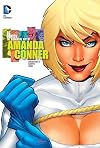
Amanda Conner first came to my attention with her fabulous "Supergirl" strip in Wednesday Comics-- rarely is any comics artist able to master facial expressions so well, and even more, she used them to humorous effect. The Sequential Art of Amanda Conner collects a number of different examples of her work for DC Comics over the years, and I like her stuff enough to make it a must-read.
I'm reading it now, though, because it collects issues #47-49 of Birds of Prey (vol. 1), the only collected show more issues in the gap between Old Friends, New Enemies and Of Like Minds.* The story is "The Chaotic Code," and it features Barbara and Dinah fighting to protect a young girl with the astounding power to undo the effect of entropy on people. Of course, like all advanced medical science in a comic book world, There Are Things That Man Was Not Meant To Do, and it'll kill you if it lasts too long. Also the guy the girl is working for is evil. The interesting part is that Barbara temporarily regains use of her legs; there's a great page where she jumps out of a window after some fearsome hand-to-hand stuff, and there a couple good jokes. What's unfortunate is that the fact she is forced to go back to the way she was isn't really dealt with.
Meanwhile, Dinah gets in trouble for parking illegally, and it escalates crazily from there. This is goofy, action-driven fun, a dynamic that the post-Green-Arrow Black Canary is well-suited for, I think. Unfortunately, she's already back in her old outfit, though at least it's drawn better here than it was in the late 1980s/early 1990s. I miss the full-body jumpsuit! She ends up throwing down with Talia al Ghul, who is working for President Luthor for some reason.
Conner is maybe the perfect artist for Birds of Prey: fun and even sexy, without ever feeling crass and exploitative. Her faces, especially for Dinah as the situation gets worse and worse, are great, and she choreographs potentially-confusing action scenes quite well. It's a shame that she only ever drew this single three-issue arc.
The book is, of course, overall an excellent showcase for her immense skills; I'll touch just briefly on the other tales here. Superman: Lois Lane #1, the not-properly-titled first story by Barbara Kesel, features Lois on her own, battling in a submarine. This is definitely the action-Lois of the 1990s (as seen in World Without a Superman, for example), and it's fun in much the same way Birds of Prey itself is.
Geoff Johns's "Power Trip" takes place on the eve of the Infinite Crisis, with the Psycho Pirate trying to confuse Power Girl about her tangled origin story. I'm not sure why, as the story takes four issues to not answer any questions. It also features the completely stupid explanation of the "cleavage window" on her costume. Some good jokes, though. Some obvious ones, too.
"Scared Straight" has the most anal rape jokes I've ever encountered in a superhero comic, and I have no idea what the hell it even is. I'm afraid finding out will just make things worse, though. And Ame-Comi Girls featuring Wonder Woman #1 has a charming scene where the protagonist wants to know why she's dressed in a ridiculously exploitative costume and no one answers her and the thing just keeps on happening!
The best story in the book is clearly the one Amanda Conner wrote herself: "Fuzzy Logic," a charming short where Power Girl, Wonder Woman, and Batgirl fight a tentacle monster, and then Wonder Woman gives Power Girl advice about her cat.
Birds of Prey: « Previous in sequence | Next in sequence »
* There are some other collected issues in this gap, actually, but they're all in collections branded with other series titles, like Batman and Nightwing. show less
I'm reading it now, though, because it collects issues #47-49 of Birds of Prey (vol. 1), the only collected show more issues in the gap between Old Friends, New Enemies and Of Like Minds.* The story is "The Chaotic Code," and it features Barbara and Dinah fighting to protect a young girl with the astounding power to undo the effect of entropy on people. Of course, like all advanced medical science in a comic book world, There Are Things That Man Was Not Meant To Do, and it'll kill you if it lasts too long. Also the guy the girl is working for is evil. The interesting part is that Barbara temporarily regains use of her legs; there's a great page where she jumps out of a window after some fearsome hand-to-hand stuff, and there a couple good jokes. What's unfortunate is that the fact she is forced to go back to the way she was isn't really dealt with.
Meanwhile, Dinah gets in trouble for parking illegally, and it escalates crazily from there. This is goofy, action-driven fun, a dynamic that the post-Green-Arrow Black Canary is well-suited for, I think. Unfortunately, she's already back in her old outfit, though at least it's drawn better here than it was in the late 1980s/early 1990s. I miss the full-body jumpsuit! She ends up throwing down with Talia al Ghul, who is working for President Luthor for some reason.
Conner is maybe the perfect artist for Birds of Prey: fun and even sexy, without ever feeling crass and exploitative. Her faces, especially for Dinah as the situation gets worse and worse, are great, and she choreographs potentially-confusing action scenes quite well. It's a shame that she only ever drew this single three-issue arc.
The book is, of course, overall an excellent showcase for her immense skills; I'll touch just briefly on the other tales here. Superman: Lois Lane #1, the not-properly-titled first story by Barbara Kesel, features Lois on her own, battling in a submarine. This is definitely the action-Lois of the 1990s (as seen in World Without a Superman, for example), and it's fun in much the same way Birds of Prey itself is.
Geoff Johns's "Power Trip" takes place on the eve of the Infinite Crisis, with the Psycho Pirate trying to confuse Power Girl about her tangled origin story. I'm not sure why, as the story takes four issues to not answer any questions. It also features the completely stupid explanation of the "cleavage window" on her costume. Some good jokes, though. Some obvious ones, too.
"Scared Straight" has the most anal rape jokes I've ever encountered in a superhero comic, and I have no idea what the hell it even is. I'm afraid finding out will just make things worse, though. And Ame-Comi Girls featuring Wonder Woman #1 has a charming scene where the protagonist wants to know why she's dressed in a ridiculously exploitative costume and no one answers her and the thing just keeps on happening!
The best story in the book is clearly the one Amanda Conner wrote herself: "Fuzzy Logic," a charming short where Power Girl, Wonder Woman, and Batgirl fight a tentacle monster, and then Wonder Woman gives Power Girl advice about her cat.
Birds of Prey: « Previous in sequence | Next in sequence »
* There are some other collected issues in this gap, actually, but they're all in collections branded with other series titles, like Batman and Nightwing. show less
Lists
Awards

You May Also Like


Associated Authors
Statistics
- Works
- 227
- Also by
- 65
- Members
- 3,960
- Popularity
- #6,377
- Rating
- 3.6
- Reviews
- 155
- ISBNs
- 169
- Languages
- 11