
Jimmy Palmiotti
Author of Fables, Vol. 05: The Mean Seasons
About the Author
Image credit: Jimmy Palmiotti. Photo by "5 of 7" on flickr.
Series
Works by Jimmy Palmiotti
Harley Quinn by Amanda Conner & Jimmy Palmiotti Omnibus Vol. 2 (Harley Quinn Omnibus) (2018) 9 copies
DC Sneak Peek: Starfire #1 — Author — 4 copies
Starfire [2015] #1 — Author — 3 copies
DC Sneak Peek: Harley Quinn #1 — Author — 3 copies
Friday the 13th # 2 3 copies
Uncle Sam And The Freedom Fighters 4 3 copies
The Blue Falcon and Dynomutt #1 - Love You Till Forever — Author — 2 copies
Uncle Sam And The Freedom Fighters 2 2 copies
Claws #1 2 copies
Overstreet's Fan #20 February The Year in Review (Free Shi! The Blood of Saints Fan Edition #2) 2 copies
Uncle Sam And The Freedom Fighters 5 2 copies
Uncle Sam And The Freedom Fighters 3 2 copies
Uncle Sam And The Freedom Fighters 1 2 copies
Uncle Sam And The Freedom Fighters 6 2 copies
Uncle Sam And The Freedom Fighters 7 2 copies
Resistance 1 2 copies
Uncle Sam And The Freedom Fighters 8 2 copies
Starfire [2015] #8 — Author — 2 copies
Heroes for Hire (2006) #13 2 copies
Marvel Crossover - The Punisher vs Deadpool - Heft Nr. 29 : Stadtgespräch Teil 2; Hier endet es Teil 1 & 2. (2001) 2 copies
Wool #1 (of 6) 2 copies
21 Down: the Complete Collection 2 copies
Batwing: Futures End 2 copies
Ash Volume One 1 copy
PaperFilms Sampler 1 copy
Punisher Red X-Mas (2004) #1 1 copy
Conan y las hijas de Midora 1 copy
Rage — Author — 1 copy
Harley Quinn [2016] #26 1 copy
Harley Quinn [2016] #33 1 copy
Creator Owned Heroes 6 1 copy
Daughters of the Dragon #4 1 copy
Heroes for Hire (2006) #6 1 copy
Heroes for Hire (2006) #7 1 copy
Creator Owned Heroes 5 1 copy
Cloudburst 1 copy
Creator Owned Heroes 1 1 copy
Creator Owned Heroes 2 1 copy
Creator Owned Heroes 3 1 copy
Creator Owned Heroes 4 1 copy
Harley Quinn [2016] #34 1 copy
Creator Owned Heroes 7 1 copy
SuperZero #3 1 copy
21 Down (2002) #8 1 copy
Punisher: Vánoce na odstřel 1 copy
Harley quiere al Joker 1 copy
Marvel Knights Punisher 1 copy
SuperZero #2 1 copy
SuperZero #4 1 copy
SuperZero #5 1 copy
SuperZero #6 1 copy
Resistance 8 1 copy
Resistance 2 1 copy
Resistance 3 1 copy
Resistance 4 1 copy
Resistance 5 1 copy
Resistance 6 1 copy
Resistance 7 1 copy
Heroes For Hire #2 1 copy
Hawkman (2002-2006) #35 1 copy
Triggergirl 6 1 copy
Deadpool : Cruel summer 1 copy
Pop Kill (2025) 001 1 copy
The Invincible Red Sonja 1 copy
Associated Works
9-11: The World's Finest Comic Book Writers & Artists Tell Stories to Remember (2002) — Contributor — 256 copies, 1 review
Black Panther by Christopher Priest: The Complete Collection Volume 1 (2015) — Illustrator — 152 copies, 4 reviews
Multiversity: Harley Screws Up the DCU (2023) — Cover artist, some editions; Illustrator, some editions — 15 copies, 2 reviews
Starfire [2015] #12 — Author — 2 copies
DC 1st: Batgirl/The Joker — Illustrator — 2 copies
Tagged
Common Knowledge
- Canonical name
- Palmiotti, Jimmy
- Other names
- Palmiotti, James J.
- Birthdate
- 1961-08-16
- Gender
- male
- Relationships
- Conner, Amanda (spouse)
- Nationality
- USA
- Birthplace
- Brooklyn, New York, USA
- Associated Place (for map)
- New York, USA
Members
Discussions
The hills have eyes: the beginning, graphic novel in Thing(amabrarian)s That Go Bump in the Night (December 2012)
Reviews

God exists, and He hates me. How do I know this? He permitted the existence of a second volume of Uncle Sam and the Freedom Fighters. (Actually, he permitted the existence of still more, but in His mercy He left those ones uncollected.) Only the sheer deep-rootedness of my completist instincts can explain why I read this: given that I'd read the previous volume and that it takes place during Countdown to Final Crisis, I felt compelled to read it, but now that I've typed that it out, it seems show more a wholly inadequate explanation for why I inflicted this on myself. Perhaps I, like God, hate me.
This is like the first volume, but worse if you can imagine it. Nothing that any character does in here mean anything; I want to give Justin Gray and Jimmy Palmiotti the benefit of the doubt, but this reads like sheer hackwork, comics vomited out to fulfill some kind of contractual obligation. (Is DC required to publish stories featuring the characters/concepts they inherited from Quality Comics? Surely nothing else could explain their insistence of releasing terrible comic after terrible comic featuring them.) One imagines they wrote each issue in mere minutes, never edited a word, and then laughed as they cashed their paychecks. (2007-08 was a good time for them and shit writing, given they were also partly responsible for Countdown to Final Crisis.) As a fan of what I've read of Christopher Priest's run on The Ray, I'm glad he's not alive so he didn't have to witness their utter ineptitude in handling the characters he poured so much brilliance into.
The only person more guilty than the writers of this comic is its artist. Seriously, Renato Arlem's art is irredeemably bad and completely terrible. A heavy user of Photoshop, characters usually don't move from panel to panel, and images are reused in different contexts despite inappropriate poses and facial expressions, and what the dialogue and narration indicate ought to be happening is often wholly undepicted in the artwork. That anyone has ever hired him to "draw" anything boggles my mind. I can only assume that since 50% of his drawings are reused, he costs 50% of other artists. (Caleb Mozzocco has said much the same at me, but at length, and with pictures.)
Don't be like me. Don't make my mistake. Don't turn on God. Don't read this book!
DC Comics Crises: « Previous in sequence | Next in sequence » show less
This is like the first volume, but worse if you can imagine it. Nothing that any character does in here mean anything; I want to give Justin Gray and Jimmy Palmiotti the benefit of the doubt, but this reads like sheer hackwork, comics vomited out to fulfill some kind of contractual obligation. (Is DC required to publish stories featuring the characters/concepts they inherited from Quality Comics? Surely nothing else could explain their insistence of releasing terrible comic after terrible comic featuring them.) One imagines they wrote each issue in mere minutes, never edited a word, and then laughed as they cashed their paychecks. (2007-08 was a good time for them and shit writing, given they were also partly responsible for Countdown to Final Crisis.) As a fan of what I've read of Christopher Priest's run on The Ray, I'm glad he's not alive so he didn't have to witness their utter ineptitude in handling the characters he poured so much brilliance into.
The only person more guilty than the writers of this comic is its artist. Seriously, Renato Arlem's art is irredeemably bad and completely terrible. A heavy user of Photoshop, characters usually don't move from panel to panel, and images are reused in different contexts despite inappropriate poses and facial expressions, and what the dialogue and narration indicate ought to be happening is often wholly undepicted in the artwork. That anyone has ever hired him to "draw" anything boggles my mind. I can only assume that since 50% of his drawings are reused, he costs 50% of other artists. (Caleb Mozzocco has said much the same at me, but at length, and with pictures.)
Don't be like me. Don't make my mistake. Don't turn on God. Don't read this book!
DC Comics Crises: « Previous in sequence | Next in sequence » show less

Access a version of the below that includes illustrations on my blog.
When I reread the "Power Trip" arc of JSA Classified, I was reminded of how awful Geoff Johns's writing was... but also what a brilliant artist Amanda Conner was, and what a good fit she was for the buoyant, expressive Power Girl. So I decided to pick up this collection, which contains all twelve issues of her run on Power Girl vol. 2. (Unfortunately, it also includes that terrible JSA Classified story, but I skipped it show more rather than suffer through it a third time. Note that Geoff Johns gets first billing on the cover for writing just four of the seventeen issues included here, whereas Amanda Conner—the only person to work on all seventeen and the volume's clear star—is down in fourth. Must be nice to be the former president of DC!)
The twelve issues of Power Girl collected here run concurrently with Justice Society of America vol. 3 #29-40 and JSA All-Stars vol. 2 #1-6, taking place during the time when Power Girl is leading the JSA. (When the volume opens, the team seems to be unified still; by the time of the closing arc, it has split up, and Magog has left.) But the story's focus is on the fact that despite what's happening with the Justice Society, Power Girl is no longer frustrated at her lack of a clear origin, and just trying to be herself—whoever that may be. So for the first time in a long while, she's reactivated her civilian identity of Karen Starr, and is using it to build a technology company while she moves out of the JSA brownstone into an apartment of her own. She develops friendships, and builds up her own supporting cast. There's even her cat from her JLI days.
It's one of those runs that you can't point to a single issue and say "this is an amazing comic book" but where you can point to the whole and say "this is what a superhero comic book should be." It's funny, it's charming, it's goofy, it has a unique personality all its own. Sometimes Power Girl is battling the Ultra-Humanite and his former lover Santana, but sometimes she's stopping alien girls gone wild and a virile alien warlord who wants to repopulate his sterilized planet, sometimes she's helping out a teenage boy by going comic book shopping with him. Writers Justin Gray and Jimmy Palmiotti have admittedly produced some real shit in their time at DC, but this plays to their strengths—or at least to Conner's, who is surely in the Top Ten of superhero comics artists, and consistently elevates any material she is given.
In Conner's hands, comedy, action, and emotion all get good play, letting the whole story come alive. Sometimes the main conflict of one of these stories will end halfway through an issue, and the rest will just be about Power Girl chilling with her sidekick/new friend Terra—and it is always a delight. Conner hits the perfect note with PG's physical appearance, giving us a woman who is attractive but not objectified. I mean, Gray and Palmiotti definitely write in gratuitous moments, but they feel natural and part of the story. (Which is not always the case with Power Girl; shortly before writing this review, I read JSA All-Stars #1, where PG's costume gets strategically torn in such a way as to reveal her entire midriff, and where her boobs are always hanging in "attractive" unnatural positions... bleh.)
Like many great runs, the worst thing about it is that it wasn't longer; I gladly would have read another twelve issues from this team. I felt that the supporting cast at Karen's new company barely got started in what they could do, and I want more Kara and Atlee bonding in New York City. But even though this comic lasted another fifteen issues, Judd Winick took over as writer and it became (to my understanding, anyway) a Brightest Day tie-in; neither the writer nor the change of focus appeals. That said, it did make me interested in picking up PG's newest series...
The Justice Society and Earth-Two: « Previous in sequence | Next in sequence » show less
When I reread the "Power Trip" arc of JSA Classified, I was reminded of how awful Geoff Johns's writing was... but also what a brilliant artist Amanda Conner was, and what a good fit she was for the buoyant, expressive Power Girl. So I decided to pick up this collection, which contains all twelve issues of her run on Power Girl vol. 2. (Unfortunately, it also includes that terrible JSA Classified story, but I skipped it show more rather than suffer through it a third time. Note that Geoff Johns gets first billing on the cover for writing just four of the seventeen issues included here, whereas Amanda Conner—the only person to work on all seventeen and the volume's clear star—is down in fourth. Must be nice to be the former president of DC!)
The twelve issues of Power Girl collected here run concurrently with Justice Society of America vol. 3 #29-40 and JSA All-Stars vol. 2 #1-6, taking place during the time when Power Girl is leading the JSA. (When the volume opens, the team seems to be unified still; by the time of the closing arc, it has split up, and Magog has left.) But the story's focus is on the fact that despite what's happening with the Justice Society, Power Girl is no longer frustrated at her lack of a clear origin, and just trying to be herself—whoever that may be. So for the first time in a long while, she's reactivated her civilian identity of Karen Starr, and is using it to build a technology company while she moves out of the JSA brownstone into an apartment of her own. She develops friendships, and builds up her own supporting cast. There's even her cat from her JLI days.
It's one of those runs that you can't point to a single issue and say "this is an amazing comic book" but where you can point to the whole and say "this is what a superhero comic book should be." It's funny, it's charming, it's goofy, it has a unique personality all its own. Sometimes Power Girl is battling the Ultra-Humanite and his former lover Santana, but sometimes she's stopping alien girls gone wild and a virile alien warlord who wants to repopulate his sterilized planet, sometimes she's helping out a teenage boy by going comic book shopping with him. Writers Justin Gray and Jimmy Palmiotti have admittedly produced some real shit in their time at DC, but this plays to their strengths—or at least to Conner's, who is surely in the Top Ten of superhero comics artists, and consistently elevates any material she is given.
In Conner's hands, comedy, action, and emotion all get good play, letting the whole story come alive. Sometimes the main conflict of one of these stories will end halfway through an issue, and the rest will just be about Power Girl chilling with her sidekick/new friend Terra—and it is always a delight. Conner hits the perfect note with PG's physical appearance, giving us a woman who is attractive but not objectified. I mean, Gray and Palmiotti definitely write in gratuitous moments, but they feel natural and part of the story. (Which is not always the case with Power Girl; shortly before writing this review, I read JSA All-Stars #1, where PG's costume gets strategically torn in such a way as to reveal her entire midriff, and where her boobs are always hanging in "attractive" unnatural positions... bleh.)
Like many great runs, the worst thing about it is that it wasn't longer; I gladly would have read another twelve issues from this team. I felt that the supporting cast at Karen's new company barely got started in what they could do, and I want more Kara and Atlee bonding in New York City. But even though this comic lasted another fifteen issues, Judd Winick took over as writer and it became (to my understanding, anyway) a Brightest Day tie-in; neither the writer nor the change of focus appeals. That said, it did make me interested in picking up PG's newest series...
The Justice Society and Earth-Two: « Previous in sequence | Next in sequence » show less
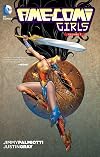
Technically, I didn't finish this. I picked it up because it featured all sorts of awesome female superheroes and villains, but the art, you guys. I don't always love lady superhero costumes, but I'm also fairly used to them by now. And I usually like the story enough that the costumes aren't a deal-breaker. BUT. When Wonder Woman's special fancy ambassador outfit she wore to speak to the UN (or whatever the comic equivalent is) was a glorified thong and bandeau top, I rolled my eyes so hard show more they almost popped out of my head. It's not like her normal costume, as featured on the cover, is drearily demure and modest.
So I flipped forward to see what the other segments featured and discovered some characters with individual breasts larger than their heads and a PMS joke. And then I was like, screw you guys, it's obvious I'm not your audience here.
There may be an interesting story in these pages, but I can tolerate only so much sexist body representation before I decide my time and money is better spent elsewhere. show less
So I flipped forward to see what the other segments featured and discovered some characters with individual breasts larger than their heads and a PMS joke. And then I was like, screw you guys, it's obvious I'm not your audience here.
There may be an interesting story in these pages, but I can tolerate only so much sexist body representation before I decide my time and money is better spent elsewhere. show less
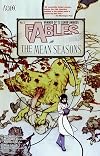
The stories in this volume follow the dramatic battle from the previous collection, and are appropriately more calm after prior tumultuous events, giving the story breathing room and tying up several loose plot threads that were introduced earlier. For instance, the aftermath of the romance between Snow White and Bigby, as she delivers a litter of children that are half cub, half human. We also get a back story about Bigby's time during World War II, and another small story that reveals show more Cinderella uses that pretty face for more than flirting. The volume ends with a mystery that has a sad conclusion, leaving us a bit of a cliffhanger for the next collection in the series.
I continue to enjoy this graphic novel series. As it progresses, the characters gather more depth and history, and move away from being just novel retellings of fairy tales to being interesting people on their own terms. Willingham has done a fantastic job of layering this world with history and mythology, drawing upon the fairy tale sources and then adding so much more to this basic framework. Even as he builds up his own fascinating world, he often introduces a new variant of old fairy tales here or there, to the gratification of us lovers of fairy tale retellings.
I have become very fond of the central characters in the series, in particular Snow White and BIgby and Rose Red. It is always fun, though, to meet a new fairy character or to see revelations about minor characters. There is enough in the plot, the novelty, and the characterization to keep me interested in this series for a long time to come. show less
I continue to enjoy this graphic novel series. As it progresses, the characters gather more depth and history, and move away from being just novel retellings of fairy tales to being interesting people on their own terms. Willingham has done a fantastic job of layering this world with history and mythology, drawing upon the fairy tale sources and then adding so much more to this basic framework. Even as he builds up his own fascinating world, he often introduces a new variant of old fairy tales here or there, to the gratification of us lovers of fairy tale retellings.
I have become very fond of the central characters in the series, in particular Snow White and BIgby and Rose Red. It is always fun, though, to meet a new fairy character or to see revelations about minor characters. There is enough in the plot, the novelty, and the characterization to keep me interested in this series for a long time to come. show less
Lists
Awards

You May Also Like


Associated Authors
Statistics
- Works
- 389
- Also by
- 64
- Members
- 5,887
- Popularity
- #4,190
- Rating
- 3.9
- Reviews
- 170
- ISBNs
- 238
- Languages
- 10
- Favorited
- 1
