
Kuan Yew Lee (1923–2015)
Author of From Third World to First: The Singapore Story 1965-2000
About the Author
Works by Kuan Yew Lee
Malaysia : age of revolution 1 copy
A História de Cingapura 1 copy
Associated Works
On the Firing Line: The Public Life of Our Public Figures (1989) — Contributor — 126 copies, 1 review
Tagged
Common Knowledge
- Other names
- Lee Kuan Yew (Chinese name order, i.e., Lee is the family name)
李光耀
LKY
Lee Kuan Yew, Harry (birth name) - Birthdate
- 1923-09-16
- Date of death
- 2015-03-23
- Gender
- male
- Education
- University of Cambridge (BA, starred 1st class honours [perfect score]|1949|Law)
London School of Economics - Occupations
- politician
- Organizations
- People's Action Party
Government of Singapore - Awards and honors
- Order of St Michael and St George (Knight Grand Cross, 1972)
Companion of Honour (1970)
SPMJ - Nationality
- Singapore
- Birthplace
- Singapore
- Places of residence
- Singapore, Republic of Singapore
- Place of death
- Singapore
- Associated Place (for map)
- Singapore, Republic of Singapore
Members
Reviews
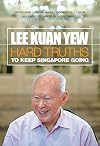
Being a Singaporean in my early twenties, I have not much recollection of the esteemed Lee Kuan Yew as a 'star politician' - I was a mere 3 years old when he stepped down to be the Minister Mentor, and a week shy from my 12th birthday on the day that he passed. This book, however, enabled me to catch a glimpse into his mind and character as a young adult now; documenting all his opinions, frank rebuttals and sharp words, I have seen the vigour and passion of the famed Lee Kuan Yew that show more struck down every single adversary he faced.
Perhaps the most striking of his character was underscored in this reviewed book; his conviction and consequent bluntness. Lee did not mince his words nor succumb to political correctness - in his speeches and debates, he negotiated his positions fiercely with an acute national interest, never shying away from what needed to be understood. Although this induced controversy in his character - with some arguing that Lee advocated for extreme ideologies like nepotism, authoritarianism and even racially-charged eugenics – his ideologies had set the foundations of policymaking and the establishment of systems that had made Singapore what it is today. show less
Perhaps the most striking of his character was underscored in this reviewed book; his conviction and consequent bluntness. Lee did not mince his words nor succumb to political correctness - in his speeches and debates, he negotiated his positions fiercely with an acute national interest, never shying away from what needed to be understood. Although this induced controversy in his character - with some arguing that Lee advocated for extreme ideologies like nepotism, authoritarianism and even racially-charged eugenics – his ideologies had set the foundations of policymaking and the establishment of systems that had made Singapore what it is today. show less
Hard Truths to Keep Singapore Going is a book that I personally found really enjoyable especially since I grew up in Singapore. It captures the unfiltered insights of Lee Kuan Yew, Singapore's founding Prime Minister. The book's conversational tone makes it easy to follow, while its raw honesty definitely strikes a chord with readers, especially those familiar with Singapore’s history.
Lee’s reflections on issues like race, politics, and economic survival feel genuine and very relevant, show more even today. His no-nonsense approach is both sobering and relatable, making it clear why these "hard truths" are vital for Singapore's future.
This book is truly worth reading to better understand the rationale why Singapore do what we do. May future leaders continue to learn from LKY (through his many books) and bring Singapore to even greater heights! show less
Lee’s reflections on issues like race, politics, and economic survival feel genuine and very relevant, show more even today. His no-nonsense approach is both sobering and relatable, making it clear why these "hard truths" are vital for Singapore's future.
This book is truly worth reading to better understand the rationale why Singapore do what we do. May future leaders continue to learn from LKY (through his many books) and bring Singapore to even greater heights! show less
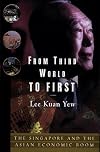
Part II of Mr. Lee Kuan Yew's memoirs.
Given his extremely busy life as a statesman over the past 30 years, this volume is not arranged in chronological order. Instead, LKY organizes it in two broad sections - the first on domestic policy, and the second on foreign relations.
The combinations of his political positions may seem odd to most Americans. In trade, he is a free market proponent, in domestic social spending he is a pragmatic social democrat, with a progressive but light tax policy. show more In the early years, he was a New-Deal technocrat public works advocate, but also fiercely anti-Communist.
He notes the hazardous effect of the 'resource curse' on colonial nations - where MNCs swoop in, harvest the resources, and leave little benefit for the rest of the population save a few autocrats. He wryly notes that Singapore dodged that bullet by having no natural resources, and instead must aim for human development so as to avoid exploitation. Therefore, he advertised the place as a financial and technical center, with an educated and motivated populace. It gained a lot of appeal that way.
It's also interesting how he managed to develop an education system, juggling four official languages and preventing ethnic tensions, building up a university system while preventing the Communists from South-East Asia from infiltrating it. In the early years, the Cultural Revolution was in full swing, and LKY was merciless in the imprisonment, exile, or execution of suspected dissidents.
But in many ways, they've worked. Their unemployment rate, after peaking at 4% during the economic crisis of the late 2000s, is now down to 1.9%.
The economic development of the past 50 years was a whiplash for some. LKY shares stories of new apartment goers in the early years trying to coax their pigs and chickens upstairs.
Foreign policy for Singapore in the early years was also an immense juggling act. After their expulsion from Malaysia, and the departure of British troops in the 1960s, Singapore was left largely alone against Indonesia and Malaysia, who both coveted Singapore's strategic location, and communist movements in SE-Asia as a whole.
His initial strategy was two-fold: first, develop military independence by hiring Israeli troops to train the army, and purchase cheaper arms from them or the US. Second, develop stronger ties with the rest of the British Commonwealth (Australia and New Zealand in particular), Japan, and the United States as a major trading partner, so that nobody would dare attack them without angering larger, more powerful friends. In the post-Cold War era, he has cultivated relations with the Chinese, Americans, and the Russians. Money talks.
After Singapore's establishment as a developed nation, he moves on to broader topics on foreign policy. He sides with Thatcher on economic policy, but disapproves of her response to the miners and neutral response to Apartheid in South Africa. Obviously, he has little tolerance for European racial hegemony, as it would only exacerbate any worries about 'regional security'.
His reach in foreign policy is broad. He speaks of 'national character' and the balance of power as realists do, but also of personal agency and the personalities of the leaders. His analyses are brutal at times, but still very interesting. He moves from his SE-Asian neighbors, to British colonial possessions, to European elder statesmen.
His relationship with China was of particular interest. His initial relations were harried, at best, as the early stages of Singapore's independence coincided with the Cultural Revolution, and he was concerned about the terrifying rumors which filtered out through refugees. In the late 1970s, however, a certain Deng Xiaoping rose to power, and paid a visit to Singapore. LKY relates that he was very impressed with Singapore's economic development, from a colonial outpost to a trading power. He lamented the enormity of his task - "If only I had a city to run, like Shanghai, instead of all of China. Then perhaps I could run it like Hong Kong or Singapore." Perhaps this visit was one of the foundations of his 'Special Economic Zone' policy, which led to exponential urban growth along the coasts, and massive industrial booms, and China's return.
Like all political memoirs, this one contains some degree of self-serving platitudes. But LKY, at least, might have some reason to boast. Although he does grant extremely harsh criticism to his opponents, referring to some as 'incompetent' or worse.
His position on race can at times be brilliant with its successful transition into multiculturalism, and at times prejudiced. His open advocacy of the policies of 'The Bell Curve' is baffling. It is jarring to see his economic policy of social advocacy contrasted with his almost Victorian views on parochialism, on 'racial qualities', and inventing a new nationalism to unify the state. If anything, Singapore resembles Plato's Republic and the Chinese philosophy of Legalism - a selected elite (PAP) running the state, influencing the media and education to shape national discussion, and the stifling of dissent, most notably with bringing libel suits against political opposition.
This memoir is still of interest - perhaps as an idea of nation-building, perhaps as an honest confession of the brutal decisions of politics. Economically liberal, but politically authoritarian and communal.
It is perhaps a dictatorship, but perhaps it is one of the most prosperous ones there ever was, one that other nations might look to as a model, an alternative to democracy. Unless, of course, you chew gum or jaywalk. show less
Given his extremely busy life as a statesman over the past 30 years, this volume is not arranged in chronological order. Instead, LKY organizes it in two broad sections - the first on domestic policy, and the second on foreign relations.
The combinations of his political positions may seem odd to most Americans. In trade, he is a free market proponent, in domestic social spending he is a pragmatic social democrat, with a progressive but light tax policy. show more In the early years, he was a New-Deal technocrat public works advocate, but also fiercely anti-Communist.
He notes the hazardous effect of the 'resource curse' on colonial nations - where MNCs swoop in, harvest the resources, and leave little benefit for the rest of the population save a few autocrats. He wryly notes that Singapore dodged that bullet by having no natural resources, and instead must aim for human development so as to avoid exploitation. Therefore, he advertised the place as a financial and technical center, with an educated and motivated populace. It gained a lot of appeal that way.
It's also interesting how he managed to develop an education system, juggling four official languages and preventing ethnic tensions, building up a university system while preventing the Communists from South-East Asia from infiltrating it. In the early years, the Cultural Revolution was in full swing, and LKY was merciless in the imprisonment, exile, or execution of suspected dissidents.
But in many ways, they've worked. Their unemployment rate, after peaking at 4% during the economic crisis of the late 2000s, is now down to 1.9%.
The economic development of the past 50 years was a whiplash for some. LKY shares stories of new apartment goers in the early years trying to coax their pigs and chickens upstairs.
Foreign policy for Singapore in the early years was also an immense juggling act. After their expulsion from Malaysia, and the departure of British troops in the 1960s, Singapore was left largely alone against Indonesia and Malaysia, who both coveted Singapore's strategic location, and communist movements in SE-Asia as a whole.
His initial strategy was two-fold: first, develop military independence by hiring Israeli troops to train the army, and purchase cheaper arms from them or the US. Second, develop stronger ties with the rest of the British Commonwealth (Australia and New Zealand in particular), Japan, and the United States as a major trading partner, so that nobody would dare attack them without angering larger, more powerful friends. In the post-Cold War era, he has cultivated relations with the Chinese, Americans, and the Russians. Money talks.
After Singapore's establishment as a developed nation, he moves on to broader topics on foreign policy. He sides with Thatcher on economic policy, but disapproves of her response to the miners and neutral response to Apartheid in South Africa. Obviously, he has little tolerance for European racial hegemony, as it would only exacerbate any worries about 'regional security'.
His reach in foreign policy is broad. He speaks of 'national character' and the balance of power as realists do, but also of personal agency and the personalities of the leaders. His analyses are brutal at times, but still very interesting. He moves from his SE-Asian neighbors, to British colonial possessions, to European elder statesmen.
His relationship with China was of particular interest. His initial relations were harried, at best, as the early stages of Singapore's independence coincided with the Cultural Revolution, and he was concerned about the terrifying rumors which filtered out through refugees. In the late 1970s, however, a certain Deng Xiaoping rose to power, and paid a visit to Singapore. LKY relates that he was very impressed with Singapore's economic development, from a colonial outpost to a trading power. He lamented the enormity of his task - "If only I had a city to run, like Shanghai, instead of all of China. Then perhaps I could run it like Hong Kong or Singapore." Perhaps this visit was one of the foundations of his 'Special Economic Zone' policy, which led to exponential urban growth along the coasts, and massive industrial booms, and China's return.
Like all political memoirs, this one contains some degree of self-serving platitudes. But LKY, at least, might have some reason to boast. Although he does grant extremely harsh criticism to his opponents, referring to some as 'incompetent' or worse.
His position on race can at times be brilliant with its successful transition into multiculturalism, and at times prejudiced. His open advocacy of the policies of 'The Bell Curve' is baffling. It is jarring to see his economic policy of social advocacy contrasted with his almost Victorian views on parochialism, on 'racial qualities', and inventing a new nationalism to unify the state. If anything, Singapore resembles Plato's Republic and the Chinese philosophy of Legalism - a selected elite (PAP) running the state, influencing the media and education to shape national discussion, and the stifling of dissent, most notably with bringing libel suits against political opposition.
This memoir is still of interest - perhaps as an idea of nation-building, perhaps as an honest confession of the brutal decisions of politics. Economically liberal, but politically authoritarian and communal.
It is perhaps a dictatorship, but perhaps it is one of the most prosperous ones there ever was, one that other nations might look to as a model, an alternative to democracy. Unless, of course, you chew gum or jaywalk. show less
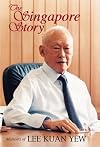
This is the first of two volumes of memoirs by Lee Kuan Yew, prime minister of Singapore for 30 years, and its most influential leader. It is not without reason that he titles his memoir The Singapore Story.
His prose is disciplined and workmanlike, and he prefers stating facts over reminiscence. He passes over his very British early education, his childhood in Singapore, and even over the incredible brutality of the Japanese occupation with crisp mechanical description. He goes to work on show more the black market with astonishing discipline, almost casually describing how he escaped several massacres.
After finishing his law degree with top marks, he describes his early forays into politics, and the founding of the People's Action Party, which has had a majority since 1959. He describes his political machinations with astonishing detail and candor, and is an adept judge of character. His description of urban politics, with mass mobilization campaigns, coalition building, and multi-lingual speeches and coalitions, is fascinating.
His first aim, after British decolonization, was to unite Singapore with Malaysia. He speaks very favorably of "The Tunku" Abdul Rahman, but less so of the more local politicians. After tense and uneasy relationship, the union broke down after only two years, and Singapore was to be expelled from Malaysia, with the British soon leaving, and the once-supportive Communists planning an all-out uprising.
The second volume, which I'm going to reread soon, covers the period of Singapore's independence and its economic transformation - arguably the inspiration for significant portions of Deng Xiaoping's system of reforms in China over the last quarter of the 20th century - and we know how those went, and how Singapore is now.
An interesting view into East Asian politics. show less
His prose is disciplined and workmanlike, and he prefers stating facts over reminiscence. He passes over his very British early education, his childhood in Singapore, and even over the incredible brutality of the Japanese occupation with crisp mechanical description. He goes to work on show more the black market with astonishing discipline, almost casually describing how he escaped several massacres.
After finishing his law degree with top marks, he describes his early forays into politics, and the founding of the People's Action Party, which has had a majority since 1959. He describes his political machinations with astonishing detail and candor, and is an adept judge of character. His description of urban politics, with mass mobilization campaigns, coalition building, and multi-lingual speeches and coalitions, is fascinating.
His first aim, after British decolonization, was to unite Singapore with Malaysia. He speaks very favorably of "The Tunku" Abdul Rahman, but less so of the more local politicians. After tense and uneasy relationship, the union broke down after only two years, and Singapore was to be expelled from Malaysia, with the British soon leaving, and the once-supportive Communists planning an all-out uprising.
The second volume, which I'm going to reread soon, covers the period of Singapore's independence and its economic transformation - arguably the inspiration for significant portions of Deng Xiaoping's system of reforms in China over the last quarter of the 20th century - and we know how those went, and how Singapore is now.
An interesting view into East Asian politics. show less
Lists
You May Also Like


Associated Authors
Statistics
- Works
- 23
- Also by
- 1
- Members
- 1,140
- Popularity
- #22,523
- Rating
- 3.8
- Reviews
- 10
- ISBNs
- 51
- Languages
- 4
- Favorited
- 2