
Stéphane Courtois
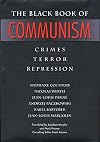
Author of The Black Book of Communism: Crimes, Terror, Repression
About the Author
Works by Stéphane Courtois
Du passé faisons table rase !: histoire et mémoire du communisme en Europe (2009) 4 copies, 1 review
Cartea neagră a comunismului 1 copy
Associated Works
La guerre civile européenne : National-socialisme et bolchevisme 1917-1945 (1997) — Foreword, some editions — 38 copies, 1 review
Tagged
Common Knowledge
- Legal name
- Courtois, Stéphane
- Birthdate
- 1947-11-25
- Gender
- male
- Education
- Université Paris X Nanterre (Habilitation à diriger des recherches, Histoire, 19 90)
Université Paris X Nanterre (Diplôme d'études supérieures de 3e cycle, Histoire, Thèse 'La politique du Parti communiste français et ses aspects syndicaux, 19 39 l 19 44', 19 78)
Université Paris X Nanterre (Maîtrise, Histoire, 19 74)
Université Paris X Nanterre (Licence, Droit, Sciences économique, 19 67 l 19 73)
Lycée Carnot, Paris (Baccalauréat, Philosophie, 19 67)
Lycée Mignet, Aix-en-Provence (show all 8)
Lycée Marceau, Chartres
Collège Cévenol, Chambon-sur-Lignon (1958 l ) - Occupations
- historian
- Organizations
- Institut catholique de Vendée, La Roche-sur-Yon (Professeur, 20 03 l 20 14)
Centre National de la Recherche Scientifique, Centre d'études d'histoire et de sociologie du communisme (Attaché, 19 83, Directeur de recherche, 19 92 l 20 06)
Université Paris X Nanterre (Vacataire, 19 80, Chargé de cours, 19 81 l 19 83)
Communisme, Revue (Co-fondateur, 19 81)
Editions du Seuil, Archives du communisme (Co-fondadteur) - Awards and honors
- Chevalier de l'ordre du mérite (2004)
Université Libre Internationale de Moldavie (Docteur honoris causa, 20 11) - Relationships
- Kriegel, Annie (colleague)
- Nationality
- France
- Birthplace
- Dreux, Eure-et-Loire, Centre-Val-de-Loire, France
- Map Location
- France
- Associated Place (for map)
- France
Members
Reviews
As the Beatles' song goes on to say, "If you go carrying pictures of Chairman Mao, you ain't going to make it with anyone anyhow."
Unfortunately, those who blatantly profess their allegiance to communism still get seated at the polite tables of civilization. This book provides plenty of evidence why the communist should be afforded even less sympathy in civil society than the professed fan of Adolf Hitler. Indeed, amongst other startling revelations in this book is that Nazi death camps were show more partially modelled on Soviet labor camps.
To be sure the subtitle, "Crimes, Terror, Repression," refers to a horrifying, sometimes mind-numblingly long list of tortures, familiar and unfamiliar, to the body and spirit, and the 700 plus pages of text are not a pleasant read. Still, this book is a valueable.
For starters, it refutes a propaganda point that communist governments, particularly the Soviet Union and its satellite countries, liked to use: that they were the bulwark against fascism. Not only did the USSR, in a non-aggression pact, collude with Hitler, but it actively killed fellow anti-fascists in Spain and before and during its war with Hitler. As the book documents, communist parties the world over habitually killed fellow communists who deviated from the necessary purity, and they also killed those who struggled with them against colonial powers in Southeast Asia and against Batista's dictatorship in Cuba. The communists in Russia, after the 1917 revolution, killed more political opponents in two month's than the Czar did in 80 years.
Though it's not the first to do so, the book documents that the Russian experiment in communism was not some relatively peaceful affair launched by Lenin and betrayed by a bloodthirsty Stalin. To be sure, the paranoid Stalin launched immense purges, forced labor projects, and engineered famines, but terror was a principle embraced and practiced from the beginning by Lenin.
The book also refutes the commonly recited falsehood that Mao bettered the average Chinese's lot. His policies directly led to perhaps the greatest famine in history, and he was not above conducting his own purges.
Most of these crimes against their supposed beneficiaries are documented not only through secondary histories but also primary sources of survivor accounts and government documents.
The book is divided into sections covering communism in five different manifestations: Soviet, Eastern European, Asian, the Third World, and attempts to foster international revolution via the Comintern and terrorism. China and Russia get several chapters each but most other countries that had communist regimes get at least one chapter. The book draws two general distinctions between the communism of Asia and the Soviet Union and its satellites. The Soviet model emphasized political murder of its opponents and citizens (though it was willing to simply exploit them as economic assets in labor camps). While China also has labor camps and a history of bloody repressions against its citizens, it also developed a program of trying to change the mind of its citizens as well as compel obediance through terror. The Khmer Rouge model, built by the secretive Pol Pot, combined the worst of both: idealogical reprogramming and murder.
To be sure, if you're not familiar with the history of some of the covered countries, the relevant chapters seem like a collection of strange names and obscure events. This is particlarly true of the sections on Eastern Europe where the authors assume a certain knowledge of the background politics and figures. On the other hand, the book is genuinely informative even to someone like me, a neophyte, in its chapters on communist politics in Afghanistan and Ethiopia. Not only are communist crimes there covered but the background history is also explained well.
The chapter on NKVD death squads in Spain is not the first revelation of their activities but does serve as a good summary.
This book was originally published in France, and the introduction, added for the American edition, talks about its fallout there where a politican's and intellectual's previous relationship to communism can have some real effects on his public reception. The final chapter tries to answer the question on whether terror was a principle of communism from the beginning. Communists at the beginning of the twentieth century did not generally preach using terror as a tool to utopia. Indeed, communism was a formerly recognized political philosophy accorded legitimacy via officially recognized and tolerated parties in several countries before the Russian Revolution. The book seems to blame Lenin and Russia's tradition of political violence for the brutal turn communism took.
Several of the authors are interested in the question of whether ex-communists in Eastern Europe should be punished and, if so, how.
What the book is starkly lacking is an attack on the practiciality of communism as an organizing economic principle. I suspect this is not only because it is outside the book's intended scope but also because, as alluded to in the introduction, some of the editors may sympathize with the proclaimed ends of communism.
The book also fails to mention the failed medieval experiments in communism, many of them violent, covered in Norman Cohn's classic The Pursuit of the Millennium. show less
Unfortunately, those who blatantly profess their allegiance to communism still get seated at the polite tables of civilization. This book provides plenty of evidence why the communist should be afforded even less sympathy in civil society than the professed fan of Adolf Hitler. Indeed, amongst other startling revelations in this book is that Nazi death camps were show more partially modelled on Soviet labor camps.
To be sure the subtitle, "Crimes, Terror, Repression," refers to a horrifying, sometimes mind-numblingly long list of tortures, familiar and unfamiliar, to the body and spirit, and the 700 plus pages of text are not a pleasant read. Still, this book is a valueable.
For starters, it refutes a propaganda point that communist governments, particularly the Soviet Union and its satellite countries, liked to use: that they were the bulwark against fascism. Not only did the USSR, in a non-aggression pact, collude with Hitler, but it actively killed fellow anti-fascists in Spain and before and during its war with Hitler. As the book documents, communist parties the world over habitually killed fellow communists who deviated from the necessary purity, and they also killed those who struggled with them against colonial powers in Southeast Asia and against Batista's dictatorship in Cuba. The communists in Russia, after the 1917 revolution, killed more political opponents in two month's than the Czar did in 80 years.
Though it's not the first to do so, the book documents that the Russian experiment in communism was not some relatively peaceful affair launched by Lenin and betrayed by a bloodthirsty Stalin. To be sure, the paranoid Stalin launched immense purges, forced labor projects, and engineered famines, but terror was a principle embraced and practiced from the beginning by Lenin.
The book also refutes the commonly recited falsehood that Mao bettered the average Chinese's lot. His policies directly led to perhaps the greatest famine in history, and he was not above conducting his own purges.
Most of these crimes against their supposed beneficiaries are documented not only through secondary histories but also primary sources of survivor accounts and government documents.
The book is divided into sections covering communism in five different manifestations: Soviet, Eastern European, Asian, the Third World, and attempts to foster international revolution via the Comintern and terrorism. China and Russia get several chapters each but most other countries that had communist regimes get at least one chapter. The book draws two general distinctions between the communism of Asia and the Soviet Union and its satellites. The Soviet model emphasized political murder of its opponents and citizens (though it was willing to simply exploit them as economic assets in labor camps). While China also has labor camps and a history of bloody repressions against its citizens, it also developed a program of trying to change the mind of its citizens as well as compel obediance through terror. The Khmer Rouge model, built by the secretive Pol Pot, combined the worst of both: idealogical reprogramming and murder.
To be sure, if you're not familiar with the history of some of the covered countries, the relevant chapters seem like a collection of strange names and obscure events. This is particlarly true of the sections on Eastern Europe where the authors assume a certain knowledge of the background politics and figures. On the other hand, the book is genuinely informative even to someone like me, a neophyte, in its chapters on communist politics in Afghanistan and Ethiopia. Not only are communist crimes there covered but the background history is also explained well.
The chapter on NKVD death squads in Spain is not the first revelation of their activities but does serve as a good summary.
This book was originally published in France, and the introduction, added for the American edition, talks about its fallout there where a politican's and intellectual's previous relationship to communism can have some real effects on his public reception. The final chapter tries to answer the question on whether terror was a principle of communism from the beginning. Communists at the beginning of the twentieth century did not generally preach using terror as a tool to utopia. Indeed, communism was a formerly recognized political philosophy accorded legitimacy via officially recognized and tolerated parties in several countries before the Russian Revolution. The book seems to blame Lenin and Russia's tradition of political violence for the brutal turn communism took.
Several of the authors are interested in the question of whether ex-communists in Eastern Europe should be punished and, if so, how.
What the book is starkly lacking is an attack on the practiciality of communism as an organizing economic principle. I suspect this is not only because it is outside the book's intended scope but also because, as alluded to in the introduction, some of the editors may sympathize with the proclaimed ends of communism.
The book also fails to mention the failed medieval experiments in communism, many of them violent, covered in Norman Cohn's classic The Pursuit of the Millennium. show less
Staggering. It makes you ashamed to call these totalitarian monsters human. The mass murder on a scale that is hard to imagine, occurred only a few decades ago, and the remnants of those regimes are in some cases still in power.
Aside from the damning indictments on the perpetrators, one is compelled to ask what kind of culture is behind the genocide of tens of millions in Russian and China? What is the mentality of the people who suffer through it, without rising up in armed rebellion show more against it? What does this say about human evolution? Have those cultures lost their will to be free? show less
Aside from the damning indictments on the perpetrators, one is compelled to ask what kind of culture is behind the genocide of tens of millions in Russian and China? What is the mentality of the people who suffer through it, without rising up in armed rebellion show more against it? What does this say about human evolution? Have those cultures lost their will to be free? show less

Synopsis:
Already famous throughout Europe, this international bestseller plumbs recently opened archives in the former Soviet bloc to reveal the actual, practical accomplishments of Communism around the world: terror, torture, famine, mass deportations, and massacres. Astonishing in the sheer detail it amasses, the book is the first comprehensive attempt to catalogue and analyze the crimes of Communism over seventy years.
"Revolutions, like trees, must be judged by their fruit," Ignazio show more Silone wrote, and this is the standard the authors apply to the Communist experience―in the China of "the Great Helmsman," Kim Il Sung's Korea, Vietnam under "Uncle Ho" and Cuba under Castro, Ethiopia under Mengistu, Angola under Neto, and Afghanistan under Najibullah. The authors, all distinguished scholars based in Europe, document Communist crimes against humanity, but also crimes against national and universal culture, from Stalin's destruction of hundreds of churches in Moscow to Ceausescu's leveling of the historic heart of Bucharest to the widescale devastation visited on Chinese culture by Mao's Red Guards.
As the death toll mounts―as many as 25 million in the former Soviet Union, 65 million in China, 1.7 million in Cambodia, and on and on―the authors systematically show how and why, wherever the millenarian ideology of Communism was established, it quickly led to crime, terror, and repression. An extraordinary accounting, this book amply documents the unparalleled position and significance of Communism in the hierarchy of violence that is the history of the twentieth century.
Review:
When it was first published in France in 1997, Le livre noir du Communisme touched off a storm of controversy that continues to rage today. Even some of his contributors shied away from chief editor Stéphane Courtois's conclusion that Communism, in all its many forms, was morally no better than Nazism; the two totalitarian systems, Courtois argued, were far better at killing than at governing, as the world learned to its sorrow.
Communism did kill, Courtois and his fellow historians demonstrate, with ruthless efficiency: 25 million in Russia during the Bolshevik and Stalinist eras, perhaps 65 million in China under the eyes of Mao Zedong, 2 million in Cambodia, millions more Africa, Eastern Europe, and Latin America--an astonishingly high toll of victims. This freely expressed penchant for homicide, Courtois maintains, was no accident, but an integral trait of a philosophy, and a practical politics, that promised to erase class distinctions by erasing classes and the living humans that populated them. Courtois and his contributors document Communism's crimes in numbing detail, moving from country to country, revolution to revolution. The figures they offer will likely provoke argument, if not among cliometricians then among the ideologically inclined. So, too, will Courtois's suggestion that those who hold Lenin, Trotsky, and Ho Chi Minh in anything other than contempt are dupes, witting or not, of a murderous school of thought--one that, while in retreat around the world, still has many adherents. A thought-provoking work of history and social criticism, The Black Book of Communism fully merits the broadest possible readership and discussion. --Gregory McNamee show less
Already famous throughout Europe, this international bestseller plumbs recently opened archives in the former Soviet bloc to reveal the actual, practical accomplishments of Communism around the world: terror, torture, famine, mass deportations, and massacres. Astonishing in the sheer detail it amasses, the book is the first comprehensive attempt to catalogue and analyze the crimes of Communism over seventy years.
"Revolutions, like trees, must be judged by their fruit," Ignazio show more Silone wrote, and this is the standard the authors apply to the Communist experience―in the China of "the Great Helmsman," Kim Il Sung's Korea, Vietnam under "Uncle Ho" and Cuba under Castro, Ethiopia under Mengistu, Angola under Neto, and Afghanistan under Najibullah. The authors, all distinguished scholars based in Europe, document Communist crimes against humanity, but also crimes against national and universal culture, from Stalin's destruction of hundreds of churches in Moscow to Ceausescu's leveling of the historic heart of Bucharest to the widescale devastation visited on Chinese culture by Mao's Red Guards.
As the death toll mounts―as many as 25 million in the former Soviet Union, 65 million in China, 1.7 million in Cambodia, and on and on―the authors systematically show how and why, wherever the millenarian ideology of Communism was established, it quickly led to crime, terror, and repression. An extraordinary accounting, this book amply documents the unparalleled position and significance of Communism in the hierarchy of violence that is the history of the twentieth century.
Review:
When it was first published in France in 1997, Le livre noir du Communisme touched off a storm of controversy that continues to rage today. Even some of his contributors shied away from chief editor Stéphane Courtois's conclusion that Communism, in all its many forms, was morally no better than Nazism; the two totalitarian systems, Courtois argued, were far better at killing than at governing, as the world learned to its sorrow.
Communism did kill, Courtois and his fellow historians demonstrate, with ruthless efficiency: 25 million in Russia during the Bolshevik and Stalinist eras, perhaps 65 million in China under the eyes of Mao Zedong, 2 million in Cambodia, millions more Africa, Eastern Europe, and Latin America--an astonishingly high toll of victims. This freely expressed penchant for homicide, Courtois maintains, was no accident, but an integral trait of a philosophy, and a practical politics, that promised to erase class distinctions by erasing classes and the living humans that populated them. Courtois and his contributors document Communism's crimes in numbing detail, moving from country to country, revolution to revolution. The figures they offer will likely provoke argument, if not among cliometricians then among the ideologically inclined. So, too, will Courtois's suggestion that those who hold Lenin, Trotsky, and Ho Chi Minh in anything other than contempt are dupes, witting or not, of a murderous school of thought--one that, while in retreat around the world, still has many adherents. A thought-provoking work of history and social criticism, The Black Book of Communism fully merits the broadest possible readership and discussion. --Gregory McNamee show less
This is almost as difficult a book to review as it was to read. The first issue that confronts the general reader (that would be me) is the extent to which they should acknowledge or ignore the controversy swirling around some of the more lurid accusations made in the work, particularly with reference to things like the Ukrainian Famine and some of the more outrageous actions of the Maoist regime. What I have tentatively concluded is that what is contained in the work is in substance show more correct, though that the authors -- particularly the lead author/editor (Coutrois) -- also never passed up an opportunity to relate a lurid tale, a stomach turning anecdote or a weird personal habit of a leading Communist. Which is a pity since such antics ultimately detracted from the work rather than added to it. A hard-nosed journalistic approach that left out the polemic, or at any rate confined it to only certain parts of the narrative (as in say a few paragraphs at the end of each sections) would probably have been far more effective.
The second issue is simply the mass of data, names and dates interjected,machine-gun like, page after page, chapter after chapter. No human -- or at any rate this human -- could possibly keep it all straight, leading me to think this work would far better be approached as a reference than as a narrative, the latter being how I read it.
But let us set the above aside, and simply conclude that for the present this is this THE definitive one volume work on the rise, life and ultimate death of Communism as a worldwide revolutionary phenomena, in those nations where Communism of some flavor achieved political ascendency. Perhaps a more complete, more easily digestible or less heavy on the polemic history will someday be written, but to my knowledge it has not yet been.
As to the specific sections of the text: I was particularly impressed by the chapters on the functioning of the Comintern/Cominform, the chapter on Communism in Afghanistan and the chapter on Cambodia under Pol Pot. I was less impressed on some of the material present on China, which seemed biased toward the lurid and the chapter on Poland, which was perhaps the heaviest in the text on anti-Communist polemic. show less
The second issue is simply the mass of data, names and dates interjected,machine-gun like, page after page, chapter after chapter. No human -- or at any rate this human -- could possibly keep it all straight, leading me to think this work would far better be approached as a reference than as a narrative, the latter being how I read it.
But let us set the above aside, and simply conclude that for the present this is this THE definitive one volume work on the rise, life and ultimate death of Communism as a worldwide revolutionary phenomena, in those nations where Communism of some flavor achieved political ascendency. Perhaps a more complete, more easily digestible or less heavy on the polemic history will someday be written, but to my knowledge it has not yet been.
As to the specific sections of the text: I was particularly impressed by the chapters on the functioning of the Comintern/Cominform, the chapter on Communism in Afghanistan and the chapter on Cambodia under Pol Pot. I was less impressed on some of the material present on China, which seemed biased toward the lurid and the chapter on Poland, which was perhaps the heaviest in the text on anti-Communist polemic. show less
Lists
You May Also Like


Associated Authors
Statistics
- Works
- 24
- Also by
- 5
- Members
- 925
- Popularity
- #27,744
- Rating
- 4.0
- Reviews
- 21
- ISBNs
- 69
- Languages
- 16
- Favorited
- 1


