

Jean-François Revel (1924–2006)
Author of The Monk and the Philosopher: A Father and Son Discuss the Meaning of Life
About the Author
Author of several international bestsellers over the last 30 years, Jean-Francois Revel is perhaps best known for Without Marx or Jesus; How Democracies Perish; and The Totalitarian Temptation. He lives in Paris
Image credit: Jean-François Revel, en 1983
Series
Works by Jean-François Revel
The Monk and the Philosopher: A Father and Son Discuss the Meaning of Life (1998) — Author — 734 copies, 7 reviews
Last Exit to Utopia: The Survival of Socialism in a Post-Soviet Era (Encounter Broadsides) (2000) 121 copies, 1 review
Pourquoi des philosophes, pour l'italie sur proust, la cabale des dévots, contrecensures descartes inutile et incertain (1997) 7 copies
Geschiedenis van de westerse filosofie : deel 2 : de filosofie in het tijdperk van de wetenschap (15e, 16e en 17e e (1970) 4 copies
Contrecensures: politique, religion, culture de masse, art et critique d'art, enseignement, avant-garde, philosophie et (1966) 3 copies
Papillon 2 copies
3000 anni a tavola — Author — 2 copies
A revolução imediata 2 copies
Los filósofos: ¿para qué? 2 copies
Revirimentul democratiei — Author — 1 copy
Histoire de la philosophie occidentale : Précédé de Pourquoi des philosophes, La cabale des dévots (2013) — Author — 1 copy
Pourquoi des philosophes suivi de La cabale des dévots et précédé d'une étude inédite sur La philosophie depuis 1960 — Author — 1 copy
Histoire de la philosophie occidentale I — Author — 1 copy
Lettre ouverte à la droite 1 copy
Associated Works
On the Firing Line: The Public Life of Our Public Figures (1989) — Contributor — 126 copies, 1 review
Tagged
Common Knowledge
- Canonical name
- Revel, Jean-François
- Legal name
- Ricard, Jean-François (birth)
- Birthdate
- 1924-01-19
- Date of death
- 2006-04-30
- Gender
- male
- Education
- École normale supérieure
- Occupations
- professor (philsophy)
- Organizations
- French Resistance
Académie française (1998) - Relationships
- Ricard, Matthieu (son)
Sarraute, Claude (ex-wife) - Nationality
- France
- Places of residence
- Lille, France
Marseille, France
Kremlin-Bicetre, France - Associated Place (for map)
- France
Members
Reviews

3 stars. For me, the virtue of this book was learning that the political left in France and Europe is the same as the left on this side of the pond--unrelenting ideologues, impervious to facts, and who revise history and the facts in their favor. "Stalinists have always subjected authors who publish critiques of Communism to ad hominem attacks, labeling them "simplistic" or "obsessive" or "visceral" anticommunists, the object being to discredit them as paranoids incapable of objective show more thought. Epithets like these were cooked up more than a half-century ago in the backrooms of the totalitarians' thought police, yet the non-Communist left, with pathetic servility, still uses them in their strivings to marginalize the heterodox."
Moreover, those on the left advocate for a utopian ideal which, because it does not exist in reality, can never be criticized. "Utopia is not under the slightest obligation to produce results: its sole function is to allow its devotees to condemn what exits in the name of what does not."
I docked the book a couple of stars because it feels rather like a disorganized rambling--like articles or conversations hastily cobbled together. Revel repeats himself frequently. Also, there was much detail on French politics that will not be of much interest to the average American. Nevertheless, the book excels in confirming of the ideological essence one discerns in the left--whether in Europe or America. show less
Moreover, those on the left advocate for a utopian ideal which, because it does not exist in reality, can never be criticized. "Utopia is not under the slightest obligation to produce results: its sole function is to allow its devotees to condemn what exits in the name of what does not."
I docked the book a couple of stars because it feels rather like a disorganized rambling--like articles or conversations hastily cobbled together. Revel repeats himself frequently. Also, there was much detail on French politics that will not be of much interest to the average American. Nevertheless, the book excels in confirming of the ideological essence one discerns in the left--whether in Europe or America. show less

My reactions to reading this book in 1992.
There’s a lot of value in this book, both ideas to ponder and factual information. My major -- and only real -- gripe with this book is the paucity of footnotes. Kind of ironic in a book that emphasizes accurate information. Still, Revel is a journalist and footnotes are not generally part of stories, and he does tell you indirectly where he gets most of his factual information. And he knows a lot of stuff and is very erudite.
Revel is French so a show more lot of his examples involve France though he throws in stuff from all over the world. It was heartening (in a misery loves company sense) and/or disheartening to see French politics suffering from the same blights as American ones (preferential politics of race, media bias, Third World apologists, Marxist infiltration of education and decreasing standards for the latter.). Revel’s thesis is the opposite of the Enlightenment. They believed with enough information the world would be rational, ordered, better. Only religion, superstition, and ignorance kept man from this better world built by a wealth of information. Revel argues that we have lots of information that we don’t use, particularly information that, if heeded, would stop us from making the same mistakes over again like appeasing totalitarian regimes, destroying our economies and liberties with Marxist notions. Yet, we let idealogy filter our information, fashion dictate our discourse, laziness lull us into incompetence and lassitude in checking facts. As Revel precisely states, the idealogue is not concerned with a fact’s truth but whether it proves or disproves his world view. No one is immune to these tendencies. Not reporters, not scientists, not intellectuals, not professors, not common folk. We refuse, says Revel, to use the information we have, to see the world clearly. We not only lie to others in simple lies, we lie to ourselves with bizarre rationalizations (a favorite game of intellectuals), refuse to see reality (like the writer who refused to believe in the Ukrainian famine even though he saw some of its victims) even when it means our death.
Information, says Revel, is useless unless we use all of it honestly. Revel shows how deceit is done with a lot of examples that make me feel very ignorant. (In my defense, I had arrived at some of these conclusions already, and I also haven’t studied these matters as deeply as Revel. Revel shows how scientists dishonestly trade on their reputation to make political comments on areas they know nothing of (like disarmament or missle defense systems); how the media distor ts info (by ommission, slanted examples, outright lies, innuendo; how idealogy blinds its adherents, how criticism of certain social policies and groups is called racist by the Left (a similarity France has to America); how Third World Marxists concoct blatant lies to explain their enemies, tyrannies, and failures; how the false parity of Right Wing totalitarianism is used to excuse Marxist totalitarianism. He points out, Fascism, as a significant political force in the world, died in 1945 and how Leftists love to cite the bogus threat of resurgent Nazism, love to congratulate themselves for fighting a shadow foe while excusing Marxist atrocities and how no equivalency exists with a place like Pinochet’s regime as oppossed to Khmer Rouge Cambodia. He also talks of how intellecutals hate to admit past mistakes (they evolve, not make mistakes or recant) in supporting tyranny; how weird fashions ripple through academia (Europeans are vastly amused at the resurgence of virulent, widespread Marxism in America at the same time its dying in Europe). I particularly was amused at the bizarre notion practiced in Italian newspapers of assigning jobs on a quota system based on political party affiliation.
Revel has specific complaints about world press behavior: The First Amendment guarantees the right to express opinions not automatic access to info. He takes the American press to task for their whining hyperbole of censorship at being shut out of Grenada for 48 while troops invaded. The First Amendment also does not provide the right to break the law to get that info. Then there is the fallacy of the watchdog/adversary role -- what if the government is telling the truth?, the notion the press should mold opinion not just report facts or base its opinion on facts (allied with this is giving a utterly wrong headed notion a chance to debate a documented, rational position implying both have validity), sloppiness in checking basic facts and allegations.
Revel also has an interesting chapter on the predisposition of intellectuals to support totalitarian regimes. They provide a chance to try and remake man along the theoretical lines of your choice, and there’s no backtalk. People have to just accept your word rather than be convinced by rational arguments. You don’t have to justify yourself.
Revel’s right. We could be a lot more certain, more rational with our “facts”, especially in critical matters. A fascinating book. show less
There’s a lot of value in this book, both ideas to ponder and factual information. My major -- and only real -- gripe with this book is the paucity of footnotes. Kind of ironic in a book that emphasizes accurate information. Still, Revel is a journalist and footnotes are not generally part of stories, and he does tell you indirectly where he gets most of his factual information. And he knows a lot of stuff and is very erudite.
Revel is French so a show more lot of his examples involve France though he throws in stuff from all over the world. It was heartening (in a misery loves company sense) and/or disheartening to see French politics suffering from the same blights as American ones (preferential politics of race, media bias, Third World apologists, Marxist infiltration of education and decreasing standards for the latter.). Revel’s thesis is the opposite of the Enlightenment. They believed with enough information the world would be rational, ordered, better. Only religion, superstition, and ignorance kept man from this better world built by a wealth of information. Revel argues that we have lots of information that we don’t use, particularly information that, if heeded, would stop us from making the same mistakes over again like appeasing totalitarian regimes, destroying our economies and liberties with Marxist notions. Yet, we let idealogy filter our information, fashion dictate our discourse, laziness lull us into incompetence and lassitude in checking facts. As Revel precisely states, the idealogue is not concerned with a fact’s truth but whether it proves or disproves his world view. No one is immune to these tendencies. Not reporters, not scientists, not intellectuals, not professors, not common folk. We refuse, says Revel, to use the information we have, to see the world clearly. We not only lie to others in simple lies, we lie to ourselves with bizarre rationalizations (a favorite game of intellectuals), refuse to see reality (like the writer who refused to believe in the Ukrainian famine even though he saw some of its victims) even when it means our death.
Information, says Revel, is useless unless we use all of it honestly. Revel shows how deceit is done with a lot of examples that make me feel very ignorant. (In my defense, I had arrived at some of these conclusions already, and I also haven’t studied these matters as deeply as Revel. Revel shows how scientists dishonestly trade on their reputation to make political comments on areas they know nothing of (like disarmament or missle defense systems); how the media distor ts info (by ommission, slanted examples, outright lies, innuendo; how idealogy blinds its adherents, how criticism of certain social policies and groups is called racist by the Left (a similarity France has to America); how Third World Marxists concoct blatant lies to explain their enemies, tyrannies, and failures; how the false parity of Right Wing totalitarianism is used to excuse Marxist totalitarianism. He points out, Fascism, as a significant political force in the world, died in 1945 and how Leftists love to cite the bogus threat of resurgent Nazism, love to congratulate themselves for fighting a shadow foe while excusing Marxist atrocities and how no equivalency exists with a place like Pinochet’s regime as oppossed to Khmer Rouge Cambodia. He also talks of how intellecutals hate to admit past mistakes (they evolve, not make mistakes or recant) in supporting tyranny; how weird fashions ripple through academia (Europeans are vastly amused at the resurgence of virulent, widespread Marxism in America at the same time its dying in Europe). I particularly was amused at the bizarre notion practiced in Italian newspapers of assigning jobs on a quota system based on political party affiliation.
Revel has specific complaints about world press behavior: The First Amendment guarantees the right to express opinions not automatic access to info. He takes the American press to task for their whining hyperbole of censorship at being shut out of Grenada for 48 while troops invaded. The First Amendment also does not provide the right to break the law to get that info. Then there is the fallacy of the watchdog/adversary role -- what if the government is telling the truth?, the notion the press should mold opinion not just report facts or base its opinion on facts (allied with this is giving a utterly wrong headed notion a chance to debate a documented, rational position implying both have validity), sloppiness in checking basic facts and allegations.
Revel also has an interesting chapter on the predisposition of intellectuals to support totalitarian regimes. They provide a chance to try and remake man along the theoretical lines of your choice, and there’s no backtalk. People have to just accept your word rather than be convinced by rational arguments. You don’t have to justify yourself.
Revel’s right. We could be a lot more certain, more rational with our “facts”, especially in critical matters. A fascinating book. show less
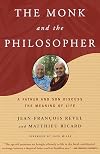
The Monk and the Philosopher
~ The Provident Son
The relationship between father and son is always complex. Fathers want the best for their sons, and sons balance a natural tension of wanting to learn from father, and live up to his father’s expectations, while exploring all that is new and exciting in the world. It is a respectful yet powerful tension between old and new, experience and novelty, obedience and autonomy, belief and curiosity, advice and adventure. This tension is richly show more realized throughout the remarkable dialogue created by these two brilliant men. The monk shares and explains what he learns from his years of conscientious practice of the Buddhist traditions. The philosopher critically analyzes what the monk presents and compares it to the philosophical traditions of the West while struggling to learn from his son.
The philosopher-father begins by asking the monk-son why he decided to leave a promising career as a molecular biologist to commit himself completely to the Buddhist practice. “In short”, he answers, “science however interesting wasn’t enough to give meaning to my life.” Based on the limited exposure he had to the contemplative lifestyle through extraordinary documentary films by Arnaud Desjardins, he saw that the monks were the most sincerely happy people he knew of, and he wanted to explore and experience their authentic lifestyle for himself. “I had the impression of seeing the living beings who were the very image of what they taught.” He goes on to say, “here were beings who seemed to be the living examples of wisdom.” He met the Tibetan Buddhist lama, Kangyur Rinpoche and eventually studied with him for years until the teacher’s death in 1975. He went on to study with Khysntse Rinpoche for 12 more years and was ordained as a monk in 1979. The younger monk seems wholly content with his decision.
“Suffering is the result of ignorance,” he learned, and “ignorance, in essence is belief in a truly existing self and in the solidly of phenomena”. However skeptical at first, observing the perfect being of his teacher convinced him of this truth and inspired him to absorb himself in the practice. He went on to learn that negative emotions arise from the notion of a self, the “me” that we all cherish, however, “attachment to the self is a fact, but the self that is the object of that attachment has no true existence; it exists nowhere and in no way as an autonomous and permanent entity.” Destructive thoughts, such as hatred, are “liberated by looking at their nature”, recognizing that thoughts have no substance, and releasing yourself from the illusion of their grip.
To dissolve a thought, begin by breaking the flow of thoughts for a few minutes. Just remain in awareness of the present moment, free of any conscious thoughts. As thoughts reappear, begin to examine the nature of discursive thoughts, looking for their source and substance, until you reach a state of ‘not found’ where thoughts vanish without leaving a trace. With the thought dissolved you can enter a state of inner simplicity, clear mindfulness, and awareness absent of any concepts. The monk attests that “working on oneself inwardly in this way gets rid of hatred, desire, jealousy, pride, and everything else that disturbs the mind.”
The extraordinary introspective skills and beliefs of Buddhist monks are the results of years of conscientious practice guided by “contemplative science.” The philosopher is skeptical, and refuses to accept evidence that is not materially observable by anyone wishing to see for himself. The monk compares the feats of Buddhist contemplatives to the skills of an Olympic athlete, who after many years of training, can jump 8 feet high. Certainly the ability to jump that high is extraordinary, and greatly exceeds the ability of any untrained athlete. We would not believe this was possible if we could not go to a track meet or watch coverage on TV and see extraordinary athletes repeating this amazing skill. The skills of highly trained monks are equally extraordinary, but not observable by others. However we can consider reliable testimony by many credible practitioners who have no reason to mislead or deceive. “A statement can be accepted as valid”, the monk argues, “when there are substantial reasons for believing the person making it”. In addition, we can directly observe the serenity of these expert practitioners.
“Action on the world is desirable”, the monk tells his father, “while inner transformation is indispensable.”, “This opening of the eyes of wisdom” he says referring to dismissing the illusions, “Increases your strength of mind, your diligence, and your capacity to take appropriate and altruistic action.” This requires a strong mind, an unshakable certainty, and a radiant personality, without the slightest trace of ego, selfishness, or self-centeredness. “If a prisoner wants to free his companions in misfortune, he must first break out of his own chains”, the monk assures us, “It’s the only way to do it”. The philosopher asks, “Do you mean that the only way to attain lasting peace in the world is the reform of the individuals?” The monk replies, “To think otherwise is surely utopian.” “In any case,” the monk elaborates, “the first thing is to make peace within oneself — inner disarmament; then peace in the family; then in the village; and finally in the nation and beyond.”
“Western efficiency is a major contribution to minor needs” the son proposes to his skeptical father, “What Buddhism could help to change is the overall attitude that consists of giving priority to ‘having’ over ‘being’. It’s a matter of establishing a new order of values, giving priority to the quest for inner well-being.” Buddhism provides a vision of tolerance, open-mindedness, altruism, quiet confidence, a science of the mind through which all people, including westerners, can find their own inner peace. Buddhism simply offers to share an experience with anyone who wishes. The point isn’t to convert people but to contribute to their well-being.
A disturbing chapter describes the Chinese invasion, occupation, and on-going destruction of Tibet, its people, and its culture since 1950. Millions of Tibetans were slaughtered, and 6,150 monasteries were destroyed nearly annihilating this unique and most peaceful culture. Despite this genocide the strong will of the Tibetan people still survives. The Dalai Lama lives in exile with about 100,000 Tibetans who still seek a peaceful return to their homeland. He often says, “Tibet has no petrol for engines, like Kuwait, but it does have petrol for the mind which should justify other countries coming to its rescue.” He points out the advantages to be gained in making Tibet a buffer state, a haven of peace in the middle of major Asian powers. He passionately advocates for support from the most powerful nations and patiently awaits their action.
The monk offers us many more pearls; each explored in much more depth in the book:
+ Truth is strong enough by itself to convince, and should never be imposed by force.
+ The goal of nonviolence is specifically to diminish violence. It’s not a passive approach.
+ Evil has no more existence than a mistake; it is only an incorrect perception of reality.
+ The great virtue of sin is precisely that it doesn’t have any true existence. There’s therefore no negative action or thought that can’t be dissolved, purified, or repaired.
+ The idea of man’s true nature can be understood as a state of balance, while violence is a state of imbalance.
+ It’s obvious that unless a sense of responsibility develops in all the individuals sharing this planet, it’ll be very difficult to apply any democratic ideals.
+ Enlightenment is the discovery of the ultimate nature of both oneself and phenomena.
+ Mastery of oneself, like so many other qualities, is only something of true value when it’s based on the right motivation and metaphysical principles.
+ What Buddhism calls meditation is a gradual discovery, over years of practice, of the nature of the mind and how mental events appear in it.
+ It doesn’t make much sense to think that because a truth is an ancient truth it’s no longer worth bothering about.
+ In spiritual practices the difficulties come at the beginning, and in worldly practice the difficulties come at the end.
+ Without wisdom, reason will just argue about human happiness without ever actually bringing it about. Education needs to be more than just the accumulation of knowledge; it should really be education on how to be.
In the end each man gains a deeper understanding and appreciation for the other’s beliefs, but neither abandons his chosen path. show less
~ The Provident Son
The relationship between father and son is always complex. Fathers want the best for their sons, and sons balance a natural tension of wanting to learn from father, and live up to his father’s expectations, while exploring all that is new and exciting in the world. It is a respectful yet powerful tension between old and new, experience and novelty, obedience and autonomy, belief and curiosity, advice and adventure. This tension is richly show more realized throughout the remarkable dialogue created by these two brilliant men. The monk shares and explains what he learns from his years of conscientious practice of the Buddhist traditions. The philosopher critically analyzes what the monk presents and compares it to the philosophical traditions of the West while struggling to learn from his son.
The philosopher-father begins by asking the monk-son why he decided to leave a promising career as a molecular biologist to commit himself completely to the Buddhist practice. “In short”, he answers, “science however interesting wasn’t enough to give meaning to my life.” Based on the limited exposure he had to the contemplative lifestyle through extraordinary documentary films by Arnaud Desjardins, he saw that the monks were the most sincerely happy people he knew of, and he wanted to explore and experience their authentic lifestyle for himself. “I had the impression of seeing the living beings who were the very image of what they taught.” He goes on to say, “here were beings who seemed to be the living examples of wisdom.” He met the Tibetan Buddhist lama, Kangyur Rinpoche and eventually studied with him for years until the teacher’s death in 1975. He went on to study with Khysntse Rinpoche for 12 more years and was ordained as a monk in 1979. The younger monk seems wholly content with his decision.
“Suffering is the result of ignorance,” he learned, and “ignorance, in essence is belief in a truly existing self and in the solidly of phenomena”. However skeptical at first, observing the perfect being of his teacher convinced him of this truth and inspired him to absorb himself in the practice. He went on to learn that negative emotions arise from the notion of a self, the “me” that we all cherish, however, “attachment to the self is a fact, but the self that is the object of that attachment has no true existence; it exists nowhere and in no way as an autonomous and permanent entity.” Destructive thoughts, such as hatred, are “liberated by looking at their nature”, recognizing that thoughts have no substance, and releasing yourself from the illusion of their grip.
To dissolve a thought, begin by breaking the flow of thoughts for a few minutes. Just remain in awareness of the present moment, free of any conscious thoughts. As thoughts reappear, begin to examine the nature of discursive thoughts, looking for their source and substance, until you reach a state of ‘not found’ where thoughts vanish without leaving a trace. With the thought dissolved you can enter a state of inner simplicity, clear mindfulness, and awareness absent of any concepts. The monk attests that “working on oneself inwardly in this way gets rid of hatred, desire, jealousy, pride, and everything else that disturbs the mind.”
The extraordinary introspective skills and beliefs of Buddhist monks are the results of years of conscientious practice guided by “contemplative science.” The philosopher is skeptical, and refuses to accept evidence that is not materially observable by anyone wishing to see for himself. The monk compares the feats of Buddhist contemplatives to the skills of an Olympic athlete, who after many years of training, can jump 8 feet high. Certainly the ability to jump that high is extraordinary, and greatly exceeds the ability of any untrained athlete. We would not believe this was possible if we could not go to a track meet or watch coverage on TV and see extraordinary athletes repeating this amazing skill. The skills of highly trained monks are equally extraordinary, but not observable by others. However we can consider reliable testimony by many credible practitioners who have no reason to mislead or deceive. “A statement can be accepted as valid”, the monk argues, “when there are substantial reasons for believing the person making it”. In addition, we can directly observe the serenity of these expert practitioners.
“Action on the world is desirable”, the monk tells his father, “while inner transformation is indispensable.”, “This opening of the eyes of wisdom” he says referring to dismissing the illusions, “Increases your strength of mind, your diligence, and your capacity to take appropriate and altruistic action.” This requires a strong mind, an unshakable certainty, and a radiant personality, without the slightest trace of ego, selfishness, or self-centeredness. “If a prisoner wants to free his companions in misfortune, he must first break out of his own chains”, the monk assures us, “It’s the only way to do it”. The philosopher asks, “Do you mean that the only way to attain lasting peace in the world is the reform of the individuals?” The monk replies, “To think otherwise is surely utopian.” “In any case,” the monk elaborates, “the first thing is to make peace within oneself — inner disarmament; then peace in the family; then in the village; and finally in the nation and beyond.”
“Western efficiency is a major contribution to minor needs” the son proposes to his skeptical father, “What Buddhism could help to change is the overall attitude that consists of giving priority to ‘having’ over ‘being’. It’s a matter of establishing a new order of values, giving priority to the quest for inner well-being.” Buddhism provides a vision of tolerance, open-mindedness, altruism, quiet confidence, a science of the mind through which all people, including westerners, can find their own inner peace. Buddhism simply offers to share an experience with anyone who wishes. The point isn’t to convert people but to contribute to their well-being.
A disturbing chapter describes the Chinese invasion, occupation, and on-going destruction of Tibet, its people, and its culture since 1950. Millions of Tibetans were slaughtered, and 6,150 monasteries were destroyed nearly annihilating this unique and most peaceful culture. Despite this genocide the strong will of the Tibetan people still survives. The Dalai Lama lives in exile with about 100,000 Tibetans who still seek a peaceful return to their homeland. He often says, “Tibet has no petrol for engines, like Kuwait, but it does have petrol for the mind which should justify other countries coming to its rescue.” He points out the advantages to be gained in making Tibet a buffer state, a haven of peace in the middle of major Asian powers. He passionately advocates for support from the most powerful nations and patiently awaits their action.
The monk offers us many more pearls; each explored in much more depth in the book:
+ Truth is strong enough by itself to convince, and should never be imposed by force.
+ The goal of nonviolence is specifically to diminish violence. It’s not a passive approach.
+ Evil has no more existence than a mistake; it is only an incorrect perception of reality.
+ The great virtue of sin is precisely that it doesn’t have any true existence. There’s therefore no negative action or thought that can’t be dissolved, purified, or repaired.
+ The idea of man’s true nature can be understood as a state of balance, while violence is a state of imbalance.
+ It’s obvious that unless a sense of responsibility develops in all the individuals sharing this planet, it’ll be very difficult to apply any democratic ideals.
+ Enlightenment is the discovery of the ultimate nature of both oneself and phenomena.
+ Mastery of oneself, like so many other qualities, is only something of true value when it’s based on the right motivation and metaphysical principles.
+ What Buddhism calls meditation is a gradual discovery, over years of practice, of the nature of the mind and how mental events appear in it.
+ It doesn’t make much sense to think that because a truth is an ancient truth it’s no longer worth bothering about.
+ In spiritual practices the difficulties come at the beginning, and in worldly practice the difficulties come at the end.
+ Without wisdom, reason will just argue about human happiness without ever actually bringing it about. Education needs to be more than just the accumulation of knowledge; it should really be education on how to be.
In the end each man gains a deeper understanding and appreciation for the other’s beliefs, but neither abandons his chosen path. show less
Jean Francois-Revel, a pillar of French intellectual life in our time, became world famous for his challenges to both Communism and Christianity. Twenty-seven years ago, his son, Matthieu Ricard, gave up a promising career as a scientist to study Tibetan Buddhism -- not as a detached observer but by immersing himself in its practice under the guidance of its greatest living masters.
Meeting in an inn overlooking Katmandu, these two profoundly thoughtful men explored the questions that have show more occupied humankind throughout its history. Does life have meaning? What is consciousness? Is man free? What is the value of scientific and material progress? Why is there suffering, war, and hatred? Their conversation is not merely abstract: they ask each other questions about ethics, rights, and responsibilities, about knowledge and belief, and they discuss frankly the differences in the way each has tried to make sense of his life.
Utterly absorbing, inspiring, and accessible, this remarkable dialogue engages East with West, ideas with life, and science with the humanities, providing wisdom on how to enrich the way we live our lives. show less
Meeting in an inn overlooking Katmandu, these two profoundly thoughtful men explored the questions that have show more occupied humankind throughout its history. Does life have meaning? What is consciousness? Is man free? What is the value of scientific and material progress? Why is there suffering, war, and hatred? Their conversation is not merely abstract: they ask each other questions about ethics, rights, and responsibilities, about knowledge and belief, and they discuss frankly the differences in the way each has tried to make sense of his life.
Utterly absorbing, inspiring, and accessible, this remarkable dialogue engages East with West, ideas with life, and science with the humanities, providing wisdom on how to enrich the way we live our lives. show less
Lists
Awards


You May Also Like


Associated Authors
Statistics
- Works
- 54
- Also by
- 7
- Members
- 2,268
- Popularity
- #11,316
- Rating
- 3.9
- Reviews
- 21
- ISBNs
- 159
- Languages
- 12
- Favorited
- 3
