
David Foster Wallace (1962–2008)
Author of Infinite Jest
About the Author
Writer David Foster Wallace was born in Ithaca, New York on February 21, 1962. He received a B.A. from Amherst College in Massachusetts. He was working on his master's degree in creative writing at the University of Arizona when he published his debut novel The Broom of the System (1987). Wallace show more published his second novel Infinite Jest (1996) which introduced a cast of characters that included recovering alcoholics, foreign statesmen, residents of a halfway house, and high-school tennis stars. He spent four years researching and writing this novel. His first collection of short stories was Girl with Curious Hair (1989). He also published a nonfiction work titled Signifying Rappers: Rap and Race in the Urban Present. He committed suicide on September 12, 2008 at the age of 46 after suffering with bouts of depression for 20 years. (Bowker Author Biography) show less
Works by David Foster Wallace
This Is Water: Some Thoughts, Delivered on a Significant Occasion, about Living a Compassionate Life (2009) — Author — 1,803 copies, 60 reviews
Quack This Way: David Foster Wallace & Bryan A. Garner Talk Language and Writing (2013) 117 copies, 3 reviews
McCain's Promise: Aboard the Straight Talk Express with John McCain and a Whole Bunch of Actual Reporters, Thinking About Hope (2008) 83 copies, 1 review
Selected Essays from: Consider the Lobster and Other Essays {abridged audio} (2005) 34 copies, 3 reviews
He ballat breument la conga. 3 copies
Here and There [short story] 3 copies
Forever Overhead 3 copies
Derivative Sport in Tornado Alley 3 copies
The Gospel of God Romans 2 copies
Oblivion [short story] 2 copies
Lyndon [short story] 2 copies
On His Deathbed, Holding Your Hand 2 copies
Backbone 1 copy
Say Never [short story] 1 copy
Mr. Squishy [short story] 1 copy
Uncollected Works of DFW 1 copy
Sonora Review 12 (Summer 1987) — Fiction Editor — 1 copy
John Billy [short story] 1 copy
My Appearance [short story] 1 copy
A New Examiner 1 copy
Greatly Exaggerated [essay] 1 copy
Associated Works
Touchstone Anthology of Contemporary Creative Nonfiction: Work from 1970 to the Present (2007) — Contributor — 219 copies, 3 reviews
There's No Toilet Paper on the Road Less Traveled: The Best of Travel Humor and Misadventure (1998) — Contributor — 217 copies, 5 reviews
The Graphic Canon, Vol. 3: From Heart of Darkness to Hemingway to Infinite Jest (2013) — Contributor — 160 copies, 1 review
Shiny Adidas Tracksuits and the Death of Camp and Other Essays from Might Magazine (1998) — Contributor — 152 copies, 3 reviews
An American Album: One Hundred and Fifty Years of Harper's Magazine (2000) — Contributor — 146 copies, 1 review
The Ecco Anthology of Contemporary American Short Fiction (2008) — Contributor — 141 copies, 2 reviews
The Glorious American Essay: One Hundred Essays from Colonial Times to the Present (2020) — Contributor — 116 copies
The Chaffey Review: Volume 1 (January 2009) — Contributor — 2 copies
Thomas Demand: L'Esprit d'Escalier — Contributor — 1 copy
Clarion: Writing at Amherst 1985 — Contributor — 1 copy
Sonora Review 56 — Contributor — 1 copy
Sonora Review 13 (Fall 1987) — Contributor — 1 copy
The New Yorker, Dec. 14, 2009 — Contributor - Fiction — 1 copy
Tagged
Common Knowledge
- Birthdate
- 1962-02-21
- Date of death
- 2008-09-12
- Gender
- male
- Education
- Amherst College (BA|1985)
University of Arizona (MFA|1987) - Occupations
- author
professor (Creative Writing) - Organizations
- Illinois State University
Pomona College - Awards and honors
- MacArthur Fellowship (1997)
Lannan Literary Award (Fiction, 1996)
Whiting Writers' Award (1987) - Cause of death
- suicide
- Nationality
- USA
- Birthplace
- Ithaca, New York, USA
- Places of residence
- Claremont, California, USA
Ithaca, New York, USA
Champaign-Urbana, Illinois, USA
Normal, Illinois, USA - Place of death
- Claremont, California, USA
- Associated Place (for map)
- USA
Members
Discussions
I Think, Therefore I Jest: EFs recursive IJ reading thread in Infinite Jesters (December 2015)
David Foster Wallace in Legacy Libraries (August 2015)
Into the heart of America, zenomax's IJ thread. in Infinite Jesters (January 2013)
RSVP Thread for Infinite Jest, Opening the First Page on 01.01.2013 in Infinite Jesters (January 2013)
anna reads IJ in Infinite Jesters (January 2013)
Why you shouldn't read Infinite Jest; or, A Thread for Haters in Infinite Jesters (January 2013)
Year of Beelzebubba singing unforgettable Ethel Merman covers and reading Infinite Jest for the seco in Infinite Jesters (December 2012)
When Art and Infinite Jest Collide in Infinite Jesters (December 2012)
Out-of-the-Blue Question Thread: In which Infinite Jest's Themes are mined obliquely in Infinite Jesters (December 2012)
INFINITE JEST: Its Structure in Infinite Jesters (November 2012)
Looking for a prospective Infinite Jest reader willing to take the plunge in Book talk (November 2010)
Requesting the help of some Infinite Jesters in Book talk (November 2010)
Infinite Jest? in 1001 Books to read before you die (November 2007)
Reviews

I am obsessed with Infinite Jest. If Infinite Jest were a bowling score (bingo!) it would be 300. Perfect! When the 10 year, $10 anniversary edition of IJ came out with the intro by David Eggers, I had to buy it even though the copy I possessed (I don't own Inifinite Jest or have a copy of Infinite Jest, I POSSESS Infinite Jest like a demon) was in great shape, good for another half dozen reads. Recently, I possessed a hardcover first edition of Infinite Jest, even though I had only read the show more 10 year, $10 anniversary edition of Infinite Jest with the intro by David Eggers twice. I saw IJ sitting in a pile on the floor in the fiction aisle of the Bookman in Orange, CA, where a gangly, geeky looking Gin Blossom t-shirt wearing no doubt writer-intellectual-type was about to grab it. That's right, the geek was about to snatch my first first edition of Infinite Jest away from me. "Get away from her!" I boomed, "the sow is mine!" And then my head spun round in sinister circles, and the geek (good riddance) fled for his life from the bookracks.
Infinite Jest was a revelatory, revolutionary reading experience for me. Think "the British are coming!" as I turned each page; think the Bolsheviks. What a liberating read, opening new wormholes in fiction. Once I'd read IJ, the landscape of contemporary literature was irrevocably transformed for me, and I could never be content again (or so I thought) with what I saw as constant mediocrity in serious fiction. However, here's the downside: Wallace raised for me in contemporary literature such an Everest expectation of any new work, that I couldn't help have the nagging, always anti-climactic sense when thereafter approaching other author's works (and Wallace's, unfortunately, too) that what I was reading was somehow "less than" or "could've been better" or "just wasn't rich enough". In other words, once I'd conquered Everest, Mounts Kilimanjaro or Fuji -- world class summits in their own rights with fantastic views-- didn't satisfy. How could they--I'd been to the HIGHEST summit too many times. But then I realized over time that most writers don't aspire for Everest with every creative effort and, more importantly, if they do not aim for Everest, they should not be read nor critiqued as if they were aiming for Everest. Maybe they were summitting Rainier or Pikes Peak. Maybe they were happy with hills (and their readers too). Could it not, in fact, be argued that creating interesting, readable "hills" might demonstrate a talent requiring more nuance, subtlety and skill than Wallace demonstrated in IJ? Nah, not really, Wallace is still the best. But hey, there's nothing innately wrong with literary hills in the first place. Wildflowers, after all, bloom brilliantly in the hills here in So. CA every spring, don't they?
True, wildflowers bloom, they do, but Wallace, premiere mountaineer, almost ruined me for fiction, I just can't shake his overarching influence and legacy. He put me, anonymous reader, on his genius back and lugged me to the top of Everest. And I just can't see the point in bowling again. show less
Infinite Jest was a revelatory, revolutionary reading experience for me. Think "the British are coming!" as I turned each page; think the Bolsheviks. What a liberating read, opening new wormholes in fiction. Once I'd read IJ, the landscape of contemporary literature was irrevocably transformed for me, and I could never be content again (or so I thought) with what I saw as constant mediocrity in serious fiction. However, here's the downside: Wallace raised for me in contemporary literature such an Everest expectation of any new work, that I couldn't help have the nagging, always anti-climactic sense when thereafter approaching other author's works (and Wallace's, unfortunately, too) that what I was reading was somehow "less than" or "could've been better" or "just wasn't rich enough". In other words, once I'd conquered Everest, Mounts Kilimanjaro or Fuji -- world class summits in their own rights with fantastic views-- didn't satisfy. How could they--I'd been to the HIGHEST summit too many times. But then I realized over time that most writers don't aspire for Everest with every creative effort and, more importantly, if they do not aim for Everest, they should not be read nor critiqued as if they were aiming for Everest. Maybe they were summitting Rainier or Pikes Peak. Maybe they were happy with hills (and their readers too). Could it not, in fact, be argued that creating interesting, readable "hills" might demonstrate a talent requiring more nuance, subtlety and skill than Wallace demonstrated in IJ? Nah, not really, Wallace is still the best. But hey, there's nothing innately wrong with literary hills in the first place. Wildflowers, after all, bloom brilliantly in the hills here in So. CA every spring, don't they?
True, wildflowers bloom, they do, but Wallace, premiere mountaineer, almost ruined me for fiction, I just can't shake his overarching influence and legacy. He put me, anonymous reader, on his genius back and lugged me to the top of Everest. And I just can't see the point in bowling again. show less
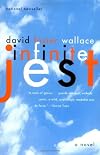
I've been obsessed with DFW's writings for many years. I've masticated (don't misread that) my way through this book for as many years. Not a good sign. And it's not because it's too difficult or some such nonsense. Too many big words? Get thee behind me, bizarre creature. My nerd heart sings at each florid tumescence of my lexicon. No. The wonderfully titled Infinite Jest lacks what a successful novel needs. And that's the emotional live wire, the through-line that hooks you, invests you, show more compels you to turn pages. I don't care in the slightest about any of the puppets peopling this book. And that is a problem. They are mere vehicles, skeletal vignettes of a dystopia-near-you. (Don't get me started on the women and black folks herein... my man embarrasses me.) The characters never get to live, breathe, grow flesh, peel off the page and climb into my mind. I never feel invited into their experiences. (I swear it's not just because the experiences stink.)
This book is essentially a thought experiment. Of course if you're going to grab a front row seat to cerebral calisthenics, you'd do worse than watching as agile a mind as DFWs. This thing is packed with philosophically delectable turns of phrase amidst the parade of demonic mundanity. We're remonstrated that Prof. Wallace avoided making a proper, emotionally vital novel (so gauche) in order to convey the ultimate disorientation and dissolution of the zeitgeist. Or perhaps that of his own mind. You have the prototypical consumer zombie of our late-capitalist nightmare dancing eagerly under the tech-glamorized spell to avoid the widening chasm of nothingness inside as everything precious and vulnerable is laid to waste. So far so good. But I think an effective dystopia is alert to the cracks in the facade where the wildflowers grow. For as much as man wills it, we are not theory-spouting robots. There is the audible rattle of our instincts in their cages. The wages of fear and desire harbor seeds of change that are what makes it worthwhile to hang on. In life or in a novel. show less
This book is essentially a thought experiment. Of course if you're going to grab a front row seat to cerebral calisthenics, you'd do worse than watching as agile a mind as DFWs. This thing is packed with philosophically delectable turns of phrase amidst the parade of demonic mundanity. We're remonstrated that Prof. Wallace avoided making a proper, emotionally vital novel (so gauche) in order to convey the ultimate disorientation and dissolution of the zeitgeist. Or perhaps that of his own mind. You have the prototypical consumer zombie of our late-capitalist nightmare dancing eagerly under the tech-glamorized spell to avoid the widening chasm of nothingness inside as everything precious and vulnerable is laid to waste. So far so good. But I think an effective dystopia is alert to the cracks in the facade where the wildflowers grow. For as much as man wills it, we are not theory-spouting robots. There is the audible rattle of our instincts in their cages. The wages of fear and desire harbor seeds of change that are what makes it worthwhile to hang on. In life or in a novel. show less
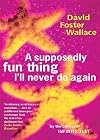
It is fair to say that my experience of ‘A Supposedly Fun Thing I’ll Never Do Again’ was mixed. At times, I was genuinely amused or intellectually stimulated. At others, I asked myself why I put myself through so many non-fiction books when one of my ostensibly powerful motivations for reading is escapism. Specifically, I wondered why I was putting myself through a series of non-fiction flashbacks to [b:Infinite Jest|6759|Infinite Jest|David Foster show more Wallace|https://images.gr-assets.com/books/1446876799s/6759.jpg|3271542], the majority of which I read during a deeply resentful five day stay in Milton Keynes. Somewhat metatextually, I passed a lot of time in Milton Keynes that should have been taken up with professional networking of some description instead writing an acerbically detailed account of my resentments. The final essay in this collection, indeed the one that gives the book its title, is very similar in tone to my chronicle of Milton Keynes. Not that I have anything like the writing skill of David Foster Wallace.* The reminder of Milton Keynes was unwelcome, however.
I freely admit that Foster Wallace is accomplished, albeit in a way that is not always easy to appreciate.** I wonder that his editors let him get away with turning in such unashamedly digressive and flamboyantly lengthy pieces.*** His neurotic inability to enjoy organised fun, a trait I most definitely share, makes his observations both compelling and uncomfortable to read. Another sticking point is my utter disinterest in tennis. There are at least fifty solid pages of tennis in this book and I struggled through them. I also find his observations of women unsettling in a manner that’s hard to precisely put my finger on. The tone of his commentary on people he meets differs very markedly by gender, which gives me an itch between the shoulder blades. This notwithstanding, the second essay contains some astute and thought-provoking observations upon the role of TV in saturating US culture with irony, a trend he sees as corrosive. First published in 1990, the piece contains flashes of prescience and remains relevant today:
My advice on approaching ‘A Supposedly Fun Thing I’ll Never Do Again’ is as follows. Unless you have an intense obsession with tennis, avoid the first and sixth essays. The former was a poor choice of opener, as I began the book thinking, “Christ, not this tennis shit again.” The second is the most thought-provoking, and thus recommended. The third and seventh form the entertainment portion and have the same format: Foster Wallace observes fellow humans partaking of organised fun. Both great. The fourth is actually a disorientatingly brief book review, which if nothing else proves that he was capable of writing succinctly yet chose not to. The remaining essay, the fifth, considers David Lynch’s filmography for more than sixty pages. If this interests you, D.F.W’s perspective appears densely well-informed and thoroughly argued. If it does not, the level of detail rapidly becomes wearisome. In short, I enjoyed perhaps half of the book’s total pages very much, while the other half alternately treated me to unpleasant deja vu and boredom. Distinctive and interesting a writer as Foster Wallace can be, I do not feel compelled to delve any further into his bibliography.****
* Although I do at least know better than to start sentences with ‘And but the’, which he apparently does in both fiction and non.
** I’ve earned the right to include unnecessary footnotes in this review by suffering through D.F.W’s interminable footnotery. The one mercy is that, unlike the edition of [b:Infinite Jest|6759|Infinite Jest|David Foster Wallace|https://images.gr-assets.com/books/1446876799s/6759.jpg|3271542] I read, these essays are formatted with footnotes actually at the foot of each page rather than being collected in an ominous vastness at the end of the book.
*** He likely would have struggled in this febrile era of the tweet-length Hot Take. Although there remains a specific niche for so-called ‘longreads’, fifty pages is closer to a dissertation.
**** Apart from anything else, I noticed during the Milton Keynes episode and was subsequently reminded today that reading Foster Wallace induces in me a certain waspish attitude to life that I don't particularly like. show less
I freely admit that Foster Wallace is accomplished, albeit in a way that is not always easy to appreciate.** I wonder that his editors let him get away with turning in such unashamedly digressive and flamboyantly lengthy pieces.*** His neurotic inability to enjoy organised fun, a trait I most definitely share, makes his observations both compelling and uncomfortable to read. Another sticking point is my utter disinterest in tennis. There are at least fifty solid pages of tennis in this book and I struggled through them. I also find his observations of women unsettling in a manner that’s hard to precisely put my finger on. The tone of his commentary on people he meets differs very markedly by gender, which gives me an itch between the shoulder blades. This notwithstanding, the second essay contains some astute and thought-provoking observations upon the role of TV in saturating US culture with irony, a trend he sees as corrosive. First published in 1990, the piece contains flashes of prescience and remains relevant today:
So then how have irony, irreverence, and rebellion come to be not liberating but enfeebling in the culture today’s avant-garde tries to write about? One clue’s to be found in the fact that irony is still around, bigger than ever after 30 long years as the dominant mode of hip expression. It’s not a rhetorical mode that wears well. As Hyde (who I pretty obviously like) puts it, “Irony only has emergency use. Carried over time, it is the voice of the trapped who have come to enjoy their cage.” This is because irony, entertaining as it is, serves an almost exclusively negative function. It’s critical and destructive, a ground-clearing. Surely this is way our postmodern fathers saw it. But irony’s singularly unuseful when it comes to constructing anything to replace the hypocrisies it debunks.
My advice on approaching ‘A Supposedly Fun Thing I’ll Never Do Again’ is as follows. Unless you have an intense obsession with tennis, avoid the first and sixth essays. The former was a poor choice of opener, as I began the book thinking, “Christ, not this tennis shit again.” The second is the most thought-provoking, and thus recommended. The third and seventh form the entertainment portion and have the same format: Foster Wallace observes fellow humans partaking of organised fun. Both great. The fourth is actually a disorientatingly brief book review, which if nothing else proves that he was capable of writing succinctly yet chose not to. The remaining essay, the fifth, considers David Lynch’s filmography for more than sixty pages. If this interests you, D.F.W’s perspective appears densely well-informed and thoroughly argued. If it does not, the level of detail rapidly becomes wearisome. In short, I enjoyed perhaps half of the book’s total pages very much, while the other half alternately treated me to unpleasant deja vu and boredom. Distinctive and interesting a writer as Foster Wallace can be, I do not feel compelled to delve any further into his bibliography.****
* Although I do at least know better than to start sentences with ‘And but the’, which he apparently does in both fiction and non.
** I’ve earned the right to include unnecessary footnotes in this review by suffering through D.F.W’s interminable footnotery. The one mercy is that, unlike the edition of [b:Infinite Jest|6759|Infinite Jest|David Foster Wallace|https://images.gr-assets.com/books/1446876799s/6759.jpg|3271542] I read, these essays are formatted with footnotes actually at the foot of each page rather than being collected in an ominous vastness at the end of the book.
*** He likely would have struggled in this febrile era of the tweet-length Hot Take. Although there remains a specific niche for so-called ‘longreads’, fifty pages is closer to a dissertation.
**** Apart from anything else, I noticed during the Milton Keynes episode and was subsequently reminded today that reading Foster Wallace induces in me a certain waspish attitude to life that I don't particularly like. show less
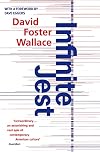
I’m proud of myself for getting through ‘Infinite Jest’, as it is dense, depressing, and very long. Worth reading, undoubtedly, but I have no intention of ever doing so again. It took me perhaps half of the book to realise that the plot wasn’t really going to go anywhere and that the blurb is thus fundamentally misleading. It implies that a mcguffin search motivates the narrative, which in fact it does not. Indeed, it is impressive that the novel manages to be compelling for more show more than a thousand pages under such unlikely circumstances: minimal plot, unpleasant subject matter, and characters of dubious appeal. All of the cast are broken people, damaged by family, substances, and tennis (pick two or three). While I found them interesting, in a grotesque sort of way, they did not strike me as easy to like. There is an admirable quality about the writing, however. The density of detail and texture, as I suppose you’d call it, is extraordinary and not something I’ve ever known to be sustained for such a long book. Some 800 pages of ‘Infinite Jest’ take place over two weeks, with various flashbacks. Despite this, the reader is left with awareness of significant gaps in events. Do not expect any resolution in the ending.
I would describe David Foster Wallace’s depiction of drugs as the diametric opposite of [b:Drugs Without the Hot Air: Minimizing the Harms of Legal and Illegal Drugs|13592853|Drugs Without the Hot Air Minimizing the Harms of Legal and Illegal Drugs|David J. Nutt|https://images.gr-assets.com/books/1422556032s/13592853.jpg|19180965] by David Nutt. While the latter is stolid non-fiction, 'Infinite Jest' is absolutely baroque in plumbing the horrifying depths of addicts' behaviour. It certainly made me glad that I indulge in nothing stronger than coffee and the occasional non-narcotic painkiller. There is barely a character among the considerable dramatis personae who has never a) had substance abuse problems, and/or b) suffered as a result of parental substance abuse problems. The language used to describe these problems is both abstract and visceral somehow. In general, I really liked Foster Wallace’s linguistic world-building and will undoubtedly adopt certain expressions. ‘The howling fantods’ strikes me as especially useful; 'demapping' & variants were deployed very well. Whereas I could not reconcile myself to sentences that began 'And but the'.
During the reading process, I happened to go to two Edinburgh International Book Festival events, one about dystopias and one about utopias. This provoked several days of thought about what constitutes a utopia, a utopian novel, a dystopia, or a dystopian novel, and in addition whether ‘Infinite Jest’ can be categorised as any of the above. On reflection, I think not, despite it being included in this list of ‘100 great works of dystopian fiction’. I consider it to be a work of alternate history in which 9/11 never happened, as that seems to me the point of divergence from which all significant differences can be taken to spring. Rather than exporting their pollution to the developing world, the US sends it to Canada. Without a generalised War on Terror, their Northern neighbour becomes the specific target of hatred. Netflix comes along earlier (impressive prediction, that) and destroys TV advertising. The US wallows in degeneration and substance abuse, electing an unbalanced entertainment personality with no political experience as president (likewise). The calendar is privatised - a pervasive feature that I came around to, especially after working out that the Year of the Depend Adult Undergarment is either 2008 or 2009 (based on a reference to Matty Pemulis being ‘three or four’ in 1989 and 23 in Y.D.A.U). For a while there I wondered if this alternate world, so much more stable, calm, and sane than the current Time of Trump, could give the novel an ironically utopian cast. When is a dystopia not a dystopia? When reality is worse than a warning from the past. Not being dystopian doesn't automatically make a fictional world utopian, though. Any remotely utopian tendency seemed so obviously counter to what Foster Wallace was trying to do that I couldn’t settle on it. Nonetheless, as of 2017 America still has an opioid abuse crisis and popular media has become more intrusive, pervasive, and febrile than depicted here. With the obvious exception that no video content can completely lobotomise you to the point of coma, that I know of. Insert Fox News joke here.
On which topic: ‘Infinite Jest’ was often extremely funny. Generally in the institutional milieu of the tennis academy rather than the halfway house, not surprisingly. The game of Eschaton and Ortho Stice’s unfortunate forehead were especially hilarious, in a dark and violent fashion. If bleaker comedy is to your taste, it’s available in uncut form here. In the style and humour I found definite echoes of Pynchon’s [b:Vineland|59721|Vineland|Thomas Pynchon|https://images.gr-assets.com/books/1357603865s/59721.jpg|1934], [a:Chuck Palahniuk|2546|Chuck Palahniuk|https://images.gr-assets.com/authors/1391203076p2/2546.jpg] in general & specifically [b:Invisible Monsters|22290|Invisible Monsters|Chuck Palahniuk|https://images.gr-assets.com/books/1348348816s/22290.jpg|849507], and [a:Steve Aylett|61378|Steve Aylett|https://images.gr-assets.com/authors/1206470416p2/61378.jpg]’s [b:Lint|7226937|Lint|Steve Aylett|https://s.gr-assets.com/assets/nophoto/book/50x75-a91bf249278a81aabab721ef782c4a74.png|1603052] & the name of (but nothing else about) [b:The Complete Accomplice|8572225|The Complete Accomplice|Steve Aylett|https://images.gr-assets.com/books/1348726634s/8572225.jpg|13440987]. It seemed to me that ‘Infinite Jest’ was the influencer not the influencee, as all the familiar elements were intensified. Palahniuk’s attempts to disgust the reader have nothing on Foster Wallace’s graphic depiction of detox, for instance.
I did not come round to the footnotes, perhaps because their text was small enough to strain the eyes. Particularly when reading in bed by lamplight. The twenty-one page all-dialogue one on Canadian separatist micropolitics with twelve even tinier sub-footnotes was beyond the pale, frankly. As a stylistic conceit, they can lend an entertaining pseudo-academic air (as in [b:Jonathan Strange & Mr Norrell|14201|Jonathan Strange & Mr Norrell|Susanna Clarke|https://images.gr-assets.com/books/1357027589s/14201.jpg|3921305]). Here, they seemed sent solely to try you. I don’t think an edition in which each was re-inserted into the text would have been meaningfully different to read, as the main narrative digressed so frequently into flashbacks, technical explanations, and editorial comments. I assume reader annoyance is why very few novels make this particular stylistic choice. It seemed to me that Foster Wallace did so because he could get away with it, given the unusually compelling density and distinctive voice of his writing. This is I suppose an experimental novel, in which the author tests how long they can get away with disregarding such niceties as plot and character development in favour of hyper-detailed descriptions of horrifying events and deeply damaged people. Just because Foster Wallace pulled it off doesn’t necessarily mean the novel deserves to be a classic, not that it’s up to me. On the one hand, I learned more than I ever wanted to know about oral narcotics and tennis, without necessarily gaining a better understanding of What’s Wrong With America. On the other, Foster Wallace has a magnificent turn of phrase, relentless eye for detail, and masterful ability to bring events to darkly farcical crescendos without a hint of catharsis. My appreciation for the parts is greater than for the sprawling whole. show less
I would describe David Foster Wallace’s depiction of drugs as the diametric opposite of [b:Drugs Without the Hot Air: Minimizing the Harms of Legal and Illegal Drugs|13592853|Drugs Without the Hot Air Minimizing the Harms of Legal and Illegal Drugs|David J. Nutt|https://images.gr-assets.com/books/1422556032s/13592853.jpg|19180965] by David Nutt. While the latter is stolid non-fiction, 'Infinite Jest' is absolutely baroque in plumbing the horrifying depths of addicts' behaviour. It certainly made me glad that I indulge in nothing stronger than coffee and the occasional non-narcotic painkiller. There is barely a character among the considerable dramatis personae who has never a) had substance abuse problems, and/or b) suffered as a result of parental substance abuse problems. The language used to describe these problems is both abstract and visceral somehow. In general, I really liked Foster Wallace’s linguistic world-building and will undoubtedly adopt certain expressions. ‘The howling fantods’ strikes me as especially useful; 'demapping' & variants were deployed very well. Whereas I could not reconcile myself to sentences that began 'And but the'.
During the reading process, I happened to go to two Edinburgh International Book Festival events, one about dystopias and one about utopias. This provoked several days of thought about what constitutes a utopia, a utopian novel, a dystopia, or a dystopian novel, and in addition whether ‘Infinite Jest’ can be categorised as any of the above. On reflection, I think not, despite it being included in this list of ‘100 great works of dystopian fiction’. I consider it to be a work of alternate history in which 9/11 never happened, as that seems to me the point of divergence from which all significant differences can be taken to spring. Rather than exporting their pollution to the developing world, the US sends it to Canada. Without a generalised War on Terror, their Northern neighbour becomes the specific target of hatred. Netflix comes along earlier (impressive prediction, that) and destroys TV advertising. The US wallows in degeneration and substance abuse, electing an unbalanced entertainment personality with no political experience as president (likewise). The calendar is privatised - a pervasive feature that I came around to, especially after working out that the Year of the Depend Adult Undergarment is either 2008 or 2009 (based on a reference to Matty Pemulis being ‘three or four’ in 1989 and 23 in Y.D.A.U). For a while there I wondered if this alternate world, so much more stable, calm, and sane than the current Time of Trump, could give the novel an ironically utopian cast. When is a dystopia not a dystopia? When reality is worse than a warning from the past. Not being dystopian doesn't automatically make a fictional world utopian, though. Any remotely utopian tendency seemed so obviously counter to what Foster Wallace was trying to do that I couldn’t settle on it. Nonetheless, as of 2017 America still has an opioid abuse crisis and popular media has become more intrusive, pervasive, and febrile than depicted here. With the obvious exception that no video content can completely lobotomise you to the point of coma, that I know of. Insert Fox News joke here.
On which topic: ‘Infinite Jest’ was often extremely funny. Generally in the institutional milieu of the tennis academy rather than the halfway house, not surprisingly. The game of Eschaton and Ortho Stice’s unfortunate forehead were especially hilarious, in a dark and violent fashion. If bleaker comedy is to your taste, it’s available in uncut form here. In the style and humour I found definite echoes of Pynchon’s [b:Vineland|59721|Vineland|Thomas Pynchon|https://images.gr-assets.com/books/1357603865s/59721.jpg|1934], [a:Chuck Palahniuk|2546|Chuck Palahniuk|https://images.gr-assets.com/authors/1391203076p2/2546.jpg] in general & specifically [b:Invisible Monsters|22290|Invisible Monsters|Chuck Palahniuk|https://images.gr-assets.com/books/1348348816s/22290.jpg|849507], and [a:Steve Aylett|61378|Steve Aylett|https://images.gr-assets.com/authors/1206470416p2/61378.jpg]’s [b:Lint|7226937|Lint|Steve Aylett|https://s.gr-assets.com/assets/nophoto/book/50x75-a91bf249278a81aabab721ef782c4a74.png|1603052] & the name of (but nothing else about) [b:The Complete Accomplice|8572225|The Complete Accomplice|Steve Aylett|https://images.gr-assets.com/books/1348726634s/8572225.jpg|13440987]. It seemed to me that ‘Infinite Jest’ was the influencer not the influencee, as all the familiar elements were intensified. Palahniuk’s attempts to disgust the reader have nothing on Foster Wallace’s graphic depiction of detox, for instance.
I did not come round to the footnotes, perhaps because their text was small enough to strain the eyes. Particularly when reading in bed by lamplight. The twenty-one page all-dialogue one on Canadian separatist micropolitics with twelve even tinier sub-footnotes was beyond the pale, frankly. As a stylistic conceit, they can lend an entertaining pseudo-academic air (as in [b:Jonathan Strange & Mr Norrell|14201|Jonathan Strange & Mr Norrell|Susanna Clarke|https://images.gr-assets.com/books/1357027589s/14201.jpg|3921305]). Here, they seemed sent solely to try you. I don’t think an edition in which each was re-inserted into the text would have been meaningfully different to read, as the main narrative digressed so frequently into flashbacks, technical explanations, and editorial comments. I assume reader annoyance is why very few novels make this particular stylistic choice. It seemed to me that Foster Wallace did so because he could get away with it, given the unusually compelling density and distinctive voice of his writing. This is I suppose an experimental novel, in which the author tests how long they can get away with disregarding such niceties as plot and character development in favour of hyper-detailed descriptions of horrifying events and deeply damaged people. Just because Foster Wallace pulled it off doesn’t necessarily mean the novel deserves to be a classic, not that it’s up to me. On the one hand, I learned more than I ever wanted to know about oral narcotics and tennis, without necessarily gaining a better understanding of What’s Wrong With America. On the other, Foster Wallace has a magnificent turn of phrase, relentless eye for detail, and masterful ability to bring events to darkly farcical crescendos without a hint of catharsis. My appreciation for the parts is greater than for the sprawling whole. show less
Lists
. (1)
Blindpill (1)
scav (1)
My Wishlist (1)
1980s (1)
Allie's Wishlist (1)
Best First Lines (1)
Five star books (1)
Read These Too (1)
Overdue Podcast (1)
Unread books (1)
Favourite Books (1)
1990s (2)
98 (1)
Summer Books (1)
. (1)
A Novel Cure (1)
To Read (2)
Non-Fiction (2)
Read in 2021 (2)
Metafiction (2)
Cooper (1)
Books I've Read (1)
. (1)
Elegant Prose (1)
Bureaucracies (1)
100 New Classics (1)
Awards


You May Also Like


Associated Authors
Statistics
- Works
- 87
- Also by
- 48
- Members
- 47,485
- Popularity
- #334
- Rating
- 4.0
- Reviews
- 862
- ISBNs
- 489
- Languages
- 22
- Favorited
- 344


