
David Servan-Schreiber (1961–2011)
Author of Anticancer: A New Way of Life
About the Author
David Servan-Schreiber is a clinical professor of psychiatry at the University of Pittsburgh School of Medicine and cofounder of the Center for Integrative Medicine.
Image credit: servan schreiber
Works by David Servan-Schreiber
The Instinct to Heal: Curing Depression, Anxiety and Stress Without Drugs and Without Talk Therapy (2003) 577 copies, 16 reviews
Antyrak. Nowy styl życia 1 copy
Guarire. 1 copy
Associated Works
Eye Movement Desensitization and Reprocessing (EMDR): Basic Principles, Protocols, and Procedures (1995) — Foreword, some editions — 264 copies
EMDR: The Breakthrough "Eye Movement" Therapy for Overcoming Anxiety, Stress, and Trauma (1997) — Préface, some editions — 218 copies, 2 reviews
Tagged
Common Knowledge
- Canonical name
- David Servan-Schreiber
- Legal name
- David Servan-Schreiber
- Birthdate
- 1961-04-21
- Date of death
- 2011-07-24
- Gender
- male
- Education
- University of Paris
Université Laval
Carnegie Mellon University - Occupations
- professor
- Organizations
- University of Pittsburgh
Claude Bernard University Lyon 1 - Relationships
- Servan-Schreiber, Jean-Jacques (father)
- Cause of death
- brain cancer
- Nationality
- France
- Birthplace
- Neuilly-sur-Seine (France)
- Place of death
- Fécamp (France)
- Associated Place (for map)
- France
Members
Reviews
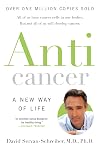
This is an older title, at least in terms of medical research: originally published in the US in 2008 and then revised in 2010. It was written by a French professor of clinical psychology who was diagnosed with brain cancer when he was in his early 30s. After a recurrence, he gradually built up a bank of research-based and anecdotal knowledge on ways people with cancer can improve their chances of survival, including through their diet, exercise, environment, stress levels, and mental show more health. This book is a memoir of his experiences combined with his recommendations for living an anticancer life, along with copious footnotes pointing to the research studies that back up the lifestyle. Sadly, while Dr. Servan Schreiber survived for 19 years after his initial diagnosis; he passed away in 2011.
Honestly, I was a little skeptical of this book when I jumped into it. There is a lot of information out there about lifestyle changes you can take to prevent cancer from recurring, or to prevent you from getting cancer in the first place. When you are living with metastatic cancer, though, that kind of advice can feel accusatory (like, “you wouldn’t have cancer if you had just done these things!”) or like it came too late, since the cancer has already spread. Other times, this kind of instruction can feel either too general (eat healthy and exercise is pretty good advice for everyone for all kinds of reasons) or like a snake oil pitch to get you to buy some supplements or a diet plan. Dr. Servan-Schreiber’s angle is that many things in our modern Western lifestyle and environment can cause cells to mutate and cancer to begin to develop, but what we can do is control the terrain of our bodies so that those almost inevitable mutations don’t grow or spread. And, for those of us who already have cancer -- even if it is advanced, metastatic, or incurable -- taking steps to improve the terrain of our bodies can help our traditional cancer treatments work more effectively.
And, you know, I think that makes a lot of sense. Certainly at times I wonder why I got cancer or why it wasn’t found until it was metastatic. Mostly I feel pretty confident that it was out of my control and, as a pragmatic person by nature, that it doesn’t really matter at this point anyway. I remember when I was first diagnosed feeling almost embarrassed and guilty that I hadn’t done something right and that is why I ended up with this diagnosis, but I've learned that while they can make some broad generalizations and name some risk factors, overall doctors don’t really know why some people get cancer and others don’t, and why some cancers spread and others don’t. And, if we take that into account, I think making lifestyle changes like the ones Dr. Servan-Schriber recommends aren’t a ticket to a cure or something that should dominate your life, but they certainly can’t hurt. And if they make us feel better, both because they are letting us have a little agency, but also because eating good food and exercising and mindfulness and stress reduction are all good things for helping us to enjoy life, then why not dip in and give some of this a try?
Any medical advice that is 10 years old needs to be taken with a grain of salt, but this was a very readable and thought-provoking book and one that I’m glad I read. It also contains one of the most helpful lay-person explanations of how cancer starts, grows, and spreads that I have read so far. Not too technical, but not too elementary either. Honestly, the book is worth reading just for that! show less
Honestly, I was a little skeptical of this book when I jumped into it. There is a lot of information out there about lifestyle changes you can take to prevent cancer from recurring, or to prevent you from getting cancer in the first place. When you are living with metastatic cancer, though, that kind of advice can feel accusatory (like, “you wouldn’t have cancer if you had just done these things!”) or like it came too late, since the cancer has already spread. Other times, this kind of instruction can feel either too general (eat healthy and exercise is pretty good advice for everyone for all kinds of reasons) or like a snake oil pitch to get you to buy some supplements or a diet plan. Dr. Servan-Schreiber’s angle is that many things in our modern Western lifestyle and environment can cause cells to mutate and cancer to begin to develop, but what we can do is control the terrain of our bodies so that those almost inevitable mutations don’t grow or spread. And, for those of us who already have cancer -- even if it is advanced, metastatic, or incurable -- taking steps to improve the terrain of our bodies can help our traditional cancer treatments work more effectively.
And, you know, I think that makes a lot of sense. Certainly at times I wonder why I got cancer or why it wasn’t found until it was metastatic. Mostly I feel pretty confident that it was out of my control and, as a pragmatic person by nature, that it doesn’t really matter at this point anyway. I remember when I was first diagnosed feeling almost embarrassed and guilty that I hadn’t done something right and that is why I ended up with this diagnosis, but I've learned that while they can make some broad generalizations and name some risk factors, overall doctors don’t really know why some people get cancer and others don’t, and why some cancers spread and others don’t. And, if we take that into account, I think making lifestyle changes like the ones Dr. Servan-Schriber recommends aren’t a ticket to a cure or something that should dominate your life, but they certainly can’t hurt. And if they make us feel better, both because they are letting us have a little agency, but also because eating good food and exercising and mindfulness and stress reduction are all good things for helping us to enjoy life, then why not dip in and give some of this a try?
Any medical advice that is 10 years old needs to be taken with a grain of salt, but this was a very readable and thought-provoking book and one that I’m glad I read. It also contains one of the most helpful lay-person explanations of how cancer starts, grows, and spreads that I have read so far. Not too technical, but not too elementary either. Honestly, the book is worth reading just for that! show less
The Instinct to Heal: Curing Depression, Anxiety and Stress Without Drugs and Without Talk Therapy by David Servan-Schreiber
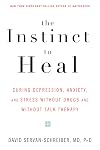
The OV of this one had the more prosaic title "Guerir le stress." Self-help books tend to make me flinch, but this one had enough decent information about treating anxiety and depression without pharmaceuticals to make it worthwhile. Breathing, EMDR therapy, fish oils, acupuncture, exercise, communication were some of the main subjects. All worth as much study as the creepy SSRI's that seem to be the only thing usually offered by medical professionals. (October 16, 2004)
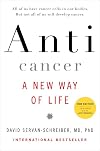
Color me dubious. The further I read into this book, the more skeptical I became--which is a shame, because Dr Servan-Schreiber with his unique perch as physician, research scientist and cancer patient would, I thought, be the perfect person to sift the solid science from wishful thinking and outright quackery but...
This book is rated as high as it is because nothing in his proposed program could do harm (the mindset being a different story) and I couldn't help being fascinated by parts and show more moved by others. Servan-Schreiber with his background as a research scientist was lucid and engaging in describing cancer's mechanisms and cancer research. I loved reading about "mighty mouse"--the mouse seemingly immune to cancer. I had to agree after reading those early chapters that "cancer is a fascinating and perverse phenomenon." And I couldn't help but be moved and inspired by many of the stories--not just his own but that of naturalist Stephen Jay Gould who against the odds beat his own cancer, and Jacqueline, a cancer patient who found reserves of strength in practicing karate with fellow cancer patients.
How could I not be moved? I was diagnosed with Stage Three Breast cancer in September of last year. In the preceding months I've undergone months of chemotherapy, a mastectomy, radiation treatments and will continue getting infusions of Herceptin until this October. And I've met far too many cancer patients who are on their second or third round with cancer. I don't want to go through all this again--thus the appeal of the promise of the title. I could certainly identify with and understand so much the people in these pages went through--and I get the fierce hope that you could take your destiny in your own hands--that you can beat back your body's betrayal. Feeling in control is so very important to you. I get that. But there's a flip side to that which isn't so positive. I've encountered people certainly who believe the patient should be blamed for their cancer. In a review of mine critical of one health guru I was told straight out that I should listen to this author--that it was my lifestyle that had made me sick. I believe Servan-Schreiber plays into this with his insistence on the "mind/body connection"--this idea, or at least implication--that if you succumb you had not just the wrong lifestyle but the wrong attitude. Ironically Servan-Schreiber's own careful tending of his "terrain" did not stop him from dying of cancer some years ago. Humans are mortal--that's not under our control and sometimes when it comes to cancer we lose--and it's not our fault.
And there's another problem with this kind of view--that cancer is under our control and would be prevented if only the medical and pharmaceutical establishment would acknowledge the truth. To Servan-Schreiber's credit he emphasizes the importance of conventional therapy, and emphasizes his prescriptions are meant to be complimentary, not alternatives. In the book Herceptin, one of the drugs I'm taking, is described as "a revolutionary drug qualified in 2005 as a 'major turning point in the eradication of suffering and death from cancer.'" I'm expected to survive this--and for that I credit the achievements of those lambasted pillars of the medical and pharmaceutical establishment. But in these past months I've met more than one cancer patient who have refused not just (admittedly scary and debilitating) chemotherapy but the relatively low-risk/high benefit radiation and hormone treatments. Who have told me that people like my oncologist are shills for the pharmaceutical companies and "don't you know what they give you in chemo is poison?" I do know--that's the point--it poisons the cancer. Yes, it poisons the patient as well--but we have the better chance of bouncing back.
So I worry books like these contribute to the paranoia, the distrust of life-saving medicines. All the more because in the end Servan-Schreiber struck me as ultimately far too credulous--there seemed to be no cause of cancer ever put out there from cell phones to deodorants to Teflon pans he wouldn't credit--ditto any purported alternate therapies down to that of shamans and Tibetan monks. Servan-Schreiber takes seriously T. Colin Campbell, a doctrinaire vegetarian and author of the China Study--a controversial figure but Servan-Schrieber skips the controversy. I just never got the sense in this book that evidence on the other side was considered beyond the quick dismissing of straw men. Some of what he cautions against might cause cancer, some be protective--my point is in the end I felt no confidence he could help me sort out which.
However, as I wrote above, at least the prescriptions themselves would do little harm--except maybe to your wallet--organic food and cosmetics, water filters... Much of the advice is what any doctor would tell you--avoid processed foods, consume plenty of veggies, fruit, tea, fish rich in Omega-3, get plenty of sunshine and exercise. No, the seductive dangers of the book are more subtle than that. show less
This book is rated as high as it is because nothing in his proposed program could do harm (the mindset being a different story) and I couldn't help being fascinated by parts and show more moved by others. Servan-Schreiber with his background as a research scientist was lucid and engaging in describing cancer's mechanisms and cancer research. I loved reading about "mighty mouse"--the mouse seemingly immune to cancer. I had to agree after reading those early chapters that "cancer is a fascinating and perverse phenomenon." And I couldn't help but be moved and inspired by many of the stories--not just his own but that of naturalist Stephen Jay Gould who against the odds beat his own cancer, and Jacqueline, a cancer patient who found reserves of strength in practicing karate with fellow cancer patients.
How could I not be moved? I was diagnosed with Stage Three Breast cancer in September of last year. In the preceding months I've undergone months of chemotherapy, a mastectomy, radiation treatments and will continue getting infusions of Herceptin until this October. And I've met far too many cancer patients who are on their second or third round with cancer. I don't want to go through all this again--thus the appeal of the promise of the title. I could certainly identify with and understand so much the people in these pages went through--and I get the fierce hope that you could take your destiny in your own hands--that you can beat back your body's betrayal. Feeling in control is so very important to you. I get that. But there's a flip side to that which isn't so positive. I've encountered people certainly who believe the patient should be blamed for their cancer. In a review of mine critical of one health guru I was told straight out that I should listen to this author--that it was my lifestyle that had made me sick. I believe Servan-Schreiber plays into this with his insistence on the "mind/body connection"--this idea, or at least implication--that if you succumb you had not just the wrong lifestyle but the wrong attitude. Ironically Servan-Schreiber's own careful tending of his "terrain" did not stop him from dying of cancer some years ago. Humans are mortal--that's not under our control and sometimes when it comes to cancer we lose--and it's not our fault.
And there's another problem with this kind of view--that cancer is under our control and would be prevented if only the medical and pharmaceutical establishment would acknowledge the truth. To Servan-Schreiber's credit he emphasizes the importance of conventional therapy, and emphasizes his prescriptions are meant to be complimentary, not alternatives. In the book Herceptin, one of the drugs I'm taking, is described as "a revolutionary drug qualified in 2005 as a 'major turning point in the eradication of suffering and death from cancer.'" I'm expected to survive this--and for that I credit the achievements of those lambasted pillars of the medical and pharmaceutical establishment. But in these past months I've met more than one cancer patient who have refused not just (admittedly scary and debilitating) chemotherapy but the relatively low-risk/high benefit radiation and hormone treatments. Who have told me that people like my oncologist are shills for the pharmaceutical companies and "don't you know what they give you in chemo is poison?" I do know--that's the point--it poisons the cancer. Yes, it poisons the patient as well--but we have the better chance of bouncing back.
So I worry books like these contribute to the paranoia, the distrust of life-saving medicines. All the more because in the end Servan-Schreiber struck me as ultimately far too credulous--there seemed to be no cause of cancer ever put out there from cell phones to deodorants to Teflon pans he wouldn't credit--ditto any purported alternate therapies down to that of shamans and Tibetan monks. Servan-Schreiber takes seriously T. Colin Campbell, a doctrinaire vegetarian and author of the China Study--a controversial figure but Servan-Schrieber skips the controversy. I just never got the sense in this book that evidence on the other side was considered beyond the quick dismissing of straw men. Some of what he cautions against might cause cancer, some be protective--my point is in the end I felt no confidence he could help me sort out which.
However, as I wrote above, at least the prescriptions themselves would do little harm--except maybe to your wallet--organic food and cosmetics, water filters... Much of the advice is what any doctor would tell you--avoid processed foods, consume plenty of veggies, fruit, tea, fish rich in Omega-3, get plenty of sunshine and exercise. No, the seductive dangers of the book are more subtle than that. show less
My colleague, who is currently battling cancer, quoted from this book in his blog, which inspired me to read it myself. (A surprisingly fast read) The author, a doctor and researcher who has also been battling against a brain tumor, wrote this book based on his research during his own cancer journey. While a bit repetitive at times (themes, subjects appearing in multiple chapters), this books is nonetheless excellent with solid facts about cancer itself (good general education), nutrition show more (majority of the book), lifestyle (particularly mind and body connection), and finally, dealing with death. The glossy pages represent a good summary read, if you just want to skim. I recommend this book to anyone, rather you are or are not touched by cancer yourself or anyone in your life.
Of all sections of the book, lifestyle had elements that hit me the hardest. Of note is the concept that helplessness is traumatic. “The negative impact of prolonged feelings of helpless and despair, when left unattended, not the stresses of life themselves, contribute to the inflammatory processes that can help cancer grow.” While I am one who normally let things roll-off and accept, recent events have cornered me into feeling completely helpless and in despair. These passages were hard to read.
“In the effort to ward off cancer, it is thus essential to combat the psychology of helplessness…
Certain events are so painful that they tear deeply into the image people have of themselves or the trust they have in the world around them. This is true with particularly disturbing events such as rape, frightening or life-threatening accidents, and even some romantic breakups. It is also the case with the absence or loss of love or repeated humiliations experienced in childhood, as this is the age when people are the most emotionally and psychologically vulnerable. Such wounds tend to form a sort of psychological abscess. The brain tries to isolate and skirt around them as much as possible; the individual’s consciousness may even “deny” the event. But just as pressure on an abscess will show that it is still sensitive, life may brutally remind a person of his/her traumatic past and to become aware of the still-tender psychological wound.”
“For Mary…, she feels the same sadness and weeps the same tears, her body produces the same stomach cramps and goes so far as to assume the same position – that of a little girl hunched over, her arms around her knees.”
I read the 2nd edition, which has the aforementioned revised and expanded mind and body connection section. show less
Of all sections of the book, lifestyle had elements that hit me the hardest. Of note is the concept that helplessness is traumatic. “The negative impact of prolonged feelings of helpless and despair, when left unattended, not the stresses of life themselves, contribute to the inflammatory processes that can help cancer grow.” While I am one who normally let things roll-off and accept, recent events have cornered me into feeling completely helpless and in despair. These passages were hard to read.
“In the effort to ward off cancer, it is thus essential to combat the psychology of helplessness…
Certain events are so painful that they tear deeply into the image people have of themselves or the trust they have in the world around them. This is true with particularly disturbing events such as rape, frightening or life-threatening accidents, and even some romantic breakups. It is also the case with the absence or loss of love or repeated humiliations experienced in childhood, as this is the age when people are the most emotionally and psychologically vulnerable. Such wounds tend to form a sort of psychological abscess. The brain tries to isolate and skirt around them as much as possible; the individual’s consciousness may even “deny” the event. But just as pressure on an abscess will show that it is still sensitive, life may brutally remind a person of his/her traumatic past and to become aware of the still-tender psychological wound.”
“For Mary…, she feels the same sadness and weeps the same tears, her body produces the same stomach cramps and goes so far as to assume the same position – that of a little girl hunched over, her arms around her knees.”
I read the 2nd edition, which has the aforementioned revised and expanded mind and body connection section. show less
Awards

You May Also Like


Associated Authors
Statistics
- Works
- 9
- Also by
- 2
- Members
- 1,501
- Popularity
- #17,120
- Rating
- 4.1
- Reviews
- 43
- ISBNs
- 130
- Languages
- 18