

Alistair Cooke (1908–2004)
Author of Alistair Cooke's America
About the Author
Alistair Cooke is a journalist and broadcaster. Cooke was born in Manchester, England on November 20, 1908. He obtained his education at Cambridge, Yale, and Harvard. His career is based on his observations of American life and culture. Cooke worked as a correspondent for NBC and as a special show more correspondent for the London Times and the Guardian. He is perhaps most famous for his BBC weekly broadcast, "Letter From America," which has been successful for over fifty years because of its sophisticated wit. Cooke became well-known in the United States as host for Omnibus for nine years and later as host of the Masterpiece Theatre. He has also written numerous books including the bestsellers Alistair Cooke's America, Six Men, and Fun and Games with Alistair Cooke. In 1973, Cooke was made an honorary Knight of the British Empire. (Bowker Author Biography) show less
Image credit: Marion S. Trikosko (1974)
Series
Works by Alistair Cooke
Alistair Cooke's American Journey: Life on the Home Front in the Second World War (2006) — Author — 116 copies
The Alistair Cooke Collection Volume One: Letters from America, Talk About America, and The Americans (2018) 6 copies
Letters from America: The Americans, Letters from America and Talk About America (1981) 3 copies, 1 review
Omnibus: King Lear 2 copies
A Commencement Address 2 copies
Six Friends 1 copy
All at Sea 1 copy
Associated Works
Above Washington: A Collection of Nostalgic and Contemporary Aerial Photographs of the District of Columbia (1979) — Introduction, some editions — 186 copies, 2 reviews
Above San Francisco: A New Collection of Nostalgic and Contemporary Aerial Photographs of the Bay Area (1977) — Foreword — 140 copies, 1 review
On the Firing Line: The Public Life of Our Public Figures (1989) — Introduction — 126 copies, 1 review
Tagged
Common Knowledge
- Other names
- Cooke, Alfred (birth name)
- Birthdate
- 1908-11-20
- Date of death
- 2004-03-30
- Gender
- male
- Education
- Jesus College, Cambridge
- Occupations
- reporter
radio presenter
television presenter - Organizations
- BBC
PBS
Guardian
The Times
CBS
NBC - Awards and honors
- Order of the British Empire (Knight Commander, 1973)
- Relationships
- Cooke, John Byrne (son)
Quiller-Couch, Arthur (teacher)
Pick, Hella (colleague) - Cause of death
- cancer
- Nationality
- UK
USA (naturalized|1941) - Birthplace
- Salford, Lancashire, England, UK
- Places of residence
- Salford, Lancashire, England, UK
London, Middlesex, England, UK
New York, New York, USA
Cambridge, Cambridgeshire, England, UK - Place of death
- New York, New York, USA
- Burial location
- cremated, ashes scattered (Central Park, Manhattan, New York, New York, USA)
- Associated Place (for map)
- England, UK
Members
Reviews
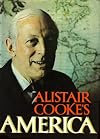
Superb read. A man with a true grasp of the massive history of America and its development. His perspective of historical events come with an excellent slant and he has managed to note the many hidden aspects of American history that you would rarely find in such detail in a single place. One of the best non-fiction novels I have read.
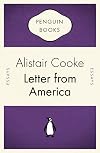
My last two years of high school were spent in a small boarding school in northern Israel. It was an English school, based on the British education system, and most students (not that there were too many of them; the entire school numbered 30 or so students) were British. They missed home and expressed their longings in various, odd ways, such as eating Marmite. When Saturday evening came around, they all gathered around the radio and listened to the BBC World Service, to find out how their show more soccer teams fared in the weekly League matches. That’s how I became aware of the BBC World Service, starting to listen to it myself before going to bed every evening.
The programme I remember most vividly from those long-gone days was the weekly reading of a “letter” by a British man with a voice that was deep and authoritative yet at the same time soothing and reassuring. Every week he would talk for 15 minutes, offering a snapshot of some aspect of life in America. The topics would cover all walks of life: domestic politics, foreign affairs, sports, show business, race relations, etc. Not having been in America yet, his weekly transmission opened for me a window into a world that was new and fascinating.
The man was Alistair Cooke and the name of the show was “Letter from America”. Cooke was a British journalist who moved to the United States in 1937, at the age of 29, and made America his home. The first episode of the show was broadcast by Cooke in March 1946, and the last on February 2004, a month before he passed away at the age of 95. For almost 60 years, Cooke was the voice through which listeners of the BBC learnt about the New World.
When I saw this book on sale I knew I would love it. I read it slowly, very slowly. I think it took me more than a year to finish it. I didn’t want to rush through the “letters”, wishing to draw out the pleasure for as long as possible. The move from the radio to the written word has not diminished Cooke’s presence; at times, I felt as if his voice spoke from the book’s pages. Even when the subject at hand is familiar, Cooke’s writing/reading provide details and perspective that weave together an insightful and mostly loving portrait of America.
This is a book to own and to return to from time to time, picking a “letter” that grabs our mood and rediscovering a piece of history, masterfully told by Alistair Cooke. show less
The programme I remember most vividly from those long-gone days was the weekly reading of a “letter” by a British man with a voice that was deep and authoritative yet at the same time soothing and reassuring. Every week he would talk for 15 minutes, offering a snapshot of some aspect of life in America. The topics would cover all walks of life: domestic politics, foreign affairs, sports, show business, race relations, etc. Not having been in America yet, his weekly transmission opened for me a window into a world that was new and fascinating.
The man was Alistair Cooke and the name of the show was “Letter from America”. Cooke was a British journalist who moved to the United States in 1937, at the age of 29, and made America his home. The first episode of the show was broadcast by Cooke in March 1946, and the last on February 2004, a month before he passed away at the age of 95. For almost 60 years, Cooke was the voice through which listeners of the BBC learnt about the New World.
When I saw this book on sale I knew I would love it. I read it slowly, very slowly. I think it took me more than a year to finish it. I didn’t want to rush through the “letters”, wishing to draw out the pleasure for as long as possible. The move from the radio to the written word has not diminished Cooke’s presence; at times, I felt as if his voice spoke from the book’s pages. Even when the subject at hand is familiar, Cooke’s writing/reading provide details and perspective that weave together an insightful and mostly loving portrait of America.
This is a book to own and to return to from time to time, picking a “letter” that grabs our mood and rediscovering a piece of history, masterfully told by Alistair Cooke. show less
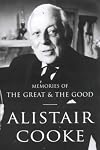
Alistair Cooke writes in the preface to this collection of 23 biographical sketches, "Most of these pieces tend to find, and rejoice in, what is best about their subjects." That is not to say that the distinguished British print and broadcast journalist (resident for many years in America) is starry-eyed about the men and women he profiles: George Bernard Shaw was a crank; Frank Lloyd Wright a prima donna; General George Marshall an appalling public speaker. Yet Cooke's smooth prose and keen show more insights explore the larger issues his subjects' stories raise and invite readers to appreciate the people who have made a difference. Franklin Roosevelt's visionary leadership was possible because of a gentleman's agreement with the press inconceivable today: they never printed a single photo of him in his wheelchair. FDR's vice president, John Nance Garner, was a Southern politician who understood only power and back-scratching: "There is one man left who is like him," Cooke wrote in 1967, "Lyndon Johnson"--cogently and simultaneously nailing LBJ's strength and weakness. Politicians and statesmen preponderate here (Cooke's Winston Churchill portrait is justly famous), but the author covers writers (P.G. Wodehouse, Robert Frost), performers (Gary Cooper, Duke Ellington), and columnists (James Reston, Erma Bombeck) with equal shrewdness. --Wendy Smith.
Deploring the current fashion for psycho-biographies, not to mention porno-biographies, of the famous, Alistair Cooke offers celebrations of people he has met during his sixty years of journalism, people he calls the Great or the Good, people who, he believes, have left the world a better or more interesting place. show less
Deploring the current fashion for psycho-biographies, not to mention porno-biographies, of the famous, Alistair Cooke offers celebrations of people he has met during his sixty years of journalism, people he calls the Great or the Good, people who, he believes, have left the world a better or more interesting place. show less
Six Men: Charlie Chaplin, Edward VIII, H. L. Mencken, Humphrey Bogart, Adlai Stevenson, Bertrand Russell by Alistair Cooke
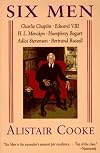
William Safire, William F. Buckley, and Alistair Cooke are some of the first writers I go to when I want to be impressed and provoked by masterful English language use. Biography is one of my favorite genres. This book is a convenient combination of my favorites in that it gives me thumbnail biographies of six well-known figures presented in remarkable depth for such a compact presentation.
“A Note on Fame and Friendship” is a necessary preface to the work in that it addresses criticisms show more of the following individual vignettes that a reader may propose. Charles Chaplin is presented in an almost schizophrenic, complete dual personality, model. But Cooke clarifies that to some extent this image was deliberately crafted by Chaplin for sanity preservation. The Edward the VIII section is scant as far as personal interaction between Cooke and the former King, but Cooke admits that while there might not have been a lot of interaction between writer and subject, the story is so important that to fail to remark on it would be inappropriate (for him—Cooke was English, after all). Sections on the two intellectuals (Russell and Mencken), a movie star (Bogart), and a politician (Stevenson) all offer personal observations that add to a general reader’s perception of the humanity of popular heroes. show less
“A Note on Fame and Friendship” is a necessary preface to the work in that it addresses criticisms show more of the following individual vignettes that a reader may propose. Charles Chaplin is presented in an almost schizophrenic, complete dual personality, model. But Cooke clarifies that to some extent this image was deliberately crafted by Chaplin for sanity preservation. The Edward the VIII section is scant as far as personal interaction between Cooke and the former King, but Cooke admits that while there might not have been a lot of interaction between writer and subject, the story is so important that to fail to remark on it would be inappropriate (for him—Cooke was English, after all). Sections on the two intellectuals (Russell and Mencken), a movie star (Bogart), and a politician (Stevenson) all offer personal observations that add to a general reader’s perception of the humanity of popular heroes. show less
Lists
Awards


You May Also Like


Associated Authors
Statistics
- Works
- 63
- Also by
- 12
- Members
- 4,357
- Popularity
- #5,754
- Rating
- 3.9
- Reviews
- 40
- ISBNs
- 192
- Languages
- 7
- Favorited
- 4