
Richard Dübell
Author of Die Teufelsbibel
About the Author
Image credit: Richard Dübell - Photo: © Olivier Favre
Series
Works by Richard Dübell
Associated Works
Tagged
Common Knowledge
- Canonical name
- Dübell, Richard
- Legal name
- Dübell, Richard
- Birthdate
- 1962-10-05
- Gender
- male
- Occupations
- writer
cartoonist - Nationality
- Germany
- Birthplace
- Landshut, Bayern, Deutschland
- Places of residence
- Landshut, Bayern, Deutschland
- Associated Place (for map)
- Landshut, Bayern, Deutschland
Members
Reviews
The frame story of this shorter novel is set in Prussia on the 24th of December, 1845. Louise von Briest and her husband Alvin are waiting to celebrate Christmas Eve on their estate with their friend Paul who is traveling to them by train. But the train does not arrive and they realize that there must have been an accident because of a snowstorm. Alvin and another friend, Otto von Bismarck (yes - the historical Bismarck), decide to organize a search party on horseback in order to find the show more train and save the lives of Paul and the other passengers who might be injured and snowed in without any food or warmth.
Louise and her young son stay on the estate, worried and anxious. To calm the boy, Louise tells him the story of a medieval knight traveling through a snowy forest with his children. The novel alternates between the two stories - Louise, the searchers and Paul, who leaves the train wreck with a few other men to find help, and the medieval knight and his children.
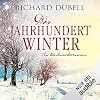
I enjoyed the 19th century story much more than the medieval one, and it was what I had signed up for - before buying the book, I had not realized that the story that Louise tells her son is longer than the frame story itself. Moreover, while it has a sort of Christmassy message in the end, it is an immensely brutal story, filled with dead people and animals. The knight and his children are pursued by a pack of wolves and have to fight them repeatedly, and this is repetitive as well as horrible. While I understand that the hardships are there to get the message across, I think that so much brutality is unnecessary. I felt sick sometimes from the detailed descriptions. The cover of the book, as well as the subtitle A Christmas Novel, suggest a very different content and atmosphere.
The 19th century story was better and the atmosphere reminded me a little of Fontane at times. It is very Prussian and I liked Paul's enthusiasm for trains as well as the inclusion of a local legend. Still, I had expected more Christmas content (the subtitle!!!). There is also a love triangle between Louise and the two friends and I was not interested in that in the least. show less
Louise and her young son stay on the estate, worried and anxious. To calm the boy, Louise tells him the story of a medieval knight traveling through a snowy forest with his children. The novel alternates between the two stories - Louise, the searchers and Paul, who leaves the train wreck with a few other men to find help, and the medieval knight and his children.
I enjoyed the 19th century story much more than the medieval one, and it was what I had signed up for - before buying the book, I had not realized that the story that Louise tells her son is longer than the frame story itself. Moreover, while it has a sort of Christmassy message in the end, it is an immensely brutal story, filled with dead people and animals. The knight and his children are pursued by a pack of wolves and have to fight them repeatedly, and this is repetitive as well as horrible. While I understand that the hardships are there to get the message across, I think that so much brutality is unnecessary. I felt sick sometimes from the detailed descriptions. The cover of the book, as well as the subtitle A Christmas Novel, suggest a very different content and atmosphere.
The 19th century story was better and the atmosphere reminded me a little of Fontane at times. It is very Prussian and I liked Paul's enthusiasm for trains as well as the inclusion of a local legend. Still, I had expected more Christmas content (the subtitle!!!). There is also a love triangle between Louise and the two friends and I was not interested in that in the least. show less

This historical novel is about the Codex Gigas, the Devil's Bible, the largest medieval manuscript in the world. It is said this book was written by fallen monk, who was walled up as a penalty. He promised to write a book to glorify the monastery in one night, and to complete this task he asked the devil to help him. In this story this caused the book to have enormous power. Seven monks are charged to protect it, hidden away in a monastery, but many people want to find it, to unleash its show more power.
The book follows several characters in late sixteenth century who are all connect to the Devil's Bible, some want to use it, some want to get rid of it, some don't know it but their lives revolve around it. All are trying desperately to find it, and the monks are trying to prevent this from happening. The story is pretty fast paced, filled with love, intrigue, mysteries and mad kings. I couldn't put it down, I found it original and very good. The writer, Richard Dübell, shows the backstory with some short chapters, and then just lets the story play out, leading the reader around. Not all of it is very predictable, making it a fun read that fits into the real history pretty well. Four out of five stars. show less
The book follows several characters in late sixteenth century who are all connect to the Devil's Bible, some want to use it, some want to get rid of it, some don't know it but their lives revolve around it. All are trying desperately to find it, and the monks are trying to prevent this from happening. The story is pretty fast paced, filled with love, intrigue, mysteries and mad kings. I couldn't put it down, I found it original and very good. The writer, Richard Dübell, shows the backstory with some short chapters, and then just lets the story play out, leading the reader around. Not all of it is very predictable, making it a fun read that fits into the real history pretty well. Four out of five stars. show less

1648. De 30-jarige oorlog is zo goed als afgelopen, en Europa snakt naar het einde.
Alle bekende karakters uit de 2 vorige delen De Duivelsbijbel en De wachters van de duivelsbijbel zijn ook in dit laatste deel weer aanwezig. Leuk book om te lezen, wel wat lang. Raakte soms de 'weg' kwijt in het boek. Wie waren nu ook al weer met wie of tegen wie.
Het verhaal zelf, de realistische beschrijvingen van de karakters, de verhaallijnen, beschrijvingen van de gevechten en het onverwachte einde, was show more wat mij voornamelijk aantrok in deze serie en dus ook dit boek. Kon goed meevoelen met de verschillende personage's show less
Alle bekende karakters uit de 2 vorige delen De Duivelsbijbel en De wachters van de duivelsbijbel zijn ook in dit laatste deel weer aanwezig. Leuk book om te lezen, wel wat lang. Raakte soms de 'weg' kwijt in het boek. Wie waren nu ook al weer met wie of tegen wie.
Het verhaal zelf, de realistische beschrijvingen van de karakters, de verhaallijnen, beschrijvingen van de gevechten en het onverwachte einde, was show more wat mij voornamelijk aantrok in deze serie en dus ook dit boek. Kon goed meevoelen met de verschillende personage's show less
I just couldn't resist....
And now I've finished reading the trilogy. I'm quite sad I'm done, actually!
All characters from the earlier books arrive again in this last part. Cyprian & Agnes and their children, Andrej, Wenceslas, Sebastian Wilfing. And some new ones.
For me, all in all this was the best part of the trilogy. The story itself, the for-real descriptions of the characters, the story lines, descriptions of the battles and the unexpected end.
I finally got the hang of the story, all show more pieces fell together. If it hadn't been such a big book, I would have read it in one time.
The lesser parts of this book for me were that Samuel Brahe was so shortly mentioned, I would have liked to get to know him better and the development of Alexandra. We left her, when she and Wenceslas found each other (or we were to believe they did). What I missed in her development was the part between then and the start of this new book. Lots of things happened to her that were of significance for her development and somehow I miss that part in understanding her in this book.
I will certainly read all of them again: for me the historical parts need a second or maybe even a third time reading, before all lines fall into place. But I like that: I like the books :-) show less
And now I've finished reading the trilogy. I'm quite sad I'm done, actually!
All characters from the earlier books arrive again in this last part. Cyprian & Agnes and their children, Andrej, Wenceslas, Sebastian Wilfing. And some new ones.
For me, all in all this was the best part of the trilogy. The story itself, the for-real descriptions of the characters, the story lines, descriptions of the battles and the unexpected end.
I finally got the hang of the story, all show more pieces fell together. If it hadn't been such a big book, I would have read it in one time.
The lesser parts of this book for me were that Samuel Brahe was so shortly mentioned, I would have liked to get to know him better and the development of Alexandra. We left her, when she and Wenceslas found each other (or we were to believe they did). What I missed in her development was the part between then and the start of this new book. Lots of things happened to her that were of significance for her development and somehow I miss that part in understanding her in this book.
I will certainly read all of them again: for me the historical parts need a second or maybe even a third time reading, before all lines fall into place. But I like that: I like the books :-) show less
Awards

You May Also Like


Associated Authors
Statistics
- Works
- 50
- Also by
- 2
- Members
- 517
- Popularity
- #48,025
- Rating
- 3.4
- Reviews
- 24
- ISBNs
- 109
- Languages
- 8