
Geoff Manaugh
Author of A Burglar's Guide to the City
About the Author
Image credit: Photo by Casey Kelbaugh for The New York Times
Works by Geoff Manaugh
Landscape Futures: Instruments, Devices and Architectural Inventions (2013) — Editor — 24 copies, 2 reviews
Associated Works
Modern Ruins: Portraits of Place in the Mid-Atlantic Region (2010) — Introduction — 54 copies, 18 reviews
Tagged
Common Knowledge
- Gender
- male
- Relationships
- Twilley, Nicola (wife)
- Nationality
- USA
- Associated Place (for map)
- USA
Members
Reviews
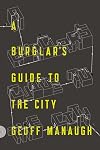
A Burglar's Guide to the city serves as a survey of the topic of burglary, from historic heists (recent and ancient) to different strategies employed by burglars (to enter, steal, and get away) and police (to prevent break-ins or catch the thieves). There is much discussion of how each building is a puzzle, and how burglars envision buildings differently than the buildings' architects intended, entering and exiting through other means than doors or even windows. The author consults experts show more and participates in "locksport" (lock-picking) workshops, but a personal experience with burglary strips the romance from the crime - most thefts are opportunistic, not grand Hollywood heists.
See also: Flawless, Sutton
Quotes
People usually focus on what burglars take, but it's how they move that's so consistently interesting. Burglars explore. (21)
...the way a city was built can catalyze or help inspire certain criminal acts.
The reverse is also true. The various parameters that define a city...affect how that city can be policed.
...cities get the types of crime their design calls for. (34-35)
The burglar is a three-dimensional actor amid the two-dimensional surfaces and objects of the city. This means operating with a fundamentally different spatial sense of how architecture should work, and how one room could be connected to another. (76)
...burglary...requires architecture: without an inside and an outside, there is no such thing as burglary. (94)
...the disappointing truth is that burglaries more often than not are impulsive and unplanned, based on spur-of-the-moment decisions made in response to some immediately noticed detail....The vast majority of burglaries are not particularly exciting (this book exists to shed light on the exceptions, not the rule). (131)
...an interest in picking locks was by no means the same thing as an interest in stealing other people's property. The two are entirely unrelated....locksport enthusiasts [are more like] an organized puzzle-solving group. (153)
Burglary tools are effectively everywhere, hidden in plain sight...in the right hands, everyday items have an unexpected secondary function... (161)
If the techniques of burglary such as those developed by [Herman] Lamm and [John] Dillinger aren't scientific, they're at least comparable to a folk art: inherited, improved upon, and always available for others to adapt and use. (238)
...any attempt to track down the perfect getaway is made all the more complex because almost everything we know about burglary - including how they did (or did not) get away - comes from the burglars we've caught. (252)
The first rule of a successful getaway is not to look as if you're trying to get away. (257)
It's as if we cannot imagine a building without also imagining someone who wants to break into it... (268)
Burglary reveals that every building, all along, has actually been a puzzle. (273) show less
See also: Flawless, Sutton
Quotes
People usually focus on what burglars take, but it's how they move that's so consistently interesting. Burglars explore. (21)
...the way a city was built can catalyze or help inspire certain criminal acts.
The reverse is also true. The various parameters that define a city...affect how that city can be policed.
...cities get the types of crime their design calls for. (34-35)
The burglar is a three-dimensional actor amid the two-dimensional surfaces and objects of the city. This means operating with a fundamentally different spatial sense of how architecture should work, and how one room could be connected to another. (76)
...burglary...requires architecture: without an inside and an outside, there is no such thing as burglary. (94)
...the disappointing truth is that burglaries more often than not are impulsive and unplanned, based on spur-of-the-moment decisions made in response to some immediately noticed detail....The vast majority of burglaries are not particularly exciting (this book exists to shed light on the exceptions, not the rule). (131)
...an interest in picking locks was by no means the same thing as an interest in stealing other people's property. The two are entirely unrelated....locksport enthusiasts [are more like] an organized puzzle-solving group. (153)
Burglary tools are effectively everywhere, hidden in plain sight...in the right hands, everyday items have an unexpected secondary function... (161)
If the techniques of burglary such as those developed by [Herman] Lamm and [John] Dillinger aren't scientific, they're at least comparable to a folk art: inherited, improved upon, and always available for others to adapt and use. (238)
...any attempt to track down the perfect getaway is made all the more complex because almost everything we know about burglary - including how they did (or did not) get away - comes from the burglars we've caught. (252)
The first rule of a successful getaway is not to look as if you're trying to get away. (257)
It's as if we cannot imagine a building without also imagining someone who wants to break into it... (268)
Burglary reveals that every building, all along, has actually been a puzzle. (273) show less
The book is, first, very well-written, with a witty, intelligent narrative that is entertaining yet clear and informative. Substance-wise, the book is equally rich, offering a pleasing assortment of case studies, histories, anecdotes, architectural novelties, and much else involving burglary and related subjects (including some hard-won, firsthand research -- no slouch, this author). However, what I found most interesting was 'Burglar's' insight into the psychology of burglars and burglary, show more as well as that which lies behind architecture and place in general. There's much to be learned from 'Burglar's Guide,' on several levels.
Additionally, the book makes one really good, notable point, seen in it's reasonably balanced treatment of the burglar. That is, the author avoids casting burglars in any kind of traditional, black-and-white light, neither condemning them as simple, regrettable criminals nor glorifying them as praise-worthy supermen. Instead, we are shown a more grounded, realistic picture of the burglar, as, simply, just a person, with certain skills and certain shortcomings, who happens to make the conscious decision to violate their fellow man. Likewise, burglary is treated as something which has indirectly benefited society by exposing problems and forcing us to correct them, while not ignoring the fact that burglary is still a highly damaging crime, both physically and psychologically (and, also, that burglars remain responsible for that damage, whatever unintended benefit they might bestow in the process). Once again, much food for thought, and much to be learned here.
Overall, 'Burglar's Guide' has a lot to offer, and I came away from it feeling enriched.
My thanks goes out to this book's author, subjects, and publisher. I am grateful for, and have benefited from, your work and service. show less
Additionally, the book makes one really good, notable point, seen in it's reasonably balanced treatment of the burglar. That is, the author avoids casting burglars in any kind of traditional, black-and-white light, neither condemning them as simple, regrettable criminals nor glorifying them as praise-worthy supermen. Instead, we are shown a more grounded, realistic picture of the burglar, as, simply, just a person, with certain skills and certain shortcomings, who happens to make the conscious decision to violate their fellow man. Likewise, burglary is treated as something which has indirectly benefited society by exposing problems and forcing us to correct them, while not ignoring the fact that burglary is still a highly damaging crime, both physically and psychologically (and, also, that burglars remain responsible for that damage, whatever unintended benefit they might bestow in the process). Once again, much food for thought, and much to be learned here.
Overall, 'Burglar's Guide' has a lot to offer, and I came away from it feeling enriched.
My thanks goes out to this book's author, subjects, and publisher. I am grateful for, and have benefited from, your work and service. show less
This is one of those books that is so interesting to read that it becomes difficult to put it down and write a review of it. I almost want to keep it a secret how cool it is, but since everyone already knows that whatever Geoff touches turns to gold, it's not like I'm letting any particular cat out of the bag.
In my eyes this book is largely a sequel to The BLDG BLOG Book, which is by far the most interesting book on the build world ever written. Even if you disagree, you have to admit that show more Geoff's ability to pull together so much, and to give more leads to artists and sites and other books than anyone could ever follow, is as impressive as it gets.
There is a large section of graphics in the book which I just can't get as into as the rest of it, but the book is intended to supplement/document an exhibit, so I know I shouldn't be too picky. This aside, I have to say I love this book, and it stands as yet another testament to Geoff's curiosity and ability to observe the threads connecting virtually everything he sees and reads about, and then writing about it in ways that makes the most mundane subject absolutely compelling.
Also this is an achingly beautifully made book. If you dont even care about Landscape Futures if you love well made artfully produced books then just buy this one. It is a work of art.
Most definitely recommended. show less
In my eyes this book is largely a sequel to The BLDG BLOG Book, which is by far the most interesting book on the build world ever written. Even if you disagree, you have to admit that show more Geoff's ability to pull together so much, and to give more leads to artists and sites and other books than anyone could ever follow, is as impressive as it gets.
There is a large section of graphics in the book which I just can't get as into as the rest of it, but the book is intended to supplement/document an exhibit, so I know I shouldn't be too picky. This aside, I have to say I love this book, and it stands as yet another testament to Geoff's curiosity and ability to observe the threads connecting virtually everything he sees and reads about, and then writing about it in ways that makes the most mundane subject absolutely compelling.
Also this is an achingly beautifully made book. If you dont even care about Landscape Futures if you love well made artfully produced books then just buy this one. It is a work of art.
Most definitely recommended. show less
In case you're not familiar with the source material, BLDGBLOG is one of my favorite blogs out there. The tagline is Architectural Conjecture, Urban Speculation, Landscape Futures; in practice, this works out to be a mix of everything imaginable (and a fair amount of stuff that is barely so).
The organizing feature of this viewpoint is understanding the shape of the world as inescapably tied to its function, the aesthetic as more than just aesthetic. Manaugh asks us to consider the show more possibilities inherent in the sky, under the ground, and everywhere in between. Essays, interviews, and artwork serve as a stream-of-consciousness, allowing us to thread our way through Manaugh's dreams and nightmares of the world.
This sounds like a dry work of academic criticism, but it's the closest descendant I've found to Jorge Luis Borges' short fiction. Manaugh loves to spin off outlines of short-stories, pulling real drama and excitement out of what could be mere dry wisdom. He never forgets that - in the end - our surroundings are ultimately processed and received by us. Even his lifeless landscapes are viewed through the lens of humanity.
This might be what stops his stuff from being widely-cited within the formal field of architecture, but it makes his book into a series of adventures and one of my favorite recent reads. Very cool. show less
The organizing feature of this viewpoint is understanding the shape of the world as inescapably tied to its function, the aesthetic as more than just aesthetic. Manaugh asks us to consider the show more possibilities inherent in the sky, under the ground, and everywhere in between. Essays, interviews, and artwork serve as a stream-of-consciousness, allowing us to thread our way through Manaugh's dreams and nightmares of the world.
This sounds like a dry work of academic criticism, but it's the closest descendant I've found to Jorge Luis Borges' short fiction. Manaugh loves to spin off outlines of short-stories, pulling real drama and excitement out of what could be mere dry wisdom. He never forgets that - in the end - our surroundings are ultimately processed and received by us. Even his lifeless landscapes are viewed through the lens of humanity.
This might be what stops his stuff from being widely-cited within the formal field of architecture, but it makes his book into a series of adventures and one of my favorite recent reads. Very cool. show less
Lists
Awards


You May Also Like


Associated Authors
Statistics
- Works
- 8
- Also by
- 3
- Members
- 987
- Popularity
- #26,087
- Rating
- 3.7
- Reviews
- 29
- ISBNs
- 19
- Languages
- 1