

Sean McMullen
Author of Souls in the Great Machine
About the Author
Image credit: Szymon Sokól (Worldcon 2005, Glasgow)
Series
Works by Sean McMullen
Eight Miles [Novelette] 8 copies
Asimov's Science Fiction: Vol. 48, No. 1 & 2 [January/February 2024] — Contributor — 6 copies
A Ring of Green Fire 4 copies
The Colours of the Masters 4 copies
The Dominant Style 4 copies
The Cascade 3 copies
The Precedent [short fiction] 3 copies
The Art Of The Dragon 2 copies
Oblivion (in 2012 - KRASNOSTEIN) 2 copies
At the Focus 2 copies
The Constant Past 2 copies
Walk to the Full Moon 2 copies
Asimov's Science Fiction: Vol. 49, No. 11 & 12 [November/December 2025] — Contributor — 2 copies
The Devils of Langenhagen 2 copies
The Blondefire Genome 2 copies
Queen of Soulmates 2 copies
Electrica 1 copy
Lagrange Point 5 1 copy
Voice of Steel 1 copy
The Chrysalis Pool 1 copy
Wheels of Echoes 1 copy
After The Winter Solstice 1 copy
The Audience {short story} 1 copy
Exceptional Forces 1 copy
A Greater Vision 1 copy
Ninety Thousand Horses 1 copy
The Porphyric Plague 1 copy
The Pharaoh's Airship 1 copy
An Empty Wheelhouse 1 copy
Lucky Jonglar 1 copy
Chronicler 1 copy
Tower of Wings 1 copy
Charon's Anchor 1 copy
Rule of the People 1 copy
The Eyes of the Green Lancer 1 copy
Destroyer of Illusions 1 copy
The Deciad 1 copy
Pax Romana 1 copy
Slow Famine 1 copy
Enigma 1 copy
The Engines of Arcadia 1 copy
The Way to Greece 1 copy
The Glasken Chronicles 1 copy
Alone in His Chariot 1 copy
Unthinkable 1 copy
Electrisarian 1 copy
While the Gate Is Open 1 copy
SVYAGATOR 1 copy
The Spiral Briar 1 copy
Associated Works
The Year's Best Science Fiction: Thirtieth Annual Collection (2013) — Contributor — 254 copies, 3 reviews
The Year's Best Science Fiction: Thirty-First Annual Collection (2014) — Contributor — 203 copies, 3 reviews
The Year's Best Science Fiction: Thirty-Third Annual Collection (2016) — Contributor — 190 copies, 2 reviews
The Year's Best Science Fiction: Thirty-Fifth Annual Collection (2018) — Contributor — 153 copies, 3 reviews
Loosed upon the World: The Saga Anthology of Climate Fiction (2015) — Contributor — 130 copies, 4 reviews
Dreaming Again: Thirty-five New Stories Celebrating the Wild Side of Australian Fiction (2008) — Contributor — 101 copies, 6 reviews
Nebula Awards 32: SFWA's Choices for the Best Science Fiction and Fantasy of the Year (1998) — Contributor — 98 copies, 1 review
The Final Frontier: Stories of Exploring Space, Colonizing the Universe, and First Contact (2018) — Contributor — 72 copies, 4 reviews
Navigating The Golden Compass: Religion, Science & Dæmonology in Philip Pullman's His Dark Materials (2005) — Contributor — 65 copies, 1 review
The Magazine of Fantasy and Science Fiction March/April 2013, Vol. 124, Nos. 3 & 4 (2013) — Contributor — 20 copies, 3 reviews
The Magazine of Fantasy and Science Fiction August/September 2009, Vol. 117, Nos. 1 & 2 (2009) — Contributor — 19 copies, 1 review
The Magazine of Fantasy and Science Fiction November/December 2018, Vol. 135, Nos. 5 & 6 (2018) — Author — 13 copies, 1 review
The Magazine of Fantasy and Science Fiction January/February 2019, Vol. 136, Nos. 1 & 2 (1978) — Contributor — 11 copies, 1 review
Locus Nr.492 2002.01 — Contributor — 1 copy
Tagged
Common Knowledge
- Canonical name
- McMullen, Sean
- Legal name
- McMullen, Sean Christopher
- Other names
- Wilcox, Roger
- Birthdate
- 1948-12-21
- Gender
- male
- Organizations
- Science Fiction and Fantasy Writers of America
- Nationality
- Australia
- Birthplace
- Sale, Victoria, Australia
- Associated Place (for map)
- Victoria, Australia
Members
Discussions
Found: pink and/or glass dragon? in Name that Book (December 2025)
Reviews
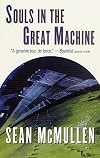
It's a wonderful feeling, re-reading a novel you loved as a teenager and finding it lives up to your memories entirely. Indeed, I think 'Souls in the Great Machine' was formative of my sci-fi tastes. There is so much to love about it! For one thing, it's the first in a trilogy yet stands alone brilliantly. Moreover, the characters, plot, and world-building are all distinctive and fantastic.
If I had to pick my absolute favourite feature, it would have to be the characterisation. The women show more are ambitious, driven, competent, intelligent, machiavellian, ruthless, sometimes vengeful, and in charge. I adore Highliber Zarvora; few other protagonists can compare to her.Lemorel makes an excellent antagonist and her motivations are a neatly gender-swapped version of many heroic male characters. In her case, this shows the hollowness of, "I'll burn down the world because my romantic partner was taken from me". Other characters have also been harmed or lost people they love, but don't launch a continental war about it. Although I still respect Lemorel's skill as a warlord. Her final showdown with Dolorian is incredible. Darien is another brilliant female character, whose disability is cleverly shown but does not define her. I should also mention Theresla and Jemli, both delightful. The friendships, loyalties, and enmities between these women are absolutely central to the book. By contrast, the male characters are essentially himbos; easily manipulated even if clever, punished for treating women badly, and mostly there to be love interests. The main two, Glasken and Ilyrie, repeatedly learn painful lessons until they respect women properly. I'm not sure I noticed as a teenager that several forms of polyamory are shown, carefully distinguished from cheating.
That brings me to the world-building. 'Souls in the Great Machine' is set in Australia, two thousand years in the future. An ice age has been and gone, orbiting satellites fry any attempts at using electricity, and whales have taken revenge on humanity via the Call. This essentially mind-controls any mammals above a certain size to walk into the sea, where they are eaten by sharks. The massive impact this has on society, the economy, technology, and even theology is cleverly explored. It made me jump a little to read that the Call began in 2021! As electrical power is off the table and there is an ongoing taboo against steam engines, machines use ingenious forms of renewable energy. Trains are powered by wind or human pedalling and are run by engineers still obsessed with Isambard Kingdom Brunel. The Great Machine of the title is a human-powered computer that is central to the story. This incredible technology cannot be kept secret, despite best efforts, and the book chronicles the revolution it unleashes. More specifically, I love the fact that librarians run this world, fight duels over any professional or personal disputes, yet also guard what books remain from earlier times.
Finally, the plot is fast-paced and exciting. It covers a long period of time, a wide area, and a sprawling cast of characters, yet flows beautifully and keeps up the pace such that 600 pages seem too brief. There are moments of delightful farce, as well as tragic hubris, extreme drama, and thrilling discovery. For several hundred pages it is a war narrative that adeptly balances the epic and the personal, the political and the technological, the brutal and the exciting. Basically, this novel is just what I want from escapist comfort reading. Few writers hit on a combination of character, plot, and world-building that suits my tastes so well. I recall not loving the latter two books in the trilogy quite as much, but that doesn't matter. As a stand-alone novel, 'Souls in the Great Machine' remains one of my all time favourites. show less
If I had to pick my absolute favourite feature, it would have to be the characterisation. The women show more are ambitious, driven, competent, intelligent, machiavellian, ruthless, sometimes vengeful, and in charge. I adore Highliber Zarvora; few other protagonists can compare to her.
That brings me to the world-building. 'Souls in the Great Machine' is set in Australia, two thousand years in the future. An ice age has been and gone, orbiting satellites fry any attempts at using electricity, and whales have taken revenge on humanity via the Call. This essentially mind-controls any mammals above a certain size to walk into the sea, where they are eaten by sharks. The massive impact this has on society, the economy, technology, and even theology is cleverly explored. It made me jump a little to read that the Call began in 2021! As electrical power is off the table and there is an ongoing taboo against steam engines, machines use ingenious forms of renewable energy. Trains are powered by wind or human pedalling and are run by engineers still obsessed with Isambard Kingdom Brunel. The Great Machine of the title is a human-powered computer that is central to the story. This incredible technology cannot be kept secret, despite best efforts, and the book chronicles the revolution it unleashes. More specifically, I love the fact that librarians run this world, fight duels over any professional or personal disputes, yet also guard what books remain from earlier times.
Finally, the plot is fast-paced and exciting. It covers a long period of time, a wide area, and a sprawling cast of characters, yet flows beautifully and keeps up the pace such that 600 pages seem too brief. There are moments of delightful farce, as well as tragic hubris, extreme drama, and thrilling discovery. For several hundred pages it is a war narrative that adeptly balances the epic and the personal, the political and the technological, the brutal and the exciting. Basically, this novel is just what I want from escapist comfort reading. Few writers hit on a combination of character, plot, and world-building that suits my tastes so well. I recall not loving the latter two books in the trilogy quite as much, but that doesn't matter. As a stand-alone novel, 'Souls in the Great Machine' remains one of my all time favourites. show less
Someone recommended this to me as:
"If you like unusual SF, you should definitely pick up Sean McMullen's Greatwinter trilogy of novels, starting with the first book Souls in the Great Machine. It's set in Australia (the middle book is set in North America) and it revolves around a post-apocalyptic society built slowly and realistically from the ashes of our own. You've got a kind of clock-punk level of technology in which fueled engines are religiously proscribed, yet society gets on at a show more pretty high level using workarounds like human- and wind-powered trains, long-distance communication via light signalling, and all the clockwork you can get your hands on. The main piece of technology around which the plot revolves is a human-(prisoner-)powered calculator, but the clockwork and trains play a huge part too.
The female characters aren't just "strong", they're actually real, genuine people - although the setting acknowledges gender inequality, many if not most of the movers and shakers in the story are believable women with authority, intelligence, and cunning. Male characters are similarly fleshed out, and gender (as well as cultural and romantic) conflict plays a part in the plot, but it's not heavy-handed or annoying, although some of the characters themselves certainly are (in ways that make them readably human).
The whole shebang is really well-grounded in Australian (and then North American) geography and culture, so non-Aussie readers would do well to have a map at hand while reading to get the full effect. In the second book, the North Americans fight their wars via duel-by-champion in wood-and-cloth airplanes, and that just racks up eleventy-million awesome points in itself. Saying too much about the third book would be spoilerish, but needless to say the tech is even cooler.
The main appeal, though, is that it's got dueling librarians. Like with flintlock pistols. And they do firing squads sometimes. And that is basically the most awesome thing ever." show less
"If you like unusual SF, you should definitely pick up Sean McMullen's Greatwinter trilogy of novels, starting with the first book Souls in the Great Machine. It's set in Australia (the middle book is set in North America) and it revolves around a post-apocalyptic society built slowly and realistically from the ashes of our own. You've got a kind of clock-punk level of technology in which fueled engines are religiously proscribed, yet society gets on at a show more pretty high level using workarounds like human- and wind-powered trains, long-distance communication via light signalling, and all the clockwork you can get your hands on. The main piece of technology around which the plot revolves is a human-(prisoner-)powered calculator, but the clockwork and trains play a huge part too.
The female characters aren't just "strong", they're actually real, genuine people - although the setting acknowledges gender inequality, many if not most of the movers and shakers in the story are believable women with authority, intelligence, and cunning. Male characters are similarly fleshed out, and gender (as well as cultural and romantic) conflict plays a part in the plot, but it's not heavy-handed or annoying, although some of the characters themselves certainly are (in ways that make them readably human).
The whole shebang is really well-grounded in Australian (and then North American) geography and culture, so non-Aussie readers would do well to have a map at hand while reading to get the full effect. In the second book, the North Americans fight their wars via duel-by-champion in wood-and-cloth airplanes, and that just racks up eleventy-million awesome points in itself. Saying too much about the third book would be spoilerish, but needless to say the tech is even cooler.
The main appeal, though, is that it's got dueling librarians. Like with flintlock pistols. And they do firing squads sometimes. And that is basically the most awesome thing ever." show less
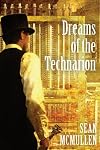
I was sent this for review by Interzone. I don’t think I’ve read anything by McMullen before, a few short stories perhaps. Some of the stories in this collection appeared in Interzone, although I don’t recall them. As sf collections go, Dreams of the Technarion is strong on ideas, if not on story – one or two feel like premises in search of a plot. But what makes the book is the final story… which isn’t a story at all but an essay on the history of Australian science fiction. show more It’s fascinating stuff – and amusing too, albeit not always intentionally: when discussing early Australian pulp magazines, McMullen writes, “This is not the sort of thing to make the average SF reader do handstands, but it was good enough for an average Australian male caught in a toilet without a newspaper”, which I’m not entirely sure means what McMullen intended it to mean… Anyway, I almost certainly wouldn’t have read this had I not been sent it for review, but I’m glad I did. There’s certainly much worse out there, often much more acclaimed, and the essay on the history of Australian sf is fascinating stuff. show less
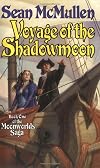
I couldn't finish the book either, and I was about halfway through when I gave up.
The problem was that nothing about the book could hold my interest. In the beginning, I wanted to understand more about everything - who the characters were (their histories, their personalities, their abilities), what the plot was (what's going on with this ship? with that continent? etc), the way magic works and its role in the world. At halfway through, I had far, far more questions than answers, and none of show more the characters seemed likable (with the possible exception of the vampire). I just did not see any prospect for answering questions more than raising questions, so I gave up.
The writing was fine, but the storytelling was altogether unsatisfactory. show less
The problem was that nothing about the book could hold my interest. In the beginning, I wanted to understand more about everything - who the characters were (their histories, their personalities, their abilities), what the plot was (what's going on with this ship? with that continent? etc), the way magic works and its role in the world. At halfway through, I had far, far more questions than answers, and none of show more the characters seemed likable (with the possible exception of the vampire). I just did not see any prospect for answering questions more than raising questions, so I gave up.
The writing was fine, but the storytelling was altogether unsatisfactory. show less
Lists
Awards


You May Also Like


Associated Authors
Statistics
- Works
- 92
- Also by
- 48
- Members
- 2,531
- Popularity
- #10,141
- Rating
- 3.6
- Reviews
- 49
- ISBNs
- 76
- Languages
- 5
- Favorited
- 8
