
Dominick Dunne (1925–2009)
Author of The Two Mrs. Grenvilles
About the Author
Dominick Dunne was born in Hartford, Connecticut on October 29, 1925. He served in World War II and was awarded the Bronze Star for rescuing a wounded soldier at the Battle of the Bulge. After receiving a bachelor's degree from Williams College in 1949, he worked as a stage manager for the Howdy show more Doody Show and Robert Montgomery Presents. He then directed Playhouse 90 and was an executive producer of the ABC drama Adventures in Paradise. He started producing films in 1970 including The Boys in the Band, The Panic in Needle Park, Play It as It Lays, and Ash Wednesday. His addiction to alcohol and drugs eventually lead to the end of his career as a television and film producer. He beat his addictions and decided to become writer. He wrote several memoirs including The Way We Lived Then: Recollections of a Well-Known Name Dropper and novels including An Inconvenient Woman, A Season in Purgatory, The Two Mrs. Grenvilles, and Too Much Money. In 1982, his daughter was strangled by her boyfriend. Dunne kept a journal during the trial, which eventually became the Vanity Fair article Justice: A Father's Account of the Trial of His Daughter's Killer. After that, he wrote regularly for Vanity Fair and covered famous trials such as those of Claus von Bulow, O.J. Simpson, and the Menendez brothers. He also wrote a column entitled Dominick Dunne's Diary and hosted the television series Dominick Dunne's Power, Privilege, and Justice on CourtTV. He died from bladder cancer on August 26, 2009 at the age of 83. (Bowker Author Biography) show less
Image credit: Eye on Books
Series
Works by Dominick Dunne
Fatal Charms and Other Tales of Today and The Mansions of Limbo [omnibus] (1999) 85 copies, 1 review
Dominick Dunne: Three Complete Novels- The Two Mrs. Grenvilles / People Like Us / An Inconvenient Woman (1994) 19 copies
The Best of Vanity Fair ELIZABETH TAYLOR: Eight Remarkable Stories About Hollywood's Most Beautiful, Most Controversial Star (2011) 5 copies, 1 review
An Inconvenient Woman [1991 TV mini series] — Writer — 2 copies
Sandheden om Ann Grenville - bind 2 2 copies
Forfeit 1 copy
O Crime do Século 1 copy
Associated Works
The Book That Changed My Life: 71 Remarkable Writers Celebrate the Books That Matter Most to Them (2006) — Contributor — 411 copies, 18 reviews
Jackie's Treasures: The Fabled Objects from the Auction of the Century (1996) — Foreword — 55 copies, 1 review
Tagged
Common Knowledge
- Canonical name
- Dunne, Dominick
- Legal name
- Dunne, Dominick John
- Birthdate
- 1925-10-09
- Date of death
- 2009-08-26
- Gender
- male
- Education
- Williams College (BA|1949)
Kingswood School
Canterbury School, New Milford, Connecticut, USA - Occupations
- film producer
television producer
reporter
novelist
television presenter - Organizations
- Twentieth Century Fox
CBS Television Network
Vanity Fair
Court TV
United States Army (WWII) - Awards and honors
- Bronze Star
- Relationships
- Dunne, John Gregory (brother)
Dunne, Griffin (son)
Dunne, Dominique (daughter)
Didion, Joan (sister-in-law) - Cause of death
- bladder cancer
- Nationality
- USA
- Birthplace
- Hartford, Connecticut, USA
- Places of residence
- Los Angeles, California, USA
Oregon, USA - Place of death
- New York, New York, USA
- Burial location
- Manhattan, New York, USA
- Associated Place (for map)
- USA
Members
Reviews
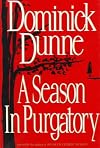
Great read. This guy can write! When young Harrison Burns becomes an accessory to a crime of passion committed by his friend and prep school classmate Constant Bradley, his silence is bought by patriarch Gerald. All efforts at a solution are mysteriously stifled; 20 years later Burns, now a successful journalist, decides to unburden himself of his torturous secret. Dunne plunges readers instantly into the thick of things with the book's opening lines: "The jury is in its third day of show more deliberation"--and, with the exception of a mildly disappointing excursion to Arizona, never relaxes his firm grip. The unforgettable Bradley family, their skeletons (e.g., Agnes, the mad, institutionalized daughter) and peccadillos offer an allure similar to a sidelong glance at tabloid headlines, though here told with wit and skill. Their machinations prove both fascinating and appalling--and always hypnotically readable. In addition to his potent characterization and deftly crafted plotting, Dunne again provides an insider's glimpse of this rarified stratum--a world where the highest praise for a character might be "he's marvelous at placement . . . he can seat a dinner party better than anyone I've ever known." This compulsive yarn might well be subtitled Lifestyles of the Rich and Famous--The Dark Side . show less

The Two Mrs. Grenvilles by Dominick Dunne
A trashy roman è clef is what this is. Here's the story. William Grenville Jr. is the most eligible young bachelor in New York's high society. Fabulously wealthy, handsome, somewhat shy and introverted. He meets and is bedded by a showgirl, Ann Arden. He is, as they used to say, reamed, steamed, and dry cleaned. Against the wishes of his imperious mother (the first Mrs. Grenville), he marries Ann in Tacoma hours before shipping off to the Pacific show more battles of WWII. He returns from the war to resume his life in New York, Oyster Bay, Newport, and at his Kentucky thoroughbred farm. Ann (the second Mrs. Grenville) works very diligently to fit into his society but isn't really accepted. Too many gaffes. She is, it turns out, a Bitch (yes, with that capital B), especially when schnockered, which is often. She's a loose lady, too, but insanely jealous of her husband. After attending—and making a loud, destructive scene—at a party for the Duchess of Wales, she and her husband return to their estate and she shoots him with a shotgun. Shoots him dead!
All this and, of course, more, much much more, is conveyed to us by a writer named Basil Plante, who drifts in and out of these society doings, trying, in the end, to coax the truth out of Ann.
As I said, this is a roman è clef. It really happened. Only all the names have been changed. The real names were Billy Woodward Jr. and his wife Ann. Ann shot Billy, but Billy's mother organized a high society stonewall in which no one at the party had a hard word for Ann. Yahda yahda. A grand jury didn't indict her. She got away with murder! Ann's MIL (very reluctantly) stood by her and directed Billy's four sisters to stand by her also. "We can't have this splashed in the newspapers." But Ann really was closed out. In this (true) story, Basil is Truman Capote, who exposed Ann Woodward in a chapter of his unfinished book [Answered Prayers]. When that chapter was published by Esquire, Ann Woodward took cyanide. Blluttt! End of story.
Except that Dunne's version enjoyed best-sellerdom, and it was made into a TV movie starring Ann-Margaret as Ann and Steven Collins as Billy. In her final role, Claudette Colbert played the first Mrs. Grenville, Billy's mother.
As I said, it's trashy, but it is a page-turner. Quick read, pretty entertaining, of no particular lasting value. show less
A trashy roman è clef is what this is. Here's the story. William Grenville Jr. is the most eligible young bachelor in New York's high society. Fabulously wealthy, handsome, somewhat shy and introverted. He meets and is bedded by a showgirl, Ann Arden. He is, as they used to say, reamed, steamed, and dry cleaned. Against the wishes of his imperious mother (the first Mrs. Grenville), he marries Ann in Tacoma hours before shipping off to the Pacific show more battles of WWII. He returns from the war to resume his life in New York, Oyster Bay, Newport, and at his Kentucky thoroughbred farm. Ann (the second Mrs. Grenville) works very diligently to fit into his society but isn't really accepted. Too many gaffes. She is, it turns out, a Bitch (yes, with that capital B), especially when schnockered, which is often. She's a loose lady, too, but insanely jealous of her husband. After attending—and making a loud, destructive scene—at a party for the Duchess of Wales, she and her husband return to their estate and she shoots him with a shotgun. Shoots him dead!
All this and, of course, more, much much more, is conveyed to us by a writer named Basil Plante, who drifts in and out of these society doings, trying, in the end, to coax the truth out of Ann.
As I said, this is a roman è clef. It really happened. Only all the names have been changed. The real names were Billy Woodward Jr. and his wife Ann. Ann shot Billy, but Billy's mother organized a high society stonewall in which no one at the party had a hard word for Ann. Yahda yahda. A grand jury didn't indict her. She got away with murder! Ann's MIL (very reluctantly) stood by her and directed Billy's four sisters to stand by her also. "We can't have this splashed in the newspapers." But Ann really was closed out. In this (true) story, Basil is Truman Capote, who exposed Ann Woodward in a chapter of his unfinished book [Answered Prayers]. When that chapter was published by Esquire, Ann Woodward took cyanide. Blluttt! End of story.
Except that Dunne's version enjoyed best-sellerdom, and it was made into a TV movie starring Ann-Margaret as Ann and Steven Collins as Billy. In her final role, Claudette Colbert played the first Mrs. Grenville, Billy's mother.
As I said, it's trashy, but it is a page-turner. Quick read, pretty entertaining, of no particular lasting value. show less
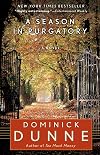
When young Harrison Burns becomes an accessory to a crime of passion committed by his friend and prep school classmate Constant Bradley, his silence is bought by patriarch Gerald. 'My soul was lost, but my future was bought and paid for'.
In 1975, 15-year-old Martha Moxley, who lived in a wealthy area of Greenwich, Conn., was found beaten to death with a golf club. The prime suspect was the 17-year-old neighbour, Thomas Skakel, a nephew of Ethel Kennedy. "A Season in Purgatory" was designed show more to parallel the Moxley murder case. There is a theme of power and privilege - as well as the theme that those with the most expensive lawyers win.
"A Season in Purgatory" blends in all the familiar tales of Kennedy damage and damage control. Constant Bradley's classy, beautiful wife, Charlotte, is given a million dollars by his father when she threatens to leave him because of his womanizing. A mentally challenged sister is packed off to an insane asylum and never mentioned. People are paid to write school essays and an autobiography for Constant, and his father buys up copies of the book to make sure it is a best seller. The oldest brother, Jerry, who is really supposed to be the great family political hope, has an accident, and the woman with him ends up in a wheelchair. A sister becomes an alcoholic. Gerald Bradley has a stroke.
Dominick Dunne (disclosure: he is one of my favourite authors - I subscribed to Vanity Fair for years just so I could read his column) has taken all the most chilling character flaws of generations of Kennedy's and compressed them into one creepy plot line (which happens to be closer to true than not) - a highly readable tale about the privileged who feel they can make their own rules. show less
In 1975, 15-year-old Martha Moxley, who lived in a wealthy area of Greenwich, Conn., was found beaten to death with a golf club. The prime suspect was the 17-year-old neighbour, Thomas Skakel, a nephew of Ethel Kennedy. "A Season in Purgatory" was designed show more to parallel the Moxley murder case. There is a theme of power and privilege - as well as the theme that those with the most expensive lawyers win.
"A Season in Purgatory" blends in all the familiar tales of Kennedy damage and damage control. Constant Bradley's classy, beautiful wife, Charlotte, is given a million dollars by his father when she threatens to leave him because of his womanizing. A mentally challenged sister is packed off to an insane asylum and never mentioned. People are paid to write school essays and an autobiography for Constant, and his father buys up copies of the book to make sure it is a best seller. The oldest brother, Jerry, who is really supposed to be the great family political hope, has an accident, and the woman with him ends up in a wheelchair. A sister becomes an alcoholic. Gerald Bradley has a stroke.
Dominick Dunne (disclosure: he is one of my favourite authors - I subscribed to Vanity Fair for years just so I could read his column) has taken all the most chilling character flaws of generations of Kennedy's and compressed them into one creepy plot line (which happens to be closer to true than not) - a highly readable tale about the privileged who feel they can make their own rules. show less
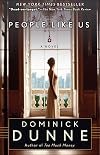
Re-read in 2014. I am a fan of Dominick Dunne's writing. He knows his subject, in this case wealthy New York socialites. An observer, Gus/Dominick is not one of them but is invited to their functions. Dunne has an acute ear for dialogue: 'Hellohowareyou'. And his characters and their pretensions are succinctly revealed in a line or two of dialogue. Wickedly funny, the writing is so talented and appears effortless. And the subject-matter? It's like flicking through 'Hello' magazine at the show more hairdressers, but without the guilt. show less
Lists
Awards


You May Also Like


Associated Authors
Statistics
- Works
- 20
- Also by
- 13
- Members
- 4,007
- Popularity
- #6,301
- Rating
- 3.5
- Reviews
- 78
- ISBNs
- 152
- Languages
- 8
- Favorited
- 9