
Phillip C. McGraw
Author of Life Strategies: Doing What Works, Doing What Matters
About the Author
Phillip C. McGraw was born in Vinita, Oklahoma, on September 1, 1950. In 1968, he was awarded a football scholarship to the University of Tulsa, but he later transferred to Midwestern State University where he received a Bachelor of Arts degree in psychology. He also received a Master of Arts in show more experimental psychology in 1976, and a Doctor of Philosophy in clinical psychology in 1979 from the University of North Texas. McGraw has had twenty-five years of experience in psychology and human functioning. He is an author and co-founder of Courtroom Sciences, Inc., the world's leading litigation consulting firm. His books include Relationship Rescue: A Seven-Step Strategy for Reconnecting with Your Partner; Self Matters: Creating Your Life from the Inside-Out; and Life Code: The New Rules for Winning in the Real World. He was The Oprah Winfrey Show's resident expert on human behavior and currently writes a monthly column in O, The Oprah Magazine. (Bowker Author Biography) show less
Image credit: Jerry Avenaim
Works by Phillip C. McGraw
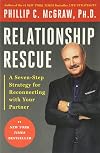
Relationship Rescue: A Seven-Step Strategy for Reconnecting with Your Partner (2000) 721 copies, 4 reviews
The Life Strategies Workbook: Exercises and Self-Tests to Help You Change Your Life (2000) 227 copies, 1 review
The Relationship Rescue Workbook: Exercises and Self-Tests to Help You Reconnect with Your Partner (2000) 128 copies
The Life Strategies Self-Discovery Journal: Finding What Matters Most for You (2001) 45 copies, 1 review
The Family First Workbook: Specific Tools, Strategies, and Skills for Creating a Phenomenal Family (2005) 22 copies
The Ten Laws from Life Strategies: Doing What Works, Doing What Matters (With Ribbon Bookmark) (Charming Petite) (2008) 4 copies
Couple : la formule du succès : Sept étapes essentielles pour renouer avec votre partenaire (2006) 1 copy
Sauvez votre couple : une stratégie en sept étapes pour rétablir les liens avec votre partenaire (2001) 1 copy
Inside Out 1 copy
Associated Works
Tagged
Common Knowledge
- Legal name
- McGraw, Phillip Calvin
- Birthdate
- 1950-09-01
- Gender
- male
- Education
- Midwestern State University (BA)
North Texas State University (MA, PhD) - Occupations
- psychologist
television host - Relationships
- McGraw, Robin (wife)
McGraw, Jay (son)
Broaddus, Cindi (sister-in-law) - Nationality
- USA
- Places of residence
- Los Angeles, California, USA
- Associated Place (for map)
- California, USA
Members
Reviews
What helped me most in a rough patch was slowing everything down and acting intentionally again. Small things mattered more than big speeches: making coffee for them in the morning, putting the phone away at dinner, and actually listening instead of preparing a reply. I also think rebuilding a connection takes patience, not a one-day fix. Sometimes we forget that ordinary routines are where trust grows back. I even glanced at chaturbate reviews show more target="_top">https://chaturbate.pissedconsumer.com/review.html while thinking about how people look for different kinds of connection online. In real life, though, the quiet daily effort usually matters most. show less
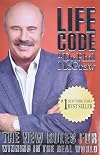
As I’ve said already several dozen times, I received this book via the courtesy of a GoodReads drawing. Despite that repetitious and kind consideration, I give my unfiltered feedback below.
To further the probably unnecessary preamble, I feel it relevant to note that I’m not at all the self-help Dr. Phil type. I don’t typically subscribe to the sea of “fix your life” books that are available. This isn’t, of course, because my life is perfect but I estimate that the ways in which show more it is imperfect are not sufficiently of concern to warrant the reading of an entire book. These things take hours to read, after all! But, in the interest of flinging my net of interests to the furthest reaches of the literary genres, I signed up for this book just, as they say when at sea, for the halibut.
So to talk about this book properly one must do so in parts. The first section, about 100 pages or so, goes on at length to describe the people in this world who are, to put it as simply as possible, just plain jerkfaces. Dr. Phil calls them ‘BAITER’s but they can be summed up as those people who abuse the system to get whatever the heck they want. The good doctor provides a list of warning signs for detecting such people and also what to do about them once you’ve found them. In general I found the whole thing edifying but also not especially practical. I know that such people exist but I was at a loss to name anyone in my immediate acquaintance whom I would term a ‘BAITER’. For someone out there, this will serve as a valuable guide.
The next functional bit, about 80 pages as I count it, amounts to life coaching. It encourages the reader to be assertive, go after what they want, gives strategies to get it but reminds them that in so doing they shouldn’t fall into the category of people described in the first section. In other words, go after what you want but not at any cost whatsoever. It’s a delicate balance and the book acknowledges and describes that balance effectively.
After global encouragement about life, there’s a helpful and specific chunk about negotiation. This is really a subheading of section two but I think it deserves special consideration since it is a process that is so ubiquitous and misunderstood. If you read nothing else in this book, read chapter 6 (this is non-negotiable; well, really it is since everything’s negotiable, but I digress).
The book closes with a section on passing along all the things you’ve learned in the previous sections to your children. It describes at a high level some of the modern nuances of parenting and how to best deal with these given that the world has changed considerably since we were young-uns (as Dr. Phil might put it).
In summation, this isn’t generally the sort of book I’d normally go for but it has something to say to just about everyone. It’s not a book in which you hang on every word but somewhere in this thing you’ll find something that makes you look up, ponder, and stare briefly into the middle-distance in a thoughtful way. Organizationally the book helps with brief, topical chapters and specific quotes highlighted on each page. You’ll want to skim through to the bits that you care about, the book knows this and is organized in such a way to make that easy. One couldn’t ask for much more than that. show less
To further the probably unnecessary preamble, I feel it relevant to note that I’m not at all the self-help Dr. Phil type. I don’t typically subscribe to the sea of “fix your life” books that are available. This isn’t, of course, because my life is perfect but I estimate that the ways in which show more it is imperfect are not sufficiently of concern to warrant the reading of an entire book. These things take hours to read, after all! But, in the interest of flinging my net of interests to the furthest reaches of the literary genres, I signed up for this book just, as they say when at sea, for the halibut.
So to talk about this book properly one must do so in parts. The first section, about 100 pages or so, goes on at length to describe the people in this world who are, to put it as simply as possible, just plain jerkfaces. Dr. Phil calls them ‘BAITER’s but they can be summed up as those people who abuse the system to get whatever the heck they want. The good doctor provides a list of warning signs for detecting such people and also what to do about them once you’ve found them. In general I found the whole thing edifying but also not especially practical. I know that such people exist but I was at a loss to name anyone in my immediate acquaintance whom I would term a ‘BAITER’. For someone out there, this will serve as a valuable guide.
The next functional bit, about 80 pages as I count it, amounts to life coaching. It encourages the reader to be assertive, go after what they want, gives strategies to get it but reminds them that in so doing they shouldn’t fall into the category of people described in the first section. In other words, go after what you want but not at any cost whatsoever. It’s a delicate balance and the book acknowledges and describes that balance effectively.
After global encouragement about life, there’s a helpful and specific chunk about negotiation. This is really a subheading of section two but I think it deserves special consideration since it is a process that is so ubiquitous and misunderstood. If you read nothing else in this book, read chapter 6 (this is non-negotiable; well, really it is since everything’s negotiable, but I digress).
The book closes with a section on passing along all the things you’ve learned in the previous sections to your children. It describes at a high level some of the modern nuances of parenting and how to best deal with these given that the world has changed considerably since we were young-uns (as Dr. Phil might put it).
In summation, this isn’t generally the sort of book I’d normally go for but it has something to say to just about everyone. It’s not a book in which you hang on every word but somewhere in this thing you’ll find something that makes you look up, ponder, and stare briefly into the middle-distance in a thoughtful way. Organizationally the book helps with brief, topical chapters and specific quotes highlighted on each page. You’ll want to skim through to the bits that you care about, the book knows this and is organized in such a way to make that easy. One couldn’t ask for much more than that. show less
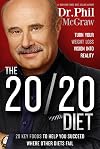
This book is a solid 4 stars based on content alone since I haven’t completed the weight loss plan yet. What I love most about this book is that Dr. Phil McGraw focuses a lot on correcting mind and behavior issues that prevent people from reaching their weight loss goals in addition to social, environmental and nutritional issues. This is where most diet books fail because they don’t address all areas that cause us to gain weight and finally, somebody got it right.
He also addresses all show more of the triggers that cause me to cheat on my weight loss plan (there are seven) and all of the different types of hunger that I experience — physical, mind (phantom), habit and trigger hunger. He has techniques to deal with all of these issues.
He’s already corrected a few mistakes I’ve made in the past. One mistake is regarding breaking bad habits. He says you don’t just break a bad habit. You have to replace one behavior with a new one that’s healthy and incompatible with the old habit. I spent so much time in the past just trying to break a bad habit without replacing it and then wondering why I was struggling. Two, he talks a lot about controlling your thoughts. This is a big issue if you're an emotional eater like me.
My weight loss issue is body composition, not necessarily weight, but Dr. Phil McGraw completely understands me. He even says that body composition is critical.
There are three phases of the diet with phases one and two lasting five days each and phase three lasting twenty days. The food selection for phase one is limited to 20 foods, but fortunately it’s only for five days. The purpose is to reset your taste buds and to learn to appreciate the natural taste of foods since we’re all so addicted to the taste of fat, salt and sugar.
If you enjoy learning about the geeky science behind weight loss, you’ll love this book. He gets into detail about the types of thermogenesis.
I’m a firm believer in using visualization to achieve my goals and Dr. Phil McGraw prescribes to the same belief.
He addresses food addiction and giving in to food cues if you suffer from this as I do.
There are short writing assignments in this book along with taking photos of yourself and taking measurements. You’ll be looking at all areas of your life to achieve your weight loss goals, not just what you eat, how much and what exercises you do.
Speaking of exercise, I love his high intensity resistance training workout. He wants you to complete it in 30 – 45 minutes. I followed it up with 20 minutes of high intensity interval training and afterwards, I felt amazing.
I highly recommend this book to anyone who wants to lose weight, get in better shape and correct any behavioral issues that have held you back in the past. Give this book a try. It’s worth reading. show less
He also addresses all show more of the triggers that cause me to cheat on my weight loss plan (there are seven) and all of the different types of hunger that I experience — physical, mind (phantom), habit and trigger hunger. He has techniques to deal with all of these issues.
He’s already corrected a few mistakes I’ve made in the past. One mistake is regarding breaking bad habits. He says you don’t just break a bad habit. You have to replace one behavior with a new one that’s healthy and incompatible with the old habit. I spent so much time in the past just trying to break a bad habit without replacing it and then wondering why I was struggling. Two, he talks a lot about controlling your thoughts. This is a big issue if you're an emotional eater like me.
My weight loss issue is body composition, not necessarily weight, but Dr. Phil McGraw completely understands me. He even says that body composition is critical.
There are three phases of the diet with phases one and two lasting five days each and phase three lasting twenty days. The food selection for phase one is limited to 20 foods, but fortunately it’s only for five days. The purpose is to reset your taste buds and to learn to appreciate the natural taste of foods since we’re all so addicted to the taste of fat, salt and sugar.
If you enjoy learning about the geeky science behind weight loss, you’ll love this book. He gets into detail about the types of thermogenesis.
I’m a firm believer in using visualization to achieve my goals and Dr. Phil McGraw prescribes to the same belief.
He addresses food addiction and giving in to food cues if you suffer from this as I do.
There are short writing assignments in this book along with taking photos of yourself and taking measurements. You’ll be looking at all areas of your life to achieve your weight loss goals, not just what you eat, how much and what exercises you do.
Speaking of exercise, I love his high intensity resistance training workout. He wants you to complete it in 30 – 45 minutes. I followed it up with 20 minutes of high intensity interval training and afterwards, I felt amazing.
I highly recommend this book to anyone who wants to lose weight, get in better shape and correct any behavioral issues that have held you back in the past. Give this book a try. It’s worth reading. show less
I got this as an ebook from my sister. It took me quite a while to read it as I did not find it that interesting. Not a big fan of the esteemed Dr. to begin with, I view him as the pop cultural McDonald's of psychology essentially brought to the stage by Oprah. Dr. Phil's central theme in the book is there are a lot of folks out there in the workplace, or elsewhere who are conspiring to bring you down in some way. So he sets up awareness's and strategies to thwart their efforts. The latter show more part of the book deals with your children and how to deal with them and help them. I skipped that because I don't have kids. He also talks about some other factors that can enhance your life but I could not tell you one I remember other than set yourself apart from others by showing your uniqueness. It is the type of book you need to read repetitively to get much out of it, I will pass. show less
Lists
Awards


Relationship Rescue: A Seven-Step Strategy for Reconnecting with Your Partner (Advice, How-To & Miscellaneous – 2000)
You May Also Like


Associated Authors
Statistics
- Works
- 50
- Also by
- 4
- Members
- 6,753
- Popularity
- #3,628
- Rating
- 3.3
- Reviews
- 54
- ISBNs
- 224
- Languages
- 15
