
About the Author
David H. Freedman is a journalist specializing in business and technology. He is a senior editor at Forbes ASAP, and his work has appeared in Inc., the Atlantic Mouthly, the New York Times, Wired, Science, and the Harvard Business Review
Works by David H. Freedman
A Perfect Mess: The Hidden Benefits of Disorder - How Crammed Closets, Cluttered Offices, and on-the-Fly Planning Make the World a Better Place (2006) 805 copies, 26 reviews
Wrong: Why experts* keep failing us--and how to know when not to trust them *Scientists, finance wizards, doctors, relationship gurus, celebrity CEOs, ... consultants, health… (2010) 157 copies, 15 reviews
Brainmakers: How Scientists Are Moving Beyond Computers to Create a Rival to the Human Brain (1901) 57 copies
New software makes it possible to monitor employees and clients. It's not as creepy as it sounds 1 copy
The Cost of Competence 1 copy
Associated Works
Tagged
Common Knowledge
Members
Reviews
Wrong: Why experts* keep failing us--and how to know when not to trust them *Scientists, finance wizards, doctors, relationship gurus, celebrity CEOs, ... consultants, health officials and more by David H. Freedman
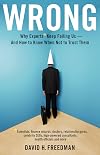
Медицината е супер важна дисциплина и милиарди всяка година се харчат за медицински изследвания - за да бъде изучено както човешкото тяло и неговите функции, така и действието на различните храни, вещества и лекарства върху него.
Супер много ме дразнят разните му там show more антиваксъри, конспиративни ненормалници и други дебили, които обявяват медицината за "корумпирана", че "големите корпорации" опорочили всичко, че имало измислено лекарство за рак, но "го крият, за да печелят от поддържащата терапия" и после предлагат да се лекуваме с кристали хомеопатия. Тази книга изобщо не е от тях.
Авторът е учен в най-добрия смисъл. Застъпник на строгия научен подход, безпристрасността и двойно слепите експерименти. Посветил е кариерата си на изследване на ... медицинските изследвания и това да открива къде те грешат, къде има човешки грешки в експериментите и изводите им.
Той всъщност е доста известен и уважаван в медицинската общност точно с това, защото безпардонното му придържане към научния протокол е неоспоримо, а резултатите от проучванията му... шокиращи.
Оказва се, че човешкият фактор при провеждането на медицински експерименти е доста голям, което доста ... изкривява резултатите. Дотолкова всъщност, че по-голямата част от резултатите на медицинските изследвания биват оборени в последствие. Дори т.н. златен стандарт, най-най-елитните, най-научни и сериозни изследвания, публикувани в най-реномираните медицински издания, авторът открива, не отговаря на научните критерии за експериментиране и интерпретация на данните в над 50% от случаите. Единствено т.н. платинен стандарт - не повече от 1000 изследвания които вече са най-най-най-най, имат само 25% грешка.
Това не е конспиративна, хипи книга, знаете ги тия. Това е строго научна книга за научния подход в медицината и като цяло в науката, която показва как учените не са непогрешими богове, а се влияят от собствените си мнения, предразсъдъци, а и личен интерес при извършването и публикуване на експерименти и интерпретиране на резултати. Един трезв поглед върху научната общност.
Книгата няма нищо общо с глобалното затопляне, но като я четях не можех да не правя паралели с това как личните интереси на учените за кариерно развитие, популярност и преследване на финансиране могат да изкривят резултатите и изследванията им в определена насока. show less
Супер много ме дразнят разните му там show more антиваксъри, конспиративни ненормалници и други дебили, които обявяват медицината за "корумпирана", че "големите корпорации" опорочили всичко, че имало измислено лекарство за рак, но "го крият, за да печелят от поддържащата терапия" и после предлагат да се лекуваме с кристали хомеопатия. Тази книга изобщо не е от тях.
Авторът е учен в най-добрия смисъл. Застъпник на строгия научен подход, безпристрасността и двойно слепите експерименти. Посветил е кариерата си на изследване на ... медицинските изследвания и това да открива къде те грешат, къде има човешки грешки в експериментите и изводите им.
Той всъщност е доста известен и уважаван в медицинската общност точно с това, защото безпардонното му придържане към научния протокол е неоспоримо, а резултатите от проучванията му... шокиращи.
Оказва се, че човешкият фактор при провеждането на медицински експерименти е доста голям, което доста ... изкривява резултатите. Дотолкова всъщност, че по-голямата част от резултатите на медицинските изследвания биват оборени в последствие. Дори т.н. златен стандарт, най-най-елитните, най-научни и сериозни изследвания, публикувани в най-реномираните медицински издания, авторът открива, не отговаря на научните критерии за експериментиране и интерпретация на данните в над 50% от случаите. Единствено т.н. платинен стандарт - не повече от 1000 изследвания които вече са най-най-най-най, имат само 25% грешка.
Това не е конспиративна, хипи книга, знаете ги тия. Това е строго научна книга за научния подход в медицината и като цяло в науката, която показва как учените не са непогрешими богове, а се влияят от собствените си мнения, предразсъдъци, а и личен интерес при извършването и публикуване на експерименти и интерпретиране на резултати. Един трезв поглед върху научната общност.
Книгата няма нищо общо с глобалното затопляне, но като я четях не можех да не правя паралели с това как личните интереси на учените за кариерно развитие, популярност и преследване на финансиране могат да изкривят резултатите и изследванията им в определена насока. show less
David Freedman’s thesis in Wrong is almost a flat-out pronouncement that all experts, advisors and gurus -- even the most prestigious and even those quoted in the most prominent sources -- are always wrong.
According to Freedman, everyone involved with expert advice is motivated by self-interest: experts are biased toward results that promote their careers; the media is biased toward flashy results and personalities that increase ratings; and the public is biased toward simple, sure-fire, show more actionable advice. Even today’s democratization of expertise (via blogs, rating/review sites, Google rankings) doesn't overcome these biases.
Freedman even dulls the shine on research’s gold standard (the randomized, double-blind controlled trial) by exploring how sloppy mistakes taint the data; how the pressures of academic tenure, lab funding, corporate profits and consultancy contracts drive fraud (data invention and falsification); and how little of this is caught through the peer review process.
This is an important topic and the book is accessibly written. But to be clear: it's very similar to the expert advice he skewers -- full of broad, sweeping statements and detailed examples biased toward his thesis. (Freedman acknowledges this late in the book and amends his thesis, but only to, “there is some reason to suspect that most experts are usually wrong.”) During my reading, frustration and pessimism grew into profound discouragement and then a spiraling hopelessness. There is no optimism here; even his chapter, “Eleven Simple Never-Fail Rules” -- a summary of red flags about advice -- is the height of irony with its (seemingly) sure-fire, actionable content.
And thus my advice (!): if this thesis is new to you and you want to know more, read this book but read it fast -- get in, get the overall picture, get out. Then decide how much of it you're going to fit into your worldview.
(Review based on an advance reading copy provided by the publisher.) show less
According to Freedman, everyone involved with expert advice is motivated by self-interest: experts are biased toward results that promote their careers; the media is biased toward flashy results and personalities that increase ratings; and the public is biased toward simple, sure-fire, show more actionable advice. Even today’s democratization of expertise (via blogs, rating/review sites, Google rankings) doesn't overcome these biases.
Freedman even dulls the shine on research’s gold standard (the randomized, double-blind controlled trial) by exploring how sloppy mistakes taint the data; how the pressures of academic tenure, lab funding, corporate profits and consultancy contracts drive fraud (data invention and falsification); and how little of this is caught through the peer review process.
This is an important topic and the book is accessibly written. But to be clear: it's very similar to the expert advice he skewers -- full of broad, sweeping statements and detailed examples biased toward his thesis. (Freedman acknowledges this late in the book and amends his thesis, but only to, “there is some reason to suspect that most experts are usually wrong.”) During my reading, frustration and pessimism grew into profound discouragement and then a spiraling hopelessness. There is no optimism here; even his chapter, “Eleven Simple Never-Fail Rules” -- a summary of red flags about advice -- is the height of irony with its (seemingly) sure-fire, actionable content.
And thus my advice (!): if this thesis is new to you and you want to know more, read this book but read it fast -- get in, get the overall picture, get out. Then decide how much of it you're going to fit into your worldview.
(Review based on an advance reading copy provided by the publisher.) show less
A Perfect Mess: The Hidden Benefits of Disorder - How Crammed Closets, Cluttered Offices, and On-The-Fly Planning Make the World a Bet by Eric Abrahamson
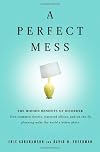
This book starts with the premise that messiness or disorder is good and then proceeds to demonstrate with many examples spread across several chapters. He comes down hard on professional organizers.
The first premise is that the cost of ordering stuff may exceed the benefit. Another premise is that order stifles innovation, and that disorder may be conducive to greater creativity.
A few interesting things:
Cell phone providers managed to annoy users by eliminating noise. (We need the noise to show more know that someone is still on the other end.) The book seemed to say to reduce bandwidth consumption, they take out the real noise and put in fake noise at the other end.
The 1948 book Cheaper by the Dozen is based on an actual family where the father indeed strove to impose a high level of order or discipline on his family.
There were examples of many unknown and small companies reputed to have success through disorder and lack of planning. Risk takers and non-conformists seems like a pretty good description of most of them. One recognizable name was mentioned, Novel Corporation. Not exactly a sterling model of a successful strategy, however, they still exist as a company.
It mentioned some examples where noise is useful in decoding information, both in biological and man-made systems, but didn't mention one that I am familiar with, which is delta-sigma analog to digital converters.
An interesting read that will probably make little difference in my life. On second though, perhaps I will do a little less planning. The book said that planning doesn't improve outcome. show less
The first premise is that the cost of ordering stuff may exceed the benefit. Another premise is that order stifles innovation, and that disorder may be conducive to greater creativity.
A few interesting things:
Cell phone providers managed to annoy users by eliminating noise. (We need the noise to show more know that someone is still on the other end.) The book seemed to say to reduce bandwidth consumption, they take out the real noise and put in fake noise at the other end.
The 1948 book Cheaper by the Dozen is based on an actual family where the father indeed strove to impose a high level of order or discipline on his family.
There were examples of many unknown and small companies reputed to have success through disorder and lack of planning. Risk takers and non-conformists seems like a pretty good description of most of them. One recognizable name was mentioned, Novel Corporation. Not exactly a sterling model of a successful strategy, however, they still exist as a company.
It mentioned some examples where noise is useful in decoding information, both in biological and man-made systems, but didn't mention one that I am familiar with, which is delta-sigma analog to digital converters.
An interesting read that will probably make little difference in my life. On second though, perhaps I will do a little less planning. The book said that planning doesn't improve outcome. show less
Like I would an over-compensating, insecure research paper that I wanted to mark up to reduce redundancy, rabbit trails, self-congratulation, and self-contradiction, I sort of enjoyed reading it, sometimes. Ultimately, I'm not convinced the emperor was appropriately clothed. I read/skimmed to the end because I though the book might do right by offering some insight or creative connection. I was wrong. (Ugh. Sorry for that.)
Lists
You May Also Like


Associated Authors
Statistics
- Works
- 13
- Also by
- 1
- Members
- 1,267
- Popularity
- #20,252
- Rating
- 3.6
- Reviews
- 42
- ISBNs
- 53
- Languages
- 9