
Kathryn Schulz
Author of Being Wrong: Adventures in the Margin of Error
About the Author
Kathryn Schulz is a journalist whose work has appeared in the New York Times Magazine, Rolling Stone, Foreign Policy, the Nation, the Boston Globe, and the "Freakonomics" blog of the New York Times. She lives in New York's Hudson Valley.
Works by Kathryn Schulz
Associated Works
Furious Hours: Murder, Fraud, and the Last Trial of Harper Lee (2019) — Author photographer, some editions — 1,416 copies, 70 reviews
This Will Make You Smarter: New Scientific Concepts to Improve Your Thinking (Edge Question Series) (2012) — Contributor — 905 copies, 17 reviews
Tagged
Common Knowledge
- Gender
- female
- Education
- Brown University (BA/History)
- Occupations
- author
journalist
book critic - Awards and honors
- Pulitzer Prize (Feature Writing, 2016)
- Nationality
- USA
- Birthplace
- Shaker Heights, Ohio, USA
- Places of residence
- Hudson Valley, New York, USA
New York, New York, USA
Costa Rica
Portland, Oregon, USA
Shaker Heights, Ohio, USA - Associated Place (for map)
- USA
Members
Reviews
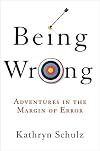
I may be wrong about this, but Being Wrong is a very good book. Kathryn Schulz uses personal stories from a variety of sources, such as a wrongfully identified criminal, people losing their religion, and more trivial instances of mistakes, to explain just what is so humiliating about being wrong, and why it is so darn satisfying to be right. And she does all this with a consistently conversational tone, friendly and funny but not too funny when the more serious stories are being told.
In show more addition to intriguing stories, Schulz provides a very good potted introduction to philosophy by quoting from many major philosophers to illustrate the varying perspectives on "wrongness" and error. Most people nowadays would probably consider error to be something humiliating, that doesn't happen very often. But it does, all the time. Schulz argues that, where possible, we should try to see the positive side of error. It can stimulate creativity, broaden the mind or even change our lives for the better. show less
In show more addition to intriguing stories, Schulz provides a very good potted introduction to philosophy by quoting from many major philosophers to illustrate the varying perspectives on "wrongness" and error. Most people nowadays would probably consider error to be something humiliating, that doesn't happen very often. But it does, all the time. Schulz argues that, where possible, we should try to see the positive side of error. It can stimulate creativity, broaden the mind or even change our lives for the better. show less
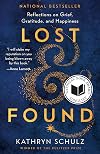
Grief confuses us by spinning us around to face backward, because memories are all we have left, but of course it isn’t the past we mourn when someone dies; it’s the future.
This is a beautiful and gentle memoir of losing and finding -- with some philosophy/literature about the two experiences, but largely explored as a eulogy of her father as she comes to terms with his death (I grew fond of Schulz and everyone in her family), and as an homage to the woman who is now her wife.
What an show more astonishing thing it is to find something.
. . .
Overnight, I had become someone who wanted to hold someone’s hand on the way to breakfast. show less
This is a beautiful and gentle memoir of losing and finding -- with some philosophy/literature about the two experiences, but largely explored as a eulogy of her father as she comes to terms with his death (I grew fond of Schulz and everyone in her family), and as an homage to the woman who is now her wife.
What an show more astonishing thing it is to find something.
. . .
Overnight, I had become someone who wanted to hold someone’s hand on the way to breakfast. show less

4.75 stars. wow, this is just so beautiful. i love the way she talks about everything, how this is such an intensely personal and specific story of both losing her father and finding her wife, but at the same time how it's also such an intensely universal and general story that will likely resonate with literally everyone. like so much in this book, it's both of those seemingly conflicting things at the same time. wrapped up with a bunch of history and physics and literature and all kinds of show more information and references. (how did i not know where the word ampersand came from?!) i want to be friends with her, wish i had known her dad, want to know her wife.
this is just lovely in all the best ways. i want to mark the entire thing because the writing is so wonderful, but this is the first portion of a sentence that made me stop reading and nearly gasp: "...hope never materializes anywhere without fear having stowed away inside it..."
in describing falling in love: "...there among the wild clamor of things I felt were two almost contradictory emotions: that nothing in the world could feel more natural; that nothing in the world could feel more astonishing."
"I leaned forward in my seat to look up at the sky, as dense with stars as if a box full of the universe had tipped and spilled out overhead." show less
this is just lovely in all the best ways. i want to mark the entire thing because the writing is so wonderful, but this is the first portion of a sentence that made me stop reading and nearly gasp: "...hope never materializes anywhere without fear having stowed away inside it..."
in describing falling in love: "...there among the wild clamor of things I felt were two almost contradictory emotions: that nothing in the world could feel more natural; that nothing in the world could feel more astonishing."
"I leaned forward in my seat to look up at the sky, as dense with stars as if a box full of the universe had tipped and spilled out overhead." show less
Lost and Found is a beautifully written meditation on love and loss. Just a few months after her father, with whom she was very close, died, the author met the woman she would eventually marry. The book poses important questions, sometimes philosophical, sometimes quotidian, pertaining to the reasons why we lose things, why we find things, why we forget, why we remember. Like many books about loss, this book is a juxtaposition of sorts, pairing the relationship between the innate beauty in show more the world along with the grievous suffering that comes from living in it. Schulz also stresses the need for and significance of gratitude, and how loss is innately connected to loving another human being.
Quietly eloquent, revealing, revelatory. show less
Quietly eloquent, revealing, revelatory. show less
Lists
Awards


You May Also Like


Associated Authors
Statistics
- Works
- 13
- Also by
- 9
- Members
- 1,616
- Popularity
- #15,942
- Rating
- 3.9
- Reviews
- 46
- ISBNs
- 40
- Languages
- 7
- Favorited
- 5