

Ahmadou Kourouma (1927–2003)
Author of Allah Is Not Obliged
About the Author
Image credit: Ahmadou Kourouma
Works by Ahmadou Kourouma
Tagged
Common Knowledge
- Canonical name
- Kourouma, Ahmadou
- Birthdate
- 1927-11-24
- Date of death
- 2003-12-11
- Gender
- male
- Occupations
- novelist
playwright
insurance company director - Nationality
- Côte d'Ivoire
- Birthplace
- Boundiali, Côte d'Ivoire
- Places of residence
- Lyon, France
- Place of death
- Lyon, France
- Associated Place (for map)
- Lyon, France
Members
Reviews
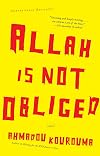
“The full, final and completely complete title of my bullshit story is: Allah is not obliged to be fair about all the things he does here on earth.” Birahima, a child-soldier, narrates this book, winner of Prix Renaudot. I understand Kourouma’s decision to use a child-soldier as a narrator. His approach is unsentimental and unmanipulative and, in more nuanced prose, could have been devastating. But Kourouma is too enamored of his decision and spends too much time highlighting his own show more cleverness at the expense of a damning indictment.
Birahima has three exclamations/curses (in what I presume is the Malinke language) and he uses them frequently. Far too frequently. And while that may be how a child Birahima’s age really talks, it quickly becomes intrusive and distracting. Likewise, Kourouma has Birahima regularly define certain words for the reader in parentheses. Ordinary words as well as unusual Malinke (or other African languages) words. I can find no rhyme or reason for which words are defined. But again, Kourouma uses this device so frequently (often multiple times on a page) that it is annoying and distracts from the story. The subject of the book is important and needs to be told. But I found Kourouma’s stylistic tics so off-putting that they undercut his message. Appalling incidents of torture, dismemberment, rape, and murder lost their power because so much of Birahima’s narration is rendered in overstated, over-the-top prose. Kourouma is telling a gruesome, almost unspeakable story but the impact was so attenuated by his style of narration that the book became a effort instead of a riveting read.
The first half of the book clings to the story of Birahima searching for his aunt. Then, midway through the book, Birahima begins a tiresomely cynical narration of the political history of the civil wars in Sierra Leone and Liberia in the 1990s and early 2000s. Here especially, Birahima displays a wisdom and perceptiveness far beyond that of most children his age; it is jarring to have him narrate events around him as a child and then only a sentence later display a prescient, nuanced understanding of the larger circumstances and context. Either Birahima is a child with all the advantages (and limitations) that that choice entails or he is not. He can’t be both child and adult whenever shifting his insights suits Kourouma’s purposes. I liked Kourouma’s Suns of Independence and looked forward to this book. I wish I could recommend it.
P.S. Having written all of this, I must now add this addendum. In poking around the internet, I found “Childhoods Dis-ordered: Non-Realist Narrative Modes in Selected Post-2000 West African War Novels,” a Ph.D. dissertation by Cecilia Addei from the Department of English, University of the Western Cape in South Africa. I was pleased to find this work well-written and with an interesting and thought-provoking thesis. The author examined four different books, including Kourouma’s novel. Ms. Addei’s interpretation of the use of the various dictionaries is completely different from my take and I think it is well worth considering because she offers a cogent and (almost) convincing explanation for the style I disliked.
”In a world turned upside down, Birahima still wants to prove the truthfulness of his story…. Birahima’s commitment is to make his absurd story believable so he explains words which will validate his experience…. Even though Birahima seeks different ways to validate the absurdity of his war story, by appealing to God as guarantor of truth and the wisdom in folklore, the dictionaries are the final evidentiary support of the truth he wants to establish…his most authoritative form of validation…. Thus we see Birahima using more words to explain single words yet not achieving the reality he wants to achieve. This is due to the fact that language cannot let the actual reality reveal itself so we see at the end of the novel that the reader is taken back to the beginning with Birahima, unable to validate his absurd story and the reader not making any progress. Birahima will tell us his story again to prove its truthfulness and when we reach the end we will again go back to the beginning in an infinite and eternal circle that imitates the fact that there is no escape from language into truth. Birahima’s inability to prove the truthfulness of his story using dictionaries is in consonance with Jacques Derrida’s idea that language produces meaning only with reference to other meanings against which it takes on its own significance….”
Although she hasn’t quite convinced me, I think she makes a good case for her interpretation. My reading about the book showed that opinions about the book vary quite widely. Notwithstanding my dissatisfaction, I would recommend considering the book. I’ve read Kourouma before (The Suns of Independence) and been impressed; perhaps I’m dismissing this work too easily. show less
Birahima has three exclamations/curses (in what I presume is the Malinke language) and he uses them frequently. Far too frequently. And while that may be how a child Birahima’s age really talks, it quickly becomes intrusive and distracting. Likewise, Kourouma has Birahima regularly define certain words for the reader in parentheses. Ordinary words as well as unusual Malinke (or other African languages) words. I can find no rhyme or reason for which words are defined. But again, Kourouma uses this device so frequently (often multiple times on a page) that it is annoying and distracts from the story. The subject of the book is important and needs to be told. But I found Kourouma’s stylistic tics so off-putting that they undercut his message. Appalling incidents of torture, dismemberment, rape, and murder lost their power because so much of Birahima’s narration is rendered in overstated, over-the-top prose. Kourouma is telling a gruesome, almost unspeakable story but the impact was so attenuated by his style of narration that the book became a effort instead of a riveting read.
The first half of the book clings to the story of Birahima searching for his aunt. Then, midway through the book, Birahima begins a tiresomely cynical narration of the political history of the civil wars in Sierra Leone and Liberia in the 1990s and early 2000s. Here especially, Birahima displays a wisdom and perceptiveness far beyond that of most children his age; it is jarring to have him narrate events around him as a child and then only a sentence later display a prescient, nuanced understanding of the larger circumstances and context. Either Birahima is a child with all the advantages (and limitations) that that choice entails or he is not. He can’t be both child and adult whenever shifting his insights suits Kourouma’s purposes. I liked Kourouma’s Suns of Independence and looked forward to this book. I wish I could recommend it.
P.S. Having written all of this, I must now add this addendum. In poking around the internet, I found “Childhoods Dis-ordered: Non-Realist Narrative Modes in Selected Post-2000 West African War Novels,” a Ph.D. dissertation by Cecilia Addei from the Department of English, University of the Western Cape in South Africa. I was pleased to find this work well-written and with an interesting and thought-provoking thesis. The author examined four different books, including Kourouma’s novel. Ms. Addei’s interpretation of the use of the various dictionaries is completely different from my take and I think it is well worth considering because she offers a cogent and (almost) convincing explanation for the style I disliked.
”In a world turned upside down, Birahima still wants to prove the truthfulness of his story…. Birahima’s commitment is to make his absurd story believable so he explains words which will validate his experience…. Even though Birahima seeks different ways to validate the absurdity of his war story, by appealing to God as guarantor of truth and the wisdom in folklore, the dictionaries are the final evidentiary support of the truth he wants to establish…his most authoritative form of validation…. Thus we see Birahima using more words to explain single words yet not achieving the reality he wants to achieve. This is due to the fact that language cannot let the actual reality reveal itself so we see at the end of the novel that the reader is taken back to the beginning with Birahima, unable to validate his absurd story and the reader not making any progress. Birahima will tell us his story again to prove its truthfulness and when we reach the end we will again go back to the beginning in an infinite and eternal circle that imitates the fact that there is no escape from language into truth. Birahima’s inability to prove the truthfulness of his story using dictionaries is in consonance with Jacques Derrida’s idea that language produces meaning only with reference to other meanings against which it takes on its own significance….”
Although she hasn’t quite convinced me, I think she makes a good case for her interpretation. My reading about the book showed that opinions about the book vary quite widely. Notwithstanding my dissatisfaction, I would recommend considering the book. I’ve read Kourouma before (The Suns of Independence) and been impressed; perhaps I’m dismissing this work too easily. show less
On its face, this sounds like a great novel: an orphan-turned-child soldier accompanies a smuggler-turned-shaman on a years-long odyssey across Ivory Coast, Guinea, Liberia, and Sierra Leone to find a perpetually fleeing aunt. In practise, the thing is a mess.
Allah is Not Obliged is framed as the recollections of Birahima, a Malinké boy who leaves home after his mother dies to live with his aunt in Liberia. Along the way, he gets swept up in the tribal wars and political unrest of West show more Africa in the early 90s, becoming a child soldier in the service of various warlords. His companion is Yacouba, a grigriman—someone who makes protective amulets and talismans and advises on spiritual matters like sacrifices and omens. Birahima is crass and crude, cynical about the state of the world and furious at having to live in it. He looks down on the indigenous animist tribes (who he calls "Black N*gger African Natives") and the Christian afro-American Liberians alike. No one is free from his scorn.
What makes the book so unbearable is the repetition and the definitions. Phrases, paragraphs, even whole sections are repeated for seemingly no reason. If a character is introduced once, they will be reintroduced at least three times more—Birahima even introduces himself to us more than once, never with any changes, as though we will have forgotten who is narrating the story. All of this, without a narrative purpose, comes across as useless flab. And speaking of flab, the fucking definitions. There is at least a pretence for these; in the beginning, Birahima explains that he has several dictionaries in front of him to help him tell his tale, as he, being Malinké, likely speaks Maninka, and has to translate his thoughts into French. Therefore, when he uses some words, he'll define them in simpler terms.
But this happens constantly. It's so, so unnecessary. I appreciated the definitions for culturally specific terms that I wasn't familiar with (excision, grigri, griot, etc.) but I don't need everyday words like "denial" or "havoc" or "swift" to be defined for me, and taking time to do so interrupts the flow of the narrative and, especially when it happens twice a page, wears on one's patience.
You could probably guess that a lot of heinous shit happens in this book. And it does. Rape, dismemberment, child murder, genital mutilation, political oppression, slavery, torture. I understand that these are facts of life during horrific times, and I could deal with them, but the way they're told is infuriating. Even the narrative feels sanded down, like all the interesting parts are breezed over in favour of history lessons or pages of repeated passages. Characters are rarely if ever developed.
Allah is Not Obliged is a good story told in a terrible way. There are interesting insights here about West African political dealings, tribal tensions, and the adoption of Abrahamic religions versus traditional animist practises. Still, I can't help but feel like the pain of the reading experience isn't worth it.
____________________
Global Challenge: Côte d'Ivoire show less
Allah is Not Obliged is framed as the recollections of Birahima, a Malinké boy who leaves home after his mother dies to live with his aunt in Liberia. Along the way, he gets swept up in the tribal wars and political unrest of West show more Africa in the early 90s, becoming a child soldier in the service of various warlords. His companion is Yacouba, a grigriman—someone who makes protective amulets and talismans and advises on spiritual matters like sacrifices and omens. Birahima is crass and crude, cynical about the state of the world and furious at having to live in it. He looks down on the indigenous animist tribes (who he calls "Black N*gger African Natives") and the Christian afro-American Liberians alike. No one is free from his scorn.
What makes the book so unbearable is the repetition and the definitions. Phrases, paragraphs, even whole sections are repeated for seemingly no reason. If a character is introduced once, they will be reintroduced at least three times more—Birahima even introduces himself to us more than once, never with any changes, as though we will have forgotten who is narrating the story. All of this, without a narrative purpose, comes across as useless flab. And speaking of flab, the fucking definitions. There is at least a pretence for these; in the beginning, Birahima explains that he has several dictionaries in front of him to help him tell his tale, as he, being Malinké, likely speaks Maninka, and has to translate his thoughts into French. Therefore, when he uses some words, he'll define them in simpler terms.
But this happens constantly. It's so, so unnecessary. I appreciated the definitions for culturally specific terms that I wasn't familiar with (excision, grigri, griot, etc.) but I don't need everyday words like "denial" or "havoc" or "swift" to be defined for me, and taking time to do so interrupts the flow of the narrative and, especially when it happens twice a page, wears on one's patience.
You could probably guess that a lot of heinous shit happens in this book. And it does. Rape, dismemberment, child murder, genital mutilation, political oppression, slavery, torture. I understand that these are facts of life during horrific times, and I could deal with them, but the way they're told is infuriating. Even the narrative feels sanded down, like all the interesting parts are breezed over in favour of history lessons or pages of repeated passages. Characters are rarely if ever developed.
Allah is Not Obliged is a good story told in a terrible way. There are interesting insights here about West African political dealings, tribal tensions, and the adoption of Abrahamic religions versus traditional animist practises. Still, I can't help but feel like the pain of the reading experience isn't worth it.
____________________
Global Challenge: Côte d'Ivoire show less
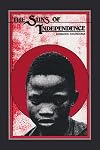
Very enjoyable. Better known for his later work, Allah is Not Obliged, Kourouma is from the Ivory Coast and here tells the story of Fama and Salimata, a husband and wife torn apart by the collision between traditional and post-colonial cultures. Fama is the last of a line princes who had reigned over the Malinke people and now he seeks his place in the new, independent national bureaucracy. Meanwhile, his wife, Salimata, haunted by memories of a ritualistic excision and a brutal rape, is show more intent of bearing a child to whom their legacy may be passed. Kourouma uses tales and proverbs from the Malinke tradition to help depict the confusion, contradictions, and dreams of people living through the turbulence of newly won independence. show less
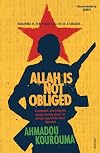
Oliver Twist crossed with Holden Caulfield? Kids crossed with Lord of the Flies? Bouncing back and forth between two civil wars, hopped up on hash and witchcraft? Birahima, our damaged li'l protagonist, weaves in and out of the West African hellscape, dancing between the tragedies like they turn to water as soon as they hit him. You root for him, the homicidal monster. You have to, because who else is availabe? Anyone who's not a killer is gonna get their arms and legs cut off by Foday show more Sankoh's RUF, or raped and decapitated by the Kamajors, an "Ivoirian Freemasonry of hunters," or tortured and executed by one of several cruel-beyond-belief "battle nun"–type figures who combine a kind of motherhood with a bloodlust that's cartoonish, mangaesque. Probably the kids will kill you fastest and feel worst about it.
This book got a lot of things across from me. What it means for animism to be an immanent part of daily life, as opposed to a shameful indulgence like here in Uganda (it means a lot more killing). How important it is for newspaper atrocities to be attached to stories that tell it like people would tell it--cruicially, with all the hardbitten irony and absurdist delight this child soldier can muster--in order for the bewildering history to stick to your brain, turn into something with bite and dimension. How they guy in charge will never leave well enough alone, because "he doesn't give a fuck, he controls the useful part of Sierra Leone!" and by the time he realizes he can't get away with controlling it any more, it's way, way too late for hum to even control his own life or safety. Not giving a fuck--being too lazy, as well as too afraid, to do anything other than what the crowd is doing, even if that's killing everybody, because at least it's a living and a laugh and better to be doing the hand-chopping than having it done to you--is so fucking human-sounding and leaves me quite sure that if you took us in a vaunted first-world country like Canada and subtracted wealth and subsistence and added a million guns and ethnic hatred, you'd have the exact same thing. It would have been easy for Kourouma to tug the heartstrings, but he doesn't do it directly--only when you stop to reflect are you overwhelmed--because any kid would choose, like Birahima, not to give a fuck, since the ones who don't remove themselves from consideration by dying. Dying, and the threat of death, change everything, and we'd all be something fucked-up like a thugged-out cannibal or a baby with no hands or a bloodthirsty nun, or we'd just be wraiths of a past when there were other choices. show less
This book got a lot of things across from me. What it means for animism to be an immanent part of daily life, as opposed to a shameful indulgence like here in Uganda (it means a lot more killing). How important it is for newspaper atrocities to be attached to stories that tell it like people would tell it--cruicially, with all the hardbitten irony and absurdist delight this child soldier can muster--in order for the bewildering history to stick to your brain, turn into something with bite and dimension. How they guy in charge will never leave well enough alone, because "he doesn't give a fuck, he controls the useful part of Sierra Leone!" and by the time he realizes he can't get away with controlling it any more, it's way, way too late for hum to even control his own life or safety. Not giving a fuck--being too lazy, as well as too afraid, to do anything other than what the crowd is doing, even if that's killing everybody, because at least it's a living and a laugh and better to be doing the hand-chopping than having it done to you--is so fucking human-sounding and leaves me quite sure that if you took us in a vaunted first-world country like Canada and subtracted wealth and subsistence and added a million guns and ethnic hatred, you'd have the exact same thing. It would have been easy for Kourouma to tug the heartstrings, but he doesn't do it directly--only when you stop to reflect are you overwhelmed--because any kid would choose, like Birahima, not to give a fuck, since the ones who don't remove themselves from consideration by dying. Dying, and the threat of death, change everything, and we'd all be something fucked-up like a thugged-out cannibal or a baby with no hands or a bloodthirsty nun, or we'd just be wraiths of a past when there were other choices. show less
Lists
Awards


You May Also Like


Associated Authors
Statistics
- Works
- 15
- Members
- 953
- Popularity
- #27,013
- Rating
- 3.7
- Reviews
- 31
- ISBNs
- 93
- Languages
- 13
- Favorited
- 5