
G. J. A. O'Toole
Author of The Spanish War: An American Epic 1898
About the Author
George O'Toole (1936-2001) worked for the CIA from 1966 to 1969. He was the author of several award-winning books, including the Encyclopedia of American Intelligence and Espionage; The Spanish War, which was a Pulitzer Prize finalist; and the novels The Cosgrove Report, Poor Richard's Game, and An show more Agent on the Other Side. show less
Works by G. J. A. O'Toole
Honorable Treachery: A History of U.S. Intelligence, Espionage, and Covert Action from the American Revolution to the CIA (1991) 108 copies, 1 review
The Cosgrove Report: Being the Private Inquiry of a Pinkerton Detective into the Death of President Lincoln (1979) 75 copies, 2 reviews
The assassination tapes: An electronic probe into the murder of John F. Kennedy and the Dallas coverup (1975) 20 copies
The Encyclopedia of American Intelligence and Espionage: From the Revolutionary War to the Present (1988) 10 copies
The Spanish War 1 copy
Associated Works
Tagged
Common Knowledge
- Canonical name
- O'Toole, G. J. A.
- Birthdate
- 1937
- Gender
- male
Members
Reviews
The Cosgrove Report: Being the Private Inquiry of a Pinkerton Detective Into the Death of President Lincoln by G. J. A. O'Toole
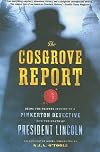
Really would like to rate this higher but frankly there are too many issues. Interesting, for me anyway, in that I knew very little about assassination conspiracy theories relating to Lincoln. The book is well researched and the information it presents is both amazing and in many cases true. Some of the characters who were involved I did not know of and learned a great deal. That is really the good. The negative is that the plot wanders, is both farcical and predictable. I think the author show more got to a point where he just did not know what to do with what he had created. The last half of the book IMO just fell apart. The premise is amazing, the initial direction fantastic but then it just falls apart. No spoilers but when you get to the section you will know what I mean. I would recommend it as a nice summer read but not much more. show less
Honorable Treachery: A History of U.S. Intelligence, Espionage, and Covert Action from the American Revolution to the CIA by G. J. A. O'Toole

My reactions to reading this book in 1992.
O’Toole proves his central tenet: that espionage and covert actions are not antithetical to American ideals or the intent of the Founding Fathers.
George Washington was given a black budget by Congress to spend on intelligence operations. (John Jay in the Federalist Papers specifically talks about the need for the president to sometimes take secret actions in foreign affairs.) Washington, in fact, seems to have been quite a spymaster even sending show more detailed tradecraft instructions to his subordinates. There is the interesting account of the despised Tory James Rivington. Even after the war, he never revealed he had been a double agent for Washinton -- probably to protect the British pensions of his sons.
In one of the many historical parallels of the book, Washington mounted a paramilitary operation to free hostages in Libya. And, in another, unfortunate, historical parallel, America sold out their mercentary troops when an agreement was reached with Pasha Yusuf Karaanli. Other historical parallels were the anti-war subversion and dissent during the War of 1812 (perhaps the most unpopular war in U.S. history) among the so-called Blue Light Federalists, and the War of 1812 was marked by poor intelligence which cost the U.S. when Detroit and Washington D.C. fell. The war in Mexico resembled Vietnam in that it involved trying to find enemy forces in a country that was to be treated as friendly or neutral. The scrutiny American intelligence operations fell under when it was revealed that Daniel Webster used secret intelligence funds to propagandize in the U.S. foreshadowed the attacks against the CIA in the ‘70s; the Confederacy’s attempt to incite a revolt amongst the Copperheads has its parallels with the idea behind the Bay of Pigs. (O’Toole gives enough details of the latter operation to convince me its failure was John F. Kennedy’s fault with his bizarre and irrelevant adherance to a blown cover story).
There is a whole lot of interesting history here. British and Spanish and French intrigues in the new U.S. republic, wargaming’s influence on intelligence development in America, a possible incursion of Japanese troops in the Baja Pennisunla (and the near war with Japan in 1906), the intrigues with Mexico during the Mexican-American War and around the turn of the century, the extant of the German sabotage network in the U.S. during WWI and the extant of Western Hemisphere operations by the Germans in WWII (or the co-opting of German spy networks in Russia by the U.S. after WWII), the silly anti-German sentiments of WWI in the U.S) and private -- and worthless -- counterespionage networks then, the stupid Wilsonian attitudes toward intelligence, early foreign intrigues of the U.S. and efforts by other countries to subvert us, the too late attempt to stop the Russian Revolution by propaganda, the details of foreign intrigue during the Civil War, Soviet Amtorg (a Soviet front company), use of labor unions by the OSS, and the insertion of CIA agents in Russia.
The last part of the book does slump a little into a complex alphabet soup but O’Toole is showing the need after Pearl Harbor -- a disasterous failure of intelligence resulting from bad communications (the Army and Navy commanders at Pearl Harbor were not given summaries of Magic intercepts for a Central Intelligence Agency, thus he ignores the NSA and other feeder agencies. All in all, though, a very informative, well-written bookl. show less
O’Toole proves his central tenet: that espionage and covert actions are not antithetical to American ideals or the intent of the Founding Fathers.
George Washington was given a black budget by Congress to spend on intelligence operations. (John Jay in the Federalist Papers specifically talks about the need for the president to sometimes take secret actions in foreign affairs.) Washington, in fact, seems to have been quite a spymaster even sending show more detailed tradecraft instructions to his subordinates. There is the interesting account of the despised Tory James Rivington. Even after the war, he never revealed he had been a double agent for Washinton -- probably to protect the British pensions of his sons.
In one of the many historical parallels of the book, Washington mounted a paramilitary operation to free hostages in Libya. And, in another, unfortunate, historical parallel, America sold out their mercentary troops when an agreement was reached with Pasha Yusuf Karaanli. Other historical parallels were the anti-war subversion and dissent during the War of 1812 (perhaps the most unpopular war in U.S. history) among the so-called Blue Light Federalists, and the War of 1812 was marked by poor intelligence which cost the U.S. when Detroit and Washington D.C. fell. The war in Mexico resembled Vietnam in that it involved trying to find enemy forces in a country that was to be treated as friendly or neutral. The scrutiny American intelligence operations fell under when it was revealed that Daniel Webster used secret intelligence funds to propagandize in the U.S. foreshadowed the attacks against the CIA in the ‘70s; the Confederacy’s attempt to incite a revolt amongst the Copperheads has its parallels with the idea behind the Bay of Pigs. (O’Toole gives enough details of the latter operation to convince me its failure was John F. Kennedy’s fault with his bizarre and irrelevant adherance to a blown cover story).
There is a whole lot of interesting history here. British and Spanish and French intrigues in the new U.S. republic, wargaming’s influence on intelligence development in America, a possible incursion of Japanese troops in the Baja Pennisunla (and the near war with Japan in 1906), the intrigues with Mexico during the Mexican-American War and around the turn of the century, the extant of the German sabotage network in the U.S. during WWI and the extant of Western Hemisphere operations by the Germans in WWII (or the co-opting of German spy networks in Russia by the U.S. after WWII), the silly anti-German sentiments of WWI in the U.S) and private -- and worthless -- counterespionage networks then, the stupid Wilsonian attitudes toward intelligence, early foreign intrigues of the U.S. and efforts by other countries to subvert us, the too late attempt to stop the Russian Revolution by propaganda, the details of foreign intrigue during the Civil War, Soviet Amtorg (a Soviet front company), use of labor unions by the OSS, and the insertion of CIA agents in Russia.
The last part of the book does slump a little into a complex alphabet soup but O’Toole is showing the need after Pearl Harbor -- a disasterous failure of intelligence resulting from bad communications (the Army and Navy commanders at Pearl Harbor were not given summaries of Magic intercepts for a Central Intelligence Agency, thus he ignores the NSA and other feeder agencies. All in all, though, a very informative, well-written bookl. show less
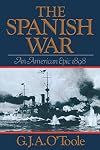
Great single volume account of the Spanish-American War.
Very readable.
Very readable.

I think I started reading this a couple of years ago but it didn't catch my interest.
You May Also Like


Associated Authors
Statistics
- Works
- 9
- Also by
- 2
- Members
- 377
- Popularity
- #64,010
- Rating
- 3.5
- Reviews
- 4
- ISBNs
- 17
- Languages
- 1