
John Prados (1951–2022)
Author of Islands of Destiny: The Solomons Campaign and the Eclipse of the Rising Sun
About the Author
John Prados is a senior fellow of the National Security Archive in Washington, DC, where he helps bring newly declassified government records to public attention. He is the award-winning author of twenty-one books. including Islands of Destiny: The Solomons Campaign and the Eclipse of the Rising show more Sun. He also lectures widely on security, freedom of information, and other issues analyzes combat processes, serves as a historical advisor to filmmakers; and designs strategy board games, including the well-known Third Reich and new award-winning titles. show less
Image credit: By Ching Wah Chin - www.NYMAS.org, CC BY-SA 3.0, https://commons.wikimedia.org/w/index.php?curid=40190233
Works by John Prados
Islands of Destiny: The Solomons Campaign and the Eclipse of the Rising Sun (2012) 161 copies, 4 reviews
Combined Fleet Decoded: The Secret History of: American Intelligence and the Japanese Navy in World War II (1995) 153 copies, 1 review
Presidents' Secret Wars: CIA and Pentagon Covert Operations from World War II Through the Persian Gulf War (1986) 106 copies
Normandy Crucible: The Decisive Battle that Shaped World War II in Europe (2011) 80 copies, 3 reviews
Associated Works
Iraq and the Lessons of Vietnam: Or, How Not to Learn from the Past (2007) — Contributor — 61 copies
MHQ: The Quarterly Journal of Military History — Spring 1996 (1996) — Author "The Strategic View: The Prophet of Bomber War" — 29 copies
MHQ: The Quarterly Journal of Military History — Autumn 1995 (1995) — Author "Mindoro's Desperate Hours" — 21 copies
The New American Empire: A 21st-Century Teach-In on U.S. Foreign Policy (2005) — Contributor — 16 copies
MHQ: The Quarterly Journal of Military History — Spring 1997 (1997) — Author "The Hottest Spots" and "The War Scare of 1983" — 14 copies
MHQ: The Quarterly Journal of Military History — Autumn 1998 (1998) — Author "Letter From Hanoi" — 14 copies
MHQ: The Quarterly Journal of Military History — Autumn 2008 (2008) — Author "In the Dark and Out of Luck" — 14 copies
MHQ: The Quarterly Journal of Military History — Autumn 2007 (2007) — Author "The Smaller Dragon Strikes" and "In Review: The United States Army in Vietnam: MACV" — 11 copies
MHQ: The Quarterly Journal of Military History — Summer 2009 (2009) — Author "Laos: The Road to Vietnam" and "In Review: Weller's War" — 11 copies
MHQ: The Quarterly Journal of Military History — Winter 2000 (1999) — Author "Most Significant Intelligence Breakthrough: Cryptanalysis" and "How Many Road to Richmond?" — 10 copies
MHQ: The Quarterly Journal of Military History — Summer 2006 (2006) — Author "In Review: In Command of History: Churchill Fighting and Writing the Second World War — 10 copies, 1 review
MHQ: The Quarterly Journal of Military History — Summer 2007 (2007) — Author "In Review: Power at Sea (three volumes) — 9 copies
MHQ: The Quarterly Journal of Military History — Winter 1994 (1993) — Author "The Spies at the Bottom of the Sea" — 9 copies
MHQ: The Quarterly Journal of Military History — Spring 2007 (2007) — Author "The Perfect Failure" — 9 copies
MHQ: The Quarterly Journal of Military History — Autumn 2001 (2001) — Author "First Freeze of the Cold War" — 8 copies
MHQ: The Quarterly Journal of Military History — Summer 2005 (2005) — Author "Ike, Ridgway, and Dien Bien Phu" — 7 copies
MHQ: The Quarterly Journal of Military History — Autumn 2009 (2009) — Author "The Emperor's Tipping Point" — 7 copies
MHQ: The Quarterly Journal of Military History — Spring 2013 (2013) — Author "What World War I Generals Got Wrong", some editions — 2 copies
Naval History — August 2006 (2006) — Author "Waging War with Cardboard Navies", some editions — 1 copy
Tagged
Common Knowledge
- Birthdate
- 1951-01-09
- Date of death
- 2022-11-29
- Gender
- male
- Education
- Columbia University (PhD|Political Science)
- Occupations
- senior analyst
- Organizations
- Society of Historians of American Foreign Relations
Society for Military History
Association of Former Intelligence Officers
National Security Archive - Nationality
- USA
- Birthplace
- New York, New York, USA
- Associated Place (for map)
- New York, USA
Members
Reviews
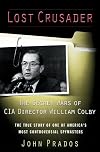
Lost Crusader is a solid biography of William E Colby, director of the CIA from 1973 to 1976, focusing mostly on his significant accomplishments and occasionally on his serious lapses in judgement. My prior experience with Colby is from Valentine's The Phoenix Program, where Colby's anondyne Congressional testimony is contrasted against the brutal reality of Phoenix in the field. In Valentine's book Colby appears as a clear villain, but the reality is likely more nuanced.
Colby is very close show more to an archetypical CIA spy. Born in Minnesota to an army officer, Colby grew up in foreign stations around the world, attended Princeton, and joined the Army as an officer in 1940. He volunteered for parachute training, and then the OSS Jedburgh program, where he was parachuted into France and then Norway to aid local guerillas against the Nazi occupation. After the war, he joined the new CIA and set up stay-behind networks in Sweden and provided political assistance to the non-Communist Left in Italy. An ideological anti-communist liberal with an Ivy League degree, the only thing that marked Colby as different was his Catholicism, slightly out of line with the WASP establishment that defined the CIA.
In 1959, Colby was assigned as deputy station chief to Saigon, marking the start of a decade working in Vietnam in a variety of roles. Colby was committed to both pacification and President Ngô Đình Diệm. He was one of voices arguing against the 1963 coup, and for a unified command for civilian efforts which eventually became CORDS. Colby served as Division Chief for the Far East and later CORDS director, where he was responsible for the Phoenix Program.
One thing this book fails to square is Colby's committed idealism with many many compromises the CIA made in Vietnam. Covert war is hard to manage without covert funding, and associated corruption. However, the CIA's Air America massively facilitated the drug trade in South East Asia, and Colby appears to have at minimum turned a blind eye. Likewise, while the goal of Phoenix was to identify and "neutralize" high-ranking Viet Cong cadres, it rapidly and inevitably turned into a arbitrary detention and assassination program. Most tellingly, fewer than 20 Category A senior Viet Cong leaders were killed by Phoenix, and only 1 as a result of a targeted operation as opposed a random ambush. The vast majority of locals affected were Category B (tax collectors and the like), or Category C, which included anyone who made a pragmatic accommodation with the Viet Cong at any point.
After Vietnam, Colby returned to Langley, where he became CIA director in the midst of Watergate. Colby had the unenviable position of having to wind down an overgrown post-Vietnam covert warfare division, clear out decades of deadwood senior officers, finally get rid of the paranoid James Jesus Angleton, reform dissemination, and handle the release of the "Family Jewels" report. Colby wasn't responsible for the Family Jewels, which chronicle decades of CIA misdeeds from assassination missions to domestic surveillance to MKULTRA, but he did have to clean up the mess. This was arguably Colby's greatest success. Stonewalling would have likely seen the CIA defunded and broken up entirely, while a flawed release process could have seriously jeopardized national security. Colby's timed release and acquiescence to political realities protected the agency at the cost of his own career.
The book opens with the final act, Colby's mysterious disappearance in the Chesapeake Bay in 1996, but in this case, despite the drama of a missing spymaster the simplest solution is likely right. The 76 year old Colby had some sort of cardiac incident, fell out of his canoe, and drowned. His body was eventually found, and frankly, in the 90s its unclear who would have cared enough to kill him. Colby didn't lose the Vietnam War (that defeat had many fathers), but he didn't win it either. Ultimately, his legacy is preserving the CIA past 1975, for better or worse. show less
Colby is very close show more to an archetypical CIA spy. Born in Minnesota to an army officer, Colby grew up in foreign stations around the world, attended Princeton, and joined the Army as an officer in 1940. He volunteered for parachute training, and then the OSS Jedburgh program, where he was parachuted into France and then Norway to aid local guerillas against the Nazi occupation. After the war, he joined the new CIA and set up stay-behind networks in Sweden and provided political assistance to the non-Communist Left in Italy. An ideological anti-communist liberal with an Ivy League degree, the only thing that marked Colby as different was his Catholicism, slightly out of line with the WASP establishment that defined the CIA.
In 1959, Colby was assigned as deputy station chief to Saigon, marking the start of a decade working in Vietnam in a variety of roles. Colby was committed to both pacification and President Ngô Đình Diệm. He was one of voices arguing against the 1963 coup, and for a unified command for civilian efforts which eventually became CORDS. Colby served as Division Chief for the Far East and later CORDS director, where he was responsible for the Phoenix Program.
One thing this book fails to square is Colby's committed idealism with many many compromises the CIA made in Vietnam. Covert war is hard to manage without covert funding, and associated corruption. However, the CIA's Air America massively facilitated the drug trade in South East Asia, and Colby appears to have at minimum turned a blind eye. Likewise, while the goal of Phoenix was to identify and "neutralize" high-ranking Viet Cong cadres, it rapidly and inevitably turned into a arbitrary detention and assassination program. Most tellingly, fewer than 20 Category A senior Viet Cong leaders were killed by Phoenix, and only 1 as a result of a targeted operation as opposed a random ambush. The vast majority of locals affected were Category B (tax collectors and the like), or Category C, which included anyone who made a pragmatic accommodation with the Viet Cong at any point.
After Vietnam, Colby returned to Langley, where he became CIA director in the midst of Watergate. Colby had the unenviable position of having to wind down an overgrown post-Vietnam covert warfare division, clear out decades of deadwood senior officers, finally get rid of the paranoid James Jesus Angleton, reform dissemination, and handle the release of the "Family Jewels" report. Colby wasn't responsible for the Family Jewels, which chronicle decades of CIA misdeeds from assassination missions to domestic surveillance to MKULTRA, but he did have to clean up the mess. This was arguably Colby's greatest success. Stonewalling would have likely seen the CIA defunded and broken up entirely, while a flawed release process could have seriously jeopardized national security. Colby's timed release and acquiescence to political realities protected the agency at the cost of his own career.
The book opens with the final act, Colby's mysterious disappearance in the Chesapeake Bay in 1996, but in this case, despite the drama of a missing spymaster the simplest solution is likely right. The 76 year old Colby had some sort of cardiac incident, fell out of his canoe, and drowned. His body was eventually found, and frankly, in the 90s its unclear who would have cared enough to kill him. Colby didn't lose the Vietnam War (that defeat had many fathers), but he didn't win it either. Ultimately, his legacy is preserving the CIA past 1975, for better or worse. show less
I will start by saying that, though I heartily agree with Prados' thesis that the Pacific War turning point was in the Solomons Campaign, I was initially unimpressed with the book. It seemed in bad need of an editor. Prados can have a stilted, choppy writing style that is difficult to read. He also used incorrect terminology (it's F6F and F4F, not F-6F or F-4F) and flat out derogatory terms (an author using "Jap" when they are quoting a contemporary source is completely acceptable, using it show more while writing in their own voice is completely unacceptable.) He also referred to Guadalcanal as "Cactus" throughout the book, even when discussing Japanese (not Jap) planning in reference to it. It was confusing and bizarre considering that was the U.S. codename for Guadalcanal. Last he also made some pretty obvious historical errors (he refers to Gen. Lawton Collins as the commander of the Americal Division multiple times throughout a multi-paragraph stretch. Collins was the commander of the 25th Division not the Americal, something Prados should have known.) I was surprised at the number of faults I found considering Prados' impressive reputation as a historian. In defense of the book I will say it covers some interesting and new, for me, ground by integrating intelligence into the campaign. However, what really saved the book for me was the final chapter. There Prados does an excellent job of explaining how the Japanese (not Jap) conflict between decisive battle strategy and attrition battle operations really hurt them. That alone made the book worthwhile. I would suggest picking it up in the library and just reading that last chapter. If you want good books on the Guadalcanal and Solomons campaign I recommend Richard Frank's Guadalcanal and the relevant volumes from Samuel Eliot Morison's History. show less
Vietnam: The History of an Unwinnable War, 1945-1975 (Modern War Studies (Hardcover)) by John Prados
Prados argues that the USA acted within the context of political, military, social, economic, foreign policy. He refers to this as an envelope. As events progressed from 1945 forward, that enveloped narrowed. This greatly reduced American flexibility and latitude for action. Prados believes that the war was unwinable. This account is somewhat influenced by the Iraq war. His objective is to create a large narrative account that incorporates recently (at least in late 1990s and early 2000s) show more released primary sources and synthesizes the latest secondary histories. Prados writes South Vietnam back into the story. I liked his personal accounts of his experience as a student at Columbia University. And I like how he fact-checked numerous memoirs. Unsurprisingly, they are chockfull of errors, omissions, and misstatements. It is a little long. It is an excellent analytical account of policy and decision-making at the highest levels. Very little is said of military history and battles. There are photos but I don't recall any maps at all. show less
I finished John Prados' Normandy Crucible: The Decisive Battle That Shaped World War II in Europe. A concise 4 star read, that delved into the early days of the planning, the invasion and the assortment of leadership and personalities.
The meat and potatoes though is on the attempts to break out of the Bocage culminating in the Cobra Breakout and Falaise Pocket. An interesting detail was Prados' incorporation Ultra intelligence and it's value and limitations. Prados see's the Ultra show more intelligence more in its tactical than strategic value.
Prados discusses the various operations highlighting Operation Goodwood and Cobra but also discusses other breakout attempts and the various mechanical innovations especially on the Sherman Tanks to overcome the Bocage.
The book then winds up discussing the operations around the closing of the Falaise Gap, the mistakes and successes made by both the Germans and the Allies. The Germans failure to achieve breakout of the pocket sooner but ultimately having enough core leadership and troops escape to be able to reforge their forces albeit more thinly manned and armed and more brittle than earlier renditions of the Whermact. The same lack of commitment in closing the gap and better and clearer communication between Monty. Bradley and SHAEF, which contributed to a successful entrapment of but not a complete entrapment of the Wehrmact. In the end Prados distributes blame and credit fairly equally among all parties.
A worthy addition to the literature. show less
The meat and potatoes though is on the attempts to break out of the Bocage culminating in the Cobra Breakout and Falaise Pocket. An interesting detail was Prados' incorporation Ultra intelligence and it's value and limitations. Prados see's the Ultra show more intelligence more in its tactical than strategic value.
Prados discusses the various operations highlighting Operation Goodwood and Cobra but also discusses other breakout attempts and the various mechanical innovations especially on the Sherman Tanks to overcome the Bocage.
The book then winds up discussing the operations around the closing of the Falaise Gap, the mistakes and successes made by both the Germans and the Allies. The Germans failure to achieve breakout of the pocket sooner but ultimately having enough core leadership and troops escape to be able to reforge their forces albeit more thinly manned and armed and more brittle than earlier renditions of the Whermact. The same lack of commitment in closing the gap and better and clearer communication between Monty. Bradley and SHAEF, which contributed to a successful entrapment of but not a complete entrapment of the Wehrmact. In the end Prados distributes blame and credit fairly equally among all parties.
A worthy addition to the literature. show less
Lists
Awards

You May Also Like


Associated Authors
Statistics
- Works
- 35
- Also by
- 21
- Members
- 1,444
- Popularity
- #17,805
- Rating
- 3.9
- Reviews
- 15
- ISBNs
- 82
- Languages
- 1
- Favorited
- 2