
Rosa Parks (1913–2005)
Author of Rosa Parks: My Story
About the Author
Civil rights activist Rosa Parks was born on February 4, 1913 in Tuskegee, Alabama. She attended the Montgomery Industrial School, which emphasized domestic sciences such as cooking, sewing, and caring for the sick. She married Raymond Parks in 1932 and was one of the first women to join the show more Montgomery branch of the NAACP in 1943. On December 1, 1955, Parks refused to give up her seat on a city bus to a white man and was arrested and fined for violating a city ordinance. Her actions inspired 50,000 blacks in Montgomery to boycott the city buses for a year until the U.S. Supreme Court ruled the segregated busing policy was unconstitutional. She moved to Detroit, Michigan with her husband in 1957 and served as a secretary/ receptionist for U.S. Representative John Conyers from 1965 to 1988. She founded the Rosa and Raymond Parks Institute for Self-Development, which sponsors an annual summer bus trip around the country for teenagers to learn the history of their country and the civil rights movement. She received numerous awards during her lifetime including the NAACP's Springarn Medal in 1979, the Presidential Medal of Freedom in 1996, and the Congressional Gold Medal in 1999. She died on October 24, 2005 at the age of 92. (Bowker Author Biography) show less
Works by Rosa Parks
Quiet Strength: The Faith, the Hope, and the Heart of a Woman Who Changed a Nation (1994) 232 copies, 1 review
Associated Works
Sisters in the Struggle: African American Women in the Civil Rights-Black Power Movement (2001) — Contributor — 120 copies
Tagged
Common Knowledge
- Canonical name
- Parks, Rosa
- Legal name
- Parks, Rosa Louise McCauley
- Other names
- PARKS, Rosa
- Birthdate
- 1913-02-04
- Date of death
- 2005-10-24
- Gender
- female
- Education
- Alabama State Teachers College for Negroes
- Occupations
- civil rights leader
sewist - Awards and honors
- Congressional Gold Medal (1999)
Presidential Medal of Freedom (1996)
Rosa Parks Freedom Award (1963)
Dignity Overdue Award (1965)
Capitol Press Club Martin Luther King Jr. Award (1968)
Springarn Medal (1979) (show all 15)
NAACP Martin Luther King Jr. Award (1980)
Michigan Women's Hall of Fame (1983)
Candace Award (1984)
Peace Abbey Courage of Conscience Award (1992)
National Women's Hall of Fame (1993)
Windsor–Detroit International Freedom Festival Freedom Award (1999)
Alabama Governor's Medal of Honor (2000)
Alabama Academy Award (2000)
International Institute Heritage Hall of Fame Award (2003) - Relationships
- Parks, Raymond (spouse)
- Nationality
- USA
- Birthplace
- Tuskegee, Alabama, USA
- Places of residence
- Tuskegee, Alabama, USA
Montgomery, Alabama, USA
Detroit, Michigan, USA - Place of death
- Detroit, Michigan, USA
- Burial location
- Woodlawn Cemetery, Detroit, Michigan, USA
- Associated Place (for map)
- Michigan, USA
Members
Discussions
Rosa Parks in Legacy Libraries (February 2016)
Reviews
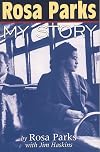
1st December 1955, Montgomery, Alabama. Rosa Parks, a black woman, refused to give up her seat to a white man. She wasn't the first one to do so, and so the usual procedure was well followed: the driver stopped the bus, called the police, she was arrested, spent a night in jail, and went to court the next day to be sentenced to paid a fine. End of the story...
… Beginning of History.
Rosa Parks was indeed a member of the NAACP. She was also, as a Baptist Christian, member of a strong church show more community unafraid to campaign on various issues affecting then black people. The two movements will combine to support her; and it will trigger the whole Civil Right Movement that would ultimately transform the segregationist USA.
Where to seat, if at all, in buses? It will take one year of clashes, pressures, and violence before racial segregation in public transport to be declared unconstitutional by the Supreme Court... and for Rosa Parks to become a whole symbol of political freedom.
This autobiography is at the image of such a courageous lady: simple, humble, yet dignified and truly brave. A lesson in humanity. show less
… Beginning of History.
Rosa Parks was indeed a member of the NAACP. She was also, as a Baptist Christian, member of a strong church show more community unafraid to campaign on various issues affecting then black people. The two movements will combine to support her; and it will trigger the whole Civil Right Movement that would ultimately transform the segregationist USA.
Where to seat, if at all, in buses? It will take one year of clashes, pressures, and violence before racial segregation in public transport to be declared unconstitutional by the Supreme Court... and for Rosa Parks to become a whole symbol of political freedom.
This autobiography is at the image of such a courageous lady: simple, humble, yet dignified and truly brave. A lesson in humanity. show less
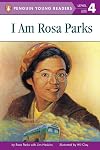
I liked this book. I think that the writing in this story was extremely engaging and paced well. I liked that her story was told in different sections, first about her arrest, then her childhood, then the bus boycott, and finally life after the boycott. This autobiography was told in first person from Rosa Parks herself. I thought this was very interesting to hear her story from her own personal point of view. Finally, I liked the illustrations in this story, I believe that they enhanced the show more story a lot and showed the intensity in Rosa’s eyes as she refused to get out of her bus seat. The main message of this book is to tell the story of Rosa Parks and encourage people to respect each other no matter what color they are. show less
Summary:
“I Am Rosa Parks,” is the biography/autobiography about the life of Rosa Parks and her involvement in the Civil Rights Movement. It is written and narrated by Rosa Parks herself. The book is split into four different chapters. The first chapter, “I Get Arrested,” retells the story of how Rosa Parks stood up for herself on the bus and didn't give her seat up to a white man. She also explains to the reader what segregation is and how it impacted the black people in the south show more during that time. In the second chapter, “How I Grew Up,” Rosa tells us a little bit more about her childhood and what it was like for her growing up in Alabama. She expresses how even when she was a child, segregation existed among her schools and even the white children discriminated against her and her friends. In the third chapter, “We Stay off the Buses,” Rosa tells about how her impact on the civil rights movement impacted other blacks to take a stand and fight against segregation. With the help of Dr. Martin Luther King, Jr., black people boycotted and didn't ride the public buses for a year. Because of this, the case was taken to court and the boycott had worked to end segregation on the buses. Finally, in the last chapter, “Since the Boycott,” Rosa tells the reader how life was like after the fight to end segregation and how many more people got involved to make a difference. She acknowledges that she’s proud of what she did and that she’s glad she stood up for herself and other blacks.
Comments (arguments/opinions):
Overall, I thoroughly enjoyed this book. Although it is a fairly easy read for a small chapter/picture book, it offers a lot of insight on life during the Civil Rights Movement and segregation. I really liked that it offered a table of contents so that it made reading easier for a young student. I think the book also offered great illustrations that went along well with the stories descriptions. I think the pictures can really help make the stories impact mean a lot more to a child. For instance, the very first picture is of a little black girl (probably Rosa Parks) drinking from a water fountain labeled ‘colored.’ I think this kind of picture can make a great impact on a child who has never learned about segregation before. I also really enjoyed how Rosa told her story about disobeying the law by not getting up out of her seat for a white man and then went on to back track and tell us about her life growing up. I think this helps the reader connect with her initial story and then relate to her better when they find out how extremely normal she actually is. Students can relate by seeing her as just another person, but it makes an impact when they see why she broke the law. The reader is able to establish empathy for Rosa Parks and really relate to her situation and why she stood up to the law. I think this is also a great autobiography because the story doesn't just focus on Rosa Parks, but it also focuses on segregation and the Civil Rights Movement. It gives background knowledge about how segregation impacted the south and it even defines certain words, such as, ‘segregation,’ ‘boycott,’ and ‘civil rights movement.’ It also introduces other people who joined the civil rights movement and touches on how they impacted and made a difference. These people included Jo Ann Robinson, Dr. Martin Luther King, Jr. and E.D. Nixon. I think these are great additives to further children’s knowledge and education on the subject. Lastly, I think the very last page really helps the reader to understand why the Civil Rights Movement happened and why it’s important to their lives now. On the last page, Rosa Parks says, “I hope that children today will grow up without hate. I hope they will learn to respect one another, no matter what color they are.” I think these last few sentences really set the stage for the story itself and will keep the children who read this book thinking about how they can make a difference in the world and continue to live loving everyone. show less
“I Am Rosa Parks,” is the biography/autobiography about the life of Rosa Parks and her involvement in the Civil Rights Movement. It is written and narrated by Rosa Parks herself. The book is split into four different chapters. The first chapter, “I Get Arrested,” retells the story of how Rosa Parks stood up for herself on the bus and didn't give her seat up to a white man. She also explains to the reader what segregation is and how it impacted the black people in the south show more during that time. In the second chapter, “How I Grew Up,” Rosa tells us a little bit more about her childhood and what it was like for her growing up in Alabama. She expresses how even when she was a child, segregation existed among her schools and even the white children discriminated against her and her friends. In the third chapter, “We Stay off the Buses,” Rosa tells about how her impact on the civil rights movement impacted other blacks to take a stand and fight against segregation. With the help of Dr. Martin Luther King, Jr., black people boycotted and didn't ride the public buses for a year. Because of this, the case was taken to court and the boycott had worked to end segregation on the buses. Finally, in the last chapter, “Since the Boycott,” Rosa tells the reader how life was like after the fight to end segregation and how many more people got involved to make a difference. She acknowledges that she’s proud of what she did and that she’s glad she stood up for herself and other blacks.
Comments (arguments/opinions):
Overall, I thoroughly enjoyed this book. Although it is a fairly easy read for a small chapter/picture book, it offers a lot of insight on life during the Civil Rights Movement and segregation. I really liked that it offered a table of contents so that it made reading easier for a young student. I think the book also offered great illustrations that went along well with the stories descriptions. I think the pictures can really help make the stories impact mean a lot more to a child. For instance, the very first picture is of a little black girl (probably Rosa Parks) drinking from a water fountain labeled ‘colored.’ I think this kind of picture can make a great impact on a child who has never learned about segregation before. I also really enjoyed how Rosa told her story about disobeying the law by not getting up out of her seat for a white man and then went on to back track and tell us about her life growing up. I think this helps the reader connect with her initial story and then relate to her better when they find out how extremely normal she actually is. Students can relate by seeing her as just another person, but it makes an impact when they see why she broke the law. The reader is able to establish empathy for Rosa Parks and really relate to her situation and why she stood up to the law. I think this is also a great autobiography because the story doesn't just focus on Rosa Parks, but it also focuses on segregation and the Civil Rights Movement. It gives background knowledge about how segregation impacted the south and it even defines certain words, such as, ‘segregation,’ ‘boycott,’ and ‘civil rights movement.’ It also introduces other people who joined the civil rights movement and touches on how they impacted and made a difference. These people included Jo Ann Robinson, Dr. Martin Luther King, Jr. and E.D. Nixon. I think these are great additives to further children’s knowledge and education on the subject. Lastly, I think the very last page really helps the reader to understand why the Civil Rights Movement happened and why it’s important to their lives now. On the last page, Rosa Parks says, “I hope that children today will grow up without hate. I hope they will learn to respect one another, no matter what color they are.” I think these last few sentences really set the stage for the story itself and will keep the children who read this book thinking about how they can make a difference in the world and continue to live loving everyone. show less
Rosa Parks: My Story, co-authored by Rosa Parks and Jim Haskins, captivated me as a historical memoir enthusiast. Immersing myself in the life of this Civil Rights Movement icon was truly eye-opening, profoundly impacting African Americans' lives. Parks' candid narrative, recounting her brave bus seat resistance, inspired with undeniable strength.
While the book provided a valuable perspective, I longed for a more cohesive narrative, hindering my personal connection. Further exploration of show more Parks' life, emotions, and sacrifices was needed. Her courage echoes, yet deeper emotional insight would've enhanced the read. Despite this, her pivotal role in shaping history cannot be overstated. This firsthand account is a must-read, illuminating a relentless fight against injustice.
Read the detailed review here - Books Charming show less
While the book provided a valuable perspective, I longed for a more cohesive narrative, hindering my personal connection. Further exploration of show more Parks' life, emotions, and sacrifices was needed. Her courage echoes, yet deeper emotional insight would've enhanced the read. Despite this, her pivotal role in shaping history cannot be overstated. This firsthand account is a must-read, illuminating a relentless fight against injustice.
Read the detailed review here - Books Charming show less
Lists
Awards


You May Also Like


Associated Authors
Statistics
- Works
- 5
- Also by
- 3
- Members
- 2,660
- Popularity
- #9,644
- Rating
- 4.0
- Reviews
- 52
- ISBNs
- 61
- Languages
- 5
- Favorited
- 1


