
Jamie Zeppa
Author of Beyond the Sky and the Earth: A Journey into Bhutan
About the Author
Image credit: Anne McDermid & Associates Ltd.
Works by Jamie Zeppa
Tagged
Common Knowledge
- Birthdate
- 1964
- Gender
- female
- Education
- York University, Toronto, Ontario, Canada
- Occupations
- teacher
- Organizations
- Seneca College, Toronto, Ontario
- Nationality
- Canada
- Places of residence
- Sault St. Marie, Ontario, Canada
Bhutan
Toronto, Ontario, Canada - Associated Place (for map)
- Ontario, Canada
Members
Reviews
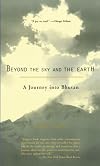
This book is a memoir written by a Canadian woman who travels to Bhutan in the late 1980s for several years to teach. The book is engaging, well-written, and thoughtful. I felt that it accurately depicted the struggles and joys of traveling and culture shock. I appreciated her insights on the romanticization of poverty, the "Shangri-La" image of Bhutan, and the whole idea of "they have nothing, but they are still so happy!"
I also was interested to read about the Bhutanese conflict with show more ethnic Nepalis and how that played out in the university setting. show less
I also was interested to read about the Bhutanese conflict with show more ethnic Nepalis and how that played out in the university setting. show less
Author Jamie Zeppa had built a good career in Canada and was also engaged to be married. Much to her fiance’s bewilderment, she decided she needed some adventure before settling down and contracted to do a year long teaching position in Bhutan.
She thought she would be teaching literature at a college in Bhutan’s main city, but her employers decided she was too young to teach at a University where she would be a similar age with her students. So Jamie ended up in a remote village teaching show more second graders. The village could be accessed mostly by foot travel and the occasional bus. It had neither running water nor electricity and only a rudimentary house for her to stay. Nevertheless, she found herself enjoying her position and loving her pupils and their families.
But soon she came to the notice of her employers who decided that no matter what her age, she would be much better utilized at the University. And so she made the move to a city with electricity, stores, and other English speaking teachers. Her university students were engaging and intellectually challenging – and she had found her place. One student in particular captured her heart.
Soon however, the government began sweeping reforms against long time citizens who spoke Nepali instead of Dzongkha (Bhutanese). These minorities,often had lived in Bhutan for generations but did not adhere to what the government mandated as the Bhutanese way of life – and violence and mass deportations broke out.
This is a wonderful book. I learned about a country I knew nothing about and author Jamie Zeppa did it in a very engaging way, including a forbidden love. It’s a vibrant story of how Ms Zeppa’s heart and life path were changed by Bhutan.`
“At my desk I start a letter to Robert about the difference between arrival and entrance. Arrival is physical and happens all at once. The train pulls in, the plane touches down, you get out of the taxi with all your luggage. You can arrive in a place and never really enter; you get there look around, take a few pictures, make a few notes, send postcards home. When you travel like this you think you know where you are, but in fact you have never left home. Entering takes longer. You cross over slowly, in bits and pieces. You begin to despair; will you ever get over> It is like awakening slowly, over a period of weeks. And then one morning, you open your eyes and you are finally here., really and truly here. You are just beginning t know where you are.” P 101 show less
She thought she would be teaching literature at a college in Bhutan’s main city, but her employers decided she was too young to teach at a University where she would be a similar age with her students. So Jamie ended up in a remote village teaching show more second graders. The village could be accessed mostly by foot travel and the occasional bus. It had neither running water nor electricity and only a rudimentary house for her to stay. Nevertheless, she found herself enjoying her position and loving her pupils and their families.
But soon she came to the notice of her employers who decided that no matter what her age, she would be much better utilized at the University. And so she made the move to a city with electricity, stores, and other English speaking teachers. Her university students were engaging and intellectually challenging – and she had found her place. One student in particular captured her heart.
Soon however, the government began sweeping reforms against long time citizens who spoke Nepali instead of Dzongkha (Bhutanese). These minorities,often had lived in Bhutan for generations but did not adhere to what the government mandated as the Bhutanese way of life – and violence and mass deportations broke out.
This is a wonderful book. I learned about a country I knew nothing about and author Jamie Zeppa did it in a very engaging way, including a forbidden love. It’s a vibrant story of how Ms Zeppa’s heart and life path were changed by Bhutan.`
“At my desk I start a letter to Robert about the difference between arrival and entrance. Arrival is physical and happens all at once. The train pulls in, the plane touches down, you get out of the taxi with all your luggage. You can arrive in a place and never really enter; you get there look around, take a few pictures, make a few notes, send postcards home. When you travel like this you think you know where you are, but in fact you have never left home. Entering takes longer. You cross over slowly, in bits and pieces. You begin to despair; will you ever get over> It is like awakening slowly, over a period of weeks. And then one morning, you open your eyes and you are finally here., really and truly here. You are just beginning t know where you are.” P 101 show less
A memoir of a young Canadian teacher sent to Bhutan in the late 1980s by a charity on a two year program to teach English. It provides a different view of Bhutan that does not whitewash the internal strife (including violence) between culturally different groups of Buddhists; the impact of living in an absolute monarchy; and the sexism that is pervasive in the country.
Memorable passages:
Then I tell them, slowly so they will understand, "In my village, in Canada, if I beat my students, their parents would get very angry. They would call the police and I would have to go to jail." But even as I say it, I hear the falseness in it. I try to calculate how many years ago corporal punishment was used in schools. I remember the strap in my elementary school. I cannot explain to them the complexity of the issue, the debate over physical punishment, the legal show more aspects, parents suing teachers, children suing parents. I cannot explain the state of things in North American schools, where teachers do not hit the students but students sometimes hit the teachers, the slow poisoning of the relationship between teacher and student, breaches of trust and abuse of authority, the hopeless lack of self-control that no one seems to know how to address. Things are different in North America, but in the final analysis, not any easier or any better, and I am sorry now that I have given that impression. Here again is the mind, leaping from emotion to speech without reflection. I have learned nothing. (p127)
I like knowing where things come from. The cheese in my curry comes from the cow belonging to the family in the first house behind the hospital with the banana trees out front. I buy the cheese, fresh, still warm, wrapped in a banana leaf and tied with a piece of dried vine. The new flip-flops I am wearing are a present from Sangay Chhoden's mother for the antibiotic ear drops I gave her for Sangay Chhoden's baby brother's infected ear. The cloth bag of peas in the kitchen came from Sonam Tshering, whose family lives in a bamboo hut at the end of the road and who cannot afford to be giving away peas or anything else. I forget the peas until they begin to rot, and am about to throw the whole lot out when I think of the hut and the meager vegetable garden behind it. I force myself to pick through pods, separating the edible peas from the slime, keeping in mind a Tantric Buddhist teaching about overcoming squeamishness, facing the inevitability of death and decay by immersing oneself in all forms of unpleasantness. (p138) show less
Then I tell them, slowly so they will understand, "In my village, in Canada, if I beat my students, their parents would get very angry. They would call the police and I would have to go to jail." But even as I say it, I hear the falseness in it. I try to calculate how many years ago corporal punishment was used in schools. I remember the strap in my elementary school. I cannot explain to them the complexity of the issue, the debate over physical punishment, the legal show more aspects, parents suing teachers, children suing parents. I cannot explain the state of things in North American schools, where teachers do not hit the students but students sometimes hit the teachers, the slow poisoning of the relationship between teacher and student, breaches of trust and abuse of authority, the hopeless lack of self-control that no one seems to know how to address. Things are different in North America, but in the final analysis, not any easier or any better, and I am sorry now that I have given that impression. Here again is the mind, leaping from emotion to speech without reflection. I have learned nothing. (p127)
I like knowing where things come from. The cheese in my curry comes from the cow belonging to the family in the first house behind the hospital with the banana trees out front. I buy the cheese, fresh, still warm, wrapped in a banana leaf and tied with a piece of dried vine. The new flip-flops I am wearing are a present from Sangay Chhoden's mother for the antibiotic ear drops I gave her for Sangay Chhoden's baby brother's infected ear. The cloth bag of peas in the kitchen came from Sonam Tshering, whose family lives in a bamboo hut at the end of the road and who cannot afford to be giving away peas or anything else. I forget the peas until they begin to rot, and am about to throw the whole lot out when I think of the hut and the meager vegetable garden behind it. I force myself to pick through pods, separating the edible peas from the slime, keeping in mind a Tantric Buddhist teaching about overcoming squeamishness, facing the inevitability of death and decay by immersing oneself in all forms of unpleasantness. (p138) show less
Lists
Awards


You May Also Like


Statistics
- Works
- 2
- Members
- 545
- Popularity
- #45,747
- Rating
- 4.1
- Reviews
- 17
- ISBNs
- 25
- Languages
- 5
- Favorited
- 1